Dyne Jewelry turns family history and survival into symbolic design
Dyne’s Protection series turns a POW family story, spacecraft interiors and ancient references into jewels that read like private talismans, not decoration.

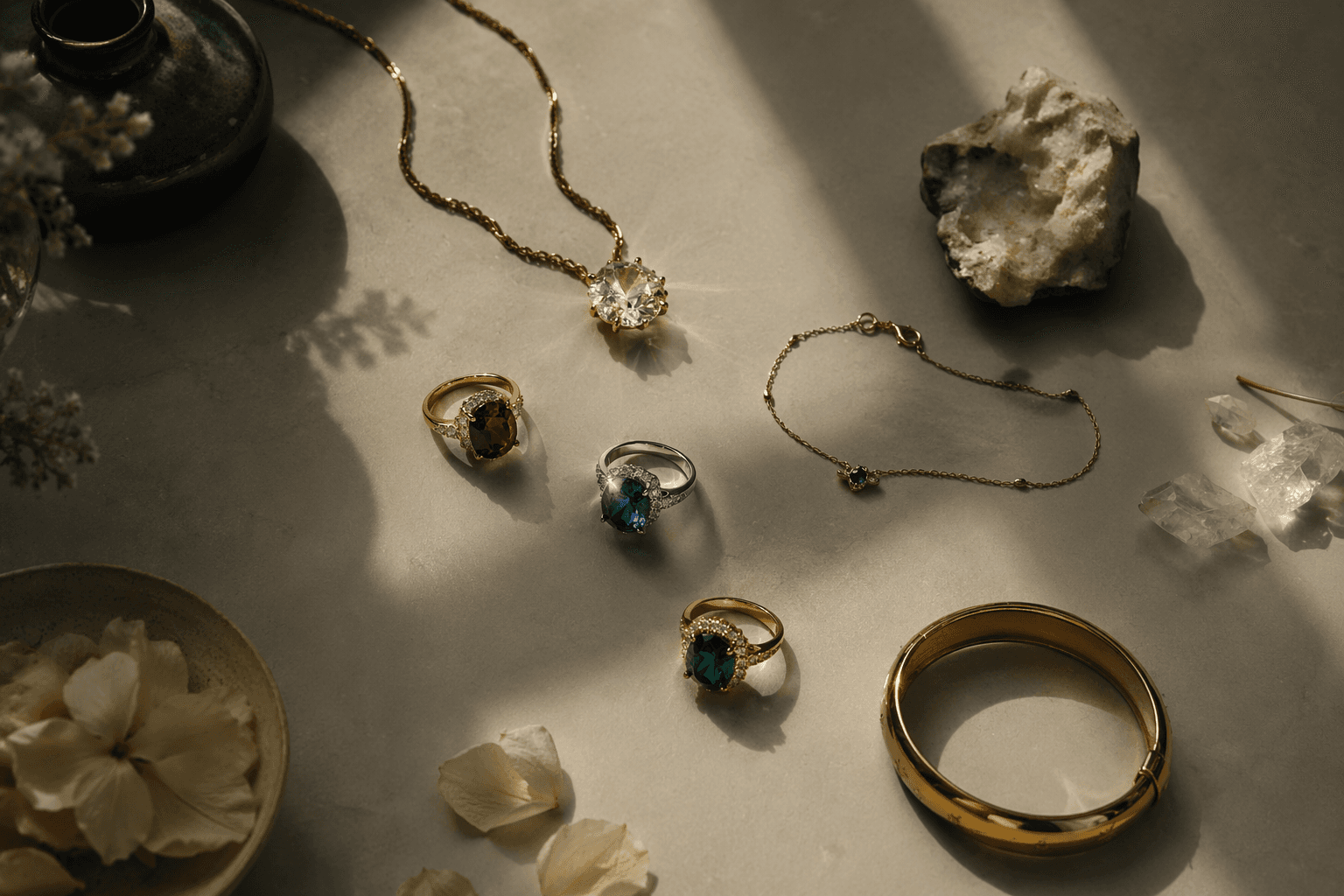
Sarah Ysabel Narici has built Dyne Jewelry on a premise that feels rare in fine jewelry: meaning comes first, sparkle second. The New York-based label, founded in 2022, turns family memory, survival, and symbolism into pieces that function less like accessories than like portable keepsakes. That is what gives Dyne its charge, and what separates it from brands that merely borrow the language of intimacy.
A house built from inheritance
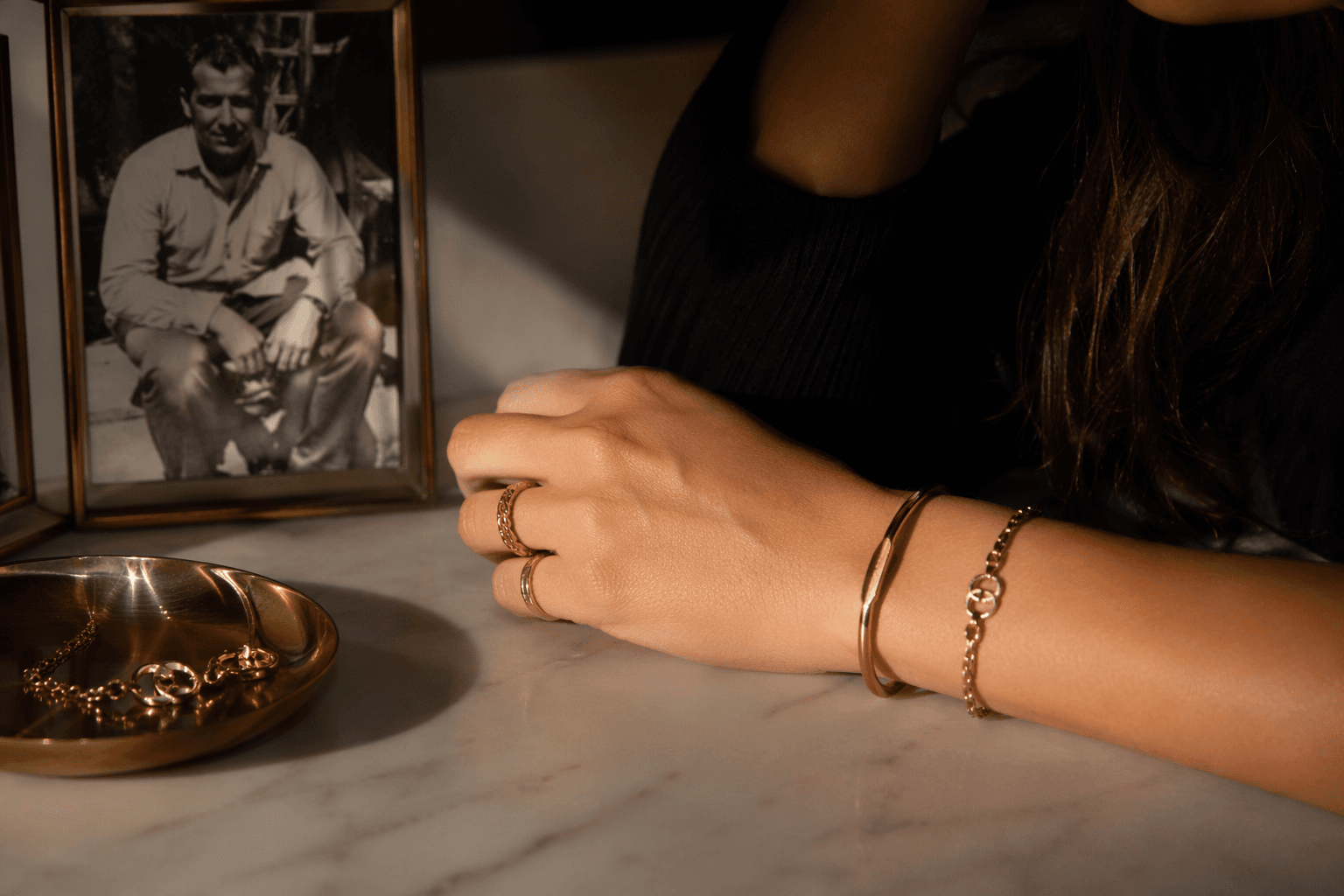
The deepest source in Narici’s work is a family story that is both brutal and defining. Her great-grandmother was held as a prisoner of war during Japan’s invasion of Singapore, and she smuggled jewelry into camp, later bartering those pieces for milk and medicine for family and friends. In Narici’s hands, that history becomes more than origin myth; it becomes a way of thinking about jewelry as currency, protection, and memory all at once.
Dyne’s name also carries that sense of lineage. It is drawn from her mother’s maiden name, a tribute to the mother who encouraged Narici to choose art over law. That pivot matters because it explains the intellectual seriousness behind the brand. Narici studied at Central Saint Martins and the Gemological Institute of America, then worked for Alexander McQueen, Stephen Webster, Marina B, and Lorraine Schwartz, bringing both conceptual rigor and technical fluency to her own line.
She launched Dyne with wedding bands for herself and her husband, which is telling. The brand did not begin with a broad commercial concept or a seasonal wish list, but with a personal vow translated into metal. Narici has also spoken about preferring the slower pace of fine jewelry to fashion jewelry, and that patience shows in the way Dyne treats each object as something to live with, not simply wear once.
Symbol as a private language
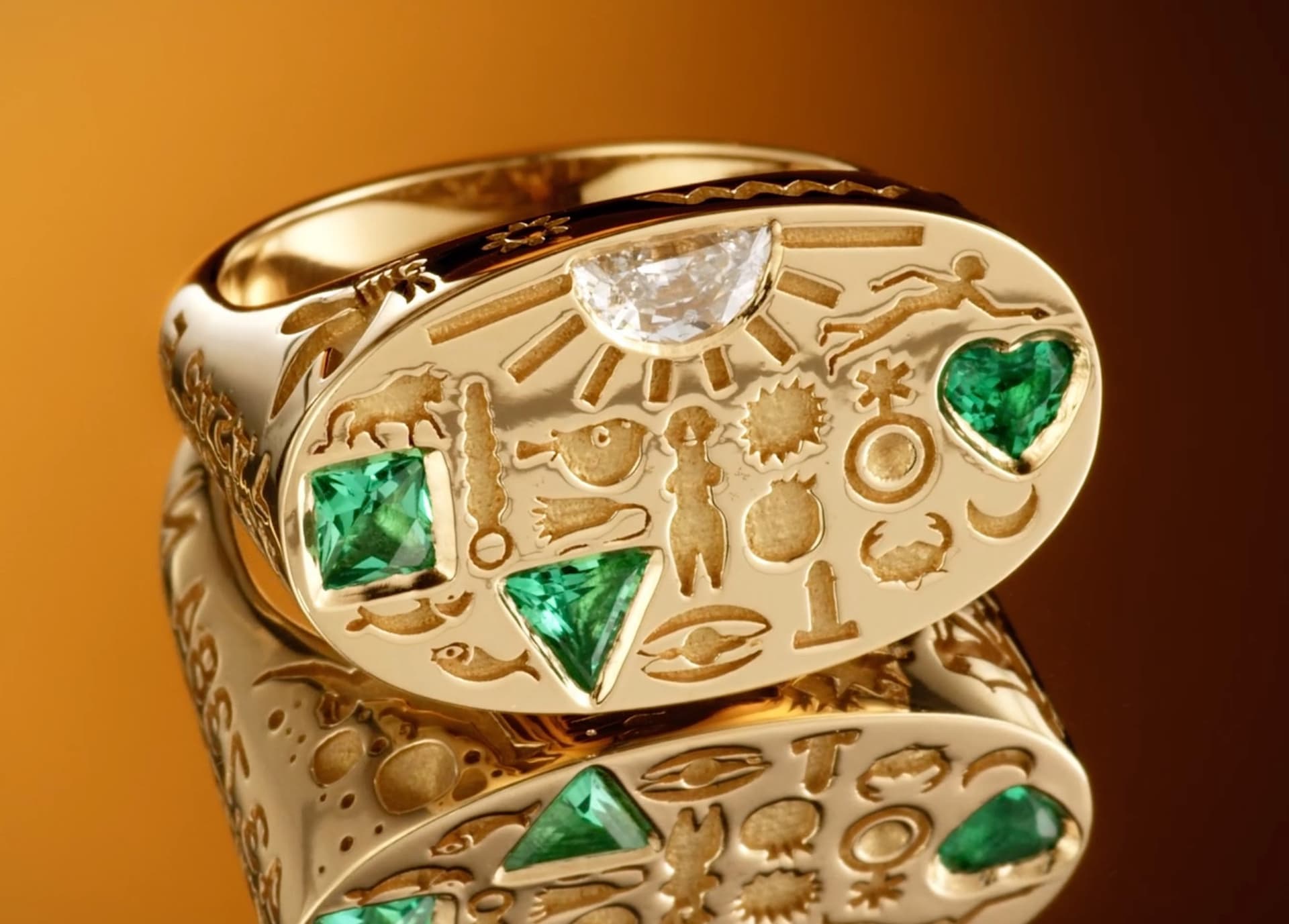
Narici’s earlier bespoke line, LoverGlyphs, reveals the grammar that still shapes Dyne. Those pieces used hand-engraved symbols, codes, and custom-cut gemstones to record people’s lives in gold rather than in writing. It is a compelling model for meaningful jewelry because it refuses generic sentiment; the story is embedded in the construction, not pasted on afterward.
That approach helps explain why Narici describes her jewelry as a kind of time capsule. She begins from concepts rather than from stones or materials, which is the opposite of how many jewelers work when they let a gem dictate the design. In Dyne, the symbol comes first, then the form, and only then the material, so the final piece feels authored rather than assembled.
This is where intimate design language becomes legible. A piece is not meaningful simply because it mentions memory, family, or love. It becomes meaningful when the mechanics of the jewel, the engraving, setting, silhouette, and scale, actually carry that idea with discipline.
Protection, rendered in metal and stone
The Protection series makes that philosophy visible at full scale. Shown at Salon Art + Design in New York, the exhibition brought together 24 Dyne jewels organized around three concepts: the bud, the capsule-room, and the ritual. It was also Narici and artist Kara Chin’s first joint exhibition, and the two are cousins, which adds another layer of family narrative to a project already built on inheritance and closeness.
Salon Art + Design ran from November 6 to 10, 2025, at the Park Avenue Armory, a setting that suited the work’s mixture of polish and introspection. Dyne has long shown in art and design contexts, including PAD in London and Phillips Auction House venues in Hong Kong, Singapore, New York, and Geneva, and that circuit makes sense. These are not showroom jewels in the usual sense; they are objects meant to be read as much as admired.
The bud motif is the sharpest example of Narici’s visual intelligence. It emphasizes enclosure and toughness through reverse-set diamonds and blackened-gold forms, a combination that can feel armored without becoming heavy-handed. The capsule-room theme draws from Soviet architect Galina Balashova’s spacecraft interiors, and that reference gives the jewels a futuristic restraint, as if safety itself had been engineered into elegant miniature architecture.
The ritual concept rounds out the series by suggesting repetition, habit, and care. Narici has said the theme felt timely because people are overwhelmed by events in the world and need something soft, vulnerable, and homey. That is a strong editorial distinction: the work does not try to escape crisis with decoration, it answers it with shelter.
History, future, and the space between them
Narici’s aesthetic sits in the tension between history and the future, and that balance is not accidental. She grew up in Italy, and a childhood visit to Cape Canaveral to watch a space shuttle launch helped shape her sense of possibility. Additional context around her background notes that her father worked with NASA, which only deepens the coherence of the space references in Protection and the Balashova-inspired capsule-room.
Ancient Egypt is another thread in the brand’s conceptual weave, and it points to why Dyne feels intellectually grounded rather than simply symbolic. Ancient references can easily become decorative shorthand, but Narici uses them as a way to think about endurance, ritual, and the afterlife of objects. The result is a jewelry language that feels historical without becoming nostalgic, futuristic without becoming cold.
That equilibrium is what makes Dyne distinctive in a crowded field of meaning-driven brands. Plenty of jewelers talk about heritage, protection, or talismans. Fewer can connect a prisoner-of-war family history, a mother’s encouragement, a space shuttle launch, and a bespoke vocabulary of glyphs into one coherent design system.
How to tell if meaningful jewelry is real
When you are evaluating jewelry that promises symbolism, look past the pitch and into the mechanics. The best pieces do not merely reference a story; they build it into the object’s structure.
- Look for a repeated visual language, such as Narici’s glyphs, symbols, and custom-cut stones in LoverGlyphs. Consistency is often a sign that the designer has a true private vocabulary rather than a borrowed mood board.
- Pay attention to construction choices that reinforce the concept. Reverse-set diamonds and blackened gold in the bud pieces do more than look dramatic; they create a sense of enclosure and defense that matches the theme.
- Notice whether the story feels specific. A family history tied to wartime survival, or a capsule-room inspired by Balashova’s spacecraft interiors, carries more weight than a vague appeal to “legacy.”
- Ask whether the piece feels authored from the inside out. Dyne begins with ideas, then moves to form, which is why its jewels read as personal statements rather than branded symbolism.
- Consider where and how the work is shown. Dyne’s presence at PAD, Phillips, and Salon Art + Design places it closer to art and design discourse than mass-market fashion, which suits jewelry that asks to be read as a keeper of memory.
Dyne’s strength lies in that rare combination of technical precision and emotional clarity. In Narici’s hands, jewelry becomes neither ornament nor slogan, but a vessel for what family carries, what history survives, and what the hand can still preserve.
This article was produced by Prism’s automated news system from verified source data, official records, and press releases, then run through automated quality and moderation checks before publishing. The system is built and supervised by the people who set the standards it runs under. Read our full AI policy.
Know something we missed? Have a correction or additional information?
Submit a Tip