ethical engagement rings for socially conscious couples, from recycled gold to lab-grown stones
Recycled gold, lab-grown diamonds, and traceable stones are changing ethical rings from a compromise into a sharper style choice. The best designs make the supply chain visible without flattening the romance.
Metal first: the quiet way ethics changes the whole ring
Gold’s record run has made this category feel newly practical. The World Gold Council says total gold demand exceeded 5,000 tonnes in 2025 and the metal hit 53 all-time highs that year, which is one reason recycled gold has moved from feel-good talking point to serious design decision. Once a ring is cast in recycled or Fairmined gold, the visual payoff is usually subtle, but the philosophical payoff is immediate: you are choosing a metal story that starts with reuse or responsible mining, not anonymous extraction.
That distinction matters because gold is the frame, not the footnote. Recycled gold keeps the same warm yellow, blush rose, or cool white finish you expect after refining, while Fairmined gold gives you a traceable mining narrative tied to certified responsible mines. If your priority is lowering the environmental footprint of the ring itself, recycled gold is the cleaner shorthand; if you want the beauty of newly mined metal with better labor and environmental standards, Fairmined or Fairtrade-certified gold is the more specific choice.
The stone tells a different story, and the budget often tells it first
Lab-grown diamonds are no longer a category to apologize for. The GIA says laboratory-grown diamonds have essentially the same chemical composition and crystal structure as natural diamonds and look the same to the unaided eye, while the FTC’s Jewelry Guides require truthful, non-deceptive descriptions of diamonds and other precious materials. In other words, the ethical conversation is not about whether a lab-grown diamond is “real,” but about whether you want your carat weight to reflect rarity, or to reflect design and budget priorities.
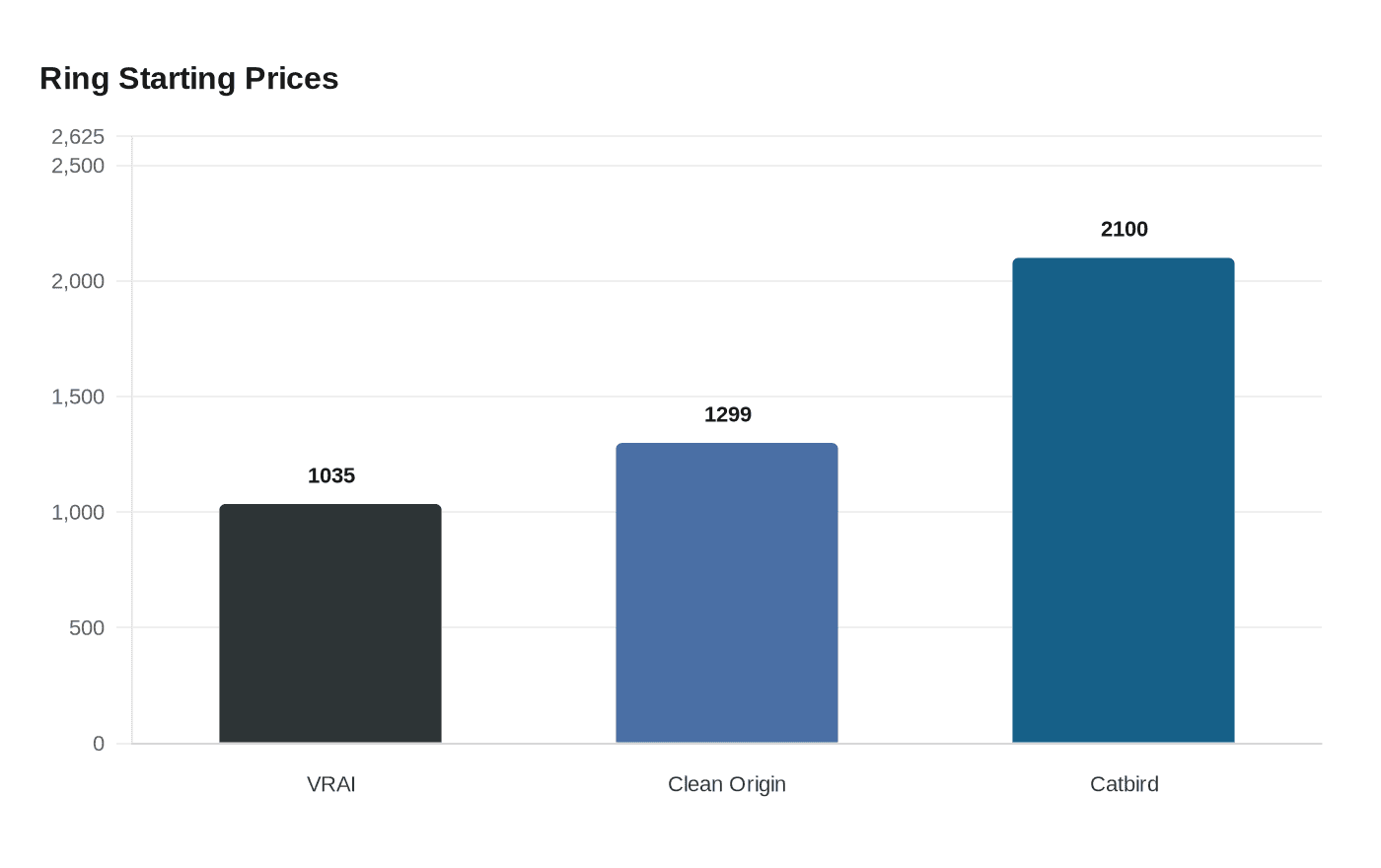
That is where the economics become visible on the finger. VRAI’s engagement rings start around $1,035, Clean Origin shows hidden-halo lab-grown rings around $1,299, and Catbird’s lab-grown diamond engagement rings begin much higher in the line, from about $2,100, because its signatures lean more sculptural and boutique. The point is not that one is better than another, but that ethical buying can buy you different things, from a larger center stone to a more ornate setting to a more distinctive silhouette.
If you want a mined diamond, traceability is the new luxury language
For couples who still want a natural stone, provenance has become its own form of romance. De Beers has expanded its Tracr platform so newly registered De Beers-sourced diamonds over 1.25 carats rough, equivalent to about 0.5 carats polished, can carry country-of-origin data starting in 2025. That does not erase mining, but it does replace mystery with a more legible chain of custody, which is exactly what many socially conscious buyers want when they choose a natural diamond.
There is a useful styling consequence here as well. A traceable natural diamond tends to appeal to the couple who wants a classic solitaire or three-stone ring but also wants to know where the stone came from, while a lab-grown diamond is often the smarter route when you care more about scale, cut quality, and budget flexibility. Ethically, those are different arguments; visually, they can both look like old-fashioned elegance, which is part of the category’s current appeal.
The brands reveal what “ethical” actually buys you
Catbird is the clearest case of style meeting conscience. The brand says its studio works with more than 95 percent recycled gold and recycled diamonds, and its engagement rings run from modest gold bands around $498 to lab-grown diamond solitaires starting near $2,100, with designs that favor delicate proportions, unusual silhouettes, and a little downtown wit. If you want a ring that feels handmade rather than house-style corporate, Catbird is the sharpest of the bunch.
VRAI is the polished modernist in the room. It offers lab-grown diamonds, custom cuts in any shape and size, and settings that span signature solitaires, hidden halos, three-stone rings, knife-edge bands, and bezels, with pricing that starts just over $1,000. Its pitch is transparency through manufacturing as much as ethics through material, and that makes it ideal if you want a clean, architectural ring that still feels tailored.
Clean Origin is the most budget-transparent of the lab-grown specialists. Its site breaks out solitaire, vintage-style, three-stone, pavé, halo, and classic designs, and it lets you start with either a setting or a diamond, which is useful when you are trying to balance size against spend. The best versions of its rings make a persuasive case that “ethical” can also mean efficient, especially when a smaller budget would otherwise force a visual compromise.
Brilliant Earth sits at the other end of the custom spectrum. It offers a design-your-own process, one-on-one help from a design consultant, and a Fairmined collection that includes settings such as the Fairmined Perfect Fit Solitaire 2mm Engagement Ring at $950, setting only. If you want natural diamonds, lab-grown options, and a wide runway of customization in one place, it is the most comprehensive showroom model of the group.
Setting choice is where ethics becomes wearability
The setting changes how the ring reads on the hand, and how it lives in daily life. Tiffany describes prong settings as lifting the stone to let light enter from multiple angles for maximum brilliance, while a bezel setting, in jeweler’s terms, wraps metal around the stone’s girdle for a more secure, lower-profile fit. If you live in a laptop-and-gym-bag world, bezel suddenly looks less modest and more intelligent; if you want flash and air around the diamond, prongs still deliver the classic sparkle.
That is why the most convincing ethical rings are never just about sourcing. A three-stone ring can turn a lab-grown diamond into a symbol of past, present, and future; a bezel can make an oval feel sleek rather than bridal; a hidden halo can add light without making the ring fussy. The strongest designs let the materials do the moral work, then let the setting do the storytelling.
What to ask before you buy
- Is the gold recycled, Fairmined, or Fairtrade-certified, and is that clearly stated?
- Is the diamond lab-grown, traceable natural, or repurposed from another piece, and does the brand disclose that plainly?
- Can you see the setting-only price, the stone price, and the customization path separately? Brands that publish those figures make comparison easier.
- Does the setting suit the way the ring will actually be worn, not just photographed? Prong and bezel are not aesthetic synonyms; they change security, light, and maintenance.
A thoughtful ethical ring is not a lesser version of luxury. It is a more legible one, where the metal, the stone, and the setting all say exactly what kind of love story you are wearing.
This article was produced by Prism’s automated news system from verified source data, official records, and press releases, then run through automated quality and moderation checks before publishing. The system is built and supervised by the people who set the standards it runs under. Read our full AI policy.
Did this article answer your question?