Gemologists Launch AI-Aided Gemstone Lab
Three gemologists with a decade of shared work launched Swiss International Gemlab, betting proprietary AI can make colored-stone reports faster, cleaner, and harder to manipulate.
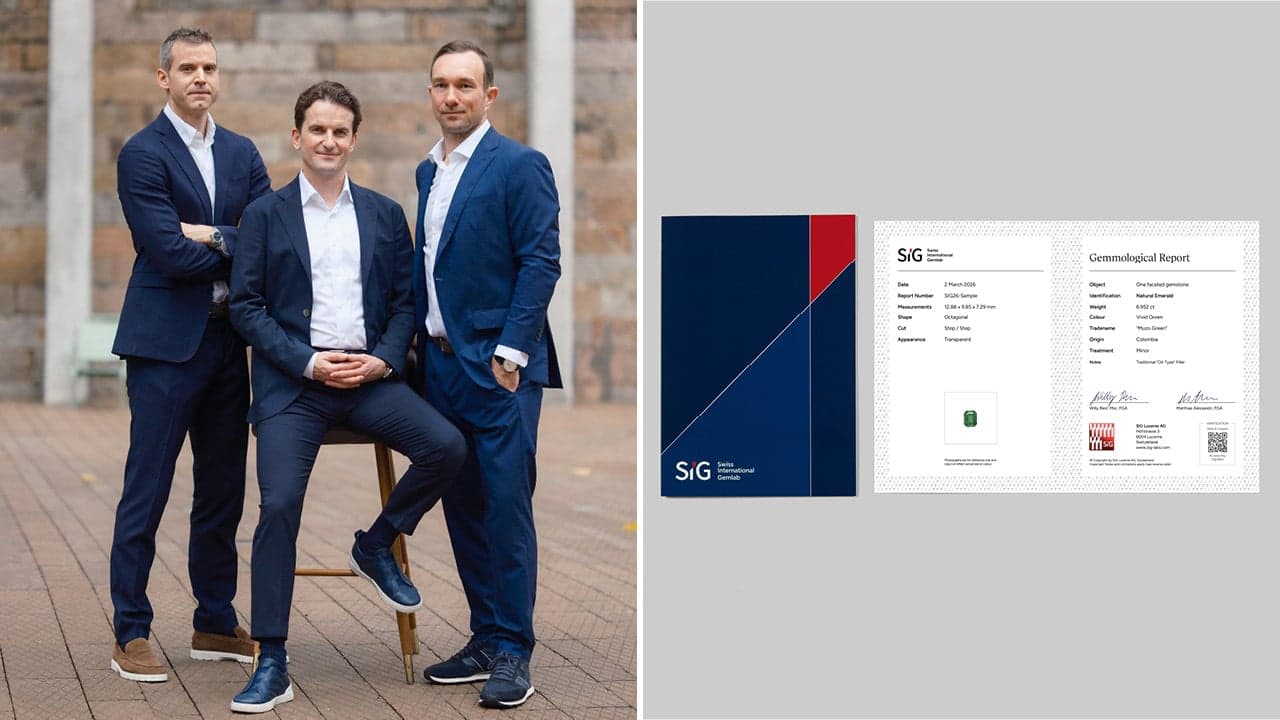
When three veteran gemologists open their own lab, the provenance of their credentials matters as much as the stones they will be grading. Willy Bieri, Lawrence Hahn, and Matthias Alessandri, who spent more than a decade working together before co-founding Swiss International Gemlab (SIG) last week, are betting that artificial intelligence can do for gem certification what decades of institutional habit could not: eliminate inconsistency without eliminating expertise.
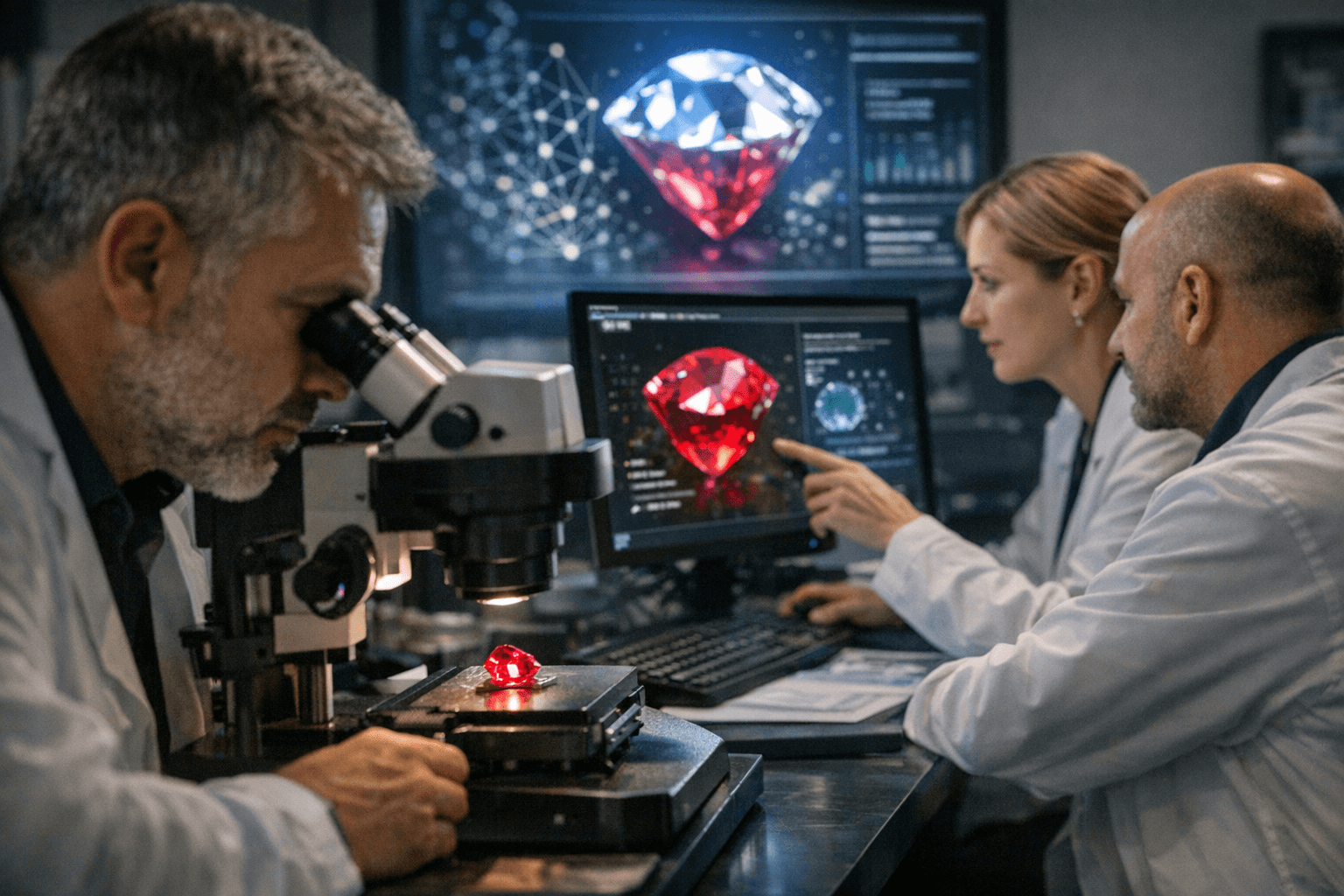
SIG, operating from Lucerne, Switzerland and Hong Kong, uses a proprietary AI system to support grading accuracy and consistency. That system, called SIG-AI Assistance, cross-references analytical data against structured databases to detect anomalies, ensure report consistency, and reduce interpretation time. The founders say the result is a paper trail that resists the kind of drift that has quietly undermined confidence in some lab reports. They describe the lab as designed to operate "free from external influence."
For buyers of colored gemstones, where a ruby's Burmese origin or an emerald's treatment history can shift its price and the story behind a piece dramatically, this matters. But it is worth understanding what any AI-assisted system, however well-designed, can and cannot do.
What SIG-AI Assistance does well is speed and pattern recognition. By comparing spectroscopic and chemical data against its databases, it can flag outliers that a single grader might miss on a busy day. A standard turnaround of five business days, with expedited options for urgent needs, and real-time status tracking suggest the system genuinely compresses the process rather than simply marketing faster service.
What it cannot do is resolve the questions that matter most to buyers of meaningful jewelry: whether a lab's origin language is conservative or generous, how it defines "minor" heat treatment versus "significant" enhancement, and where its detection limits sit for newer treatments like lattice diffusion or glass filling. These are human calibration decisions that reflect each lab's underlying philosophy, and no AI resolves them simply by existing.
If you are purchasing a colored stone with a SIG certificate, or evaluating any lab report for a piece that carries personal significance, press on these specifics. Ask whether origin language uses "consistent with" a geographic source or states origin as a definitive fact: the distinction can represent thousands of dollars and the entire narrative of an heirloom. Ask whether "no indications of treatment" means no treatment or simply no detectable evidence with the instruments used. Ask what instruments those were. Reputable labs answer these questions without hesitation.
SIG will make its global debut at GemGenève in May, offering on-site services to industry professionals. That appearance in one of fine jewelry's most scrutinized trade settings will provide an early read on how the market receives AI-assisted certification from a new entrant in a field where Gübelin, SSEF, and GRS have held institutional authority for decades. Bieri, Hahn, and Alessandri have worked together for more than a decade, which is either the best possible foundation for challenging that establishment or the clearest evidence they understand exactly how high the bar already sits.
Know something we missed? Have a correction or additional information?
Submit a Tip