Hermès turns equestrian heritage into sculptural high jewelry
Hermès turns riding gear into sculptural high jewelry, making the horse felt through shape, tension, and motion rather than a literal motif.
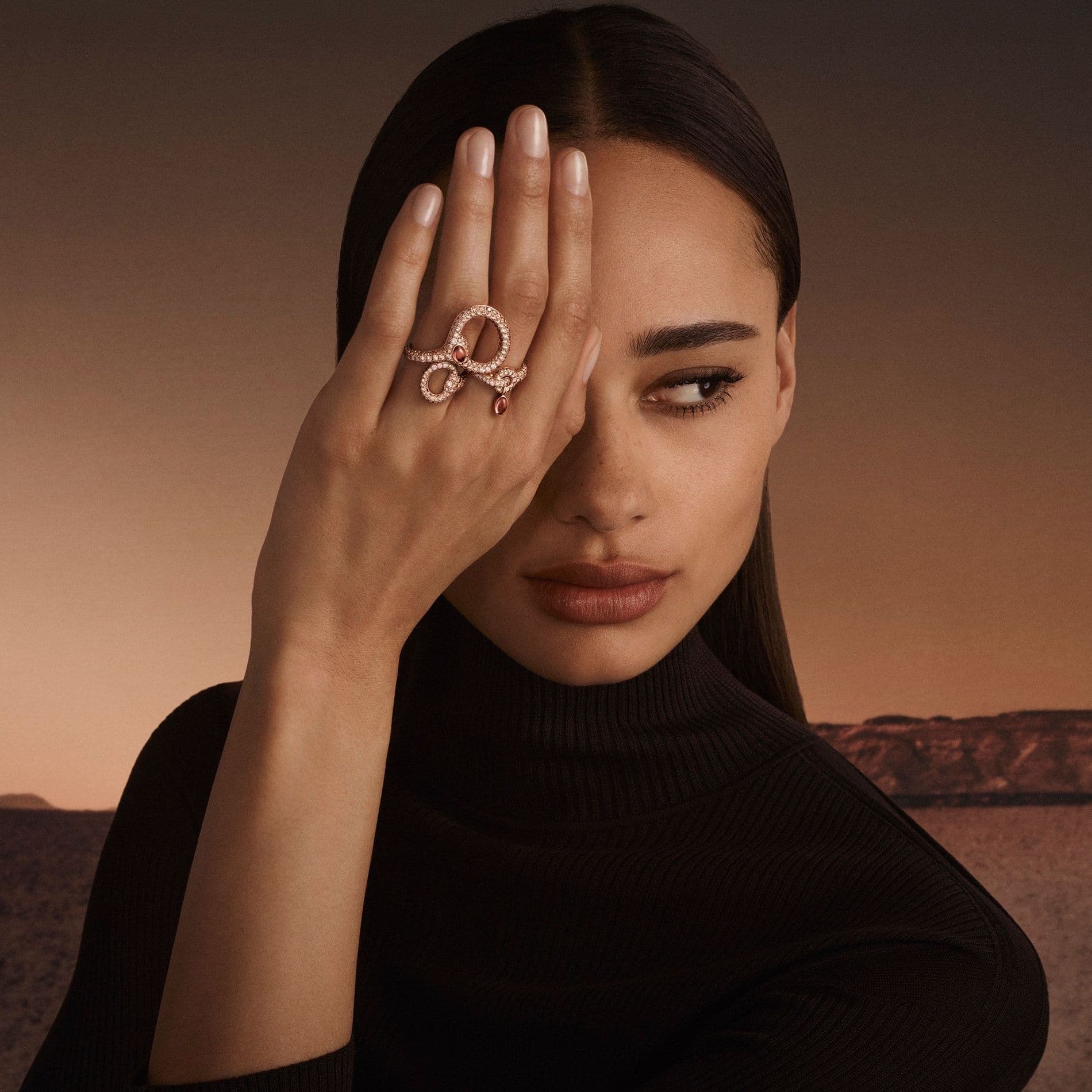
Hermès has turned bridles, stirrups, lassos, and blacksmith nails into high jewelry that reads more like motion studies than animal portraits. In Into the Horsescape, the horse is never drawn literally; it is abstracted into curve, tension, and release across 90 one-of-a-kind creations. Pierre Hardy keeps the language disciplined enough to feel modern, and that restraint is what gives the collection its collectible edge.
From saddlery to sculpture
The collection lands inside a heritage story Hermès has spent decades refining. The maison traces its beginnings to 1837, when it started as a saddlery and harness-maker, so the vocabulary of riding is part of the brand’s original material world, not a decorative afterthought. That matters here because the house does not borrow equestrian references at surface level; it translates them into jewelry forms that feel engineered rather than illustrative.
Into the Horsescape is Hermès’ ninth Haute Bijouterie collection, and the scale is significant. With 90 unique pieces, it stands as the house’s largest high-jewelry presentation since Hermès launched the category in 2010. The size gives Hardy room to vary the grammar of the collection, moving from tight, structural gestures to more fluid, almost airborne lines without losing the sense of a single visual idea.
The horse disappears into form
The smartest thing Hermès does here is refuse the obvious. There are no literal horse heads, hoof charms, or cartoonishly decorative nods to the stable. Instead, the collection takes the objects that define riding, bits, lassos, stirrups, and blacksmith nails, and abstracts them until they become sculptural signs.
That shift changes how the jewelry reads on the body. A bit becomes a curve with restraint rather than a direct symbol; a lasso becomes a loop that suggests motion without mimicking rope; a stirrup reads as structure, not souvenir. Even the blacksmith nail, one of the humblest tools in the equestrian world, gains presence when it is pulled into precious metal and set among gemstones, where its simplicity becomes part of the design’s tension.
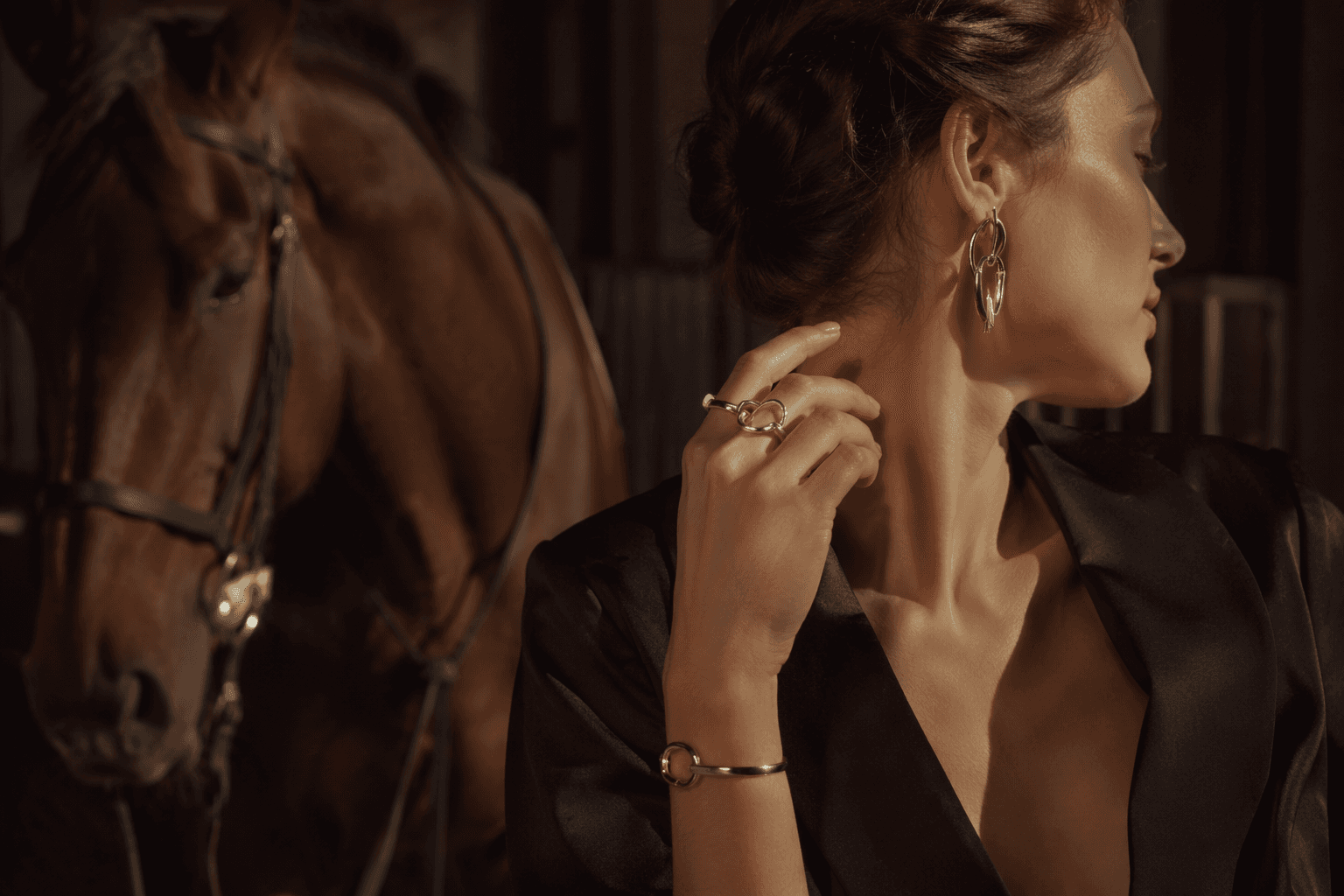
This is where Hermès’ approach feels more modern than literal animal jewelry. Direct animal motifs can flatten quickly because they depend on recognition alone, while abstraction gives the wearer something more layered to live with. Here, the horse is present as balance, impulse, and discipline, which makes the pieces feel less like themed accessories and more like wearable sculpture.
Why Pierre Hardy’s restraint matters
Hardy’s role is central to that effect. As Hermès’ Creative Director of Jewellery, he has built a language around form, movement, and the body, which suits a house that thinks about objects as things to be worn, handled, and inhabited rather than merely viewed. In this collection, that sensibility keeps the symbolism elegant instead of literal, so the equestrian reference remains sharp even when it is barely visible.
The jewelry also reflects Hermès’ own way of talking about preciousness, where color and shape matter as much as ornament. That is a particularly strong fit for pieces inspired by riding hardware, because the subject already carries lines, mechanisms, and pressure points. Hardy uses that built-in structure to make the stones and metal feel like parts of an organized system, not decoration pasted onto a surface.
The result is emotional without being sentimental. Hermès is not trying to make the horse cute or nostalgic; it is turning the idea of the horse into a set of physical sensations, control, momentum, and elegance under discipline. That is a subtler and more persuasive form of meaning, especially in high jewelry, where the most memorable pieces are often the ones that suggest a world rather than spell it out.
The couture-week debut and the value of rarity
Into the Horsescape was unveiled during Paris Haute Couture Week Fall/Winter 2026-27, which ran from July 6 to July 9, 2026, and the presentation was set at the Musée des Arts Décoratifs in Paris. That setting suits the collection’s mood, because the museum context reinforces the idea of jewelry as a form study, not a display of preciousness for its own sake. The pieces ask to be read the way you would read a design object: by line, proportion, and the relationship between surface and movement.
The 90-piece count also matters for collectors. One-of-a-kind work carries its value not just in materials but in specificity, and Hermès strengthens that with a concept that is tied to the maison’s own origin story. A horse-shaped jewel can be charming; a jewel that turns riding hardware into a sculptural code feels more exacting, and exacting is what gives luxury staying power.
How to read Hermès’ equestrian high jewelry
What makes this collection compelling is not only the craftsmanship, but the discipline behind the idea. Hermès understands that heritage becomes modern when it is edited, and Into the Horsescape is all edit: no excess literalism, no overstatement, no easy symbolism. The horse is everywhere in the structure and nowhere in the obvious sense, which is precisely why the collection feels so resolved.
For anyone looking at meaningful jewelry now, that is the lesson Hermès offers. The strongest heritage pieces do not shout their references; they translate them into forms you can wear every day in your mind, even if not on your wrist or neck. In Into the Horsescape, the equestrian world survives as motion, weight, and poise, and that is why the collection reads as both deeply Hermès and fully contemporary.
This article was produced by Prism’s automated news system from verified source data, official records, and press releases, then run through automated quality and moderation checks before publishing. The system is built and supervised by the people who set the standards it runs under. Read our full AI policy.
Did this article answer your question?