How coin jewelry turned wealth into memory and identity
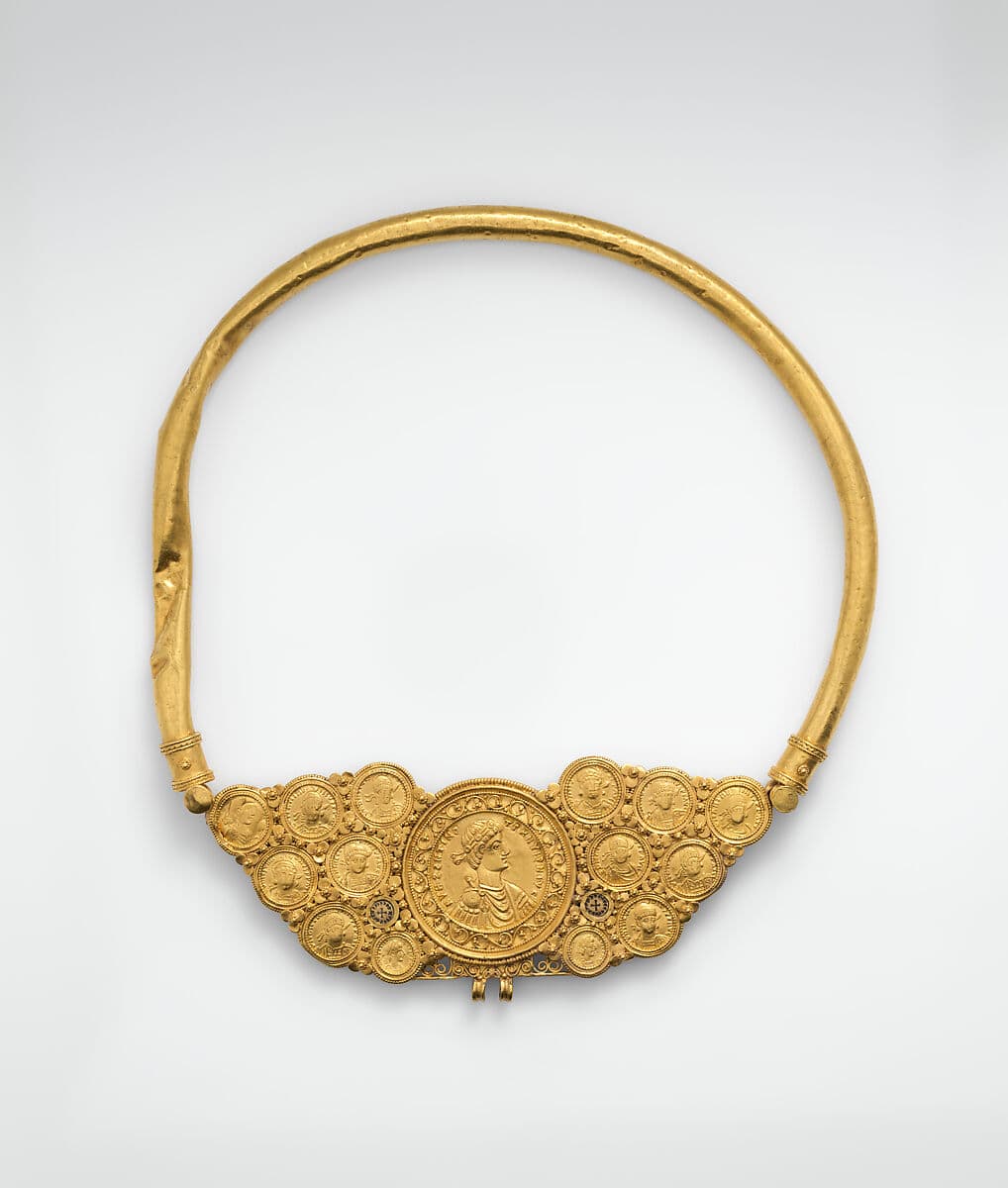
Coin jewelry turns a ruler’s profile, a date, or a place of origin into something worn close to the body, and a Byzantine pectoral shows how old that instinct is.
Coin jewelry appeared in Egypt, North Africa, and the broader Mediterranean as early as the Hellenistic period, and the Metropolitan Museum of Art traces it across those regions for thousands of years. Set against the body, a coin can still read as wealth, but it also becomes a record of movement, inheritance, devotion, or survival.
When money becomes ornament
The logic of coin jewelry is simple and powerful. A coin already comes stamped with authority, whether that means a ruler’s profile, a date, an emblem, or a place of origin, so the piece arrives with meaning before a jeweler ever touches it. Unlike a gemstone, which is prized primarily for color, clarity, and rarity, a coin brings provenance into the design itself.
Coinage itself predates coin jewelry. The first standardized coins appeared with the Lydians in western Anatolia in the 7th century BCE, and the later history of adornment built on that commercial revolution. Once coinage became a trusted medium of exchange, it also became a visible shorthand for access, travel, and status, which made it a natural material for jewelry across ports, courts, and households.
A Byzantine object that shows the idea clearly
A Byzantine object identified by the Metropolitan Museum of Art as a Pectoral with Coins and Pseudo-Medallion shows the idea clearly. The construction matters: the pectoral holds fourteen gold coins and two gold discs linked together and held by a large gold tube, turning separate pieces of wealth into a single ornamental field.
The Met’s Byzantine holdings are among the strongest in the United States, and this piece belongs to that larger story of courtly material culture. In late antiquity and the Byzantine world, mounted coins became part of the wearer’s visible identity and could communicate refinement, rank, and connection to a wider imperial world.
Why coin jewelry still feels personal
A coin can mark a family’s country of origin, a marriage voyage, a collector’s fascination with antiquity, or the pride of carrying a piece of history in daily life. In some traditions, coins signal portable wealth or ceremonial dress; in others, they serve as inherited keepsakes, where the date matters as much as the metal.
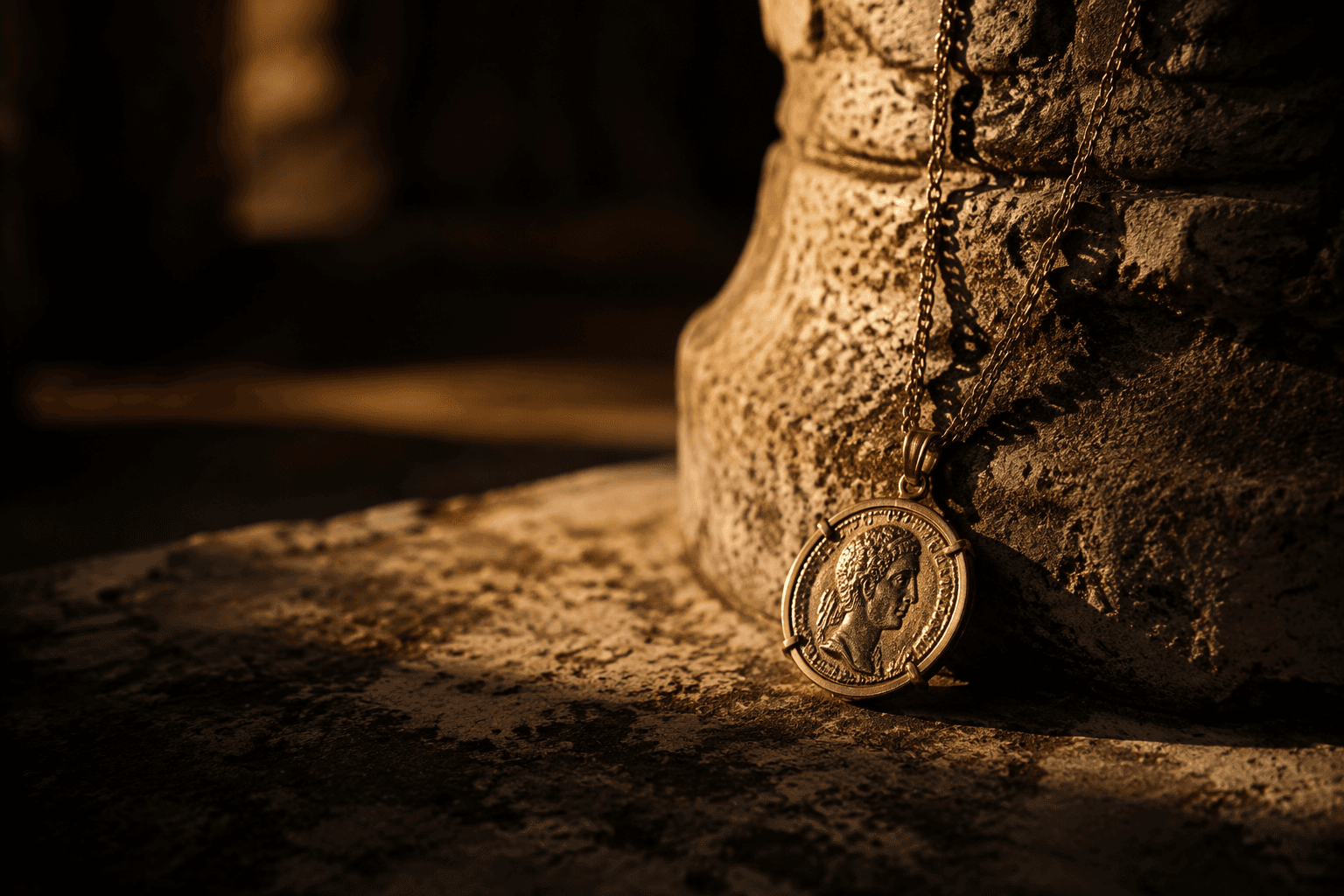
A coin mounted as a pendant or brooch carries a real issuer, a real place, a real period, and a real passage from circulation to adornment.
What to look for before you buy
The first question is whether the coin has been treated with respect. Improper cleaning, handling, and storage are major problems in coin collecting; NGC flags all three, and the same caution applies when those coins are incorporated into jewelry. Harsh polishing can strip away surface character, erase original texture, and flatten the very details that make a coin desirable in the first place.
A careful buyer should look at how the coin is mounted as much as at the coin itself. The edges should be protected, not pinched or abraded by an aggressive setting, and the metalwork should feel integrated rather than improvised. If the coin is intended for frequent wear, the setting should hold it securely without forcing the surface into constant contact with hard metal.
- Look for legible dates, rulers, or inscriptions if the story of the coin matters to you.
- Check whether the coin appears cleaned to a bright, unnatural finish, or retains a softer historical surface.
- Examine the setting for edge protection, secure links, and balanced weight.
- Decide whether the piece is built for daily wear or occasional use, especially if the coin is thin or especially old.
A practical checklist helps:
Care is part of the meaning
Coins should be handled carefully and stored in ways that avoid damaging their surfaces; the United States Mint gives the same advice to collectors, and it becomes even more important once a coin is worn as jewelry. Skin oils, friction, and repeated impact can change the appearance of a coin quickly, especially on raised details and smooth fields. If the piece has already lived through centuries of history, the goal is not to make it look new but to prevent unnecessary loss.
A bezel or mounting is not only decorative; it is protective. It should preserve the coin’s legibility while it is worn close to the body.
This article was produced by Prism’s automated news system from verified source data, official records, and press releases, then run through automated quality and moderation checks before publishing. The system is built and supervised by the people who set the standards it runs under. Read our full AI policy.
Did this article answer your question?