Natural Colored Diamonds, Browns, Pinks, and Yellows Define a Tightening Market
Argyle’s closure has squeezed supply, and natural colored diamonds are now sorting into browns, pinks, and yellows with very different entry points and collector appeal.
The new colored-diamond market
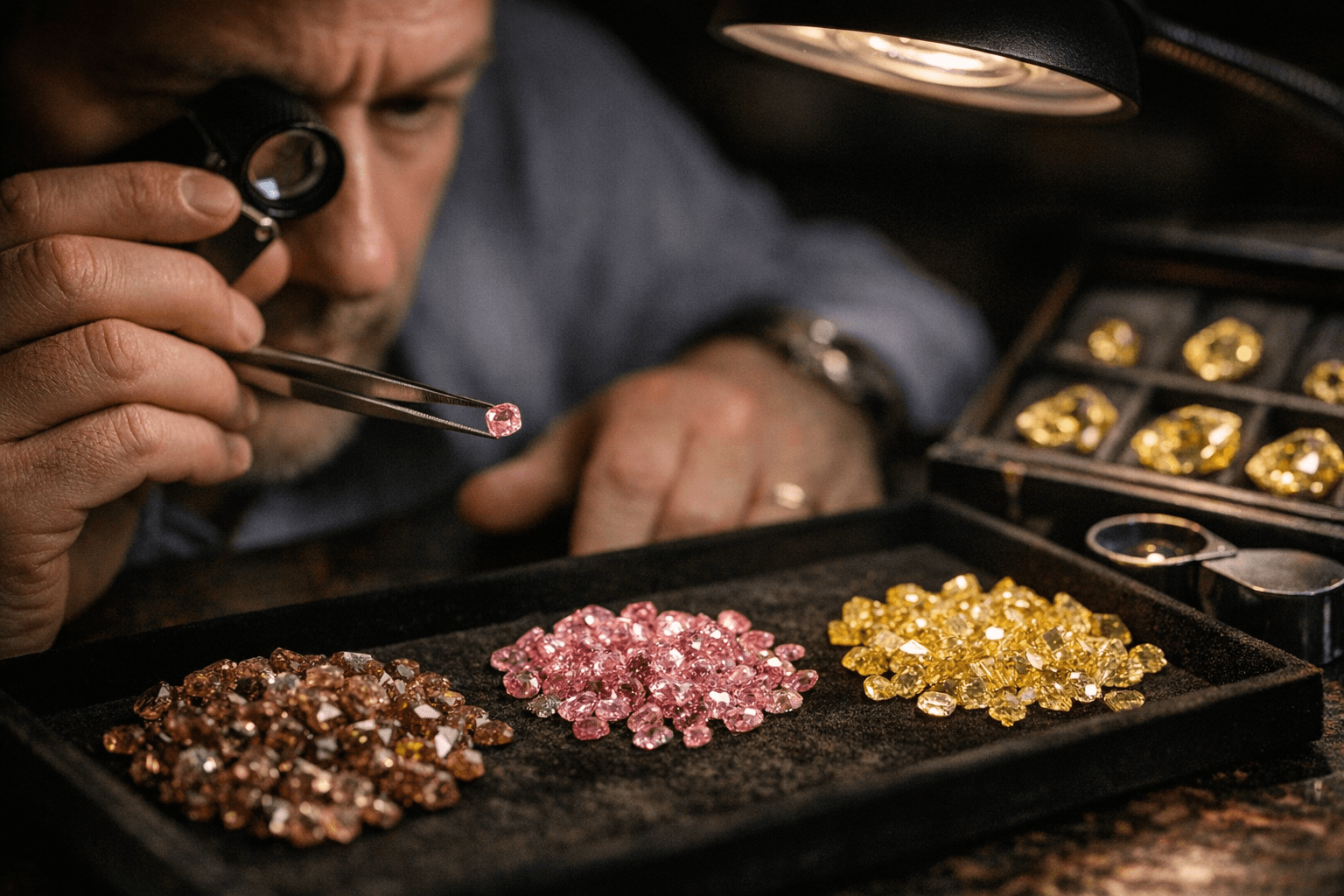
Natural colored diamonds are being read less as a single category and more as three distinct lanes: desert-toned browns, pink investment stones, and yellow gateway stones. That split matters because the market is tightening after Argyle’s closure, while demand is strengthening in India and the Middle East, giving rarity a louder voice than size alone.
GIA draws the line cleanly: fancy color diamonds are stones whose color sits beyond the D-to-Z scale, including yellow and brown diamonds beyond Z as well as pink, blue, green, and red. It also says fancy-intense and fancy-vivid stones generally command higher prices, which means color strength is not just a beauty question. It is a value signal.
Browns: the most accessible lane with real visual character
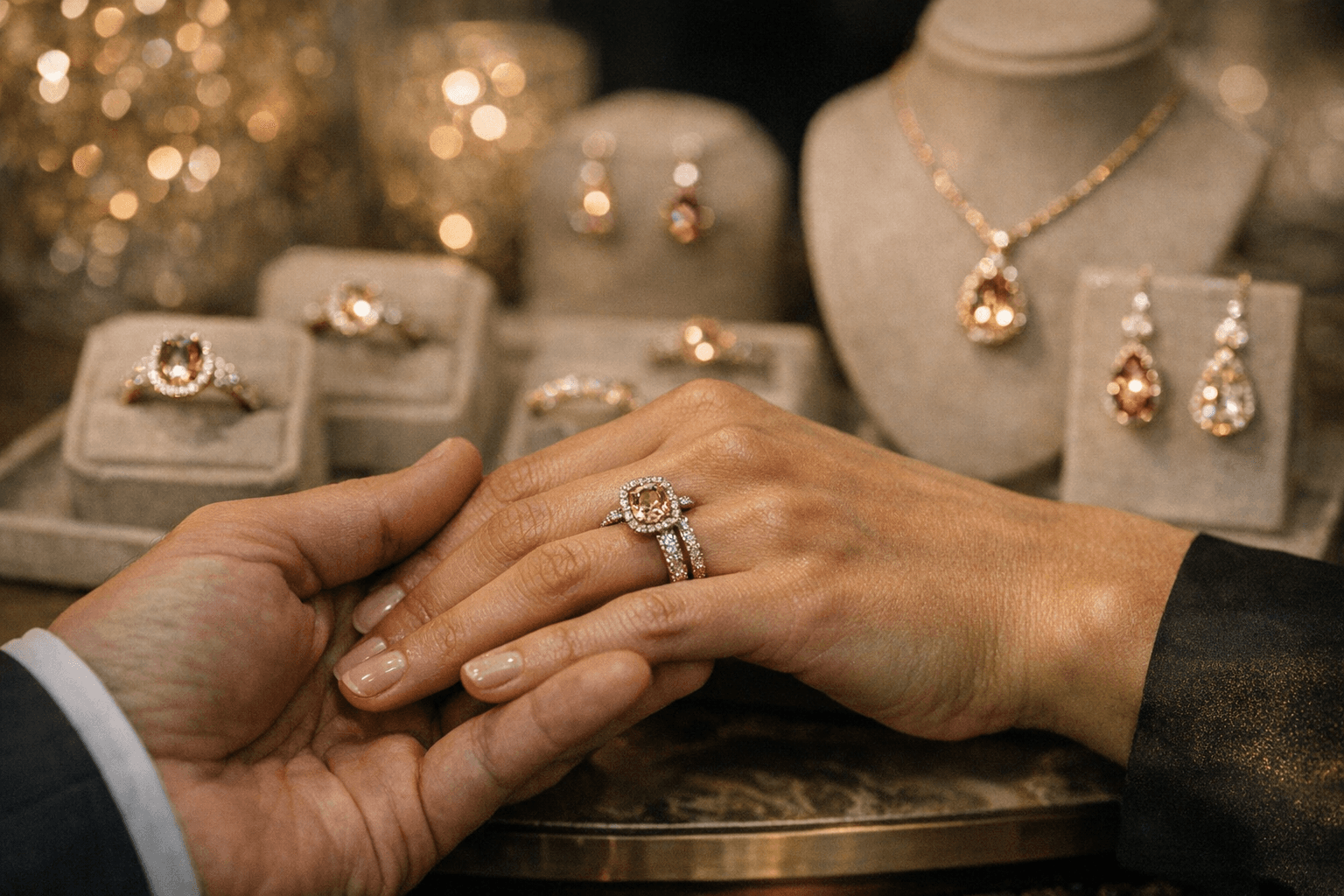
Brown diamonds sit in the most approachable part of the colored-diamond spectrum because GIA places brown among the categories most commonly seen in jewelry trade. Their appeal is not scarcity, but atmosphere: warm, earthy, and quietly distinctive, the kind of stone that reads as chosen rather than flashy. In a market obsessed with rarity, that makes brown diamonds the easiest entry point for buyers who want a natural stone with personality and a lower-key profile.
The best brown stones work when the cut lets their tone feel deliberate, not muddy. That is where the setting matters. A well-made bezel, a slim yellow-gold mounting, or a design that leans into contrast can turn a brown diamond into something considered and contemporary rather than merely affordable. For buyers, the sweet spot is often visual depth over headline rarity.
Pinks: the serious collectible story
Pink diamonds are the lane with the strongest scarcity story, and Argyle is the reason the market still talks about them in such elevated terms. Rio Tinto says Argyle was the world’s largest producer of colored diamonds and supplied more than 90% of the world’s natural red, pink, and violet diamonds during its 37 years of operation. Mining ceased in November 2020, after the mine had produced more than 865 million carats of rough diamonds.
That closure changed the psychology of the category. Rio Tinto has also described Argyle as the virtually sole source of a very small but steady supply of rare pink diamonds, and that is the backdrop behind today’s collector appetite. Pink stones are no longer just pretty anomalies; they are the best-known proof that provenance can shape value as much as size or clarity.
For buyers, that means pink diamonds deserve the most scrutiny and the most patience. The market rewards stronger color, and GIA’s fancy-intense and fancy-vivid ranges generally carry the higher prices, but the deeper story is supply. In a tight market, a pink diamond earns its place through rarity, documented provenance, and the emotional gravity of owning one of the last meaningful traces of a vanished source.
Yellows: the gateway stone with wide appeal
Yellow diamonds are the category’s most welcoming point of entry because they bring color without demanding the same leap in budget or collector conviction as the rarest pinks. GIA counts yellow among the colored-diamond categories most commonly found in jewelry, and that availability makes them feel wearable, bright, and easy to understand. They are the stones many buyers notice first when they want something more expressive than a white diamond, but not as rare or as expensive as a pink.
The smartest yellow diamonds are those with clear saturation and a cut that keeps the color lively face-up. Fancy color grading still matters here, because GIA notes that fancy-intense and fancy-vivid stones generally command higher prices. In practice, that means a richer yellow with stronger color can carry far more presence than a paler stone of similar size.
Why supply feels tighter now
Argyle’s closure is the single biggest reason the colored-diamond conversation feels more constrained. The mine sat in the Kimberley region of Western Australia and had been a defining source for pinks and other colored diamonds, so its shutdown removed a central engine from the supply chain. When a mine that shaped the market for decades stops producing, the loss is not just numerical. It becomes part of the stone’s value story.
The demand side is also shifting. De Beers’ 2025 India Diamond Acquisition Study has been reported as showing India at about 12% of global diamond jewelry demand, up from 10% in 2019, which helps explain why the country now matters so much to natural stones. The Middle East is also part of that broader demand picture. Together, those markets support a collector-minded shift toward stones with a clear identity, not just a polished look.
How to read value before you buy
The current colored-diamond market rewards buyers who look beyond carat weight. Color rarity, mine provenance, and collector psychology now drive value as much as clarity and size, especially in a category where the supply story is part of the appeal. A stone with strong color grading, a documented origin, and a shape that shows off its tone will usually feel more compelling than a larger stone with weaker presence.
It also helps to remember the broader market backdrop. De Beers said consumer demand for diamond jewelry was broadly stable in the first half of 2025, even as rough trading remained difficult and polished trading slowed amid tariff uncertainty. That makes the colored-diamond segment feel less like a hot speculative rush and more like a selective market, where buyers are choosing with intention.
The result is a very legible hierarchy. Browns offer the most accessible way in, yellows give buyers a brighter and still approachable entry, and pinks remain the category’s most charged collectible story. In a tightening market, natural colored diamonds are no longer just about color. They are about where the stone came from, how rare that color really is, and whether the piece feels destined to be worn now or kept for the next generation.
Know something we missed? Have a correction or additional information?
Submit a Tip