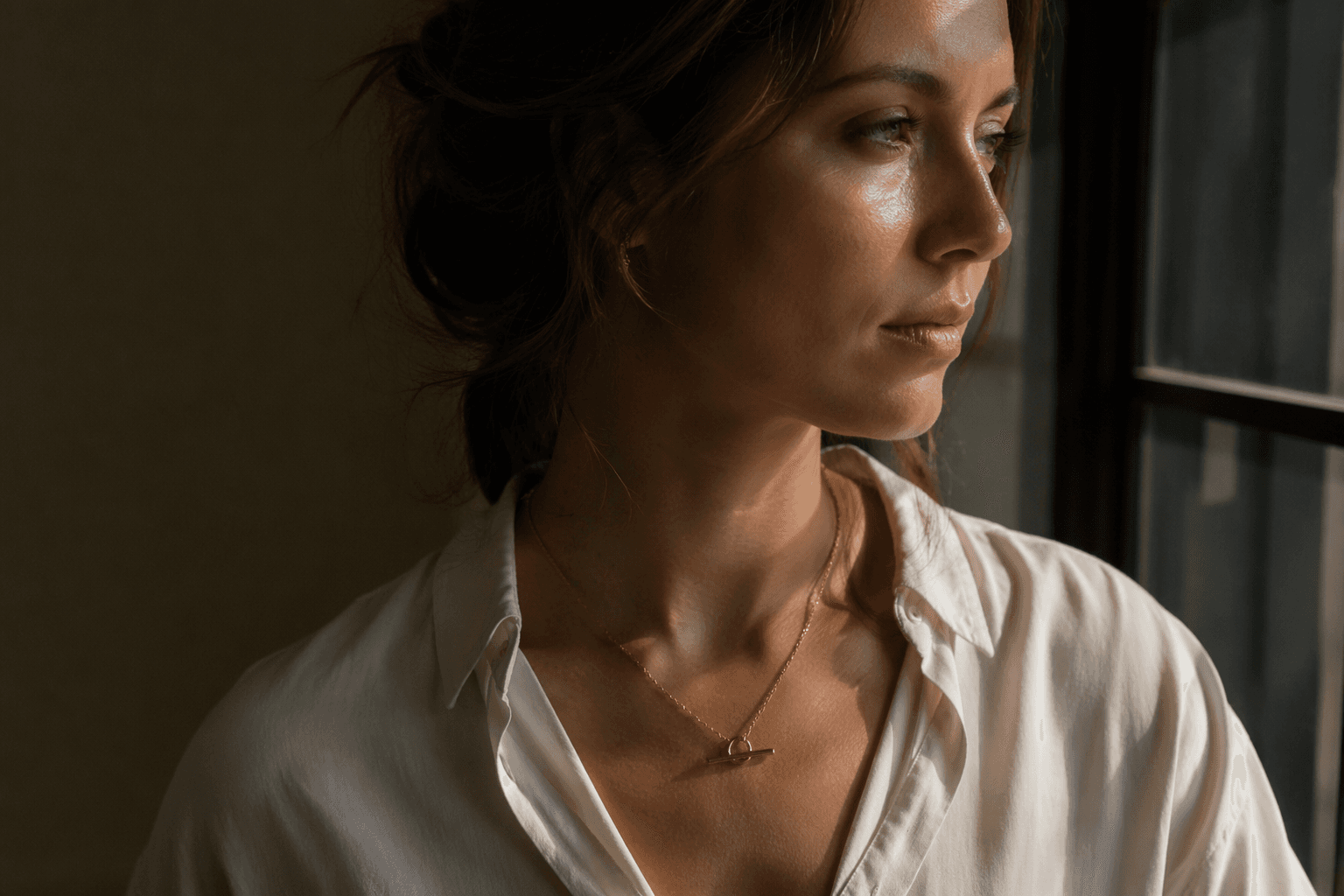
Natural diamonds seek meaning as lab-grown stones gain ground
Lab-grown stones now dominate the engagement-ring conversation, forcing natural diamonds to justify themselves through meaning, provenance and measurable craft.
The new price of meaning
The hardest question facing natural diamonds is no longer whether they are beautiful. It is whether they still justify the premium. With a round 1-carat lab-grown diamond averaging $845 in the first quarter of 2025, compared with about $3,895 for a similar natural stone, the old language of aspiration now has to compete with arithmetic. In a market where more than half of newly married couples surveyed in The Knot’s 2025 Real Weddings Study had a lab-grown engagement ring, the natural diamond is being asked to explain itself in dollars as much as in sentiment.
That shift is bigger than one category or one season. BriteCo found that more than 45% of U.S. consumer engagement ring purchases were lab-grown in 2025, while The Knot’s figures rose from 12% in 2019 to 46% in 2023 and 52% for couples who married in 2024. The pace of change is the story. Lab-grown diamonds are no longer a niche alternative; they have become the default comparison point for anyone buying an engagement ring with a real budget in mind.
A real buying decision now looks different
Picture the ring counter where this argument becomes concrete. One option is a natural diamond, smaller or more modest than the fantasy buyers once carried in their heads, but backed by provenance, provenance now being made more visible through tools like De Beers’ DiamondProof verification device. The other is a lab-grown stone, often larger for the money, and increasingly socially normalized by friends, registries and wedding data.
That is why the purchase decision has changed from “Which diamond?” to “Which story can I afford, and which story do I believe?” For many buyers, the answer is immediate: size wins. For others, the emotional premium attached to a natural stone still matters, but only if the brand can prove more than rarity in the abstract. The modern buyer wants a reason that survives the receipt.
How De Beers is trying to rewrite the script
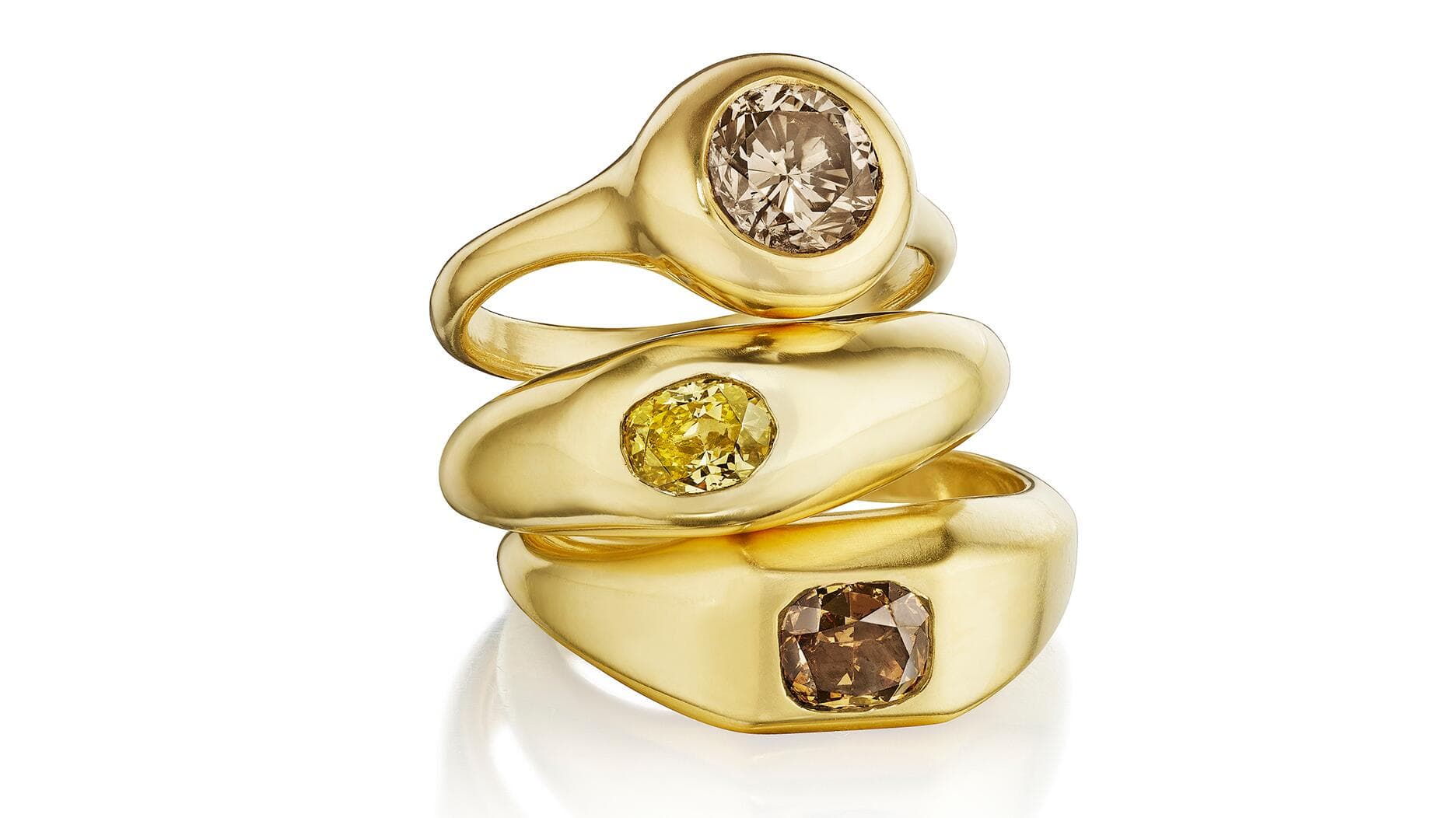
De Beers has responded by leaning hard into differentiation. In June 2025, the company launched Ombré Desert Diamonds as its first new beacon in more than a decade, and said it backed the program with its largest category marketing investment in over ten years. The idea is deliberately broader than a single collection name. De Beers describes Desert Diamonds as drawing on desert landscapes where many natural diamonds originate, and on a spectrum of color from warm whites to champagne tones and amber hues.
That is a smarter argument than repeating that natural diamonds are rare, because it makes variation itself part of the value proposition. In the Desert Diamonds frame, a natural stone is not supposed to look clinically perfect and interchangeable. It is supposed to look like something the earth made, with subtle color as proof of individuality. The company’s broader goal is even more ambitious: to use the beacon concept, previously employed for ideas such as the eternity ring and three-stone ring, to galvanize industry-wide marketing around natural diamonds rather than rely only on legacy prestige.
De Beers is also reinforcing that story with verification. Its DiamondProof device, which it advanced in the U.S. in 2025, is meant to help retailers and consumers distinguish natural from lab-grown stones. That matters because the category’s next battle is not just emotional. It is documentary. If a natural diamond is going to command more, the buyer increasingly expects to know why, and from where.
The business backdrop is still fragile
The repositioning is happening against a difficult trade environment. De Beers said rough diamond trading conditions remained challenging in the first half of 2025, citing surplus polished inventory, increased uncertainty after U.S. tariff announcements in April 2025, and continuing pressure from lab-grown diamonds. At the same time, the company said consumer demand for diamond jewelry was broadly stable, which suggests the category is not disappearing so much as fragmenting.
Paul Rowley put that tension plainly at JCK Las Vegas in 2025, saying the natural diamond business was emerging from one of the worst crises he had seen. That is not the language of a category enjoying a healthy margin of confidence. It is the language of an industry trying to recover its footing while its most visible product, the engagement ring, is being redefined by price-sensitive shoppers and a very effective substitute.
Which arguments still work, and which sound tired
Rarity still has force, but only when it is made tangible. Abstract scarcity is weaker now that a lab-grown stone can be bought, mounted and worn like any other diamond. Provenance is more persuasive, especially when paired with traceability and verification. Longevity remains real because a diamond is still a diamond, whether mined or grown, yet that point alone no longer separates natural from lab-grown in the eyes of many buyers.
Resale is the least settled argument of all. It is often invoked as a quiet reassurance, but the current market shows how hard it is to turn sentiment into recoverable value when price gaps are so wide and consumer preferences are shifting so quickly. Symbolism, meanwhile, still matters, but only when it feels personal rather than inherited from decades of advertising. A ring bought for love can still be a luxury object, but it cannot rely on the old assumption that sentiment automatically excuses the markup.
That is why De Beers’ renewed focus on storytelling makes sense. The category can no longer depend on “natural” as a self-evident advantage. It has to mean something: warmer color, visible origin, a traceable journey, and the sense that the stone’s imperfections are part of its character rather than its flaw.
The numbers do not tell a single story
There is still counterweight in the data. The Natural Diamond Council’s 2025 trends report, built on more than four million jewelry transactions across 2,500 U.S. specialty jewelers, found natural diamond jewelry sales at specialty jewelers rose 2.1% in 2025 and average natural diamond jewelry prices increased 10%. That does not read like a collapse. It reads like a market finding pockets of resilience, especially among buyers who still respond to rarity and natural provenance when those ideas are paired with clear merchandising and stronger confidence.
So the category is not asking to be saved. It is asking to be understood differently. Natural diamonds are being repositioned less as the only meaningful choice and more as the choice for buyers who want a stone with origin, character and a story that can withstand price comparison. In a crowded market where lab-grown diamonds now own the value conversation, that is the only argument that still feels durable.
This article was produced by Prism’s automated news system from verified source data, official records, and press releases, then run through automated quality and moderation checks before publishing. The system is built and supervised by the people who set the standards it runs under. Read our full AI policy.
Did this article answer your question?