New Mexico Couple Pleads Guilty to Selling Vietnamese Jewelry as Navajo-Made
A New Mexico couple admitted they smuggled Vietnamese-made jewelry and sold it as Navajo-made, a fraud prosecutors said stripped income and authorship from Native makers.
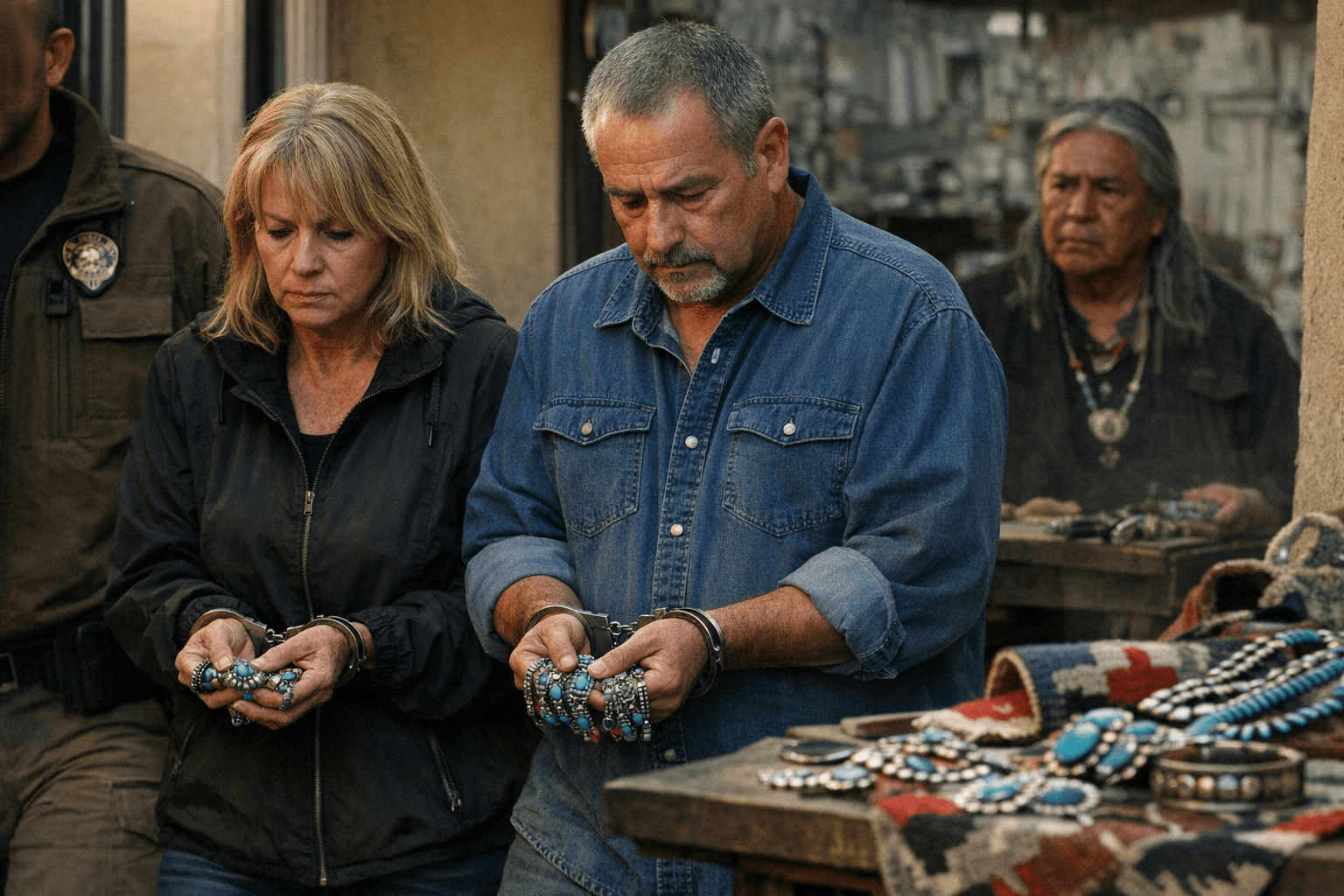
Fake Native American jewelry does more than mislabel silver and stone. It takes money from Indigenous artists and erases the cultural authorship that gives the work its meaning.
Kiem Thanh Huynh, 60, and My Ngoc Truong, 61, pleaded guilty on April 20 in federal court in Asheville, North Carolina, after prosecutors said they smuggled counterfeit Native American jewelry made in Vietnam into the United States and sold it as authentic Navajo-made work. The pair admitted guilt to misrepresentation of Indian goods in an amount greater than $1,000 and smuggling. Prosecutors said the jewelry was imported in bulk and wholesaled under a false Native identity.
The case lands squarely inside the Indian Arts and Crafts Act, the federal truth-in-marketing law Congress enacted in 1990 to protect the economic livelihoods and cultural heritage of Indian artists, artisans and tribes. The Indian Arts and Crafts Board, created in 1935, has long described the law’s purpose as clearing counterfeits from the market and preserving the value of genuine Indigenous craft. For buyers, that means provenance is not a decorative detail. It is the central fact.
Investigators said the business marketed the pieces as handmade Southwestern jewelry while selling imitation Native-style pendants, bracelets and rings. That language matters because it blurs the line between regional inspiration and false tribal attribution. A piece can nod to the Southwest in silhouette or material, but it cannot be passed off as Navajo-made unless it actually is.
The plea also fits a pattern federal prosecutors have confronted in New Mexico before. In 2020, two New Mexico men and two jewelry businesses pleaded guilty to importing Native American-style jewelry from the Philippines and selling it as authentic. In 2017, Nael Ali pleaded guilty to selling counterfeit Native American-style jewelry from two Old Town Albuquerque stores and was later sentenced to six months in prison and ordered to pay $9,048.78 in restitution.
For anyone buying jewelry with Native attribution, the lesson is blunt. Ask for the artist’s name, the tribal affiliation, and documentation that matches the claim. If a seller cannot state exactly who made the piece, where it was made, and why it is being marketed as Native American work, the safest response is to walk away. In a market built on heritage, vagueness is not charm. It is a warning.
This article was produced by Prism’s automated news system from verified source data, official records, and press releases, then run through automated quality and moderation checks before publishing. The system is built and supervised by the people who set the standards it runs under. Read our full AI policy.
Did this article answer your question?