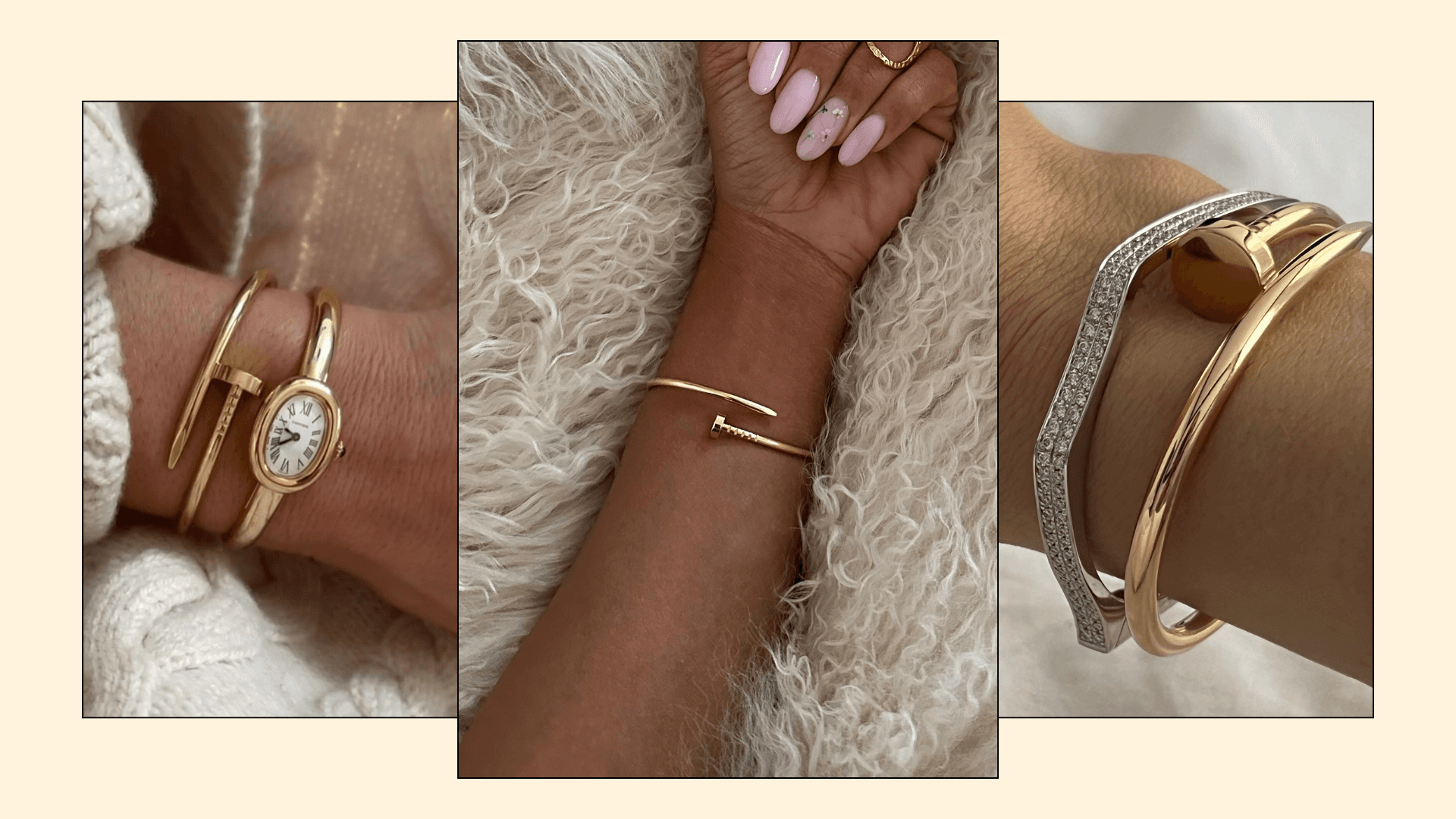
Bauhaus roots reveal minimalist jewelry's discipline, function and elegance
Minimalist jewelry looks modern because Bauhaus turned reduction into a discipline. Slutzky and Art Smith show how geometry, space, and honest materials still carry the look.

Naum Slutzky’s 1929 necklace in the Victoria and Albert Museum collection, built from sections of chromium-plated brass tubing, shows why minimalist jewelry reads as modern. The Bauhaus, founded in 1919 in Weimar by Walter Gropius, set out to rethink the material world through the unity of the arts, then taught students to study materials, color theory, and formal relationships before they ever entered a workshop. By 1923, that discipline had shifted toward mass production, a pivot that explains why a clean line, a calibrated clasp, or an unbroken metal surface can feel more exacting than decorative.
The Bauhaus code beneath the quiet look
What survives from that training is not just a style, but a method. Bauhaus jewelry favors geometry over flourish, construction over surface effect, and visible logic over ornament for ornament’s sake. When a piece feels modern today, it often obeys those rules: a reduced shape, a disciplined profile, and a form designed to be read at a glance.
The school’s move toward industry reframes simplicity as something designed to be repeatable, durable, and direct, rather than delicate or precious in the old sense.
Naum Slutzky and the industrial necklace that still feels current
Slutzky’s necklace is one of the clearest examples of that logic made wearable. It pushes jewelry toward the language of machinery rather than the language of adornment. Bauhaus makers cared more about design and process than the intrinsic value of the material itself, especially in an era when inflation pushed goldsmiths toward base metals.
The necklace’s appeal comes from how little it needs to say. It has a simple, elemental elegance, with geometric construction reduced to the minimum and even the clasp engineered with the same disciplined logic as the rest of the piece.
For readers trying to spot the Bauhaus signature on a modern necklace or cuff, this is the first test. Look for pieces that do not depend on embellishment to explain themselves. Tubes, bars, circles, and squared edges do the work, and the finish stays close to the material rather than disguising it.
Art Smith and the American turn toward negative space
The Bauhaus story does not stop in Europe. Around 1948, Art Smith’s cuff, now in The Met’s collection, shows how modernist clarity evolved in the United States through studio jewelry. Smith was a leading figure in New York’s studio jewelry movement from the 1940s through the 1970s, and his work drew on a wide field of influences: Alexander Calder, Surrealism, jazz, traditional tribal jewelry, and African sculpture.

What makes the cuff relevant to minimalist jewelry is the way Smith used negative space. The wearer’s skin becomes part of the design, so the empty areas are not missing content but active structure. His simple techniques and semi-precious metals gave the pieces a handcrafted quality.
How to read minimalist jewelry now
The easiest way to understand Bauhaus-rooted minimalism is to stop asking whether a piece is decorated and start asking how it is built. The most convincing examples share a few traits that readers can spot immediately:
- Geometric forms that read cleanly from a distance, including tubing, bars, and sharply defined curves.
- Metal surfaces that stay honest to the material, whether chromium-plated brass, semi-precious metals, or other base metals used with intention.
- Clasping and joining that feel designed rather than hidden, so the mechanics reinforce the silhouette.
- Open structure and negative space that let skin become part of the composition.
- A reduced profile that looks resolved, not merely sparse.
This article was produced by Prism’s automated news system from verified source data, official records, and press releases, then run through automated quality and moderation checks before publishing. The system is built and supervised by the people who set the standards it runs under. Read our full AI policy.
Did this article answer your question?