Best Minimalist Necklaces for Everyday Wear (2026 Guide)
Not every delicate necklace is built for daily life. The difference between a chain that lasts a decade and one that tarnishes by summer comes down to three decisions: metal, chain construction, and clasp.

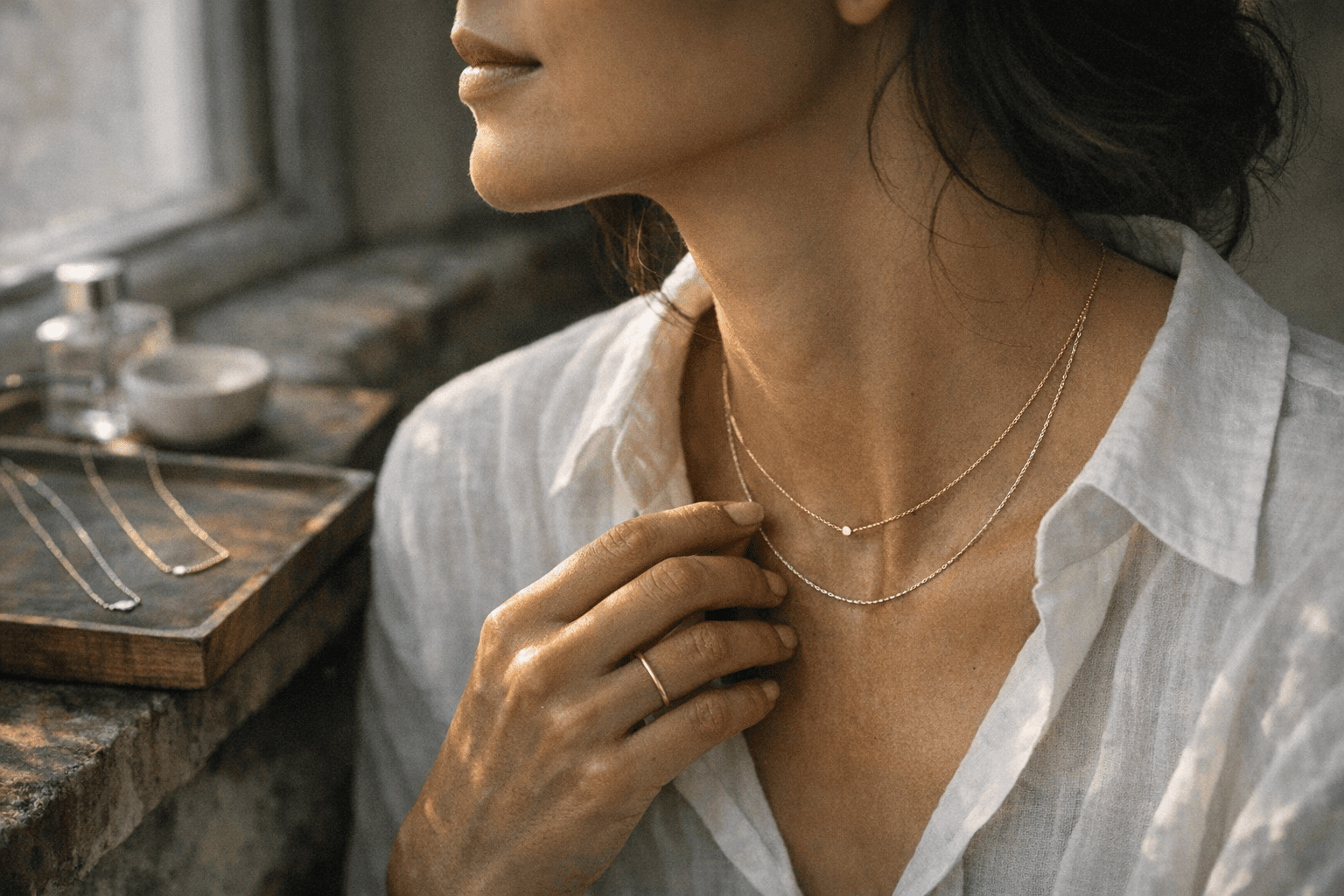
A thin gold chain sounds simple. It sits at the collarbone, barely registers weight, and somehow pulls together everything from a linen shirt to a silk slip dress. But the gap between a chain that looks identical to that one a year from now and one that has gone green or snapped at the clasp is not about aesthetics. It is entirely about construction. The decisions made before you buy, about metal quality, chain architecture, clasp security, stone settings, and skin chemistry, determine whether a minimalist necklace earns a permanent place in your rotation or gets quietly retired to a drawer.
The Metal Hierarchy: Why Material Is Everything
Gold-filled is among the best materials for everyday necklaces because it is waterproof, resists tarnish, lasts anywhere from 10 to 30 or more years, and costs a fraction of solid gold while looking identical. That longevity comes down to how the material is made: gold-filled jewelry is produced by bonding a thick layer of solid gold to a core metal, usually brass. The gold layer is significantly thicker than gold-plated jewelry, and uses a strong bonding process that is longer lasting than electroplating, which is why gold-filled chains are more durable over time.
Solid gold is the most durable option long-term because there is no outer layer to wear away. Scratches can be polished, and the piece will still be gold through and through, meaning with normal wear, solid gold can truly last a lifetime and then some. Both gold-filled and solid gold are typically stamped "14k" or "585." For everyday pieces, 14k is the practical sweet spot: unlike gold-plated or gold-filled jewelry, 14k solid gold lasts a lifetime without tarnishing or fading. 18k is softer and more prone to surface scratches with daily friction.
Gold-filled jewelry, because of its thick gold layer, is built for everyday wear. With normal care, gold-filled pieces can last many years, even a decade or more, without the gold layer wearing through, resisting tarnish and fading better than regular plated jewelry. For those with a tighter budget, this is the most defensible compromise. What to avoid outright: sterling silver is beautiful, but it requires more care, as it tarnishes over time, especially with water exposure. It is not a poor choice, but it demands more attention than gold-filled or solid gold, particularly for 24/7 wearers.
Chain Construction: Not All Delicate Is Equal
Within the minimalist category, chain design varies more than the aesthetic suggests, and those structural differences have real consequences for durability. A box chain necklace is a great option for minimalist chain necklaces with a single pendant, while a cable chain complements a delicate, barely-there look. Both chain types sit flat, resist kinking, and hold their shape well under daily movement.
A delicate cable chain complements a lacy blouse and finer styling, while the ability to mix and match chain types for layering, combining cable with other styles, has fueled enormous popularity. For layering specifically, satellite chains feature small round beads or balls positioned at regular intervals along a fine cable or link chain, creating a delicate, celestial-inspired look that adds visual interest without bulk. They are one of the most popular styles for layering because the bead accents create texture that contrasts beautifully with smooth, plain chains.
The key distinction for everyday durability is gauge: a slightly thicker cable or box chain in the 1 to 1.5 mm range holds up to daily wear, bag friction, and sleep tangles far better than the thinnest micro-chains, while still reading as unmistakably minimal. Very flat or kink-prone designs like herringbone should be avoided, particularly for pieces with pendants.
Clasps: The Weakest Link (Literally)
The clasp is where most everyday necklaces fail, and it receives the least attention at the point of purchase. Spring rings are the least expensive and the least secure of all clasps. The tiny spring can wear out over time, and if it fails, the jewelry may be lost. They are common on inexpensive chains but are not well suited for pieces you intend to wear daily, especially with any meaningful pendant attached.
For everyday wear and for most valuable pieces, the lobster claw clasp offers the perfect balance of security and ease of use. The mechanism is spring-loaded but uses a larger lever that is easier to actuate and substantially more resistant to accidental opening. For heavy, high-value, or heirloom pieces, the box clasp is the most secure option. For a minimal everyday chain, a well-made lobster claw is sufficient and less visually disruptive than a box clasp on a delicate strand.
Skin-Friendly Metals: Reading Beyond "Hypoallergenic"
The term "hypoallergenic" is not regulated in the jewelry industry, so you cannot always trust the label alone. The more reliable approach is to ask about specific alloy composition, particularly nickel content.
Titanium is hypoallergenic: its alloys are aluminum and vanadium, not nickel. Titanium is also corrosion resistant and can be worn in a pool or ocean. For gold jewelry, 14k or 18k gold should be confirmed as nickel-free to prevent allergic reactions in sensitive skin wearers. Sterling silver is generally safe for sensitive skin, composed of 92.5% pure silver, though the copper alloy used in the remaining 7.5% occasionally causes reactions in people with copper sensitivity. A reputable jeweler should know the exact composition of their pieces. Ask specifically about alloys in gold and silver.
The practical upshot: if you have had reactions to fashion jewelry before, opt for solid 14k nickel-free gold or titanium before trying gold-filled alternatives, as the base metal core in gold-filled pieces (usually brass) can occasionally become a factor if the gold layer wears unevenly at points of contact.
Care Habits for 24/7 Wear
The case for keeping a minimalist necklace on through showers, the gym, and sleep is compelling from a lifestyle standpoint, but it requires matching the right material to that level of use. Gold-filled pieces can be worn for most daily activities, including sleep, work, and light exercise. Solid 14k holds up even better to water and friction. The chemicals to watch for are chlorine (pool water degrades gold alloys over time), sulfur compounds in hot springs, and the abrasive salts in sweat during intense exercise.
- Remove any necklace before applying perfume, hairspray, or sunscreen. Let products dry fully before putting jewelry back on.
- A soft lint-free cloth after workouts removes sweat residue before it concentrates.
- Store individual chains in separate pouches or hang them to prevent tangling and micro-abrasion between pieces.
- For sterling silver in particular, anti-tarnish strips in your jewelry box slow oxidation significantly between wears.
Stone Settings: What to Look for When a Pendant Is Involved
A floating diamond solitaire or a small gemstone pendant changes the calculus considerably. For daily wear, the bezel setting, where a thin rim of metal wraps entirely around the stone's girdle, is the most protective architecture available. It guards the stone's edge against impact and eliminates the prongs that snag on fabric in a classic four-prong or six-prong setting. Pavé-set stones along a chain carry more risk: the tiny prongs holding each stone are vulnerable to catching on clothing fibers and loosening with repeated friction.
If a prong setting is preferred aesthetically, look for a low-profile design with four substantial prongs rather than six thin ones. Inspect the prong tips before purchase; they should be rounded, not pointed, which reduces fabric snag and holds better over time.
Building a Price-Quality Framework
The minimalist necklace market spans an enormous range, from under $30 to well over $1,000 for solid gold, and the price does not always correlate with what you can see. A useful framework for building a durable jewelry capsule:
- Under $80: This range is dominated by light-plated brass and sterling silver. Expect sterling to last with care but require occasional polishing. Avoid plated pieces here for everyday use.
- $80 to $300: Gold-filled enters this range from reputable makers. At this price, the construction and clasp quality should be interrogated directly. A gold-filled cable chain from a transparent maker in this bracket is a defensible long-term purchase.
- $300 and above: Solid 14k becomes accessible at the lower end of this range for simple chains. Above $500, pendants with natural stones and bezel settings are within reach. This is the tier where pieces realistically outlast their owners.
The minimalist aesthetic has always rewarded restraint, but restraint applied to construction is equally important. A single chain worn every day for a decade is not just a style choice. It is, quietly, a more sustainable one.
This article was produced by Prism’s automated news system from verified source data, official records, and press releases, then run through automated quality and moderation checks before publishing. The system is built and supervised by the people who set the standards it runs under. Read our full AI policy.
Did this article answer your question?


