Black Rhodium and Oxidized Silver Rings Revive Gothic Minimalism
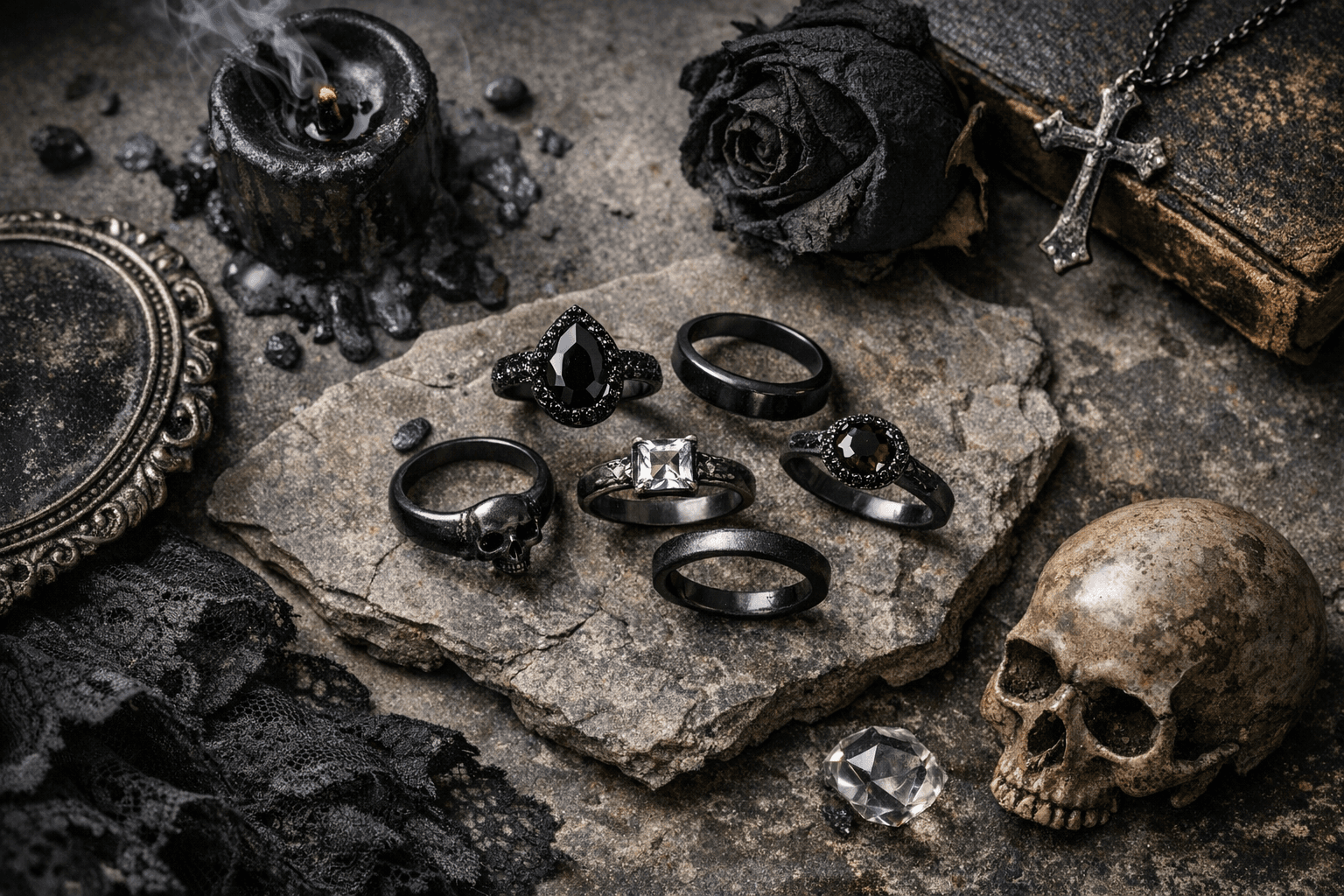
Blackened rings borrow from Victorian mourning, but their appeal is modern: a cleaner contrast that can make diamonds and colored gems look sharper.
Why blackened rings look minimalist now
Black rhodium and oxidized silver have given rings a sharper, quieter kind of drama. The finish reads gothic at first glance, but when the band is slim and the profile is clean, the effect is less costume and more precision, the kind of darkness that makes a single stone or a plain line feel intentional.
The look has old roots. Mourning jewelry was commonly commissioned by early American colonists, and Victorian Britain made black adornment unmistakably fashionable after Queen Victoria retreated into deep mourning after Prince Albert’s death in 1861. Jet jewelry, black crepe, and memorial rings with black enamel, skulls, hairwork, and even rock crystal or glass all fed the visual language that designers are revisiting now.
The difference between black rhodium and oxidized silver
Oxidized silver and black rhodium are not the same, and that difference matters when you want the finish to feel restrained rather than theatrical. Oxidized silver has existed for centuries and rose to prominence in 19th-century Victorian jewelry, which gives it a deeper historical credibility and a softer, timeworn surface. It is often the better choice if you want a ring to feel lived-in, matte, and slightly antique.
Black rhodium is newer, embraced by designers since the late 20th century, and it tends to produce a more exacting, high-contrast surface. That makes it useful when you want a ring to look crisp against skin, especially in a design with clean geometry or a single center stone. If oxidized silver feels like a shadow, black rhodium often feels like a polished outline.
When dark metal works better than bright white metal
Bright white metals can sometimes make a ring read precious in a familiar, bridal way. Dark metals shift the emphasis. GIA notes that black rhodium-plated gold, blackened silver, and blackened titanium are used to create contrast and make gemstones appear more vivid, which is exactly why the finish can feel minimalist rather than decorative.
That contrast works especially well when the design is pared back. A narrow band in blackened silver can make a small diamond look deliberate instead of dainty, while black rhodium around a gem can sharpen the silhouette the way a black frame sharpens a photograph. The result is less sparkle for sparkle’s sake and more clarity of line.
Which stone cuts keep the look clean
The cleanest blackened rings usually favor cuts that hold their shape without visual clutter. Round brilliants can work, but they lean classic; on a dark metal base, they read most minimalist when the setting is low and the prongs are restrained. Oval, emerald, and pear cuts can also look elegant, but the most refined versions keep the stone proportions disciplined and the surrounding metal slim.
Step-cut stones are especially effective because their edges echo the graphic quality of black metal. Emerald cuts, with their long lines and open center, look architectural on a blackened band, while a small baguette or a single shield-shaped stone can feel almost modernist. Dark metals also make colored stones feel fuller in tone, which is why the combination can look fresh even when the materials are traditional.
Good combinations for a pared-back look
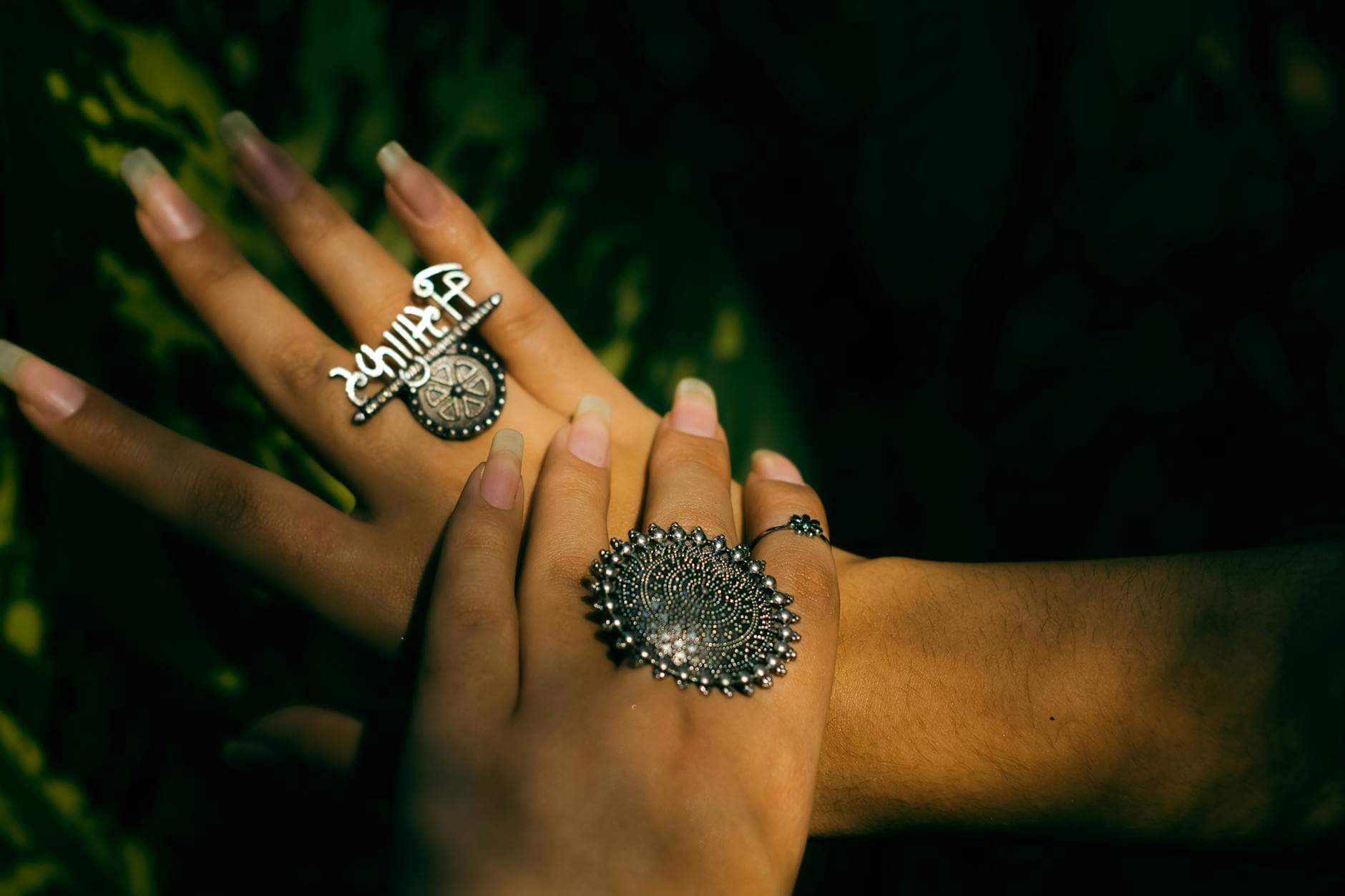
• A slim black rhodium band with a single round or emerald-cut stone • Oxidized silver with a small step-cut gem set low into the band • Blackened titanium with one flush-set diamond for a stark, graphic finish • A dark metal ring with no stone at all, if the appeal is line and texture rather than sparkle
Why the style now includes engagement rings
Blackened rings are no longer confined to fashion jewelry. Recent coverage of alternative engagement styles describes dark oxidized sterling silver as a lower-cost option than diamond rings, and that matters because it shows how the look has moved from concept piece to everyday proposition. The appeal is not only price; it is the chance to wear a ring that signals personal style rather than default convention.
That is also where black rhodium becomes useful. It is already being used across rings, earrings, bracelets, and pendants, including engagement-ring designs, so the finish is not just a novelty on one category. It is part of a broader move toward darker metals that can make a ring feel more individual without turning it into an ornate statement.
How to wear one ring with everyday basics
The easiest way to keep a blackened ring minimalist is to let it stand alone. Pair it with a white T-shirt, a crisp button-down, a ribbed knit, or a soft cashmere sweater, then keep the rest of the jewelry spare. A single black ring can sit well beside a watch, a thin chain, or a plain stud, but too many dark accents can tip the look into theme territory.
The best styling rule is simple: repeat the ring’s restraint in the rest of the outfit. If the band is oxidized silver with an antique surface, wear it with cotton, denim, wool, or tailored black trousers rather than sequins or heavy embellishment. If it is black rhodium on gold, let the finish be the statement and keep the silhouette clean.
Styling cues that keep the mood modern
• Choose one blackened ring and keep other rings off the hand • Match it with everyday fabrics, not costume textures • Favor clean nails and simple cuffs so the finish reads intentional • Use the ring as contrast against pale shirts, gray knits, or black tailoring
Who the finish is for
This moodier finish suits people who like their jewelry to feel architectural, not ornamental. It also suits anyone who wants an engagement ring or daily band that reads personal without relying on a white-diamond formula. The key is proportion: a blackened ring works best when the shape is disciplined and the materials are clearly described, whether the surface is oxidized silver, black rhodium-plated gold, or another darkened metal.
That clarity matters because the look can be easily overworked. When the design stays lean, the history feels present without becoming literal, and the ring lands where the best minimalist jewelry always does: with enough edge to be memorable, and enough restraint to wear every day.
This article was produced by Prism’s automated news system from verified source data, official records, and press releases, then run through automated quality and moderation checks before publishing. The system is built and supervised by the people who set the standards it runs under. Read our full AI policy.
Did this article answer your question?


