Choosing a Delicate Diamond Necklace: Metal, Settings, and Care Tips
The right delicate diamond necklace lives at your collarbone daily, photographs beautifully, and never snags — if you know what to look for in metal, setting, and chain.
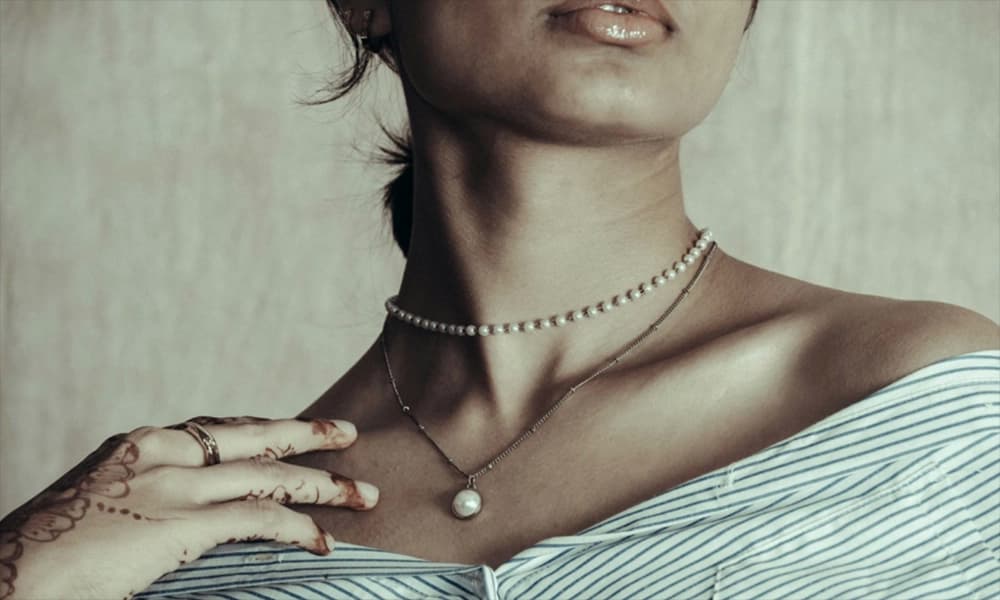
There is a specific kind of necklace that never quite leaves your neck. You shower in it, sleep in it occasionally against better judgment, and reach for it on mornings when every other decision feels too hard. If that sounds like a piece you want — one that disappears into daily life but catches the light in photographs and looks intentional layered over anything from a white tee to a silk button-down — then a delicate diamond necklace is exactly what you are looking for. The harder part is choosing one that actually holds up to that life.
Start With the Metal: Solid Gold Is Non-Negotiable
The single most consequential decision in buying a delicate necklace is not the diamond. It is the metal underneath it. Gold-plated pieces rest a thin layer of gold over a base metal, typically brass or copper, and that layer wears away. It scratches, chips, and tarnishes, often within months of daily wear, especially at friction points like clasps and chain links. Solid gold, where the entire piece is made of a gold alloy, does none of those things.
Pure 24-karat gold is too soft for everyday wear and must be alloyed with other metals such as silver, copper, or zinc to increase its hardness and durability. This is where 14-karat gold earns its reputation as the practical sweet spot: it contains enough alloy to resist denting and warping through daily activity while retaining real gold's warm color and skin compatibility. For white gold, rhodium plating gives the piece its signature color along with added shine and durability, though it requires occasional re-plating over years of wear. Yellow and rose gold in 14k are lower maintenance in that regard.
If provenance matters to you, which it should, ask whether the gold is recycled. Mejuri, for instance, crafts its 14k pieces from 94% recycled gold, a meaningful reduction in mining impact. That claim is verifiable. Vague language like "responsibly made" or "conscious collection" without a specific recycled-content figure or certification is not enough. Look for brands that cite recycled content percentages, Fairmined certification, or membership in the Responsible Jewellery Council.
The Setting: Bezel or Prong, and Why It Matters for Daily Wear
Once you have settled on solid gold, the setting is the next practical decision, and it is not just aesthetic. It determines how the piece behaves on your body all day.
A prong setting grips the diamond at specific points, typically four or six, exposing the maximum amount of stone to light. The brilliance is undeniable, especially with a round brilliant-cut diamond, but prongs can loosen over time or snag on fabrics, and a loosened prong on a moving chain is a fast route to a lost stone. For a necklace worn casually every day, that risk compounds over time.
A bezel setting completely encircles the stone, holding it snugly in place, and is smooth, sturdy, and practically maintenance-free. It also reads slightly more modern, with a clean metal rim around the diamond that gives the piece a low, streamlined profile. That profile matters more than people realize: the primary reason to choose a bezel setting for daily wear is its ability to protect the gemstone from impact and prevent snagging on clothing or hair. If you pull a lot of chunky knitwear over your head or carry a bag with a rough strap that crosses your chest, a bezel is simply the more practical choice.
A half-bezel, which frames the stone on two sides rather than fully encircling it, splits the difference: more light enters the diamond than a full bezel allows, and the profile stays low enough to avoid constant snagging. It is worth looking for this configuration if you want brilliance without the catch-and-drag of an exposed prong.
Style Archetypes: Three Silhouettes That Actually Work
Within the minimalist category, three pendant types dominate for good reason.
The floating diamond, sometimes called a bezel solitaire or suspended diamond, is the most elemental: a single stone set directly on a cable chain with no visible pendant bail. It creates the illusion that the diamond is floating at the collarbone, and it layers effortlessly because the profile is nearly flat. This is the piece that disappears when you wear it alone and amplifies everything when you stack it.
The solitaire pendant sits on a short bail, giving the diamond a slight lift off the skin. A 0.25-carat solitaire pendant offers delicate refinement, while 0.50 to 1 carat creates a more striking statement, with chain length playing a key role in how presence is felt. This silhouette photographs particularly well because the pendant catches directional light at a slightly elevated angle, making the diamond flash even in casual indoor shots.
The micro-pavé bar is the most architectural of the three: a thin rectangular setting lined with tiny pavé-set diamonds, lying flat against the skin. It reads as a line of light rather than a single point, which makes it particularly effective layered beneath a solitaire, giving the stacked look a sense of deliberate composition rather than accumulated impulse buys.
Chain Length and Thickness: The Decisions That Affect Every Outfit
Chain length is where most buyers make a mistake. The numbers are simple but the logic requires deliberate thought.
A 16-inch chain frames the collarbone beautifully, while 18 inches offers a classic drop suited to everyday elegance. For wearing over a crew-neck tee, 16 inches positions the pendant right at the neckline, which tends to disappear into the fabric. An 18-inch chain clears most crew necks and sits just below the collarbone, which is more visible and more versatile. For button-downs, especially when worn open at the collar, either length works, but 16 inches keeps the pendant tucked enough to feel intentional rather than accidental.
Chain thickness is the practical variable most buyers overlook entirely. A cable or box chain at 0.8 to 1mm is fine enough to read as delicate but substantial enough to resist the kinking that plagues ultra-fine chains under 0.6mm. Longer chains may tangle easily, and thicker ones need regular cleaning to maintain shine. For a single everyday piece, a 16-to-18-inch chain at 1mm strikes the balance. Anything lighter will need constant unraveling; anything heavier will overpower a small pendant.
For layering, the logic is about spacing: pairing an 18-inch chain with a shorter or longer piece creates depth without overpowering the look. A floating diamond at 16 inches paired with a micro-pavé bar at 18 inches is a coherent stack because the silhouettes are different, the lengths are staggered, and both sit close to the body.
Three Quick Tests for a Sturdy Setting
Before you buy, or when you pick up a piece you already own, run these checks:
- Hold the pendant between your fingers and gently try to rotate the stone. In a well-set bezel, there should be zero movement. In a prong setting, the stone should feel absolutely fixed, not spring-loaded or loose.
- Look at the prong tips under good light or a loupe. They should be rounded and flush against the girdle of the diamond, not sharp, thin, or visibly bent. Sharp prongs are prongs that will catch fabric.
- Pull the chain taut at the pendant bail and check where the bail meets the pendant. This junction, where the chain attaches, is the most common failure point in delicate necklaces. The connection should feel solid, with no visible gap or wobble.
Keeping It Brilliant: At-Home Care That Actually Works
Diamonds attract grease from skin and product, which dulls their brilliance faster than most people expect. A simple cleaning routine restores that light in minutes.
Fill a small bowl with warm water and a few drops of mild dish soap. Set the necklace in it for about ten minutes to loosen oils and buildup, especially around the setting where residue collects against the metal. Use a soft brush and gentle strokes to clean around the pendant, paying attention to any buildup around the setting. Rinse under lukewarm running water, holding the drain closed, and pat dry with a lint-free cloth. Let the chain air-dry flat before storing it.
For storage, a single hook or a short jewelry peg keeps the chain from pooling into tangles overnight. If you are traveling, a folded piece of velvet or a small zip pouch keeps delicate chains from migrating into each other.
Avoid ultrasonic cleaners for pavé settings, where tiny stones can loosen under vibration. They are fine for a solid bezel solitaire, but the safer default is always the soap-and-brush method, which works for every setting type and costs nothing.
A piece built from solid 14k gold with a low-profile setting and a well-gauged chain will not ask much of you. Clean it monthly, check the setting twice a year, and it will remain exactly what you bought it to be: the one necklace you do not have to think about, that somehow always looks like you did.
This article was produced by Prism’s automated news system from verified source data, official records, and press releases, then run through automated quality and moderation checks before publishing. The system is built and supervised by the people who set the standards it runs under. Read our full AI policy.
Did this article answer your question?


