Foundrae's Madison Avenue Store Invites Customers to Explore Discovery Drawers
Foundrae's Madison Avenue store hides its jewelry in wooden Discovery Drawers, turning the act of browsing into something closer to uncovering a secret.
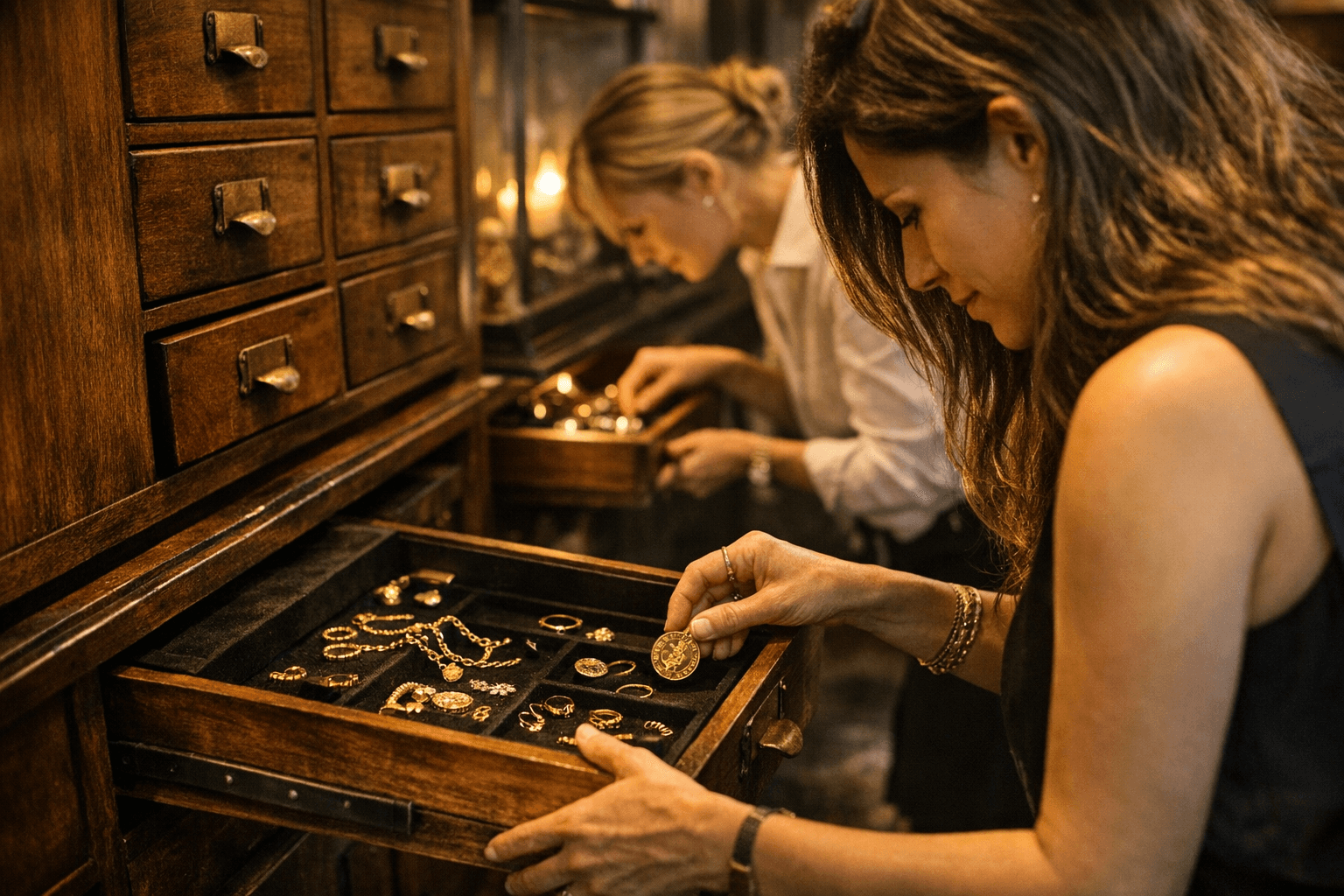
Walk into most fine jewelry boutiques and the experience is immediate, almost clinical: pieces arranged behind glass, lit to dazzle, priced to intimidate. Foundrae, the New York-based jewelry brand founded by Beth Hutchens, has built something deliberately different on Madison Avenue. Here, the jewelry doesn't announce itself. It waits to be found.
The Discovery Drawer Concept
The centerpiece of Foundrae's Madison Avenue retail experience is the Discovery Drawer, a system of wooden drawers that house the brand's pieces rather than displaying them in conventional vitrines. The choice is architecturally and philosophically significant. Glass cases create distance between the object and the person considering it; they signal that something is precious by making it untouchable. Wooden drawers do the opposite. They invite the hand, slow the pace, and shift the dynamic from passive viewing to active discovery.
For a brand whose identity is built around meaning, narrative, and personal symbolism, this is not incidental design. Foundrae's jewelry has always been conceived as a language, a system of talismans and medallions that its wearers use to articulate something about who they are or what they carry. Asking customers to open a drawer before they see a piece extends that philosophy into the physical space of retail. The discovery is part of the meaning.
Beth Hutchens and the Brand's Design Philosophy
Beth Hutchens founded Foundrae with a conviction that fine jewelry should function as more than adornment. The brand's pieces are dense with symbolism, drawing on iconography that ranges from classical antiquity to personal mythology. Hutchens has consistently resisted the idea that jewelry is primarily decorative; in her framework, it is talismanic, a physical object that holds and communicates intention.
That philosophy shapes every decision at the Madison Avenue store. The space is not designed for high foot traffic or impulse purchases. It is designed for the kind of conversation that happens when a customer opens a drawer, holds a piece, and asks what it means. The retail environment becomes an extension of the jewelry itself: something that rewards attention and doesn't yield all of its meaning at a glance.
Why Retail Intimacy Matters in Fine Jewelry
The broader fine jewelry market has spent the last decade wrestling with the tension between accessibility and exclusivity. Direct-to-consumer brands have pushed toward transparency in pricing and sourcing; heritage houses have defended the mystique of the in-store experience. Foundrae's Discovery Drawer model represents a third path: intimate without being exclusionary, curated without being cold.
There is also a practical argument for the format. Fine jewelry is among the most tactile of purchases. The weight of a chain, the finish of a bezel, the way a medallion sits against the sternum, none of these qualities translate through a screen or even through glass. By placing pieces in drawers that must be opened, Foundrae engineers a moment of direct contact between object and potential owner before any transaction takes place. That contact is itself a form of education, one that no product description or high-resolution photograph can replicate.
Provenance and Craft: What the Drawers Hold
Foundrae works primarily in 18-karat gold, with pieces that incorporate enamel, diamonds, and a range of colored stones. The brand's signature medallion format draws on the history of devotional and commemorative jewelry, objects that have been worn close to the body for centuries because their value is as much symbolic as material.
For readers who care about where materials come from and how claims hold up under scrutiny, Foundrae occupies an interesting position. The brand's emphasis on meaning and intentionality aligns naturally with a more considered approach to sourcing, though as with many fine jewelry houses, the specifics of supply chain transparency deserve direct inquiry rather than assumption. If you are drawn to Foundrae's philosophy and considering a significant purchase, asking the staff in that Madison Avenue store about stone provenance and responsible sourcing practices is precisely the kind of conversation the Discovery Drawer format seems designed to invite.
The Store as Editorial Statement
Madison Avenue has long functioned as a kind of editorial statement in American retail: a street where the address itself signals a certain seriousness of intention. Foundrae's choice to build its Discovery Drawer experience there places the brand in conversation with the heritage jewelers and luxury houses that line the same corridor, while the interior design philosophy points in an entirely different direction.
Where neighbors might use grand architecture and theatrical lighting to communicate value, Foundrae uses restraint and wood and the small, unhurried ritual of opening a drawer. It is a bet on a particular kind of customer, one who finds the conventional jewelry boutique experience alienating rather than aspirational, and who wants the act of choosing a piece to feel more like research than performance.
What This Means for the Thoughtful Buyer
If you approach jewelry as an investment in meaning as much as material value, Foundrae's retail model is worth understanding on its own terms. The Discovery Drawer format is not a gimmick; it is a coherent expression of the brand's belief that the relationship between a person and a piece of jewelry begins before the purchase, in the moment of handling and consideration.
For anyone researching Foundrae seriously, a visit to the Madison Avenue store is more informative than any amount of online browsing. The pieces are designed to be held, and the staff are positioned as guides through the brand's symbolic vocabulary rather than as salespeople moving inventory. Whether that experience translates into a purchase worth making depends, as it always does in fine jewelry, on whether the craftsmanship justifies the price and whether the provenance holds up to scrutiny.
What Hutchens has built on Madison Avenue is a retail environment that at least asks the right questions, and one that trusts its customers to linger long enough to find the answers in a drawer.
Know something we missed? Have a correction or additional information?
Submit a Tip
%3Amax_bytes(150000)%3Astrip_icc()%3Afocal(571x0%3A573x2)%2Fzendaya-ring-oscars-2-031526-83c199ddc83944b5aa044b049e5f52b2.jpg&w=1920&q=75)