How to Clean and Care for Sterling Silver Minimalist Jewelry
Sterling silver tarnishes by chemistry, not neglect; a five-minute monthly routine is all that stands between your favorite thin chain and silver sulfide.
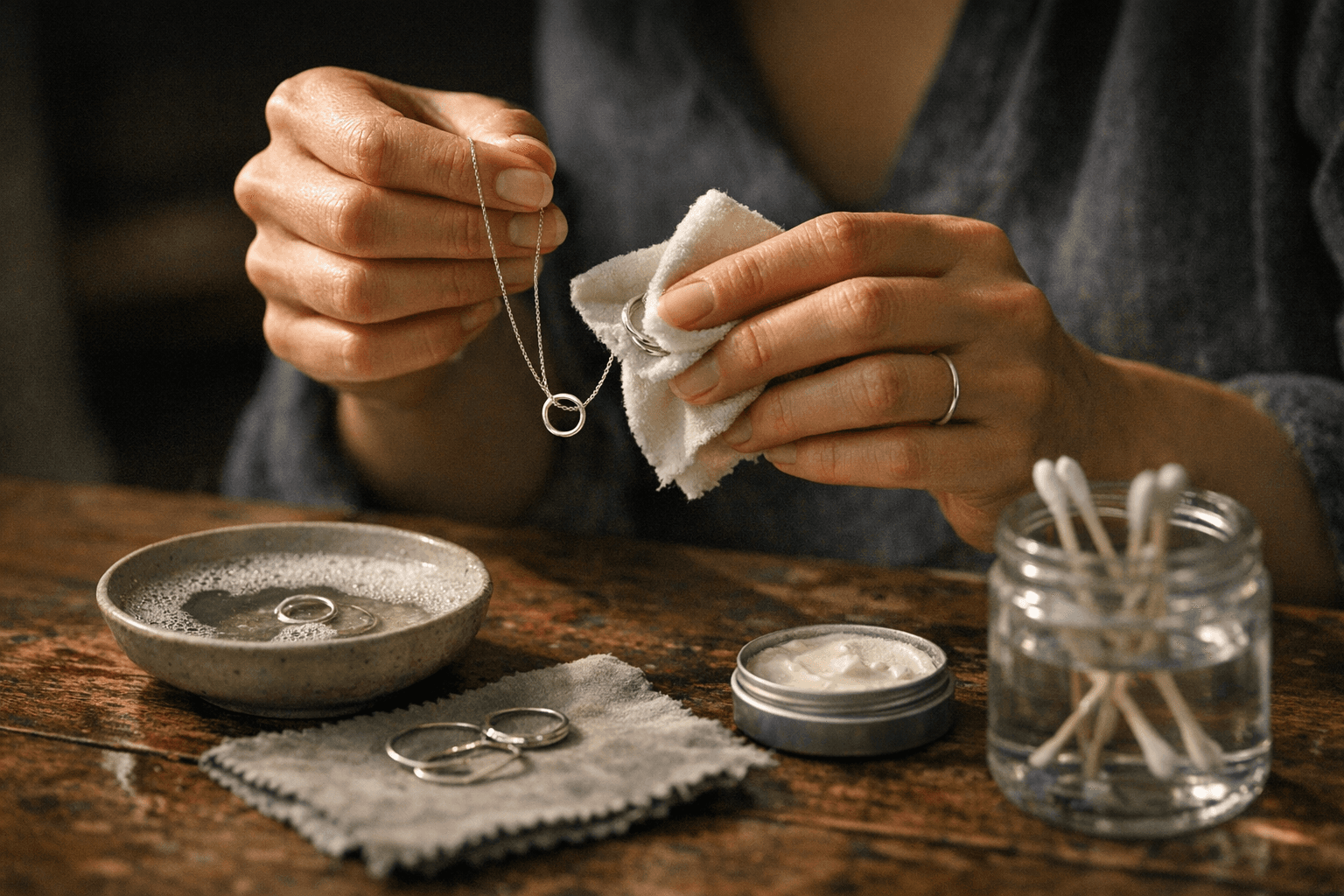
That thin sterling chain you reach for every morning, the one that sits at the collarbone and catches light in a barely-there way, is more chemically reactive than it looks. Sterling silver does not tarnish because you've been careless with it. It tarnishes because it is alive to its environment in a way that gold is not: sulfur compounds in the air, on skin, even in trace amounts from certain foods and cosmetics, bond with the silver at its surface to form silver sulfide, the dull yellow-to-black film that can make a once-luminous piece look forgotten. Understanding that process is the first step to reversing it.
Know What You're Working With
Before reaching for any cleaner, identify exactly what kind of silver piece you're holding, because the answer changes everything about how you clean it.
Fine silver, also called .999, is 99.9% pure silver. It's rarely used in jewelry because it's too soft for everyday wear. Sterling silver, stamped .925, contains 92.5% silver and 7.5% copper (occasionally another alloy). That copper content gives the metal its durability and is also why, over time, it can leave a faint green mark on skin: the copper reacts with the acids naturally present in perspiration, forming copper salts. In 1851, Tiffany & Co. became the first American company to formally adopt the .925 sterling standard, which is now the global benchmark for silver jewelry quality.
Silver-plated pieces are an entirely different category: a thin silver layer deposited over a base metal, usually brass or copper. They require the gentlest possible touch, because aggressive polishing or chemical dips can strip the plating entirely. Vermeil, by contrast, is a thick layer of gold over sterling silver, which gives it more durability than silver plate but still warrants careful handling. Argentium silver, a modern alloy that replaces some of the copper with germanium, tarnishes significantly more slowly than standard sterling and is worth considering for everyday pieces you'd rather not think about.
A Graduated Cleaning Approach
The most effective silver care is also the least dramatic. A five-minute monthly routine, handled consistently, prevents the kind of deep, oxidized tarnish that requires real intervention.
Step 1: Daily Gentle Maintenance
A microfiber cloth or a dedicated silver polishing cloth is the first line of defense and the one most people skip. After wearing a piece, wipe it down before putting it away. This removes the skin oils, sweat, and trace cosmetic residue that accelerate tarnishing when left to sit. When using a polishing cloth, rub along the metal's natural grain rather than in circular motions, which can create fine swirl marks over time, particularly visible on flat surfaces like wafer-thin rings or disc pendants.
Step 2: Soap-and-Water Soak for Light Grime
When a cloth alone isn't restoring the shine, a mild dish soap and warm water solution handles most light tarnish and surface buildup. Mix a few drops of soap into a small bowl of warm (not hot) water, let the piece soak for two to three minutes, then use a very soft baby toothbrush to work into any textured areas or chain links. Rinse under cool running water and dry thoroughly with a soft cloth before storing. This method is safe for most sterling silver pieces and gentle enough for regular use.
Step 3: Baking Soda for Heavier Tarnish
For pieces that have developed a more pronounced discoloration, a baking soda paste applied with a soft cloth can lift the silver sulfide buildup. Dissolve one tablespoon of baking soda per cup of hot water, or work the powder into a paste with a small amount of water. Apply gently, rinse well, and dry completely.
A more aggressive variation uses aluminum foil as a catalyst: line a bowl with foil, dissolve one tablespoon of baking soda per cup of hot water, and submerge the silver so it touches the foil. The electrochemical reaction pulls the sulfide off the silver and onto the aluminum, and you can actually watch the tarnish transfer. The solution will bubble. Remove pieces carefully since they will be warm, rinse with cool water, and dry immediately.
One critical caveat: neither baking soda paste nor the aluminum foil method is appropriate for silver-plated pieces (it can strip the plating), for pieces with intentional patina or oxidized detailing, or for any jewelry set with pearls, opals, turquoise, amber, or coral. These porous stones should never be submerged in water, and the chemical reaction can damage them irreparably. For any piece with stones, the mild soap-and-water method is the ceiling of safe at-home cleaning.
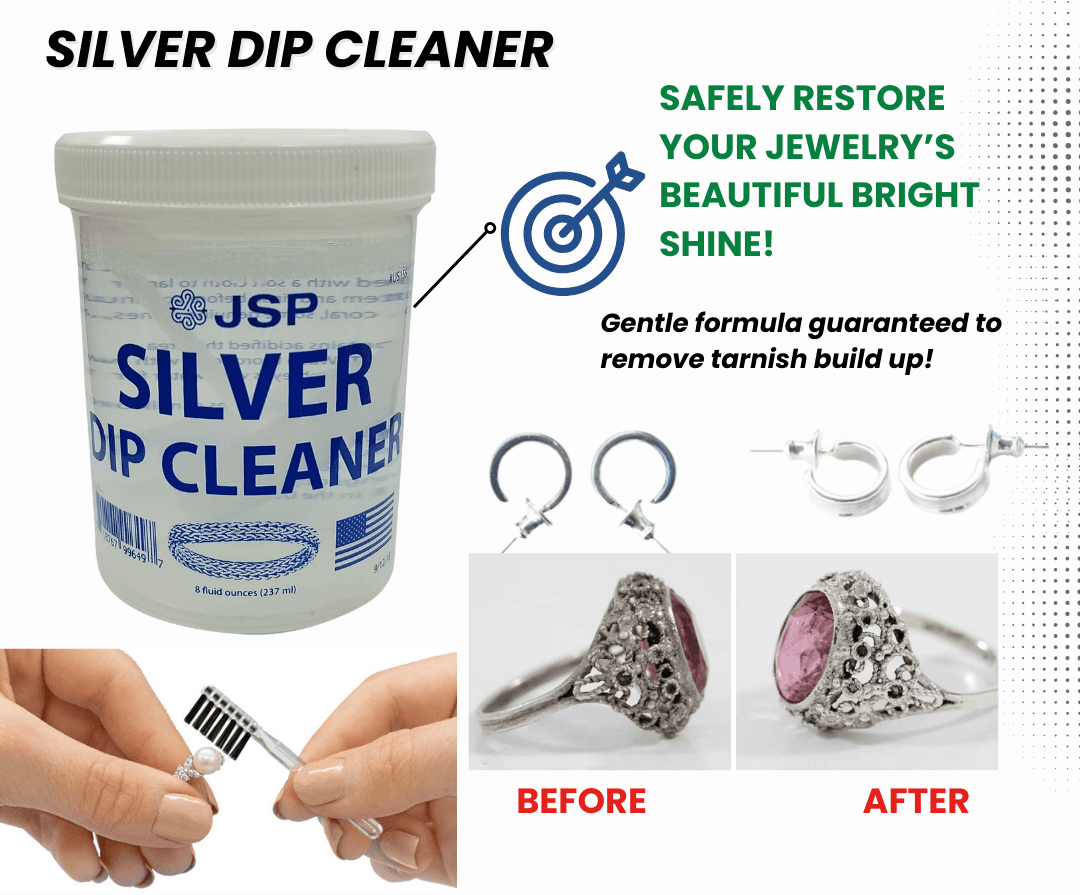
Commercial silver dips work quickly and can be effective on heavily tarnished solid sterling, but they are chemical solutions that warrant the same precautions: keep plated pieces out entirely, and rinse thoroughly afterward.
Step 4: When to Call a Professional
Some situations simply exceed the reach of home care. If a silver-plated piece has lost its plating in patches, a jeweler can re-plate it. If a thin ring or delicate chain has developed weakened links, cleaning can wait until after a structural repair. And if a piece carries diamonds, sapphires, emeralds, or other faceted gemstones in micro-pavé or prong settings, a professional ultrasonic cleaning under controlled conditions is safer than any at-home method, because the vibration or chemical exposure can loosen stones in settings that have worn over time. Always inspect prongs and micro-settings before cleaning; a stone that rocks slightly in its seat should visit a bench jeweler before it visits a bowl of baking soda water.
What to Avoid Entirely
The list of damaging substances is shorter than people expect, but each one causes real harm:
- Bleach and ammonia-based household cleaners can permanently damage sterling silver and destroy certain gemstones; never use them on jewelry under any circumstances.
- Toothpaste, despite its reputation as a folk remedy, is abrasive enough to scratch silver surfaces.
- Chlorinated pool water accelerates tarnishing and stresses metal over time; always remove silver before swimming.
- Perfume, hairspray, and body lotion can all leave chemical residues that dull the surface; the right order is always jewelry on last, after products have dried.
- Rubber and latex, including rubber bands sometimes used for storage, contain sulfur compounds and will cause tarnish at the contact point.
Storage: The Underestimated Variable
How silver is stored between wearings matters as much as how it's cleaned. The goal is to limit the piece's exposure to sulfur-bearing air and humidity.
- Airtight zip-close pouches, particularly those made from anti-tarnish fabric, create a low-sulfur microenvironment around each piece.
- Anti-tarnish strips, infused with corrosion inhibitors, absorb the sulfur compounds present in enclosed storage spaces before they can reach the metal.
- Low-humidity environments slow the tarnishing reaction; bathroom storage, convenient as it is, exposes silver to steam and moisture with every shower.
- Separating pieces prevents scratching. A delicate 1mm chain stored loose with heavier pendants is a tangle waiting to happen and a scratch risk at every contact point.
Counterintuitively, regular wear actually slows tarnishing: the natural oils on skin form a light protective layer on the metal surface. A piece left sitting for months tarnishes faster than one worn weekly.
Thinking Long-Term: Material Alternatives
For anyone who loves the look of silver but finds the maintenance cycle frustrating, two alternatives are worth understanding. Argentium silver, which substitutes germanium for a portion of the copper content, forms a germanium oxide layer at the surface that resists sulfide formation far more effectively than standard .925. It costs more than sterling, but the maintenance trade-off is significant. Vermeil, gold over sterling, sidesteps the tarnish question almost entirely for the gold-toned surface, though the underlying sterling can still be exposed at edges and high-wear points over time.
For thin chains, stacking rings, and the kind of understated everyday pieces that define minimalist jewelry at its best, a five-minute monthly ritual, a cloth, a bowl of mild soapy water, and a dry soft cloth, is genuinely sufficient to keep sterling looking as considered as the day you first put it on. The chemistry is working against you; the routine doesn't have to be.
This article was produced by Prism’s automated news system from verified source data, official records, and press releases, then run through automated quality and moderation checks before publishing. The system is built and supervised by the people who set the standards it runs under. Read our full AI policy.
Did this article answer your question?


