Kate’s tanzanite pendant turns a minimal ANZAC Day look sentimental
Kate’s rare tanzanite pendant gave ANZAC Day its emotional center, turning a restrained navy look into a quiet Diana tribute.
A single jewel did the talking
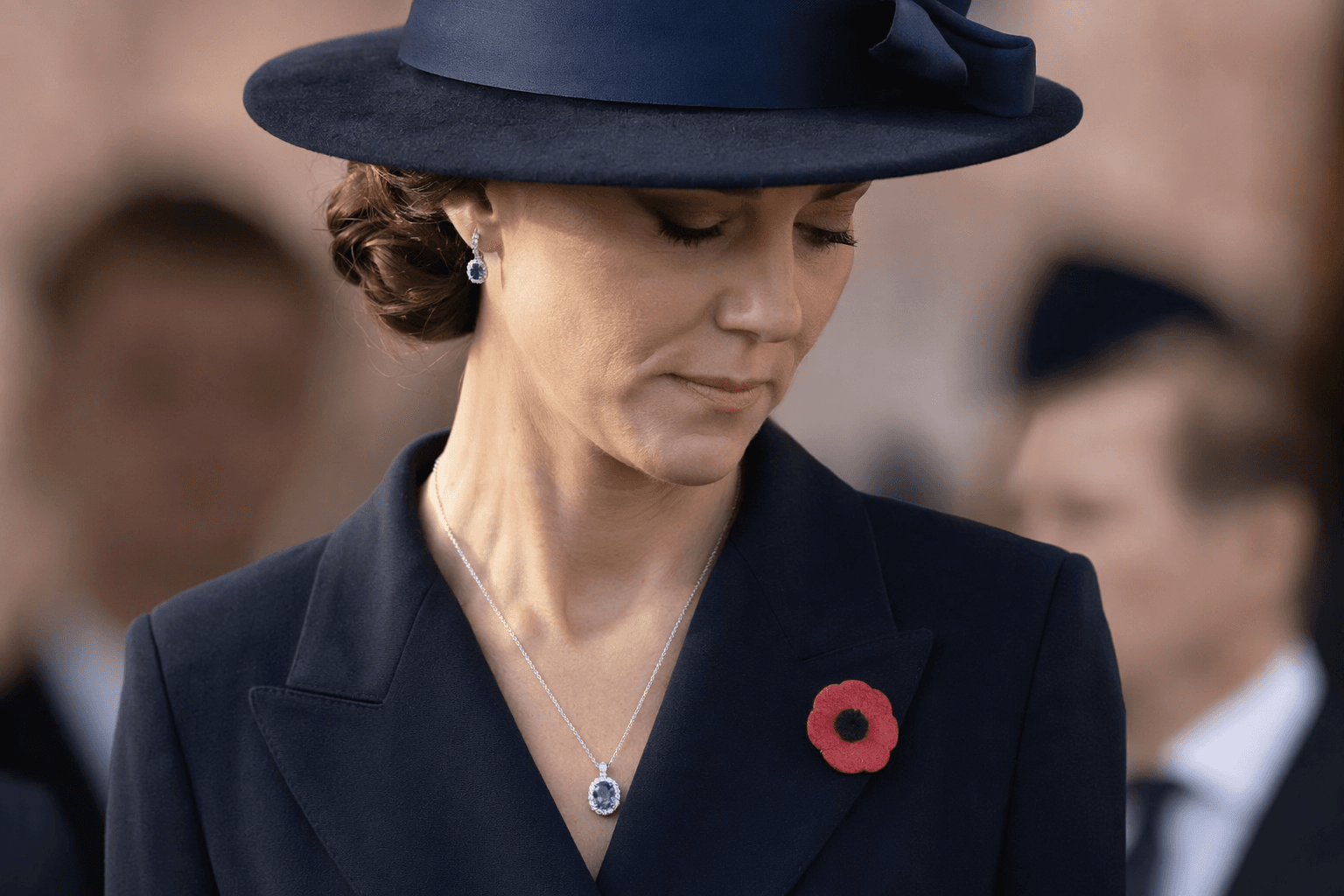
Kate’s most modern gesture at ANZAC Day was not about adding more sparkle, but about choosing less of it. One rarely seen tanzanite-and-diamond pendant, worn with Diana’s sapphire-and-diamond drop earrings, carried the emotional weight of the entire look and made a formal outfit feel intimate rather than staged.
That is the power of one-piece minimalism: a single jewel can hold memory, family history, and polish at once. In this case, the pendant did what a full royal suite would have done with far less volume. It drew the eye, told a story, and kept the overall effect disciplined.
Why the Diana connection lands so strongly
The connection between Kate and Princess Diana is part of what makes the styling instantly legible. Diana’s sapphire-and-diamond drop earrings are already one of the Princess of Wales’s most recognizable inherited pieces, so pairing them with another meaningful jewel creates a conversation between generations rather than a display of abundance.
The tanzanite pendant is especially resonant because it is rarely seen on Kate and is widely believed to have been a gift from Prince William in 2015. That turns the necklace into something more than a pretty accent. It reads as a private family marker, a piece that carries marriage, memory, and continuity in one small, cool-toned cluster of stone.
The result is far more contemporary than a heavily matched suite. Instead of announcing itself with quantity, the look uses recognition. Readers know Diana, they know Kate, and they understand immediately why a single pendant can feel more moving than a larger diamond set.
The coat dress kept the message understated
The jewelry worked because the clothing stayed calm. Kate wore a bespoke navy coat dress by Sarah Burton for Givenchy, a silhouette that was widely described as reminiscent of a 1995 Princess Diana look. That echo mattered: it gave the outfit a visual backstory before the jewels were even noticed.
Everything else followed the same disciplined line. She completed the look with a matching navy hat, navy pumps, a mini handbag, and a poppy pin, which kept the overall impression formal, sober, and polished. There was no excess, no competing color story, and no crowding around the neckline. The pendant had room to breathe, and that space is what made it memorable.
For anyone looking to understand how minimalist jewelry actually works in dressing, this is the lesson. A restrained silhouette lets one well-chosen ornament carry more emotional charge than a larger amount of sparkle ever could.
The ANZAC Day setting gave the look its weight
The appearance took place on Saturday, April 25, 2026, when the Princess of Wales attended ANZAC Day commemorations in London. She took part in a wreath-laying ceremony at the Cenotaph and then attended the Service of Commemoration and Thanksgiving at Westminster Abbey.
That context matters because ANZAC Day commemorates Australians and New Zealanders who served and died in conflict, and the 2026 observances marked the 111th anniversary of the 1915 Gallipoli landings. The day is solemn by design, which is exactly why the styling landed so well. Heavy sparkle would have felt misplaced; quiet, meaningful jewelry felt perfectly judged.
The Royal Family’s court circular recorded Kate’s wreath-laying at the Cenotaph in Whitehall, and Westminster Abbey confirmed her attendance at the service of commemoration and thanksgiving. Those official records reinforce what the look already suggested: this was not a fashion moment detached from occasion, but a carefully calibrated act of public dressing.
What one-piece minimalism looks like in practice
The elegance of the ensemble lies in its restraint. Rather than building a necklace stack or reaching for a full matching suite, Kate relied on two heirloom-level touches and let the rest of the outfit recede. The effect was modern, but also deeply legible, because the jewelry never had to compete with the coat dress.
A look like this succeeds because every element earns its place:
- A single pendant with a story can do the work of several louder pieces.
- Cool-toned stones, such as tanzanite and sapphire, read especially clean against navy.
- A clean neckline gives one jewel a stage instead of scattering attention.
- Repeating one family piece, like Diana’s earrings, creates continuity without visual clutter.
- Keeping the rest of the accessories tonal preserves the formality of the moment.
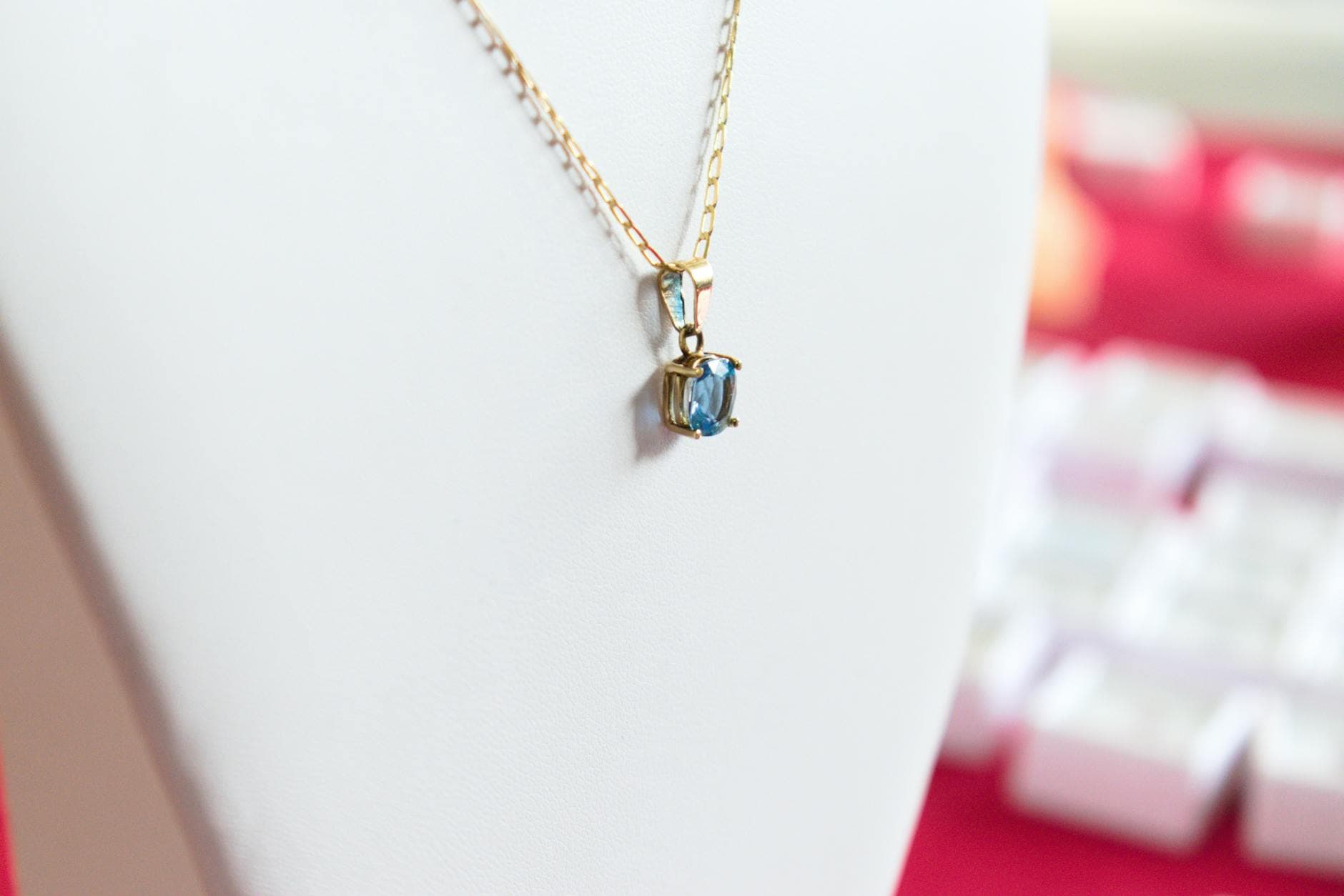
That approach is useful far beyond royal dressing. It is the same reason a thin chain, one delicate pendant, or a pair of well-chosen earrings can transform an otherwise simple outfit. The right piece does not need volume to feel finished. It needs intention.
Why this feels more modern than overt sparkle
There is a reason sentimental jewelry now feels more relevant than ever. It has presence without noise, and it makes everyday polish feel personal. A necklace with provenance, whether inherited, gifted, or chosen for its associations, offers something a purely decorative piece cannot: a narrative that travels with the wearer.
Kate’s ANZAC Day appearance showed how that narrative can be used with precision. The Diana earrings signaled continuity, the tanzanite pendant suggested affection and memory, and the navy coat dress kept everything grounded in formality. Together they created a minimal uniform of meaning, one that felt as considered as any royal jewel box flourish, only quieter and infinitely more modern.
In the end, the pendant did not simply accessorize the look. It defined it, proving that in fine jewelry, the smallest piece can carry the fullest emotional weight.
This article was produced by Prism’s automated news system from verified source data, official records, and press releases, then run through automated quality and moderation checks before publishing. The system is built and supervised by the people who set the standards it runs under. Read our full AI policy.
Did this article answer your question?


