Miniature charms emerge as a luxury answer to costly gold
Tiny charms are letting minimalist shoppers buy less gold, choose more meaning, and still build a polished fine-jewelry wardrobe.
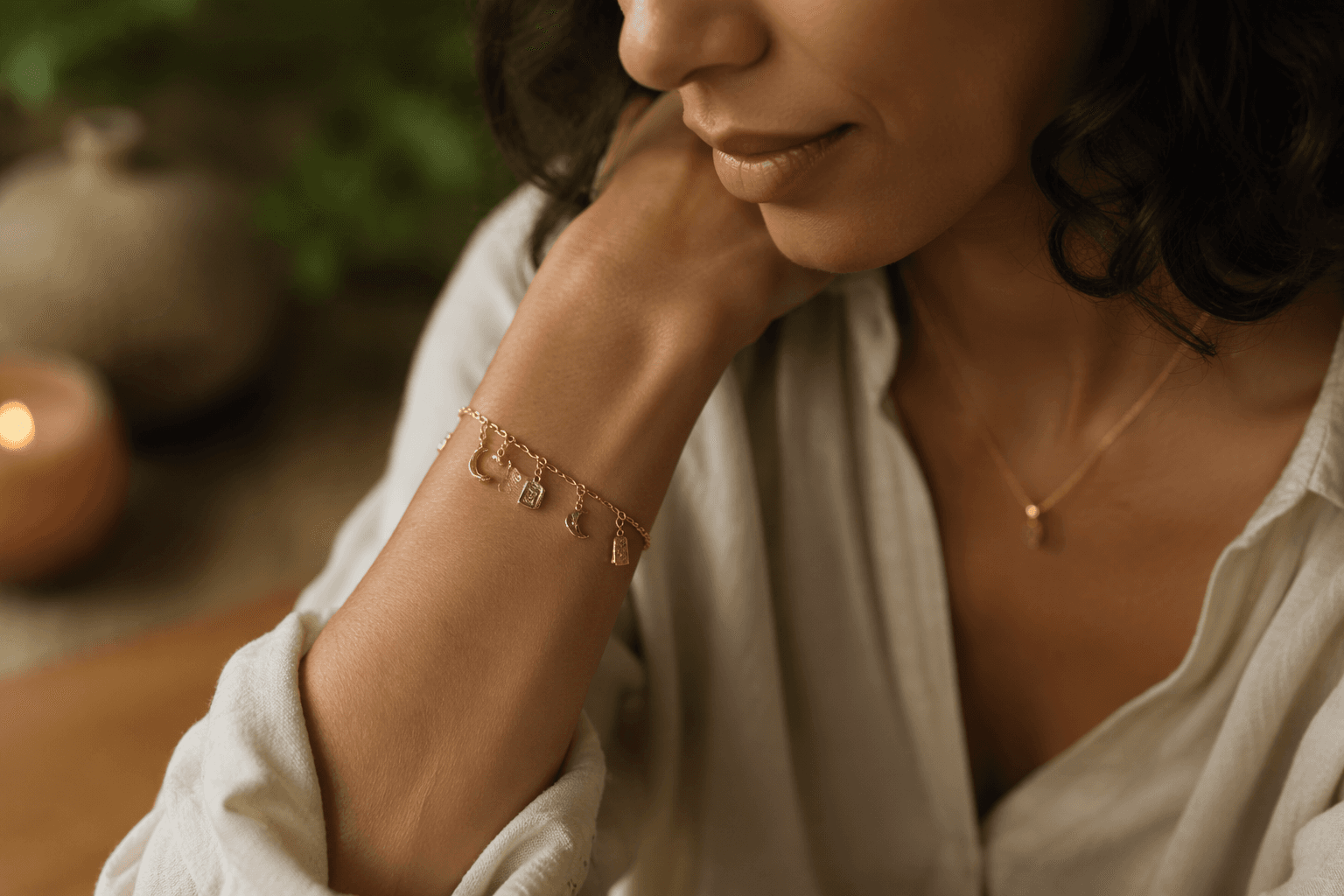
A charm can now do what a heavy gold chain no longer can: deliver preciousness without excess. As gold has held near record territory, designers showing in Las Vegas have turned to miniature pendants in 18k gold, often set with diamonds or colored stones, to keep the look luxurious while shrinking the metal content and the ticket size.
The new appeal of less metal
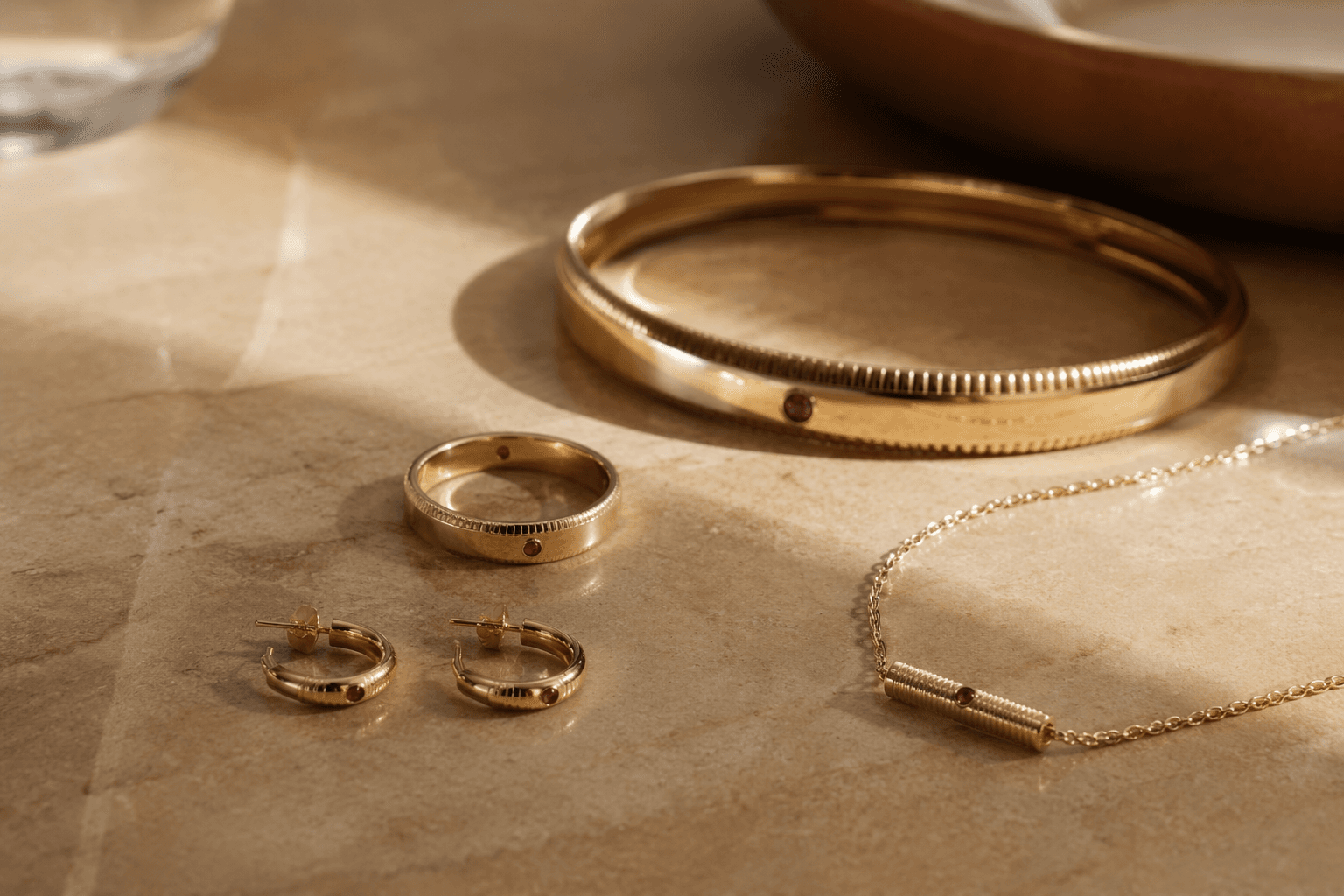
Charms are small, decorative pendants designed for necklaces, bracelets, and even earrings, and that modest scale is precisely what makes them feel so current. Instead of abandoning fine jewelry standards or dropping into lower-karat gold, many designers have chosen to compress their ideas into a tighter format, where a single charm can carry the price, craftsmanship, and personality of a far larger piece.
The economics are easy to read in the examples. Ophelia Eve’s Astral charm is priced at $3,950. Jade Trau’s Diana charm reaches $13,500, while the Mini Diana lands at $3,650. Clara Chehab’s Liberté charms start at $1,588, and Dorian Webb’s Wisdom necklace is priced at $11,495. Each of those pieces proves the same point in a different register: luxury does not have to announce itself through mass.
That matters for the minimalist shopper, whose instinct is often to edit rather than accumulate. A charm offers customization without visual clutter, especially when worn alone or in a tightly controlled stack. The result is personal, but not busy, and that balance is exactly where modern fine jewelry has become most persuasive.
Why charms feel especially right now
Gold reached an all-time peak of $5,589 per ounce in January 2026 and was still trading at historic highs in early July. In that climate, charms read as a practical design response as much as an aesthetic one. They allow brands to preserve the integrity of gold and gemstones while making the entry point less forbidding than a heavier chain, a wide cuff, or a fully paved statement piece.
That approach is notable because designers did not simply pivot to silver or reduce purity to 14k or 10k gold. The emphasis stayed on fine materials, but in smaller doses. In a market where every gram matters, the charm becomes a strategy: less metal, more intention, and a cleaner path into high jewelry dressing.
There is also a retail logic behind the shift. Charms are easy to personalize, easy to layer, and easy to expand over time. One piece can begin a collection, then later be joined by another with a different stone, symbol, or story, building a jewelry wardrobe the way a minimalist closet is built: carefully, one considered acquisition at a time.
A category with deep roots
The charm’s appeal is not new, only newly sharpened by the gold market. Ancient Egyptians used charms as talismans, objects meant to protect as much as to adorn. In the Victorian era, Queen Victoria helped popularize sentimental charm bracelets, turning them into repositories of memory and affection.
After World War II, souvenir and hobby charms became a significant revenue stream for jewelers, which is a reminder that the category has always thrived on portability and narrative. Charms are small enough to travel through daily life, but expressive enough to hold meaning, and that combination has kept them relevant across eras and tastes.
That history explains why the category adapts so well to modern minimalism. A charm does not need to be large to feel complete. It can stand for a place, a person, a milestone, or simply a mood, which makes it one of the few forms of jewelry that can be both restrained and highly specific.
Storytelling at a smaller scale
Dorian Webb has leaned into that narrative power with pieces that speak to protection, memory, and daily life. Her Harriet Tubman-inspired Wisdom necklace uses the compact scale of a charm to carry a much larger emotional charge. The effect is not decorative in the decorative-only sense; it is intimate, wearable symbolism, the kind that lets jewelry function as both object and declaration.
That is where the strongest charm designs separate themselves from mere trinkets. In 18k gold with diamonds or colored stones, the miniature form still feels expensive because the craftsmanship is concentrated rather than diluted. A single well-made charm on a fine chain can look more considered than a larger, louder piece, especially when the design is edited down to one essential motif.
For minimalist dressing, that restraint is the point. A charm worn alone reads as deliberate; a restrained stack of two or three can build a visual rhythm without losing clarity. The category gives collectors room to customize while staying within the clean lines they already prefer.
The market is rewarding higher-value pieces
The sales data supports that appetite for concentrated value. Tenoris reported that U.S. jewelry sales rose 13% year over year in June 2026 and 8.6% in the first half of 2026, while the average purchase price climbed 20% in June and 19% in the first half. At the same time, lower-priced purchases declined, which suggests shoppers were still buying, but leaning toward more expensive or more meaningful pieces.
Edge Retail Academy found a similar pattern in June, with gross sales up 18% year over year, average retail sale also up 18%, and units flat. That combination points to a market where volume is not necessarily the story; value is. Charms fit that moment neatly because they allow retailers to sell precious metal jewelry without relying on bulk.
The best charms, then, are not miniature compromises. They are precise answers to a larger problem: how to keep fine jewelry personal, collectible, and visually spare when gold is expensive and discretion itself has become a luxury.
This article was produced by Prism’s automated news system from verified source data, official records, and press releases, then run through automated quality and moderation checks before publishing. The system is built and supervised by the people who set the standards it runs under. Read our full AI policy.
Did this article answer your question?