ethical engagement rings drive demand for moissanite alternatives
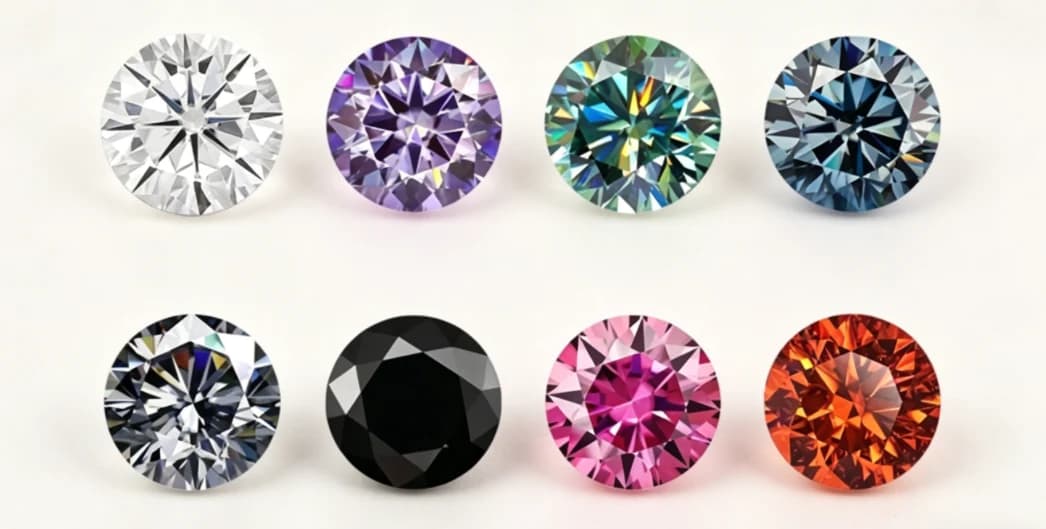
Moissanite is no longer a stand-in, but a distinct ethical choice: lab-created, conflict-free, and far cheaper than diamond, with a brighter spark.
Henri Moissan identified moissanite in meteorite material in 1893. It is a laboratory-created gemstone made of silicon carbide, while natural moissanite is so rare it appears only in tiny amounts, including meteorites. That laboratory-made supply route gives the stone a provenance many buyers find easier to trust than a mined diamond supply chain.
Why moissanite reads as an ethical choice
That discovery helps explain why jewelry-grade moissanite is created in labs today: the natural material is too scarce for commercial gemstone use. In practice, that means the ring on your finger is not just another diamond substitute, but a stone with a scientific backstory and a clearly lab-made supply route.
Charles & Colvard, the long-running U.S. moissanite company, has built much of its identity around that distinction. It markets ethical engagement rings and presents moissanite as a conflict-free option, a message that fits the wider demand for stones that do not rely on traditional mining.
Moissanite is one ethical choice, not the whole category
The current engagement-ring market is broader than a simple diamond-versus-non-diamond split. BriteCo found lab-grown diamonds accounted for 45% of all U.S. engagement ring purchases. Moissanite belongs in that same shift, but it is not interchangeable with a lab-grown diamond: one is silicon carbide, the other is diamond grown in a controlled environment.
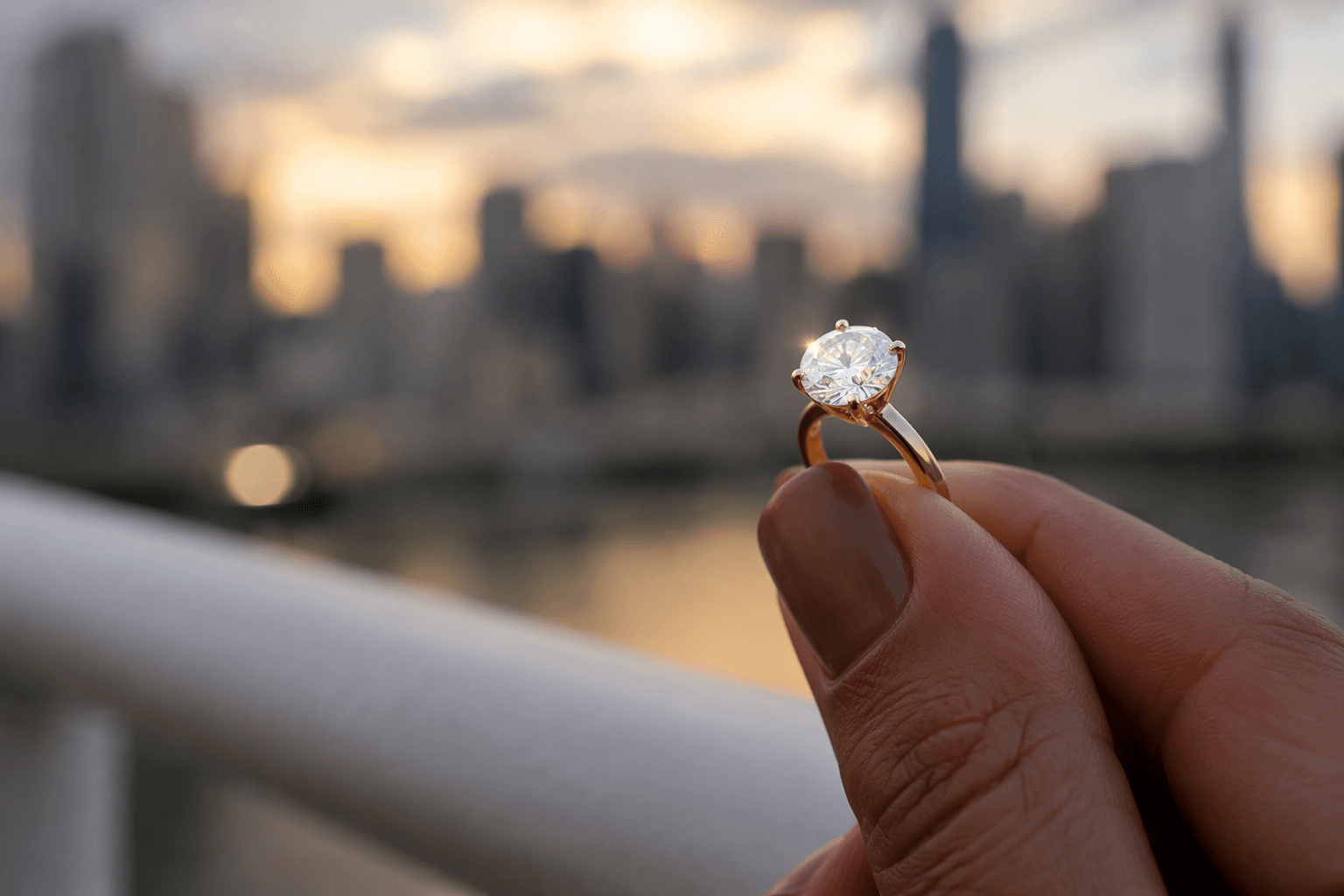
Recycled metals and vintage pieces answer different ethical questions. Recycled gold or platinum reduces the need for newly mined metal in the band and setting, while a vintage ring reuses an existing piece of jewelry, often with its original stone intact. If a brand says a ring is “ethical,” that claim can be vague unless it specifies whether the center stone is lab-created, whether the metal is recycled, or whether the entire piece is pre-owned.
Price and sparkle are part of the appeal
Moissanite’s biggest practical advantage is price. Tashvi AI puts one example at roughly $300 versus $4,000, or about 90% less than diamond equivalents. That spread changes the buying calculus immediately: instead of shrinking the stone to fit the budget, you can put the money into a better setting, a more intricate design, or a larger center stone.
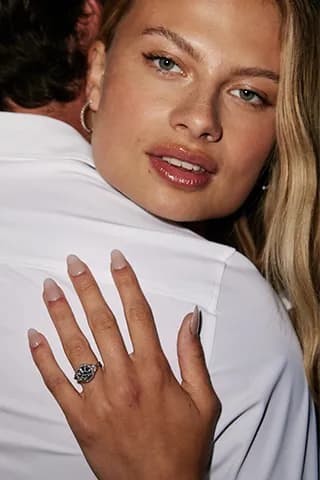
Moissanite sparkles more than diamond, and that brightness is a major reason shoppers choose it. Its livelier fire can read especially well in solitaire mounts, halo settings, and side-stone designs, where the ring is meant to catch light from every angle.
Where design matters as much as the stone
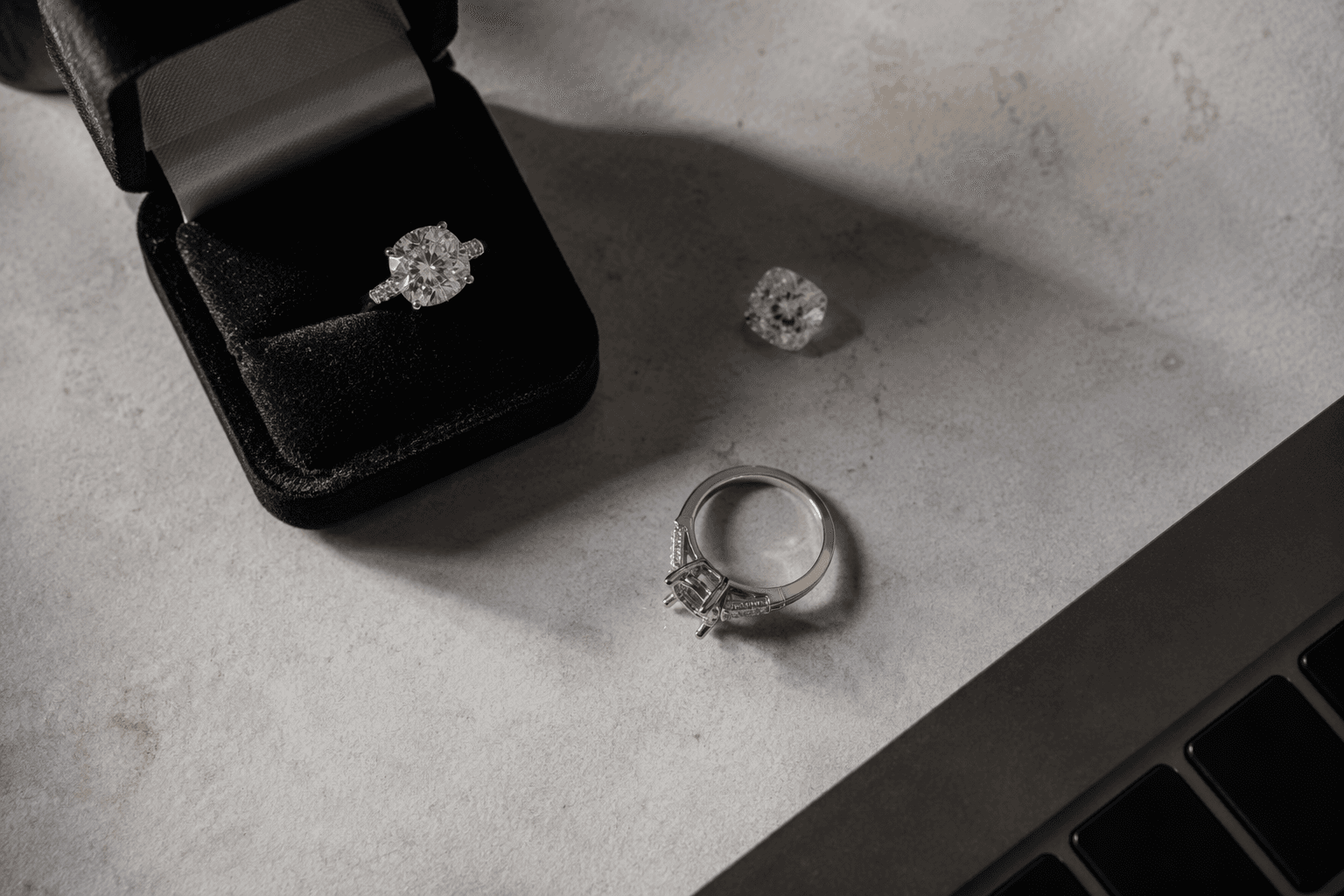
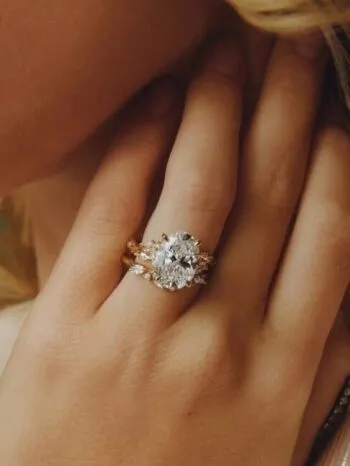
Moissanite works best when the setting is chosen with intention. Charles & Colvard and other moissanite-focused sellers lean hard into customization and style variety, which reflects the fact that many buyers are looking for rings that feel personal rather than conventional. Oval cuts, clean solitaires, and halo designs all give moissanite a different visual language, one that can feel as polished as a diamond ring without copying diamond tradition exactly.
Moissanite sits alongside vintage-inspired engagement rings as one of the alternatives drawing attention. That pairing makes sense: both appeal to buyers who want something with character, whether the character comes from a lab-grown stone or from a reused setting with a previous life.
How to shop by values, not slogans
When you compare moissanite with other ethical-ring options, the useful questions are concrete:
- Traceability: Does the seller clearly say the center stone is lab-created moissanite, lab-grown diamond, or a mined stone in a vintage setting?
- Materials: Is the band made from recycled gold or platinum, or is that claim missing?
- Environmental impact: Does the brand explain how it reduces mining, or does it rely on vague “sustainable” language?
- Price: Are you paying for the stone, the setting, the brand name, or some combination of all three?
- Symbolism: Do you want a diamond identity, a vintage piece, or a stone whose appeal comes from its own origin story?
This article was produced by Prism’s automated news system from verified source data, official records, and press releases, then run through automated quality and moderation checks before publishing. The system is built and supervised by the people who set the standards it runs under. Read our full AI policy.
Did this article answer your question?