Moissanite watches rise as buyers seek affordable luxury and durability
Moissanite watches are emerging as a sharper kind of status piece: bright, durable, and far cheaper than diamond-set rivals, with labeling rules now part of the story.

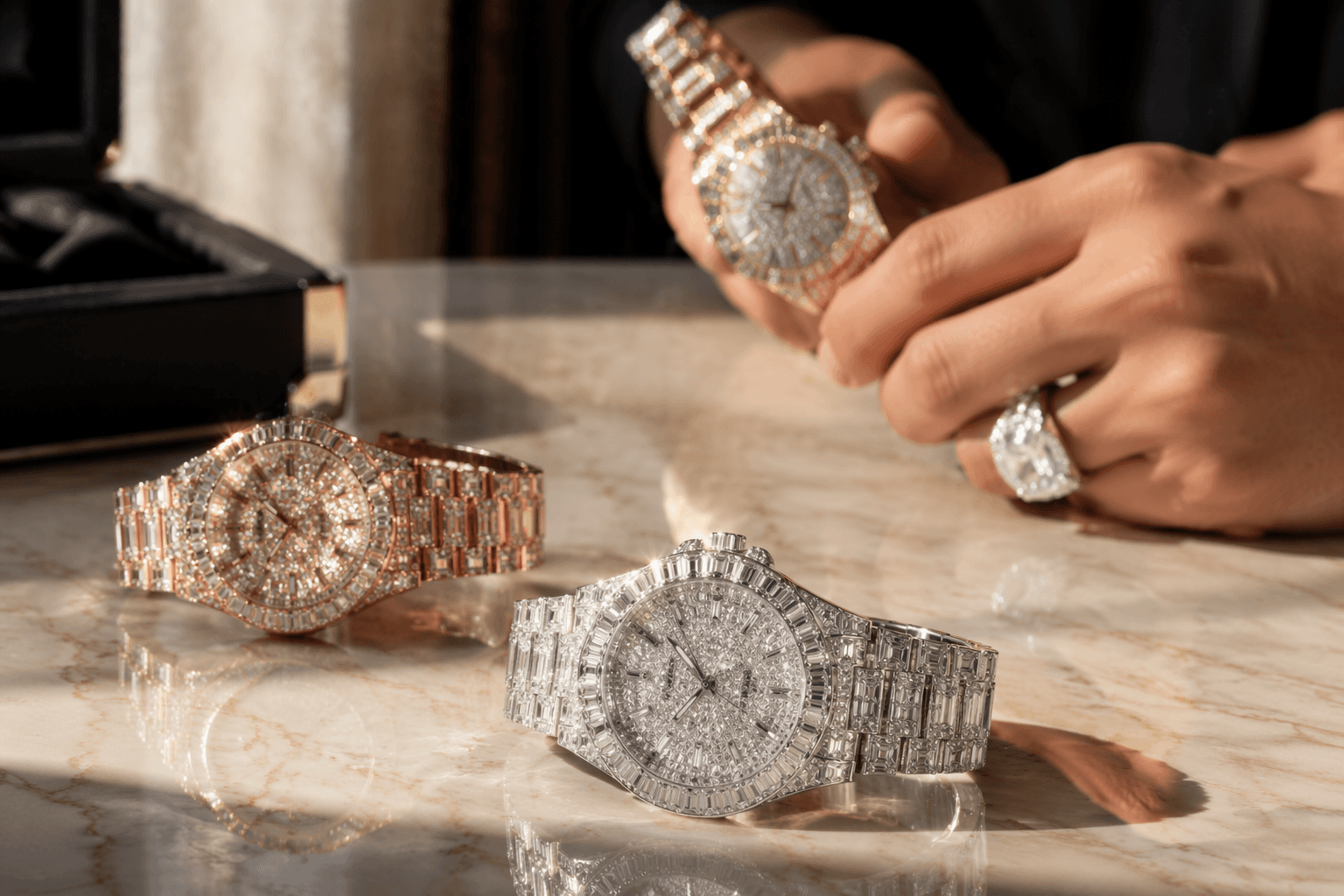
At about 9.25 on the Mohs hardness scale, moissanite gives watches strong brilliance and real day-to-day durability without diamond-level spending. That combination is moving moissanite watches from niche alternative to visible status signal, delivering the look of a dressed-up wrist at a price point that lets buyers choose bold presence over legacy pricing. That is the shift reshaping men’s luxury now, especially for pieces meant to be worn often rather than saved for rare occasions.
Why moissanite watches feel current
The category reads as modern luxury, not as a stand-in for something older and more precious. Moissanite watches are sold as affordable-luxury alternatives to diamond watches, and the message is clear: the draw is visual impact first, pedigree second. For men who want a watch to read from across a room, the effect is deliberate, bright, and unmissable.
That contemporary feel comes from the balance of flash and practicality. Instead of treating sparkle as a fragile indulgence, the category centers on wearability, which matters in a market where a watch is expected to live on the wrist, not in a box. The strongest versions of the trend lean into confidence and scale, giving buyers the atmosphere of an iced-out piece while keeping the cost far below a diamond-set counterpart.
The stone behind the shine
Moissanite’s backstory is unusually rich for a material now associated with accessible luxury. French chemist Henri Moissan first identified it in 1893 in material from what is now called Meteor Crater near Canyon Diablo, Arizona, and later received the 1906 Nobel Prize in Chemistry.
What sits in jewelry today, though, is not a museum specimen. Modern moissanite is lab-created silicon carbide, a distinction that matters both for value and for disclosure. Its roughly 9.25 Mohs rating, just below diamond’s 10, is why sellers can frame moissanite watches as pieces made for regular wear rather than delicate display.
The roughly 9.25 Mohs rating is central to the watch story. A wristwatch takes more daily contact than a ring or pendant, so a stone that can handle abrasion has a practical advantage as well as a marketing one.
Why the FTC rules matter as much as the styling
The moissanite-watch boom is not only a style story. It is also a labeling story. The Federal Trade Commission’s Jewelry Guides are designed to help consumers get accurate information when shopping for gemstones and their laboratory-created or imitation substitutes. The guides require jewelry marketers to describe products truthfully, avoid deceptive claims, and disclose material information that affects a buyer’s understanding of what is being sold.
That matters in a category where the word “luxury” can blur into implication. If a watch is moissanite-set, the material needs to be named clearly, not softened into vague gemstone language that could mislead a shopper about origin or value. The difference between a lab-created stone and a diamond-set watch is not cosmetic, and the FTC framework exists precisely to keep that distinction visible.
For shoppers, the best sign of a serious seller is specificity. Clear naming, honest descriptions, and plain disclosure should be treated as part of the product, not the paperwork around it.
How to shop moissanite watches without overpaying
The smartest way to buy this trend in 2026 is to separate sparkle from markup. A moissanite watch should be judged on three things: how well it is made, how clearly it is described, and whether the price reflects a lab-created stone rather than an attempt to mimic diamond pricing. If the watch is being sold as everyday-wear luxury, the durability claim should be matched by the stone’s hardness and by straightforward material disclosure.
A practical buying checklist looks like this:
- Look for the words lab-created moissanite or silicon carbide, not vague gemstone claims.
- Ask whether the seller is positioning the watch as an affordable-luxury alternative to diamond-set pieces, then compare the price against that category, not against costume jewelry.
- Treat the Mohs hardness figure, about 9.25, as part of the value proposition for regular wear.
- Pay for craftsmanship and disclosure, not for language that suggests diamond status without saying diamond.
This article was produced by Prism’s automated news system from verified source data, official records, and press releases, then run through automated quality and moderation checks before publishing. The system is built and supervised by the people who set the standards it runs under. Read our full AI policy.
Did this article answer your question?