Baroque Pearls Lead 2026 Jewelry Trend Toward Bold Personal Style
Baroque pearls are winning over shoppers who want less polish and more personality. The smartest buys balance irregular shape, size, and honest craftsmanship.

Why baroque pearls are suddenly everywhere
Baroque pearls are winning because they make a familiar gem feel less formal and more personal. Their irregular shapes read as sculptural rather than stiff, which is why they sit so comfortably beside the sharper, more expressive jewelry mood shaping the moment. GIA has long described pearls as prized across cultures and often calls them “The Queen of Gems,” but the current appeal is less about perfection and more about character.
That shift matters for anyone buying pearl jewelry now. The trend is not simply that pearls are back, it is that buyers are rethinking what beauty looks like on the body. A strand with uneven outlines, a drop with a lopsided oval, or a ring set with a pearl that bends light in an unexpected way feels more intentional in a wardrobe built around tailoring, denim, black knits, and mixed metals.
What makes a baroque pearl different
Baroque pearls are simply irregularly shaped pearls. Classic round pearls remain the reference point, and they are still generally the rarest and most valuable shape when other factors are equal. That does not make baroque pearls lesser; it makes them different, and in many cases, more visually interesting.
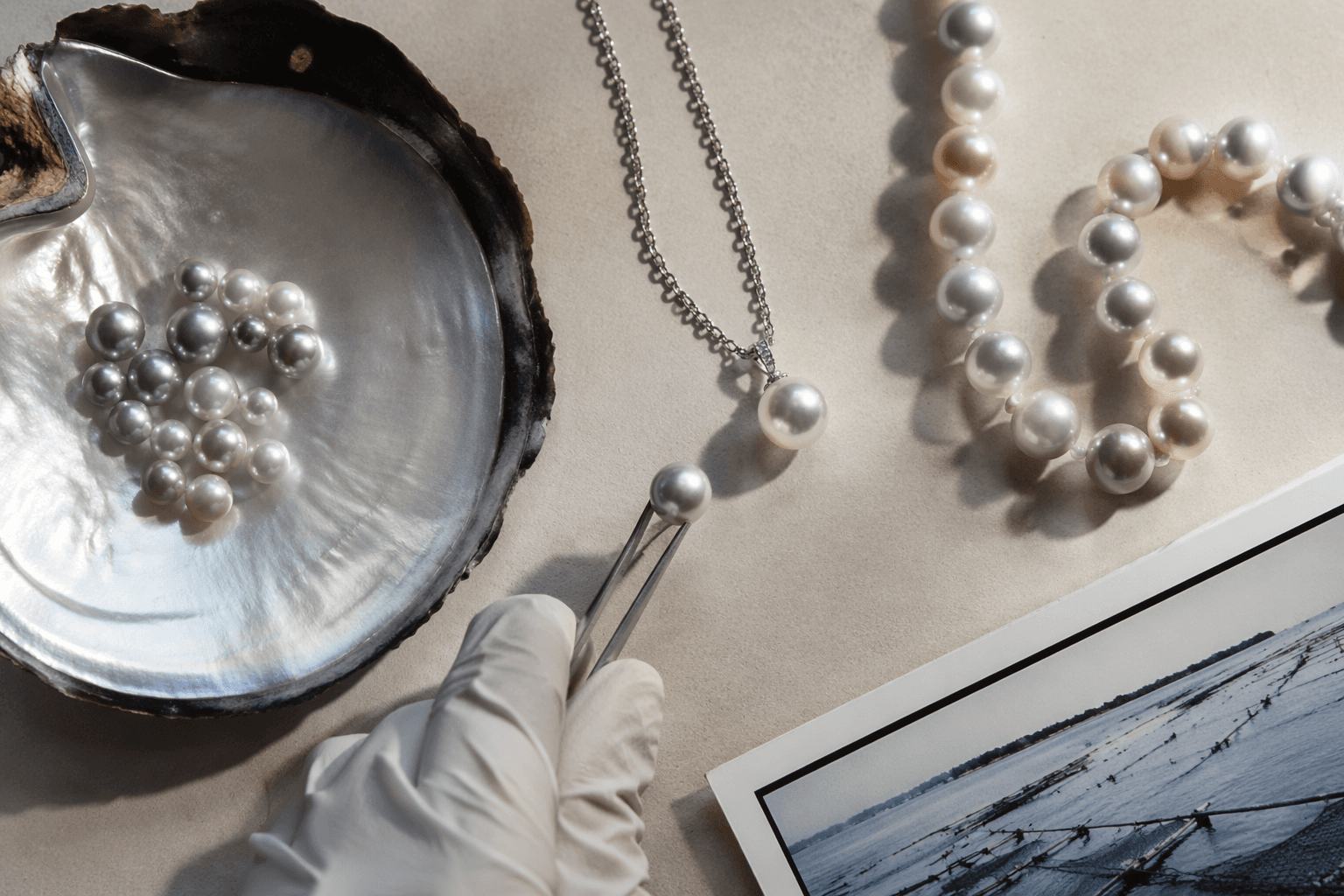
GIA’s quality framework also helps decode the category. On Japanese saltwater cultured pearls, shape is judged with a strict eye, moving through round, near-round, semi-baroque, and baroque. In other words, a baroque pearl is not a catch-all for anything odd. It sits at one end of a shape spectrum, where the more circular a pearl is, the closer it tends to move toward classic luxury pricing.
That distinction is useful when shopping. A strand of baroque pearls should look artistically irregular, not simply misshapen because of poor selection. The best pieces still have balance, attractive luster, and an intentional design, even if the pearls themselves refuse symmetry.
Why the market is leaning into bigger, bolder pearls
The appetite for baroque pearls is part of a broader move toward larger, more expressive stones. In GIA’s 2023 cultured pearl market update, dealers reported rising demand in the secondary market, with especially strong interest in larger pearls. Sizes in the 12 to 14 mm range were doing particularly well, and pearls larger than 13 mm were in the highest demand.
That helps explain why baroque pearls feel current in 2026. Bigger pearls have more presence, and irregular ones read as more modern than dainty, uniform strands. Amy Hansen of A&B Jewelry in Honolulu said Edison pearls were still finding their place in the market, with larger pearls especially in the 12 to 14 mm range performing well. For shoppers, that means the statement end of the category is not just a runway idea, it is a real buying pattern.
Color is part of the story too. GIA’s market update pointed to deeper hues, plus more purple, bronze, copper, peach, and orangy pink tones, alongside rainbow and mixed-color strands. Metallic colors and alternating blocks of color also stood out. In practice, that means the pearl market has moved far beyond the single, pale strand many people grew up seeing in jewelry boxes.
How to avoid overpaying
The easiest way to overpay is to confuse novelty with quality. A dramatic shape alone does not justify a high price, and a vague description like “rare” or “designer” tells you very little. Ask what is actually driving value: shape, size in millimeters, luster, surface quality, matching, and the materials used in the setting or clasp.
A few details are especially worth checking:
- Size in millimeters. A pearl labeled 12 mm is very different from one at 8 mm, both in presence and price.
- Shape consistency. A baroque strand can be beautifully matched even when each pearl is irregular.
- Surface and luster. Even a baroque pearl should have life and shine, not a dull or chalky finish.
- Disclosure of type. Cultured pearls should be identified clearly, and the seller should be able to tell you whether the piece is freshwater or saltwater.
- Construction. A well-made clasp, carefully knotted strand, or cleanly set ring mount can separate a thoughtful piece from a fast-fashion imitation.
If you want the trend without paying top-tier prices, 12 to 13 mm can be a sweet spot. The market has shown the strongest pull at 13 mm and up, so slightly smaller statement pearls can deliver the same visual force without the steepest premium.
How to wear sculptural pearls with an everyday wardrobe
Baroque pearls work best when they are treated less like formal heirlooms and more like architecture for the body. A single irregular pearl pendant against a white T-shirt and blazer feels sharper than a traditional matched strand. A pair of baroque drop earrings can soften a black suit without making it feel precious, and a ring with a pearly center stone can bring contrast to denim, leather, or a plain cashmere sweater.
The most convincing way to wear them is with tension. Pair them with hard metal, crisp shirting, or a tailored collar so the pearl does not drift into costume territory. Mixed metals work particularly well here, because the irregularity of the pearl echoes the looseness of the styling. Even a larger baroque stud can shift an outfit from polished to personality-driven in a single move.
- one sculptural pearl pendant with a fine chain
- baroque studs with a trench coat or blazer
- a single statement ring with a simple knit
- a short baroque strand layered over a crewneck
For day-to-day wear, the simplest formulas are often the strongest:
Why this pearl revival has history behind it
This is not the first time irregular pearls have felt fresh. GIA’s pearl history research notes that baroque pearl figurines were notable in the later Renaissance, which means the current affection for asymmetry has deep precedent. The difference now is that the setting is more modern, the styling is more relaxed, and the buyer is more educated about what drives value.
That education matters because pearl history is also a story of scarcity and change. Natural pearl sources declined over time because of overfishing, pearl culturing, plastic buttons, and oil drilling. Cultured pearls became commercially important in the 1920s and then spread globally from the 1930s through the 1980s, reshaping the market that shoppers know today.
That long arc is why baroque pearls feel so right now. They connect old-world prestige with a contemporary appetite for individuality, and they reward buyers who look past the smooth, familiar round shape to find the pieces that feel lived-in, modern, and made for real clothes rather than special occasions.
This article was produced by Prism’s automated news system from verified source data, official records, and press releases, then run through automated quality and moderation checks before publishing. The system is built and supervised by the people who set the standards it runs under. Read our full AI policy.
Did this article answer your question?