Buckingham Palace exhibition spotlights Queen Elizabeth II’s historic pearl necklaces
Queen Elizabeth II’s pearl necklaces anchor a major Buckingham Palace exhibition, showing why length, scale and restraint kept pearls elegant for decades.
Pearls as a royal signature
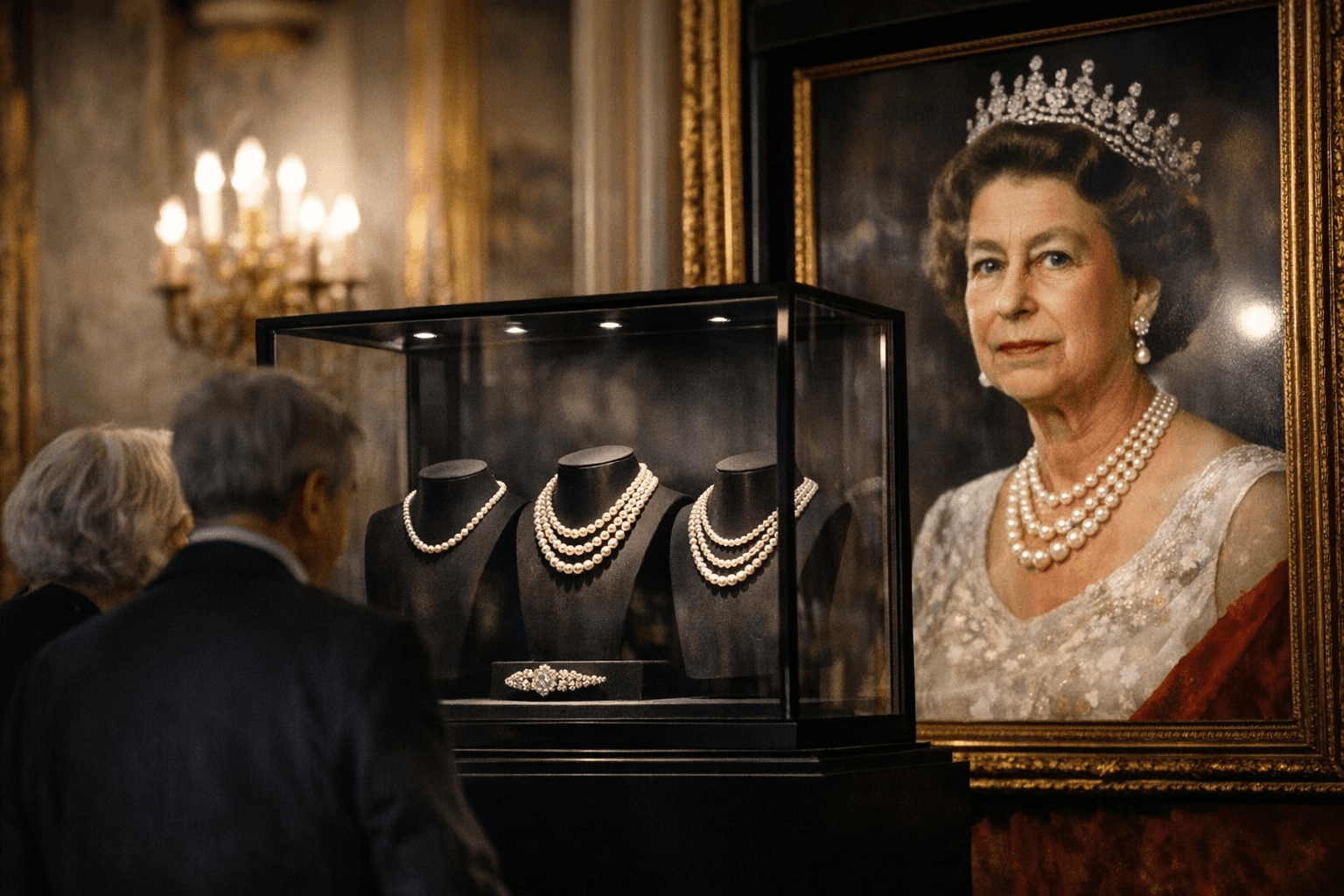
Pearls were never a decorative afterthought in Queen Elizabeth II’s wardrobe. In Buckingham Palace’s new fashion exhibition, they read as a personal code, one that linked family, ceremony and public duty with unusual consistency. The display turns that familiar image into something more useful: a guide to why pearls work, how they change with scale and length, and why they still look refined when they are styled with discipline rather than fuss.
A palace exhibition built around wardrobe, not nostalgia
Queen Elizabeth II: Her Life in Style opened at The King’s Gallery, Buckingham Palace on 10 April 2026 and runs through 18 October 2026. Presented as the largest and most comprehensive exhibition of Queen Elizabeth II’s fashion ever mounted, it gathers more than 300 items from her wardrobe, with around half shown publicly for the first time. The exhibition marks the centenary of her birth on 21 April 1926, but it is less a commemorative scrapbook than a study in how clothes, jewels and accessories helped shape one of the most closely observed public images of the 20th and 21st centuries.
The scope matters because it shifts the conversation beyond gowns. Alongside clothing, the show includes jewellery, hats, shoes, accessories, design sketches, fabric samples and handwritten correspondence. That breadth reveals how carefully the late Queen’s presentation was built, and why her pearls were never just a finishing touch. They were part of a larger visual language that treated restraint, repetition and symbolism as strengths.
The pearl necklaces that define the story
The most compelling pearl pieces in the exhibition are the Queen Anne and Queen Caroline pearl necklaces, which Royal Collection Trust says are being shown for the first time. They were wedding gifts from her parents, which immediately places them in the most intimate category of royal jewels, the kind that carry family history as well as style. Secondary reporting identifies them as two historic strands that were part of the late Queen’s wedding day jewels in 1947, usually worn together to resemble a double strand.
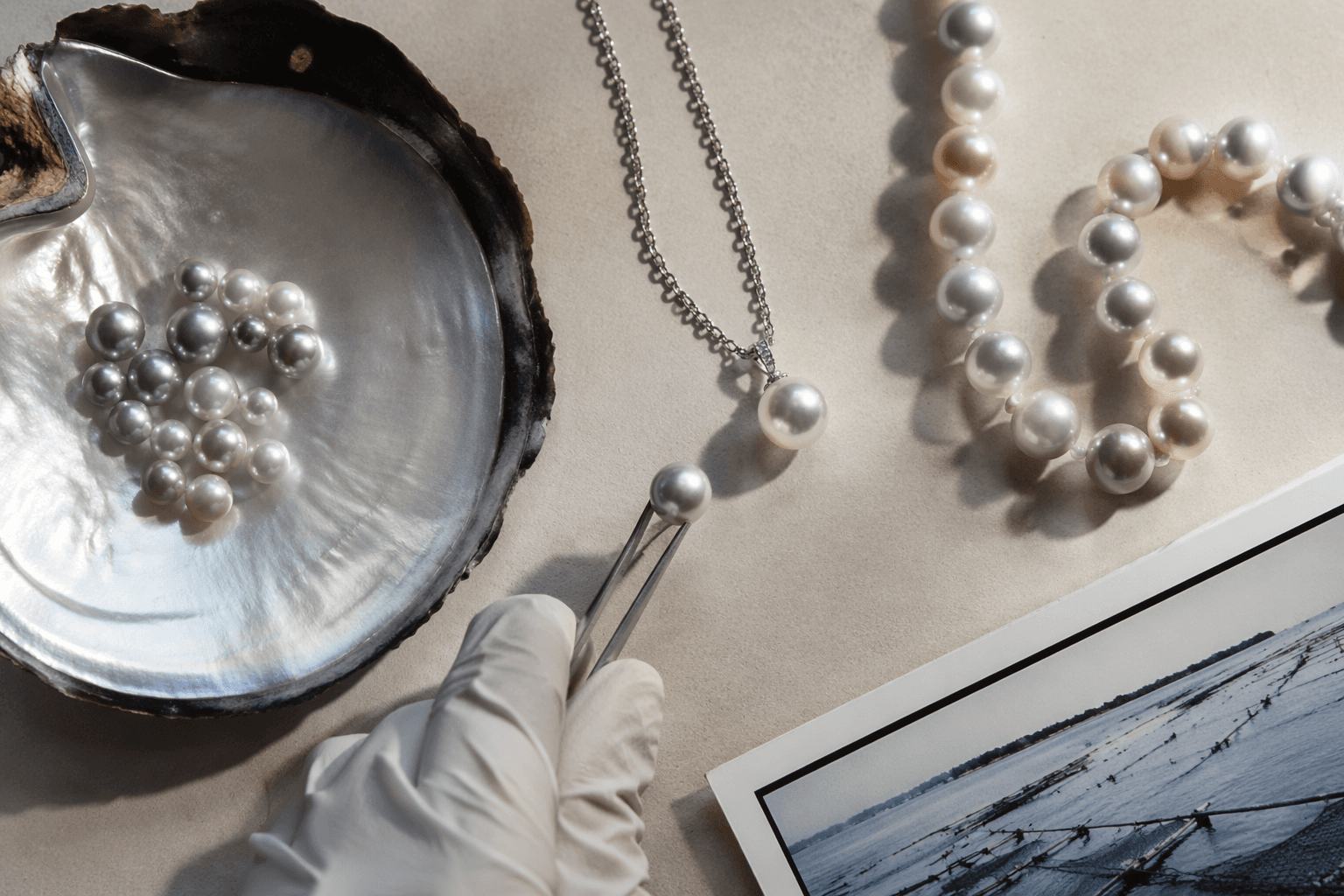
That detail is more instructive than it first appears. A double strand gives pearls a stronger, more formal presence without making them feel rigid or overworked. It also shows why pearls can move so easily between ceremony and daylight: a single strand softens the look, while layered strands create gravity and polish. If you are choosing pearls today, that is the first lesson from Elizabeth II’s archive. Scale changes the message.
Why pearls stayed current on her, and not costume-like
Pearls endured in the Queen’s public wardrobe because they were never worn in isolation. They were paired with tailored coats, clean necklines and exacting grooming, which kept them crisp rather than decorative. That balance is the difference between pearls feeling elegant and pearls feeling theatrical. On her, the effect was never precious for its own sake; it was controlled, legible and deeply consistent.
- A shorter strand reads more formal and close to the throat, especially with high necklines or jackets.
- A longer strand feels less ceremonial and can loosen the formality of pearls for day wear.
- Larger pearls create a bolder, more visible statement, while smaller pearls are quieter and easier to wear often.
- A double strand has authority, but it needs the rest of the outfit to stay clean and simple.
For modern buyers, the queen’s styling offers a practical rubric:
That is why pearls still feel current when they are worn with precision. They do not need trendiness to feel relevant. They need proportion.
The wedding story behind the jewels
The pearl necklaces sit inside a larger bridal and family narrative that gives the exhibition its emotional pull. Queen Mary’s Diamond Fringe Tiara is also on display, and Royal Collection Trust says it is being shown for the first time in almost 20 years. Made for Queen Mary, it was later lent to Princess Elizabeth by her mother for the wedding. Nearby, the exhibition includes the wedding dress itself and other milestone ensembles tied to Princess Margaret and Princess Alexandra, reinforcing the sense that royal dress was built around continuity as much as occasion.
That continuity is what made pearls central to Queen Elizabeth II’s image. They were wedding gifts, inheritance, and uniform all at once. In a life spent under scrutiny, pearls offered a form of visual steadiness that could survive changing decades, changing politics and changing hemlines. They stayed recognizably hers because they were tied to ceremony, but never trapped by it.
The wider archive behind the surface
Royal Collection Trust describes Queen Elizabeth II’s fashion archive as one of the most comprehensive single-owner collections of British fashion and the most extensive of any queen regnant or consort in the Royal Collection, numbering over 4,000 items. That number helps explain why the exhibition feels so revealing. It is not simply presenting treasured objects; it is showing the scale of a life spent curating public meaning through dress, from formal state appearances to rare surviving pieces such as a dress from her first Commonwealth tour in 1953 to 1954.
The archive also places pearls inside a broader system of visual soft power. Fabric samples, sketches and correspondence show that clothing was planned with purpose, and that purpose extended to jewellery. Pearls, in this setting, emerge as more than elegant stones. They are part of the architecture of authority, selected for their ability to read clearly from a distance and remain intimate up close.
A centenary program that widens the frame
The Buckingham Palace exhibition is only part of the centenary programming. Visitors also have a rare chance to see Queen Elizabeth II’s private apartments at the Palace of Holyroodhouse in Scotland for the first time. That expansion matters because it broadens the story from one exhibition room to a larger map of royal life, showing how style, domestic space and public image intersected across different residences and different kinds of duty.
Seen this way, the pearl necklaces are not just museum pieces. They are a lesson in how to wear jewels with intent. Choose pearls for proportion, choose length for the neckline, and choose scale for the setting. That is the enduring intelligence of Queen Elizabeth II’s signature look: pearls should never overwhelm the woman wearing them. They should clarify her presence, and that is precisely why they still look modern.
This article was produced by Prism’s automated news system from verified source data, official records, and press releases, then run through automated quality and moderation checks before publishing. The system is built and supervised by the people who set the standards it runs under. Read our full AI policy.
Did this article answer your question?