Pearls Take Center Stage at Hong Kong Trade Show with Live Harvesting
Live oyster openings and pearl faceting turned Hong Kong’s biggest jewelry fair into a lesson in how pearls are made, graded, and styled.

A pearl pavilion with a point
Live oyster openings, faceting drills, and styling sessions turned Jewellery & Gem WORLD Hong Kong 2024 into something rarer than a trade-show spectacle: a working lesson in how pearls earn their place in fine jewelry. The fair drew over 50,000 visitors from more than 140 countries and regions, alongside more than 3,300 exhibitors from over 40 countries and regions, a scale that made the pearl pavilion feel less like a side attraction and more like the center of gravity.
The pearl activation was built around Orient Odyssey, launched on 18 September 2024 by Informa Markets Jewellery as a journey “from shell to market.” That framing matters because pearls are often sold as finished sentiment, when the real value begins much earlier, in the oyster, the harvest, the treatment decisions, and the way a jeweler later interprets the gem.
Why the show floor mattered
Orient Odyssey was designed to introduce a new generation of jewellers and buyers to the full life of a pearl, from harvesting and grading to history, classification, origins, treatments, novel fashioning, and styling. That is a far more useful education than a display case of strands, because pearl value depends on factors that are easy to overlook when the gem is already polished into icon status. Luster, surface quality, shape, color, size, and nacre all shape the final impression, but so does understanding how much transformation the pearl has undergone.
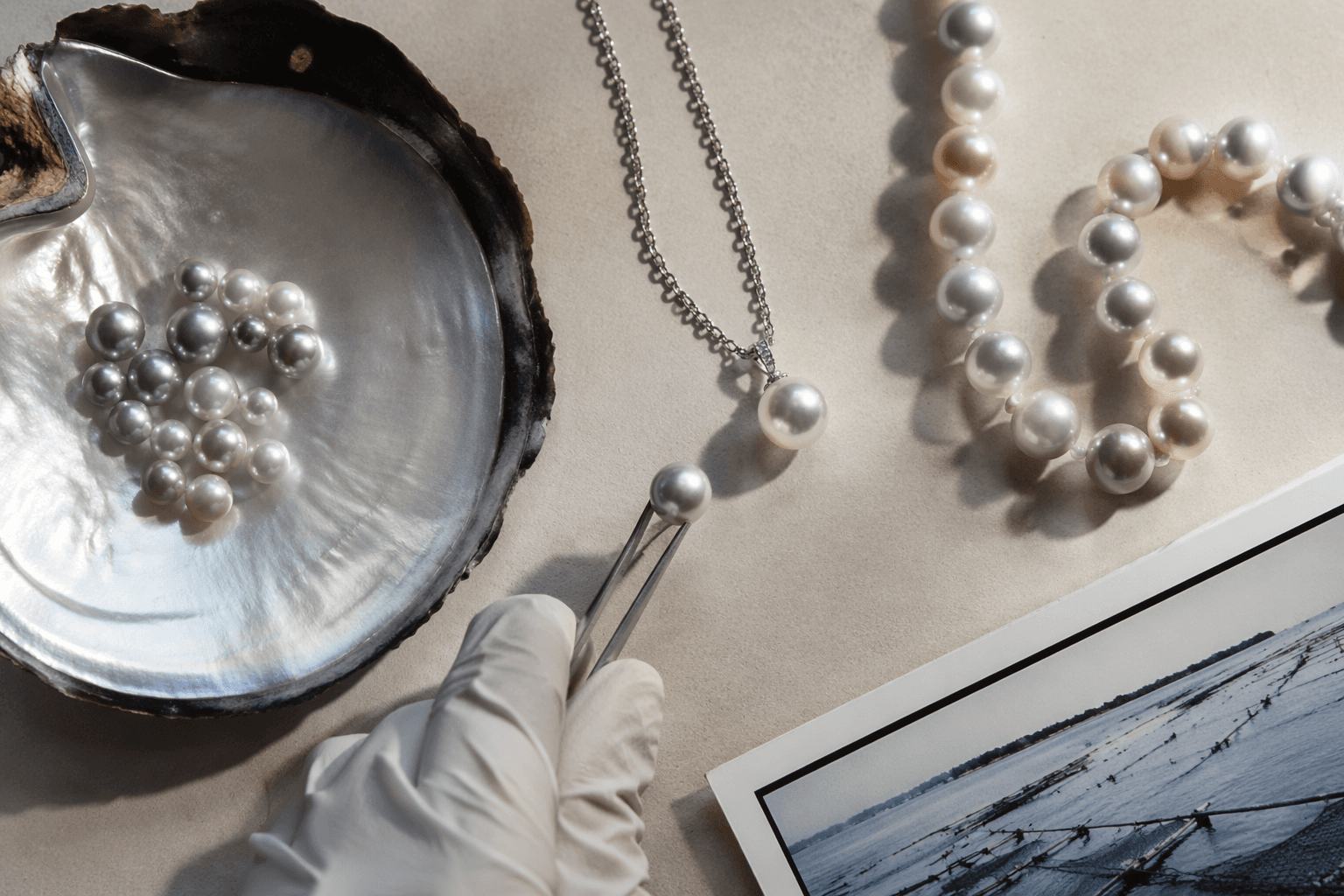
The live demonstrations made that invisible work tangible. Watching pearls being delicately extracted from pearl oysters, then seeing how they might be cut, shaped, or worn, shifts the pearl from symbol to material. For collectors, that is the essential lesson: the more you understand the process, the more clearly you can judge whether a jewel’s beauty comes from nature alone or from the skill of the hands that finished it.
Harvesting as theater, grading as education
The most memorable station on the show floor was the live pearl harvesting and pearl extraction demonstration. In a market where many buyers still think of pearls as soft, static, and almost self-explanatory, the sight of a gem emerging from shell reasserts the labor and patience built into every strand and drop earring. It also underscores why provenance is not just marketing language. A pearl that can be traced through its origin story carries a different kind of authority.
That authority was reinforced by the exhibit’s focus on grading and classification. Pearls are not judged by one simple standard, and that is precisely why events like this resonate with serious buyers. The show’s structure encouraged visitors to think about how origin, treatment, and fashioning alter value, and why a pearl with an impeccable surface and strong luster can look quietly more luxurious than a larger stone with obvious flaws.
Styling and faceting hint at pearl design’s next chapter
Pearl jewelry styling sessions led by designer Rosemary Chung gave the show a fashion vocabulary that pearls sometimes lack in more conventional settings. Styling is not a decorative afterthought here. It is the bridge between tradition and relevance, showing how pearls can move from ceremonial or bridal associations into sharper, more modern wardrobes. That is exactly how pearls keep finding new audiences: not by abandoning elegance, but by being worn with fresh intent.
Even more surprising were the pearl faceting demonstrations by gemstone artist Victor Tuzlukov. Faceting belongs to the language of hard stones, so seeing it applied to pearls suggests a wider appetite for experimentation and a willingness to challenge what pearl jewelry is supposed to look like. The signal for future design is clear: consumers are increasingly open to pearls that feel engineered, architectural, and a little unexpected, not only stringently classic.
The politics of origin still matter
The pearl conversation at Hong Kong was not only about technique. It was also about the prestige of origin, and that is where Paspaley and the Tahitian Pearl Association Hong Kong gave the event its deeper context. Paspaley, founded in 1935 and built around Australian South Sea pearls, remains a reminder that a pearl house can turn place into identity. Michael Bracher’s point that Australia has an important story to tell on the global stage speaks to how origin stories help distinguish one pearl from another in a crowded luxury market.
The Tahitian Pearl Association Hong Kong, established on 5 December 2007 with support from the French Polynesian government and Tahitian pearl wholesalers, was created to consolidate the image of Tahitian pearls and promote market growth. Its mission also includes spreading relevant information and culture among industry players and consumers, which makes it a natural partner for a show that is trying to educate as much as dazzle. Its reunion night on 17 September 2024, supported by Paspaley, brought together more than 1,000 pearl enterprises and featured a memorandum of understanding on Tahitian pearl cooperation, a pearl-themed song debut, and a jewelry parade. That is not just pageantry. It is a map of a category determined to protect its identity while expanding its reach.
A luxury story with a public benefit
The social dimension of the pearl pavilion was impossible to miss. Pearl jewelry charity sales were built into Orient Odyssey, and all net proceeds went to A Drop of Life, the Hong Kong-registered NGO focused on access to clean water. In a category often associated with private adornment, that gesture gave the fair a broader civic resonance. It linked luxury to responsibility without diluting the glamour of the stones themselves.
That combination, spectacle and substance, is what made the Hong Kong pearl showcase feel unusually current. The pearl is still the most emotionally charged of gems, but its future belongs to buyers who want to see more than beauty at the surface. They want to know how it was made, where it came from, who handled it, and why it wears the weight of both craft and culture so effortlessly.
This article was produced by Prism’s automated news system from verified source data, official records, and press releases, then run through automated quality and moderation checks before publishing. The system is built and supervised by the people who set the standards it runs under. Read our full AI policy.
Did this article answer your question?