Queen Elizabeth II’s pearls, royal style at Churchill’s farewell dinner
Queen Elizabeth II’s pearls at Churchill’s farewell dinner show why pearls and diamonds still define formal polish, and how to wear the formula now.
The royal pearl playbook
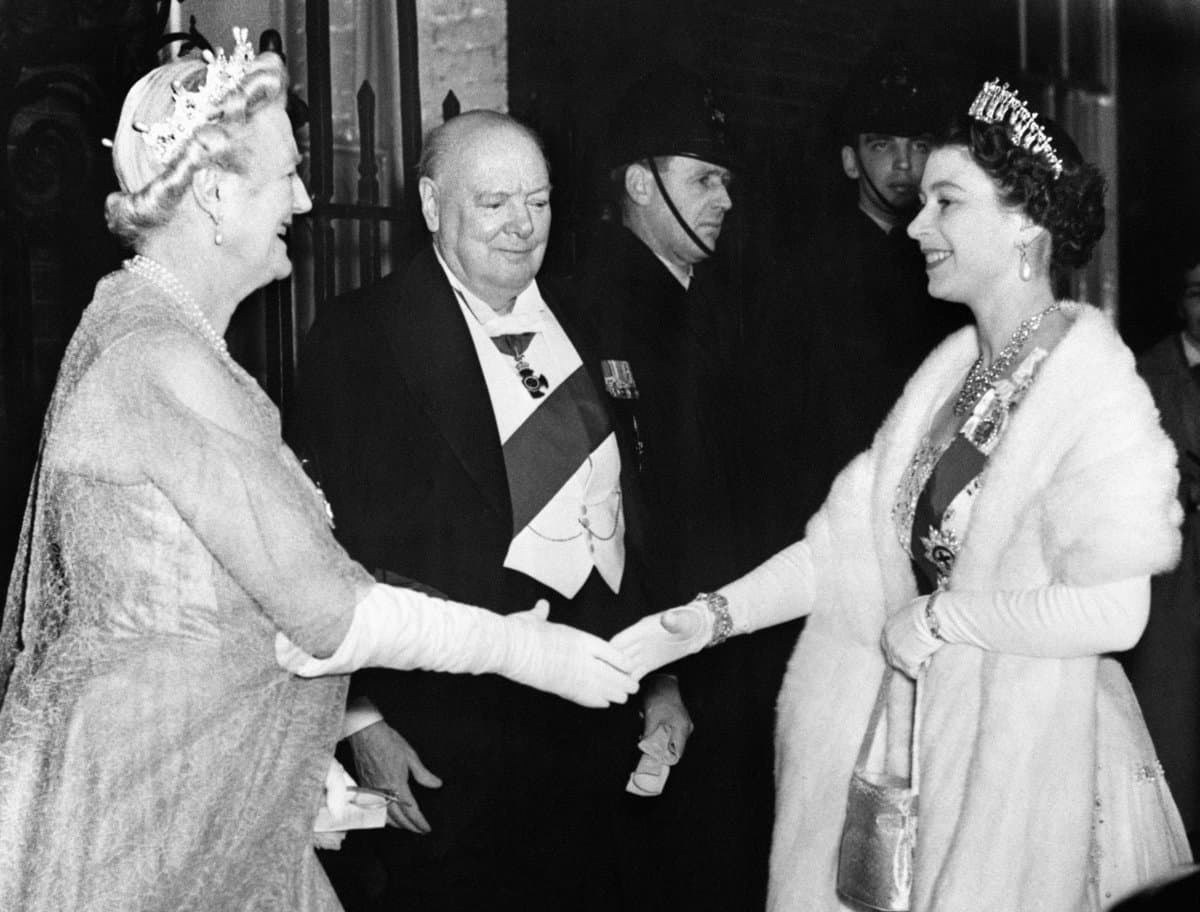
Queen Elizabeth II understood a simple rule of evening dress: when the room is political, the jewelry has to speak with calm authority. At Winston Churchill’s farewell dinner at 10 Downing Street on April 4, 1955, she wore diamonds and pearls with a composure that turned ornament into statecraft. The result still reads like the default formula for formal dressing because it balanced softness, light, and precision without ever looking overstated.
The setting mattered. Churchill was in his final night as prime minister, and he resigned the next day, April 5, 1955. John Colville remembered the dinner as gathering about fifty Cabinet ministers, grandees, and officials, with Anthony Eden, Churchill’s successor, among the guests. In a Britain still dealing with postwar rationing, and on the brink of ITV’s arrival as the country’s first commercial television channel, the polished pearl-and-diamond look felt like a bridge between old ceremonial certainty and a faster modern age.
Why pearls and diamonds worked so well
The genius of the formula is contrast. Pearls bring a milky, reflective surface that softens the face and flatters candlelight. Diamonds sharpen that effect, adding edge, sparkle, and structure so the look does not sink into sweetness. At a state-dinner level, that balance matters because the jewelry has to hold its own against formal tailoring, satin, and the visual noise of a crowded room.
Queen Elizabeth II’s public image was built on exactly this kind of controlled brightness. She was rarely seen in public during the day without a multi-stranded pearl necklace, and that habit gave her evening pearls a continuity that made them feel natural rather than decorative. The necklace did not simply accessorize her clothing. It framed her face, anchored her posture, and reinforced the sense that she was always dressed for a role larger than fashion.
What made the Downing Street look legible from across a room
The look works because it respects neckline balance. A pearl strand or multi-row necklace sits closest to the throat, which keeps the eye centered and avoids the visual drop that can happen when a necklace is too long for a formal collar or bateau neckline. Diamonds, whether in a clasp, earrings, or a brooch, then act like punctuation, catching light at the edges without competing with the pearls’ softness.
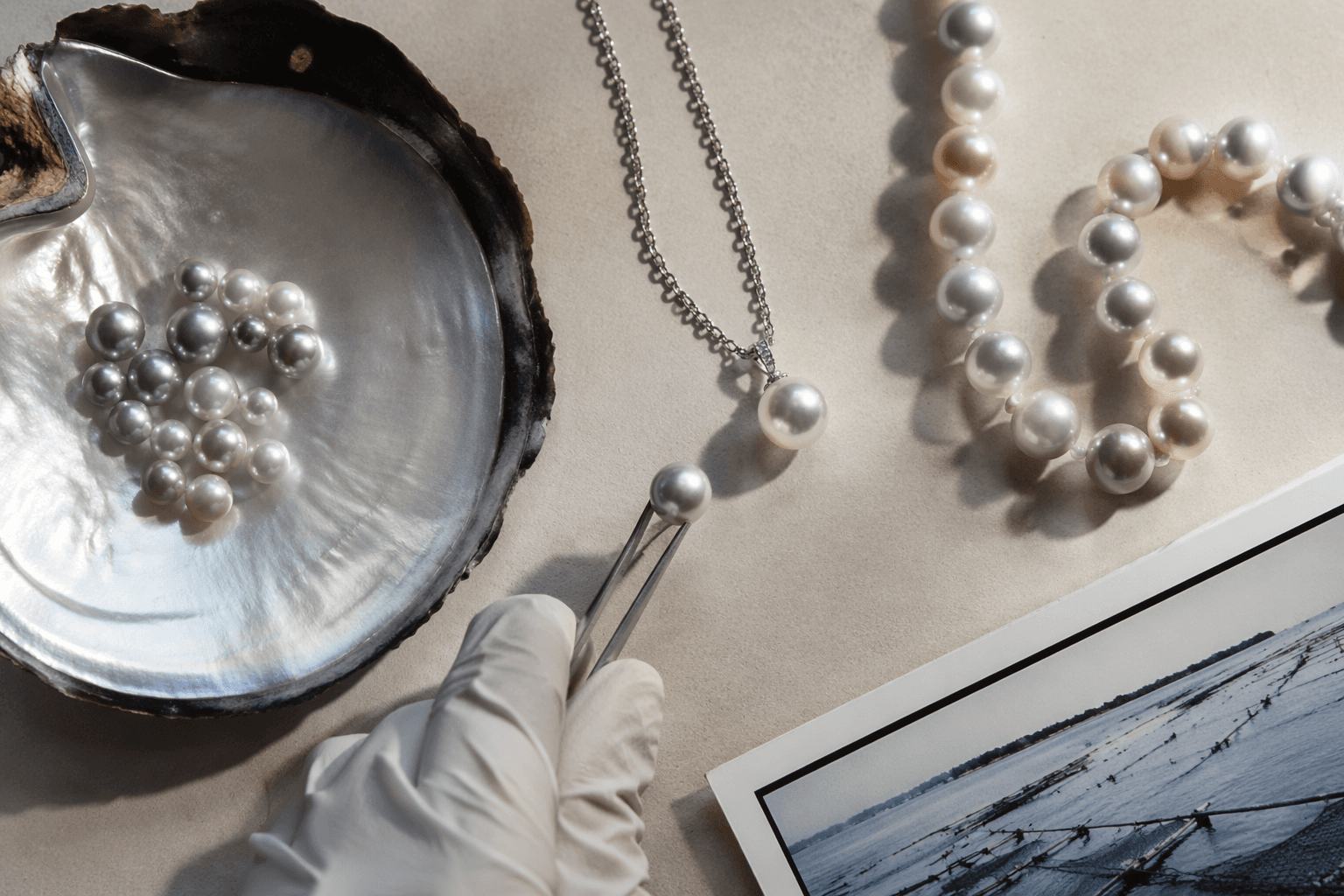
Size matters too. Medium-to-large pearls read as confident and ceremonial; tiny seed pearls can disappear in evening light. Queen Elizabeth II’s style favored enough presence to register from a distance, especially in rooms that were designed to make the wearer look composed under pressure. For anyone trying to recreate the effect now, the lesson is not quantity for its own sake. It is proportion, presence, and the kind of polish that looks intentional from the first glance.
A useful modern formula looks like this:
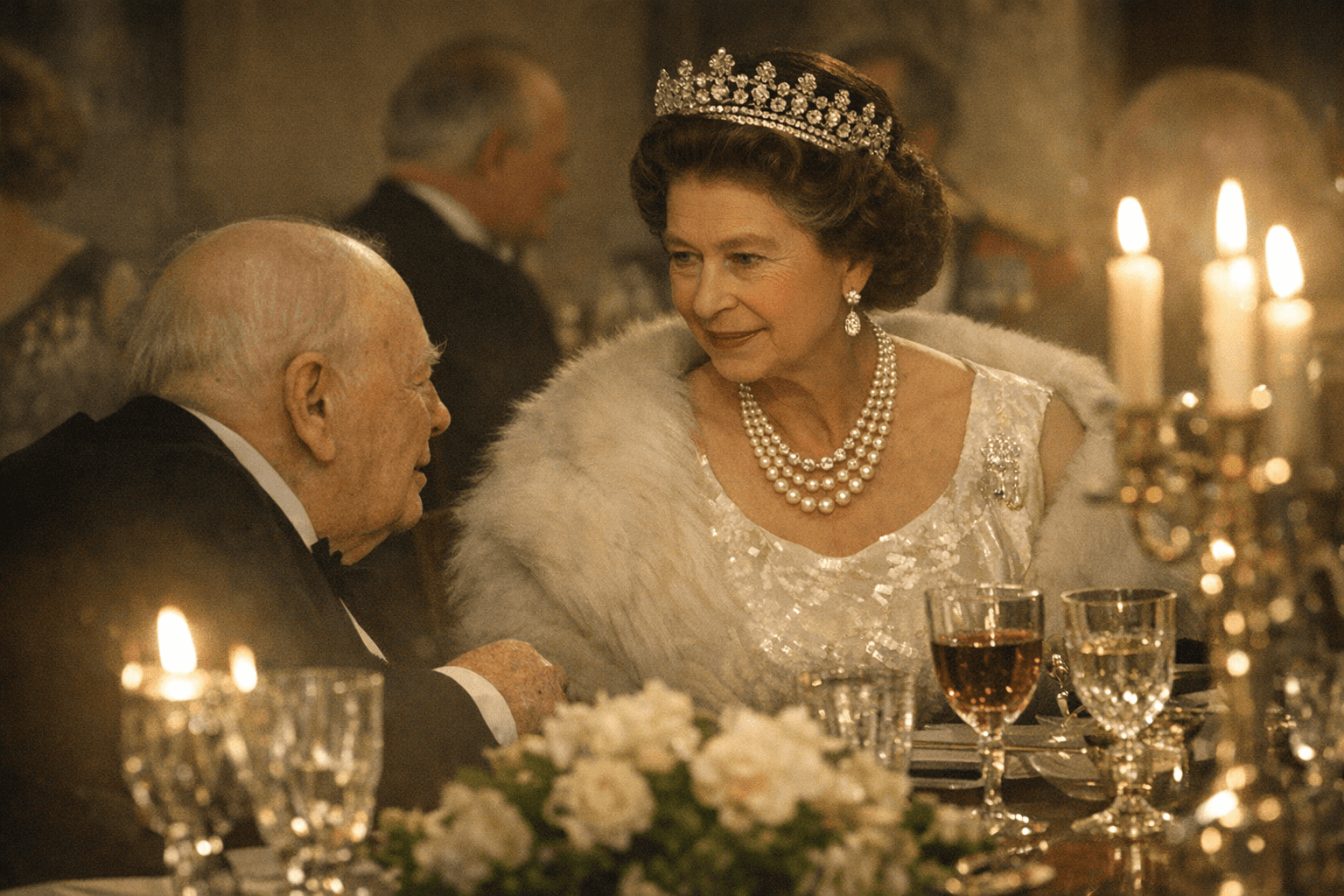
- A single strong pearl strand for a clean neckline, or a three-row necklace when the garment is high-necked and formally tailored.
- Diamonds kept close to the face, in earrings, a clasp, or a modest brooch, so the pearls remain the main story.
- Smooth fabrics, especially satin, crepe, or wool with structure, because pearls need a quiet surface to feel luminous rather than busy.
- Necklines that leave room for the necklace to breathe, not fight the collar.
The provenance behind the image
The Downing Street dinner was not an isolated styling moment. Queen Elizabeth II’s fashion archive, now held by the Royal Collection Trust, contains more than 4,000 items and spans 1926 to 2022, making it one of the most comprehensive single-owner collections of British fashion. That scale matters because it shows how consistently clothing and accessories documented her public life, not just her style preferences.
Pearls were part of that story from the beginning. Norman Hartnell used rich pearl embroidery in her 1947 wedding dress, then designed the coronation dress she wore in June 1953. Pearls were not an afterthought in her wardrobe. They were woven into its ceremonial language, appearing at milestones that defined her reign and her public identity.
There is also a more intimate strand of provenance in her pearl necklaces. Leslie Field identified at least three notable triple-row necklaces associated with the Queen: a family-made graduated-pearl necklace with a diamond clasp soon after her accession, a 1953 coronation gift from the Amir of Qatar, and a Silver Jubilee gift from King George V. That mix of family, diplomacy, and dynastic memory is exactly why pearls on Queen Elizabeth II never felt generic. Each strand carried a narrative as well as a surface.
How to wear the look without making it feel dated
The strongest lesson from the Churchill dinner is restraint. Pearls-and-diamonds still feel elegant when the pearls are clearly fine, the diamonds are clean accents, and the rest of the outfit steps back. The combination starts to look dated when every element is too literal, too matched, or too reliant on nostalgic costume cues.
For evening today, the formula works best when it is adapted rather than copied. One high-quality strand can feel more modern than several that fight for space. A diamond clasp, pavé studs, or a small brooch can echo the royal effect without turning the look into an imitation. The point is not to dress like a portrait. It is to borrow the discipline that made the portrait convincing.
That discipline is why the Queen’s pearls still resonate. In a year of political transition, rationing’s afterglow, and the arrival of commercial television, her jewelry made a case for order, grace, and authority in a single glance. At Churchill’s farewell dinner, pearls and diamonds were not a relic of the past. They were the clearest language of formal evening style, and they still are.
This article was produced by Prism’s automated news system from verified source data, official records, and press releases, then run through automated quality and moderation checks before publishing. The system is built and supervised by the people who set the standards it runs under. Read our full AI policy.
Did this article answer your question?