Freshwater Pearl Jewellery Designs
Coin-shaped and baroque freshwater pearls, Zhuji farm-to-boutique supply chains, and mixed-metal settings are making this accessible gem fashion jewellery's most design-forward story.
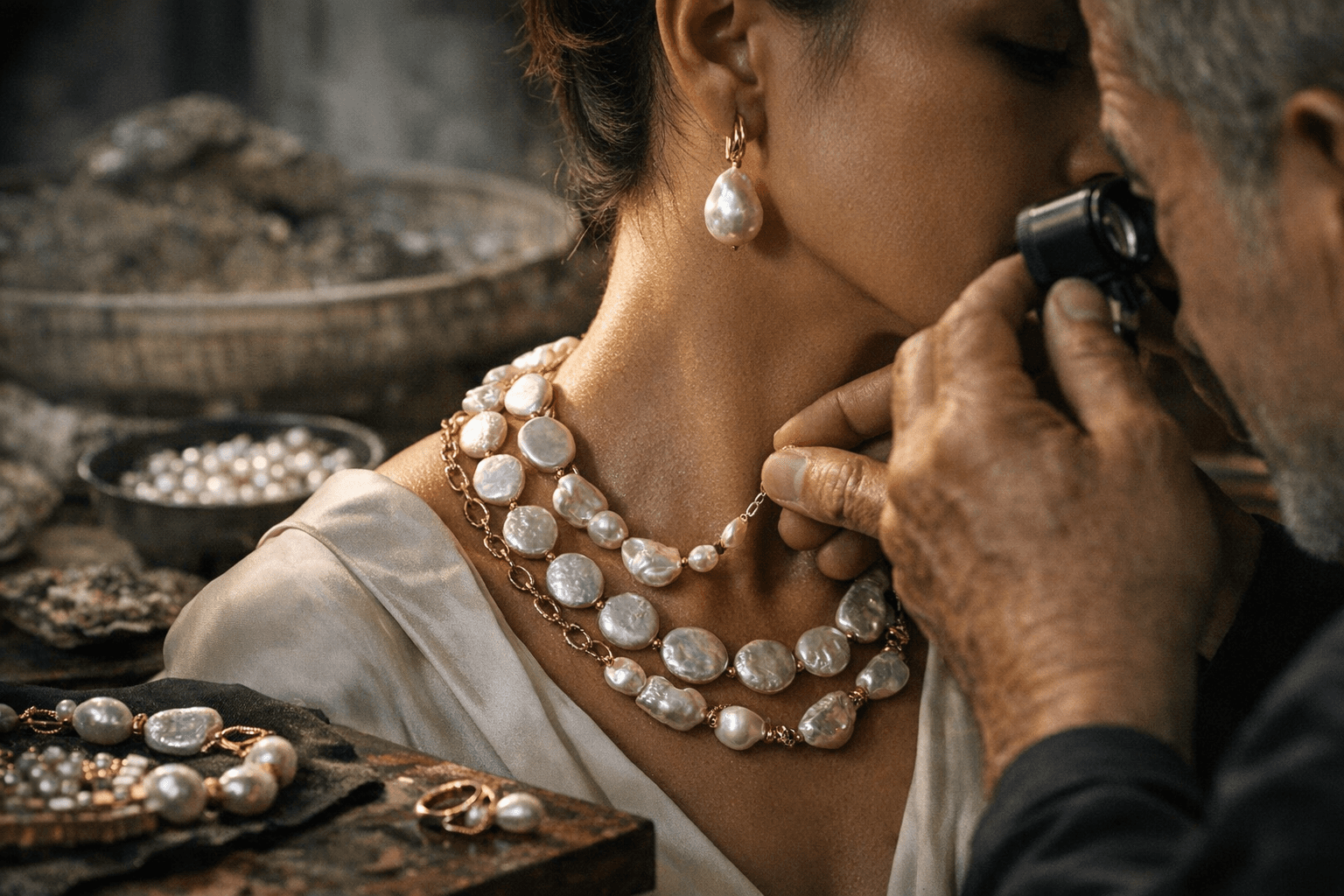
The pearl most likely to be on a designer's bench right now was not harvested from a tropical lagoon. It came from a freshwater mussel raised in the lakes and rivers of Zhejiang Province, China, processed through one of the world's most sophisticated jewellery supply ecosystems, and set into something decidedly contemporary: an asymmetric stud, a coin pendant on a gold-fill chain, or a baroque drop earring that looks more like a Brancusi sculpture than a strand of church pearls. Freshwater pearls have quietly moved from the bargain corner of the jewellery case to its most creative edge, and the design language surrounding them is evolving accordingly.
The Zhuji Advantage: Farm to Boutique
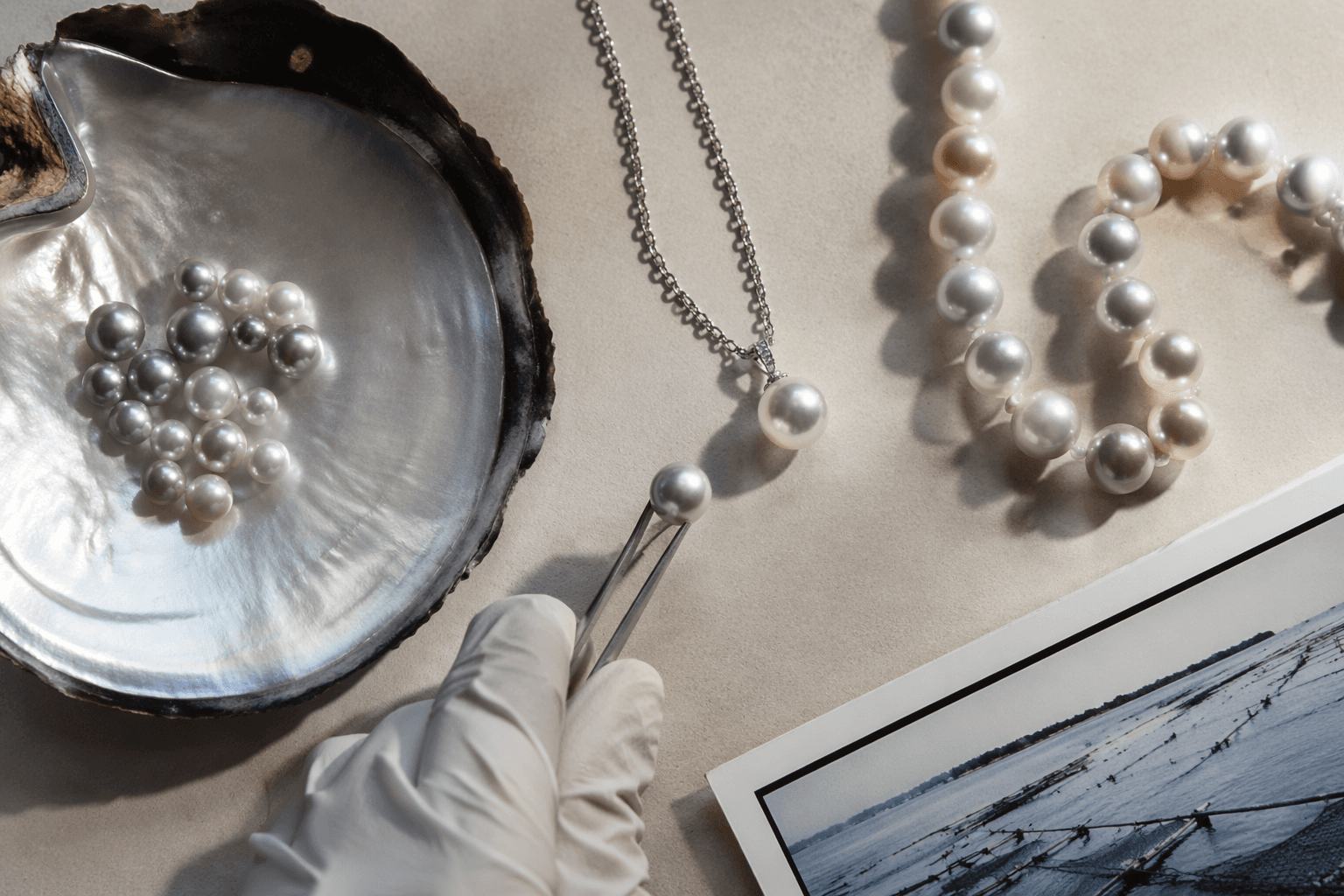
Zhuji's annual freshwater pearl trade volume represents 70% of the world's annual freshwater pearl trade volume, and 80% of China's. That concentration of supply is not incidental to contemporary design; it is the engine behind it. The China Pearls and Jewellery International City complex in Zhuji spans 1.2 million square metres, with a total investment of over 3 billion RMB (roughly 450 million USD), and records a yearly transaction volume of approximately 750 tons of pearls and pearl jewellery. For independent designers and boutique brands, direct relationships with Zhuji-based farms and processors have shortened the distance between harvest and finished piece, making it possible to request specific shapes, surface treatments, and colour gradients rather than simply selecting from catalogue lots. This farm-to-boutique model is one of the structural reasons freshwater pearl jewellery has become so design-forward so quickly.
The Shape Revolution: Baroque, Coin, and Organic Forms
For most of the twentieth century, the aspiration in cultured pearls was the perfect round. Today, that standard reads as stiff. Baroque pearls are resonating with designers because their irregular, asymmetrical shapes align with a broader cultural appetite for authenticity and natural imperfection. In a market saturated with uniform, mass-produced pieces, a baroque pearl earring is visually distinctive and inherently one-of-a-kind. The democratisation of the freshwater pearl supply chain has made high-quality baroque pearls accessible at indie-brand price points, which means more designers are experimenting with irregular forms.
Alongside baroque, coin-shaped freshwater pearls have become a signature shape in contemporary collections: flat, disc-like, and remarkably lustrous on both faces, they suit pendant and drop applications where a traditional round would simply look small. Keshi pearls, formed without a bead nucleus and prized for their all-nacre composition, appear in coiled and petal forms that photograph strikingly against the skin. The top design directions in freshwater pearl necklaces currently include baroque pearls, layered multi-strand constructions, chokers, mixed-material designs, coloured pearls, pendant and lariat styles, and statement oversized pearls. The range reflects a market actively testing what freshwater pearls can do when freed from formal conventions.
Mixed-Metal Styling: Gold, Silver, and the Interplay Between
One of the clearest signals that freshwater pearls have entered fashion jewellery's mainstream is the confidence with which designers are pairing them with mixed metals. Silver settings with cultured pearls are inexpensive and widely preferred by first-time buyers, but the conversation has moved well beyond entry-level: gold-fill chains with baroque drops, oxidised silver with coin-shaped pendants, and two-tone constructions that contrast warm and cool metals have all become standard vocabulary. Layered long strands, chokers, and chains are being mixed together, often paired with gold accents for a chic, contemporary aesthetic. The effect collapses the old hierarchy between pearl jewellery and everyday fine jewellery, which is precisely the point.
Pearl-and-gemstone pairings extend the mixed-media logic further. Spring 2026 collections are delivering unexpected pairings with coloured stones like tanzanite, morganite, and aquamarine for silhouettes that feel anything but traditional. In these pieces, the freshwater pearl functions less as the centrepiece and more as a textural counterpoint, its nacre softening the geometry of faceted stones in ways that a metal bead simply could not.
The Earring Moment and the Layering Impulse
Pearl earrings are growing increasingly popular among younger consumers, driven by their adaptable designs that align with current fashion sensibilities. The freshwater pearl earring category in particular spans a range that would have seemed implausible a decade ago: tiny studs in dyed lavender, long asymmetric drops in mixed baroque and keshi, sculptural ear cuffs, and clustered multi-pearl constructions that fill the entire ear. Men's and unisex designs are also trending, often combined with chunky links or minimalist cuts, a development that signals just how thoroughly the pearl has shed its gendered, occasion-specific past.
The layering impulse is equally significant. Where a single strand once constituted the full pearl look, contemporary styling treats freshwater pearls as one element in a composed necklace stack: a coin pendant at collarbone length over a longer baroque strand, finished with a gold chain that adds linear contrast. The approachability of freshwater pearl price points makes this kind of layered collecting realistic for a far broader audience than fine pearl jewellery traditionally served.
The Market Logic Behind the Momentum
Design enthusiasm and commercial reality are, for once, moving in the same direction. The freshwater pearl necklace segment, estimated at 500 million USD in 2025, is projected to grow at a compound annual growth rate of 6 percent through to 2033, reaching approximately 800 million USD. Online platforms have played a material role in popularising freshwater pearl jewellery by making a diverse selection of designs available at accessible price points. Direct-to-consumer brands are rising within the category, leveraging social media and influencer partnerships to reach audiences while competing on unique design, ethically sourced pearls, and transparent pricing.
The saltwater pearl segment, which dominated the market historically, is expected to see relative decline, owing to rising prices and the improving quality of freshwater alternatives. That quality gap has narrowed to the point where even seasoned pearl buyers often require gemological examination to distinguish premium freshwater material from lower-grade Akoya. For the design-led brands channelling Zhuji farm relationships into considered, shape-focused collections, that closing gap represents an enormous opportunity: the aesthetic credibility of a material that was once considered fine jewellery's second tier, now commanding the creative centre.
The freshwater pearl's reinvention is not a trend cycle that will simply reverse. It is the result of structural changes in supply, a genuine shift in design ambition, and a consumer appetite for jewellery that is both meaningful and wearable without ceremony. The most interesting pearl designs of 2026 are not the ones that look like pearls are supposed to look. They are the ones that make you reconsider what pearls are allowed to be.
This article was produced by Prism’s automated news system from verified source data, official records, and press releases, then run through automated quality and moderation checks before publishing. The system is built and supervised by the people who set the standards it runs under. Read our full AI policy.
Did this article answer your question?