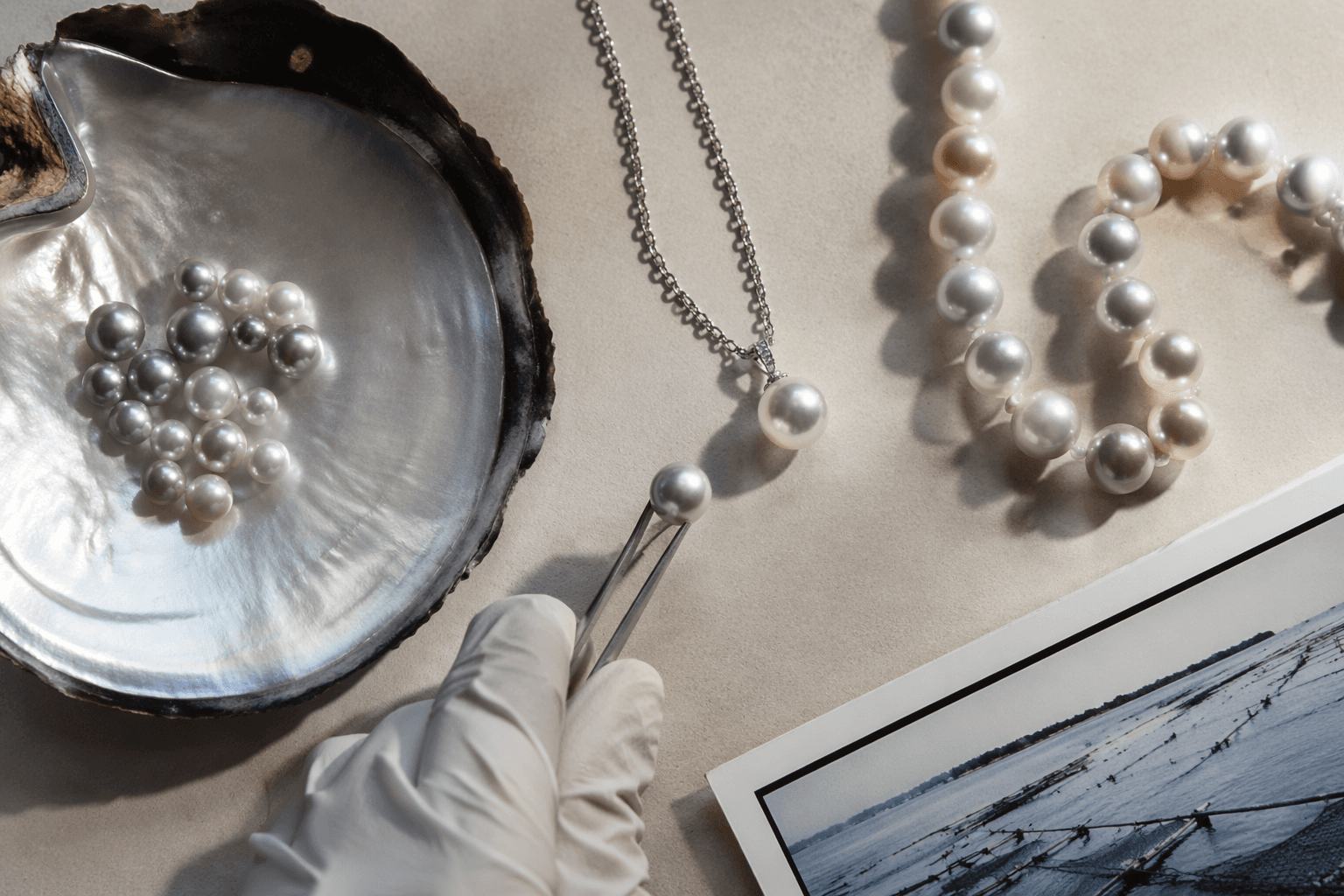
GIA details how labs verify natural and cultured pearl origins
GIA’s pearl reports turn a seller’s claim into proof, using X-rays to expose what the eye cannot. For buyers, that is the line between beautiful and verified.
Trust is the real luxury in pearls
A pearl can look serene on the surface and still carry a complicated story inside. That is why GIA’s pearl identification work matters so much to buyers: it is built to answer the question a seller cannot answer with a glossy photo alone, which pearl is natural, which is cultured, and which has been altered along the way. GIA has led the identification and classification of natural and cultured pearls since 1949, and it has also contributed to the revision of the U.S. Federal Trade Commission’s pearl guidelines for the jewelry industry.
That history gives its reports unusual weight in a market where one word can change value dramatically. A strand described as natural, cultured, saltwater, freshwater, treated, or tied to a particular mollusk origin may carry very different pricing and disclosure standards. When a purchase is significant, or when the authenticity claim is central to the sale, a lab report is not a luxury add-on. It is the evidence.
What the eye can and cannot tell you
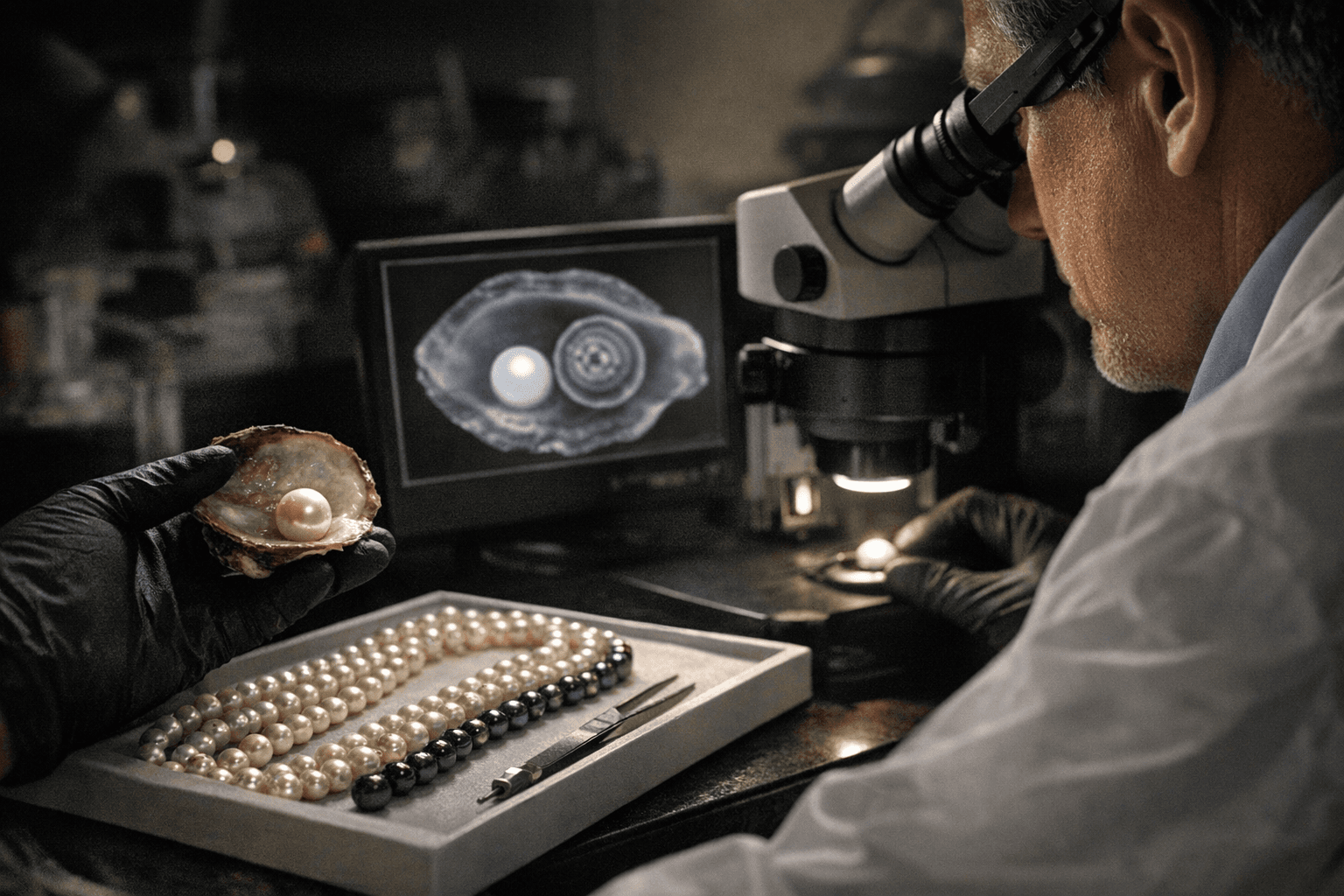
Pearls are not judged the way many gems are. Surface luster and shape matter, but they do not reveal how the pearl formed. GIA says natural and cultured pearls often cannot be separated by visual inspection alone, because the answer lives inside the pearl, not just on it. That is why the lab uses digital X-radiography, traditional visual observation, and other advanced testing to determine origin.
The key tool is microradiography, which GIA describes as the most reliable non-destructive way to see a pearl’s internal structure. All pearls are subject to this analysis, because the interior structure can show whether the pearl formed naturally in an oyster or was cultivated with human intervention. GIA also uses X-ray methods to help distinguish natural-color pearls from treated-color pearls, another distinction that can materially affect value and disclosure.
For shoppers, this is the heart of the matter: a pearl’s beauty may be obvious, but its identity is often invisible. The most persuasive proof is not a promise from a seller. It is a lab reading that shows what the pearl actually is.
How GIA translates structure into classification
GIA’s pearl work does more than sort natural from cultured. Its reports turn a pearl’s physical details into a precise record that can support pricing, insurance, resale, and confidence at the counter. The GIA Pearl Identification Report can include quantity, weight, size, shape, color, overtone, identity, mollusk origin when determinable, formation environment, whether the pearl is from saltwater or freshwater, and any detectable treatments.
That level of detail matters because two pearls can look similar in a display tray and still be worlds apart in origin and market position. A report that identifies a freshwater cultured pearl is not the same as one that confirms a natural pearl, and a treatment disclosure is just as important as origin. The document becomes a map of what the buyer is actually paying for.
GIA’s Cultured Pearl Classification Report adds another layer of evaluation through the GIA 7 Pearl Value Factors™: size, shape, color, luster, surface, nacre, and matching. Those are the qualities that determine whether a cultured pearl strand feels merely acceptable or genuinely exceptional. Matching, especially in a strand or pair, can be one of the quietest drivers of value, because symmetry and consistency are often what separate a graceful necklace from a forgettable one.
Why digital imaging changed pearl authentication
Pearl testing did not arrive fully formed. GIA’s 2024 research traces how X-ray imaging transformed the field, moving it from early film-based systems in the early 1900s to today’s sophisticated digital equipment. That evolution is more than a technical footnote. It is what allowed gemologists to distinguish natural from cultured pearls by seeing the interior clearly and consistently.
The same research identifies X-ray radiography and X-ray computed microtomography as crucial tools in modern gemology for pearl identification. In practice, that means the lab is not guessing from the surface or leaning on brand lore. It is reading the pearl’s internal architecture. For a buyer, that shift from appearance-based judgment to structural analysis is the difference between a persuasive story and a verifiable one.
It also helps explain why pearls are a uniquely high-stakes category. A strand can be delicate, luminous, and utterly convincing while still depending on origin, treatment, and mollusk type for its true value. Digital imaging makes those distinctions legible.
What to look for before you buy
Not every pearl purchase needs a full lab report, but the more the sale depends on origin claims, the more useful that document becomes. If a seller says a pearl is natural rather than cultured, or untreated rather than treated, the report is the strongest protection against ambiguity. The same is true when you are comparing pieces across saltwater and freshwater categories, or when a listing leans on mollusk origin as part of the value story.
Red flags are often subtle in pearl listings. Watch for language that sounds definitive without giving proof, especially when the price seems high for a piece that lacks lab documentation. Be cautious when a listing emphasizes size or glow but stays vague on identity, formation environment, or treatment. In a market where a single strand can vary widely in worth, vague disclosure is not a minor omission. It is a warning sign.
A credible pearl sale should feel specific. You should know whether you are looking at natural or cultured pearls, whether the pearls are saltwater or freshwater, whether any treatment is present, and whether the report includes a digital image and security features to help verify authenticity. That is the kind of clarity that turns a beautiful object into a confident purchase.
The buyer’s advantage
Pearls are among jewelry’s most poetic materials, but their romance should not come at the expense of precision. GIA’s method brings structure to a category where structure is everything: origin, treatment, formation, and matching all change how a pearl should be valued and described. For everyday shoppers, that means the smartest pearl purchase is not simply the prettiest strand. It is the one whose story can be verified from the inside out.
In a market where trust is part of the price, the lab report is not paperwork. It is the final clasp on the promise.
This article was produced by Prism’s automated news system from verified source data, official records, and press releases, then run through automated quality and moderation checks before publishing. The system is built and supervised by the people who set the standards it runs under. Read our full AI policy.
Did this article answer your question?