GIA Explains Cultured Pearls Are Real, Imitations Are Not
Cultured pearls are real, but lookalikes are not. Here is how to tell them apart, judge value, and buy with confidence.
The short answer: yes, cultured pearls are real
Cultured pearls are real pearls. They are not fakes, and they are not a marketing loophole. The essential difference is origin: cultured pearls are grown with human intervention, while imitation pearls are made from other materials such as plastic, shell, or composite products.
That distinction matters because pearl jewelry sits at the intersection of beauty, value, and disclosure. The Federal Trade Commission’s Jewelry Guides are designed to help businesses describe natural and cultured pearls, and their imitations, truthfully. In plain terms, the market depends on honesty about what a pearl is, how it was formed, and what a buyer should expect from it.
What makes a pearl natural, cultured, or imitation
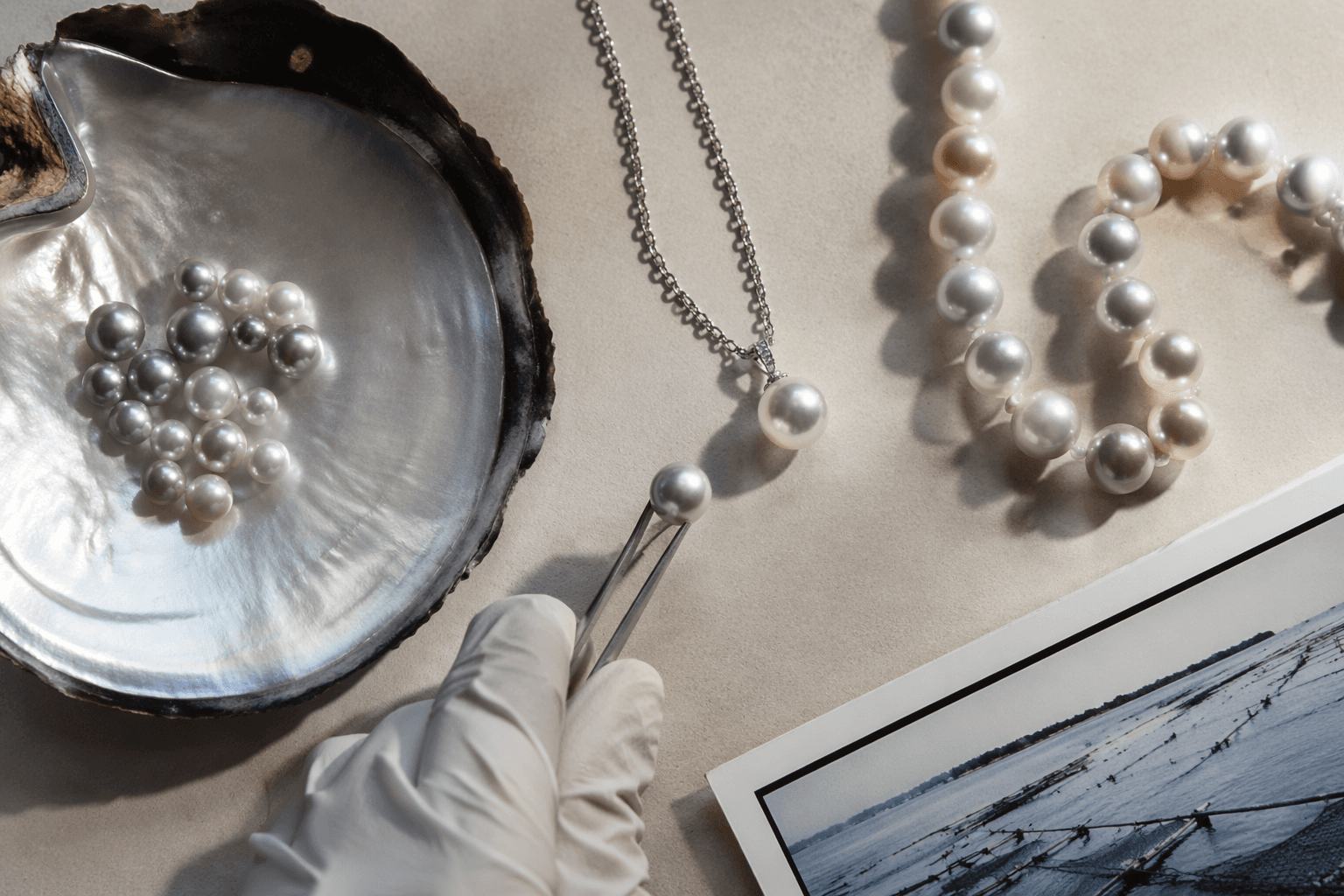
Natural pearls form in the wild without human intervention. They are created when a mollusk responds to an irritant and begins coating it with nacre, the lustrous material that gives pearls their glow. Cultured pearls follow the same biological process, but the start is deliberate: a bead or piece of tissue is inserted into the mollusk, which then coats it with nacre.
Imitation pearls are something else entirely. They are beads or objects made to look like pearls, but constructed from a different material. Plastic, shell, and composite products can mimic the soft sheen of a pearl strand, yet they do not share the layered nacre structure, the weight, or the depth of light that make real pearls so distinctive.
Why cultured pearls dominate the market
The vast majority of pearls sold in today’s pearl jewelry market are cultured pearls. That is not a compromise. It is the modern reality of fine pearl jewelry, and it is why cultured pearls have become the accessible entry point for so many buyers.
Before the first commercially successful cultured pearls in the early twentieth century, pearls were so rare and expensive that they were reserved almost exclusively for the very rich, royal families, and the gods. Cultivation changed the story of pearls without stripping away their cachet. It simply made them available in far greater numbers, at price points that let more people own a strand, a pair of studs, or a luminous drop pendant.
How cultured pearls are made
A cultured pearl begins when a pearl farmer introduces a bead or a piece of tissue into a mollusk. The animal responds by coating that nucleus with nacre over time, layer by layer. That process can take place in saltwater or freshwater mollusks, and the result can vary widely in size, shape, surface texture, and luster.
GIA identifies several cultured pearl types, including bead-nucleated, tissue-nucleated, and non-bead cultured pearls. That detail matters because not all cultured pearls are built the same way, and the method of formation can influence appearance, size, and value. A buyer looking only at the surface may see a single category called “cultured pearls,” but the trade sees a range of materials and structures with very different profiles.
How to recognize the difference at a glance
A convincing imitation can fool the eye in a photo, but real pearls usually reveal themselves in the hand. Their surfaces often show subtle irregularities, and their luster has depth rather than a flat, painted shine. The play of light on nacre is part of the appeal, which is why real pearls look alive in motion while many lookalikes can appear too uniform.
A practical way to think about it:
- Real cultured pearls are formed by a mollusk and built from nacre.
- Imitation pearls are manufactured from non-pearl materials.
- Natural pearls are wild and rare.
- Cultured pearls are farm-grown and far more common.
That last point is important at the counter. If a necklace is priced like costume jewelry but described as pearl jewelry, the material claim deserves scrutiny. If the strands are exceptionally matched and the luster is strong, the price should reflect that craftsmanship and quality, not just the word “pearl.”
What determines pearl value
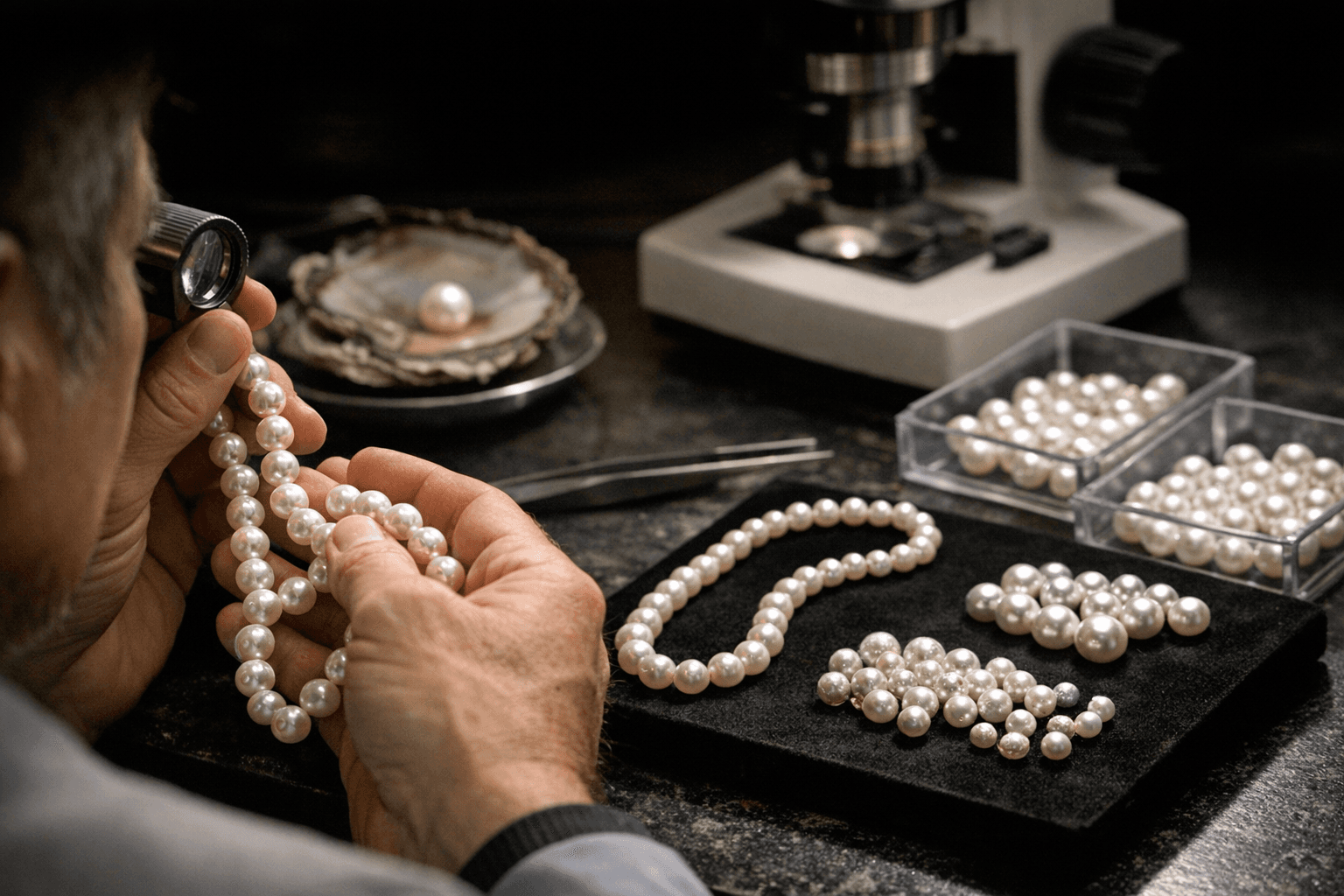
Once authenticity is established, value comes down to quality. GIA evaluates pearls by size, shape, color, luster, surface quality, nacre quality, and matching, especially when the piece contains multiple pearls. These are the factors that separate a modest strand from one that feels sculptural and refined.
- Size affects presence and rarity.
- Shape matters because round pearls are typically prized, while baroque forms have their own appeal.
- Color can shift from white and cream to black, gray, silver, and nearly every hue.
- Luster is one of the most important beauty cues, because it controls how sharply light returns from the surface.
- Surface quality reveals blemishes or irregularities.
- Nacre quality influences durability and depth of sheen.
- Matching matters in strands, earrings, and suites, where the eye expects continuity.
This is where cultured pearls often offer strong value. They can deliver the visual effect of fine jewelry without entering the price territory of rare natural pearls, which remain extraordinary because of their scarcity. For many buyers, that makes cultured pearls a more accessible alternative to higher-cost categories such as diamonds or other precious gemstones, while still offering genuine material, craftsmanship, and long-term style mileage.
What to expect when you buy, wear, and resell
Buyers should think of cultured pearls as real jewelry with real standards, but not as a category that behaves like gold or diamonds in resale. Their value is tied to fashion, condition, documentation, and quality characteristics, especially luster and matching. A well-kept strand from a reputable source can retain desirability, but the market generally rewards exceptional pearls more than ordinary ones.
That is why classification and documentation matter. GIA offers pearl classification reports for loose, mounted, or strung pearls, a reminder that the trade relies on verification. A report does not make a pearl beautiful, but it helps establish what it is, which is the first step in understanding what it is worth.
For the buyer standing at the showcase, the practical rule is simple: ask what the pearl is made of, how it was formed, and what quality factors justify the price. A cultured pearl is real. An imitation is a lookalike. The difference is not semantic, it is the foundation of value, disclosure, and trust in one of jewelry’s most enduring forms.
This article was produced by Prism’s automated news system from verified source data, official records, and press releases, then run through automated quality and moderation checks before publishing. The system is built and supervised by the people who set the standards it runs under. Read our full AI policy.
Did this article answer your question?