How GIA uses trace elements to pinpoint freshwater pearl origins
GIA’s trace-element testing gives freshwater pearls a harder provenance check, with real consequences for pricing power, resale claims, and brand trust.
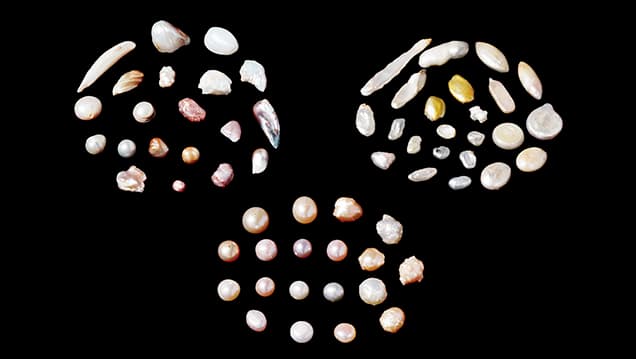
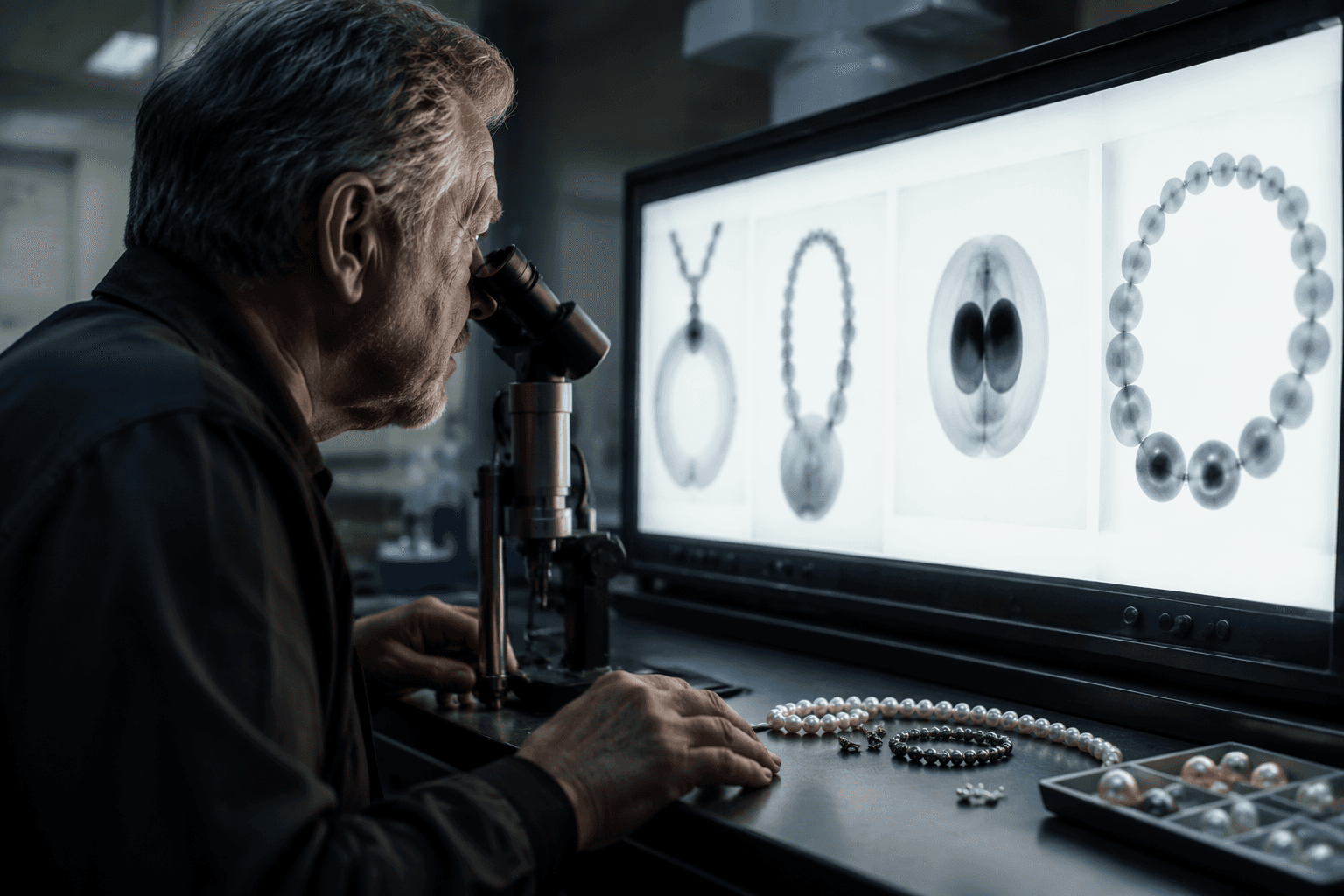
Freshwater pearls have always traded on beauty, but value increasingly rests on something less visible: whether the origin story holds up under a lab. GIA’s 2019 provenance study shows how trace-element testing can separate claims from chemistry, and that matters to anyone pricing a strand, insuring a suite, or reselling a pearl whose backstory may be as important as its glow.
Why provenance now has a price tag
In pearls, provenance is not a decorative detail. A strand described as a U.S. natural freshwater find, a Chinese cultured freshwater suite, or a non-bead-cultured pearl grown in China can carry very different market expectations, especially when buyers are paying for rarity, not just luster. The sharper the provenance, the easier it becomes to justify a premium, and the easier it becomes to challenge vague or inflated claims.
That is why the spring 2019 GIA paper, published in Gems & Gemology by Artitaya Homkrajae, Ziyin Sun, Troy Blodgett, and Chunhui Zhou, lands as more than academic pearl research. Its DOI is 10.5741/GEMS.55.1.47, and its central question is the one collectors and resale platforms increasingly care about: can a freshwater pearl’s chemical signature help pin down where it came from?
Inside the chemical fingerprint
The study examined 225 freshwater pearl samples, a dataset large enough to do more than admire a few beautiful outliers. The samples fell into three groups: non-bead-cultured pearls grown in China, natural pearls found in the United States, and Chinese cultured freshwater pearls. GIA measured trace-element concentrations using laser ablation-inductively coupled plasma-mass spectrometry, or LA-ICP-MS, then used linear discriminant analysis, or LDA, to sort the samples by pattern.
LA-ICP-MS is the sort of laboratory method that gives provenance science its authority. A laser removes microscopic material from the pearl, the plasma converts that material into ions, and the mass spectrometer reads the elemental profile. LDA then looks for the statistical lines that separate one origin group from another. For the trade, that means the argument is no longer simply “trust the seller”; it becomes “show me the chemistry.”

That shift has commercial consequences. Brands that can document origin with lab-backed analysis gain a cleaner story and, often, more pricing power. Dealers who rely on broad labels such as “freshwater” without distinguishing natural from cultured, or China from the United States, may find those claims more vulnerable as scientific origin testing becomes easier to discuss with clients.
Why American river pearls still matter
The U.S. context is not a side note, because it is part of the price conversation. GIA’s provenance paper points out that the United States has more than 300 native mussel species and that its rivers and lakes have produced countless prized natural freshwater pearls over the centuries. It also notes that American freshwater pearling and shelling heritage has been recorded in the literature since 1908, with later work by James L. Sweaney, John R. Latendresse, Wendell R. Haag, Nicholas Sturman, Laura M. Otter, Areeya Manustrong, and Dorrit E. Jacob contributing to that longer record.
The same paper is blunt about the pressures that changed the market landscape: historical overharvesting, dam construction, and water pollution reduced those resources. The U.S. Geological Survey adds that Native Americans of the Atlantic Coastal areas and the Mississippi River Basin were among the first to collect and use U.S. freshwater mussel pearls and shells. Virginia Tech’s freshwater mussel research describes nearly 300 species inhabiting the nation’s rivers, streams, and lakes, the richest mussel diversity in the world, and a natural heritage that needs protection.
That ecological backdrop matters in jewelry because provenance is not only a matter of geography, it is a matter of survival. When collectors pay for a river pearl, they are also paying for a disappearing history of waterways, mollusks, and human collecting traditions. That is one reason American natural freshwater pearls often carry a narrative premium alongside their gemological one.
The Mississippi River system as a documented source
GIA’s other 2019 pearl paper, Gemological and Chemical Characteristics of Natural Freshwater Pearls from the Mississippi River System, gives that American story a concrete market anchor. The Carlsbad laboratory received 854 natural freshwater pearls from Kari Anderson of Kari Pearls in Muscatine, Iowa, who stated that they were collected from the Mississippi River system.
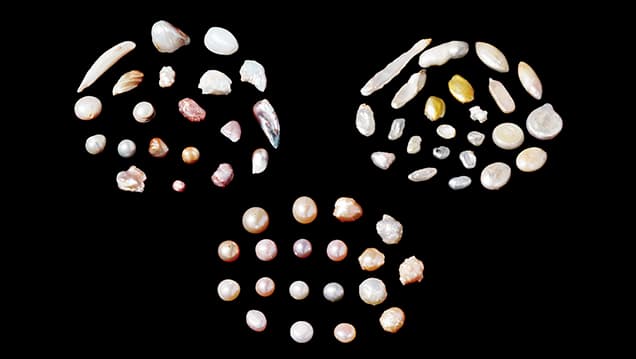
That number is important because it shows the U.S. category is not anecdotal. It is a documented body of material large enough to study, describe, and compare, which is exactly the kind of evidence the high end of the pearl market understands. A pearl with a credible Mississippi River provenance does not compete in the same lane as mass-market cultured strands; it competes as a source-driven object, with scarcity and narrative folded into value.
GIA has also pointed to natural freshwater pearls from Europe, including Russia, Scotland, and Germany, another reminder that freshwater provenance is broader than the China-versus-America shorthand many buyers still use. The more the market understands that range, the easier it becomes to evaluate what a seller is really offering: common cultured production, a specific river origin, or a rare natural find.
What buyers, collectors, and resale platforms gain
Provenance testing is not a magic stamp, and it should not be treated like one. It is interpretive, built from chemical patterns and statistical classification, which is precisely why it has credibility. The strongest use case is not spectacle, but verification: a lab-backed origin story can support more confident buying decisions, make retail descriptions harder to stretch, and give resale platforms a basis for challenging unsupported claims.
GIA’s 2020 pearl identification webinar description makes the larger point plainly: pearls conceal many clues to their origin, including whether they are natural or cultured, saltwater or freshwater, and what mollusk created them. GIA’s broader pearl analysis also notes that freshwater pearls often show moderate to strong greenish-yellow fluorescence, while saltwater pearls generally show weak or no fluorescence. Trace elements are one part of that toolkit, but an especially useful one because they translate provenance into measurable evidence.
For the market, that changes the language of value. Origin can now be tested with enough rigor to matter in negotiations, not just storytelling. And once a pearl’s source can be read in the lab, the strongest premiums will belong to the pieces whose claims are both beautiful and defensible.
This article was produced by Prism’s automated news system from verified source data, official records, and press releases, then run through automated quality and moderation checks before publishing. The system is built and supervised by the people who set the standards it runs under. Read our full AI policy.
Did this article answer your question?