Pearl Jewelry Buying Guide, How to Choose Quality and Value
Pearls reward careful buying. Learn how type, luster, nacre, and matching shape price, durability, and daily wear before you choose a strand or pair.
Start with the pearl’s identity
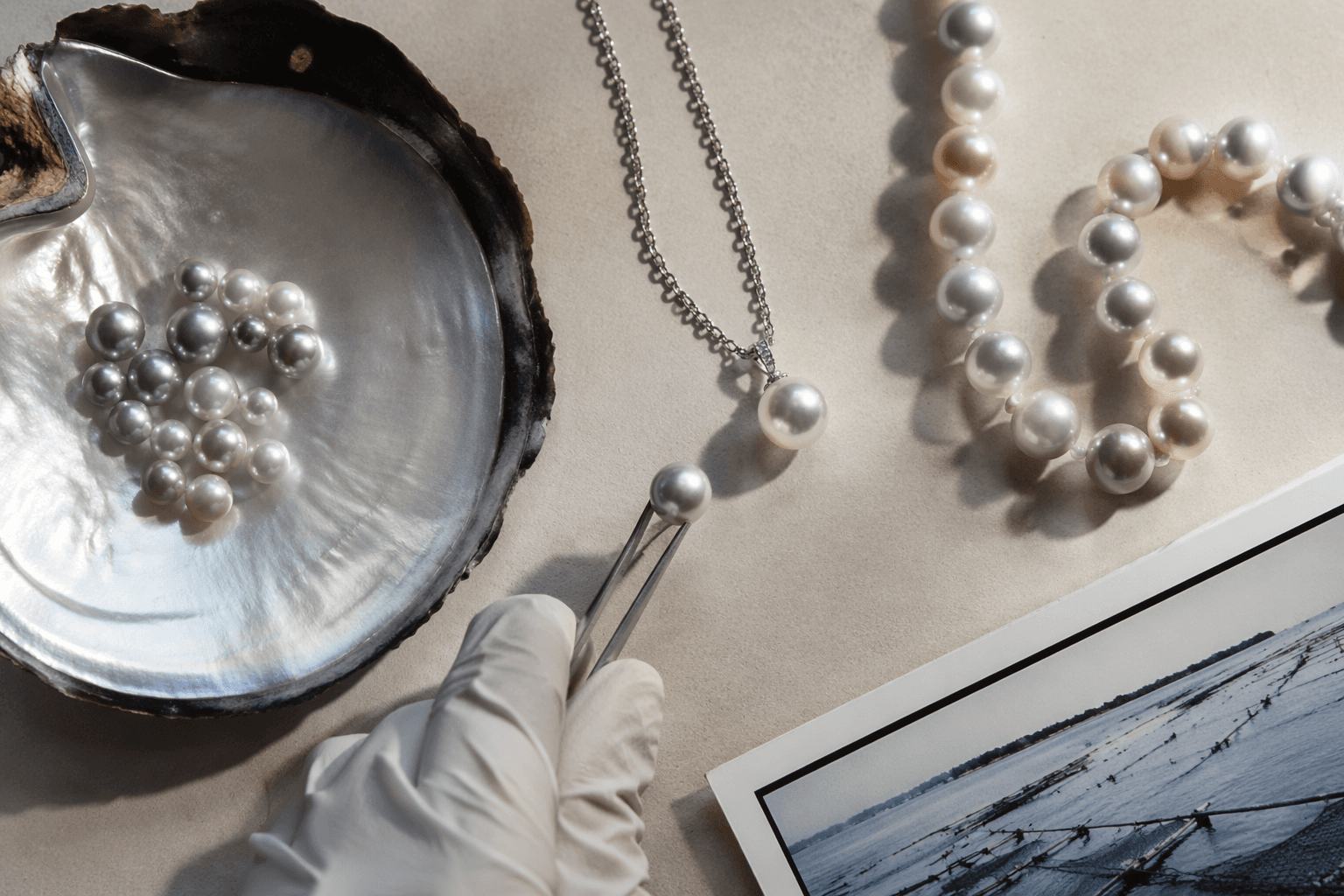
Pearls have long been called the Queen of Gems, but the smartest first-time purchase begins with a simple question: what kind of pearl is this? The Federal Trade Commission’s Jewelry Guides were built to help you understand exactly what you are buying, including natural pearls, cultured pearls, and imitation pearls, and jewelers should tell you which one you are seeing. That distinction is not academic. It affects rarity, price, and how the piece will live on your skin.
Natural pearls form without human intervention and are extremely rare, which is why they carry such a different aura from cultured pearls. Cultured pearls are genuine pearls grown with human assistance, and that fact is part of their appeal as well as their accessibility. A natural pearl necklace was once among the most expensive pieces of jewelry in the world, but cultured pearls changed the market by bringing real pearls within reach of far more buyers.
Learn the value factors before you fall for the glow
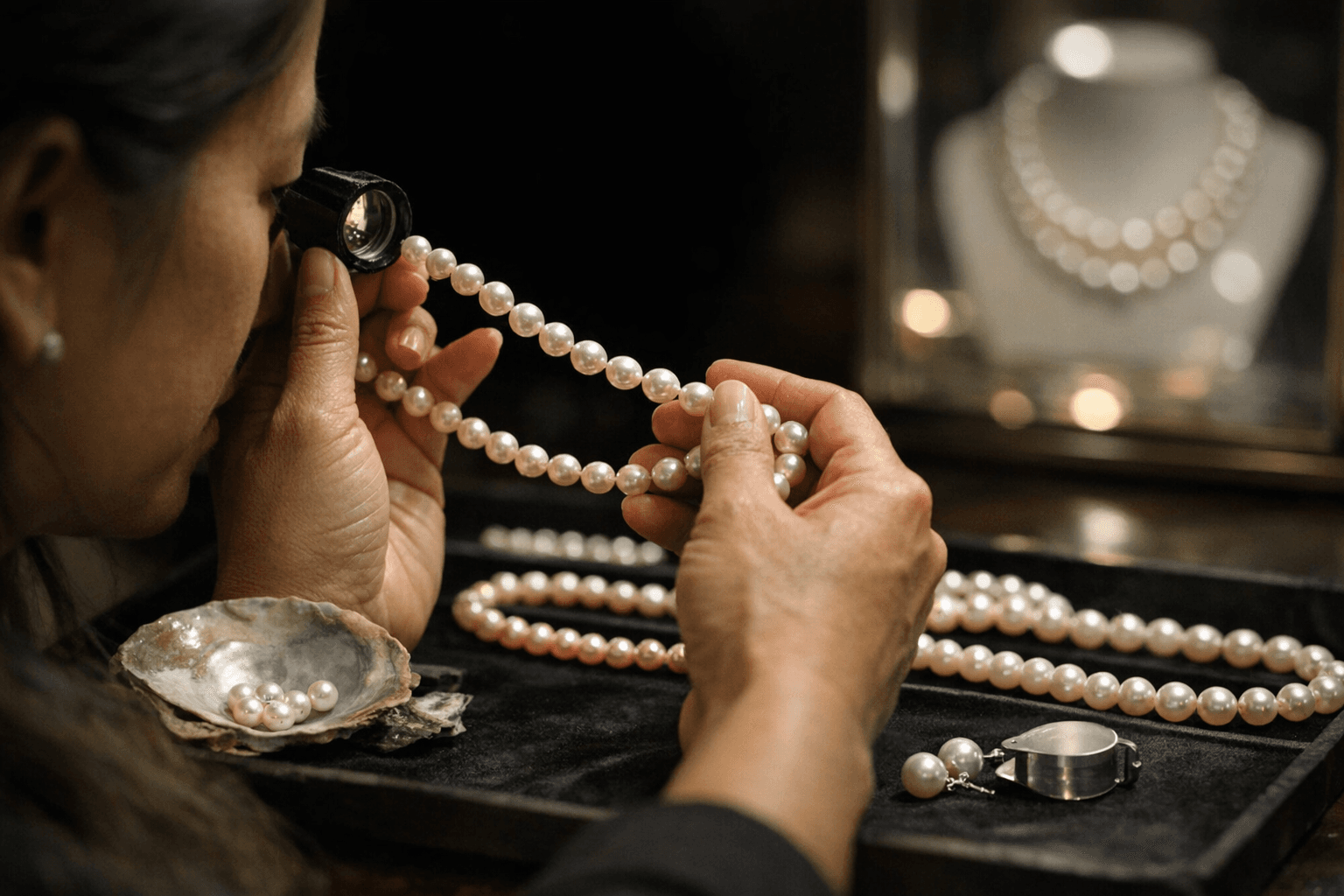
A pearl’s beauty is not judged by a single glance, even if the first impression matters. The Gemological Institute of America uses seven pearl value factors: size, shape, color, luster, surface quality, nacre quality, and matching for jewelry with two or more pearls. That framework is the clearest checklist you can carry into a store, because it turns vague admiration into a practical buying decision.
Size matters because larger pearls are rarer and more valuable than smaller pearls of the same type when the other factors are equal. Shape matters because round pearls are usually the most desired, but near-round, oval, button, and baroque shapes each serve a different style and price point. Matching becomes especially important in strands, earrings, and suites, where a pair of earrings or a necklace should look intentionally uniform rather than assembled from leftovers.
Judge luster and nacre first, not last
If you remember only one quality term, make it luster. The best pearls have a sharp, reflective glow that seems to come from within, not a flat shine sitting on the surface. The FTC notes that a cultured pearl’s value is generally based on its size and the quality of its nacre coating, which is what gives it luster. In other words, brilliance is not just prettiness. It is a clue to how much care and material went into the pearl.
Nacre quality matters for more than appearance. Thicker, better nacre is part of what gives a pearl its depth and helps it wear better over time. A pearl with weak nacre can look thin or chalky, and that is a warning sign if you want a piece that will still feel luxurious years from now. For everyday wear, luster and nacre are the qualities that separate a jewel you treasure from one that only photographs well.
Look closely at the surface and shape
Surface quality is where high-value pearls separate themselves from merely attractive ones. Tiny pits, spots, wrinkles, and blemishes can all affect value, although nearly every natural or cultured pearl has some irregularities. The question is not whether a pearl is flawless in a laboratory sense, but whether its surface looks clean enough to support the beauty and price you are paying.
Shape changes both style and value. Perfectly round pearls remain the classic benchmark, but symmetry is only one route to elegance. A smooth near-round strand can look refined and often costs less, while baroque pearls offer sculptural character and a more fashion-forward silhouette. For a first purchase, shape should match your wardrobe and your tolerance for visible variation, because the right shape is the one you will actually wear.
Compare types, not just labels
Pearl value can differ dramatically by origin, and this is where many shoppers overpay or underappreciate a piece. CIBJO’s 62-page illustrated guide covers natural and cultured pearls from both seawater and freshwater sources, and that breadth matters because not all pearls come from the same environment or command the same price. A strand of Japanese akoya pearls may cost more than freshwater pearls, in part because many buyers still lack clear education about what those differences mean.
Freshwater pearls often offer strong value because they make real pearl jewelry more accessible, while seawater pearls can bring a different level of uniformity, glow, or prestige depending on the type. The important lesson is not that one source is automatically better. It is that source, type, and quality must be weighed together, or you risk comparing pieces that do not belong in the same price conversation.
Use matching to judge the craftsmanship of multi-pearl pieces
Matching is one of the most overlooked value factors, especially in earrings and strands. When two or more pearls are used together, they should echo one another in size, color, shape, and luster so the piece reads as coherent rather than pieced together. In a necklace, matching is what creates that effortless ribbon of light across the neck; in earrings, it keeps one side from looking slightly off.
The more pearls a piece contains, the more matching matters and the more labor it likely required. That is why a well-matched strand can justify a higher price than a grouping of individually attractive pearls. You are not only paying for the gems themselves. You are paying for the skill it takes to make them behave like a set.
Know the biggest red flag
Here is the myth-buster worth repeating to another shopper: a pearl’s shine alone does not prove quality, and it certainly does not prove authenticity. Imitation pearls can look convincing at first glance, especially under flattering light, which is exactly why the FTC tells jewelers to disclose whether pearls are cultured or imitation. If a seller dodges that question, treats it casually, or leans on the glow without naming the pearl type, walk away.
The strongest pieces are the ones with honest labeling and clear construction. That is especially important if you are buying a gift or a first heirloom, because a pearl necklace or pair of earrings should carry emotional value without hiding material facts. Transparency is not a bonus in pearl shopping. It is the baseline.
Why pearls are back on more wrists and necks
Pearls are no longer confined to formal dressing, and the market reflects that shift. National Jeweler reported on a 2020 benchmark study of 1,012 U.S. jewelry consumers aged 25 to 55 who had bought at least $200 of fine jewelry in the prior three years, a sign of real buyer interest rather than nostalgia alone. Cultured pearls have made the category far more accessible, which helps explain why the old image of pearls as strictly ceremonial has given way to everyday wear.
That matters for your budget, too. A pearl purchase should be judged not only by prestige but by how often you will wear it. The best-value piece is usually the one whose type, luster, surface, and matching suit your life, not just your display case. In pearls, as in all fine jewelry, knowledge is what turns beauty into value.
This article was produced by Prism’s automated news system from verified source data, official records, and press releases, then run through automated quality and moderation checks before publishing. The system is built and supervised by the people who set the standards it runs under. Read our full AI policy.
Did this article answer your question?