Pearl Prices Explained, How Freshwater to South Sea Values Compare
Pearl prices can jump from a few hundred dollars to five figures, and the real tells are type, luster, nacre, matching, size, and origin.
Before you compare prices, understand what you are actually looking at: almost all pearls sold in jewelry today are cultured, not natural, because natural pearls are extraordinarily rare. That shift began with Kokichi Mikimoto, who successfully created the world’s first cultured pearls in 1893, and it helped turn pearls into a global category prized enough to be called “the Queen of Gems.”
What actually moves pearl prices
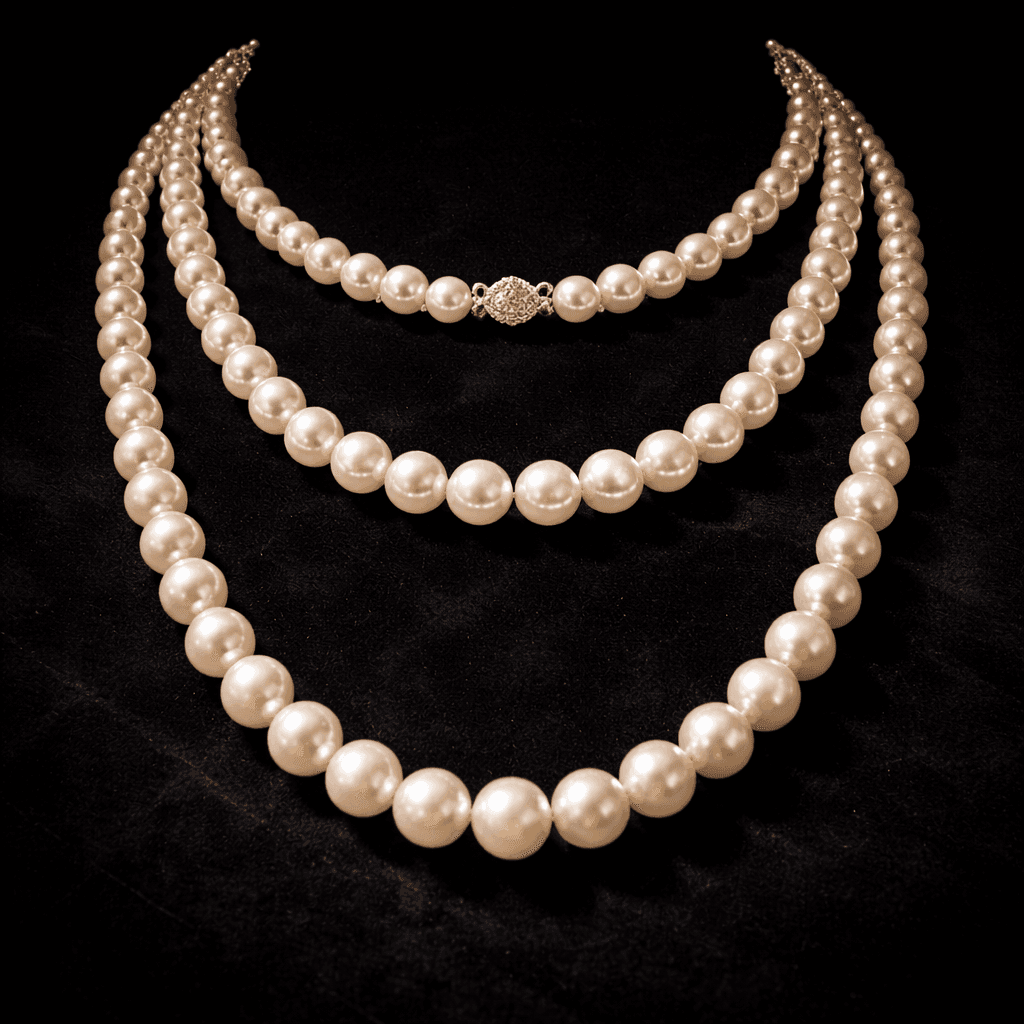
The Gemological Institute of America uses seven pearl value factors to judge both loose pearls and finished jewelry: size, shape, color, luster, surface quality, nacre quality, and matching. That framework matters because pearl value is not decided by a single trait. A pearl with a beautiful color but weak luster, or a strand with strong individual pearls that do not match well, can fall sharply in price.
Size is the most obvious price lever, but not because bigger always means better. GIA is clear that, when other factors are equal, larger pearls are rarer and more valuable, which is why a 9 mm pearl can cost dramatically more than a 7 mm pearl of the same type. Nacre quality matters just as much, because thickness of the nacre shapes the pearl’s luster, and luster is what gives a strand that deep, wet shine buyers notice across a room.
How freshwater, Akoya, Tahitian, and South Sea compare
Freshwater pearls are the market’s value anchor. They are grown almost entirely in China, come in the widest range of shapes and colors, and are the easiest way into real pearl jewelry without paying for saltwater rarity. Blue Nile describes them as offering “incredible value,” while Pearl Paradise says freshwater strands can run from about $200 to several thousand dollars, with top freshwater pieces like double strands priced from $800 to more than $2,000 depending on quality and construction.
Akoya pearls usually sit above freshwater because buyers are paying for that tight, mirror-like luster and classic roundness. Pearl Paradise says akoya pearls are primarily produced in Japan, with additional production in China, Vietnam, Thailand, and Australia, and that akoya strands commonly range from $500 to more than $10,000. Blue Nile’s Premier akoya strand, selected from the top 1 percent of annual supply, is listed at $2,877 on sale from $4,110, which is a useful reminder that the better the luster and matching, the faster the price climbs.
Tahitian pearls are valued for drama and color. They are officially tied to French Polynesia, where the black-lipped oyster produces pearls with dark body color and vivid overtones, and even their matching is more difficult because of the broad color range. Blue Nile lists a multi-color Tahitian cultured pearl necklace at $4,452 on sale from $6,360, while Pearl Paradise says Tahitian strands can range from about $500 to more than $100,000. That spread tells you how strongly color, roundness, and strand harmony affect the final number.
South Sea pearls sit at the top end because they are large, slow to grow, and geographically limited. Blue Nile says they are grown in Australia, Indonesia, and the Philippines, that they are the largest variety on the market, and that they can grow up to 20 mm. Blue Nile’s South Sea jewelry starts at $992 and rises to $65,920, while one extraordinary South Sea strand is listed at $17,250 and Pearl Paradise starts loose White South Sea pearls at $1,150. Those numbers are not inflated just because they are high, they reflect scarcity, size, and the long growth period that makes flawless matching so difficult.
Why two similar-looking pieces can cost wildly differently
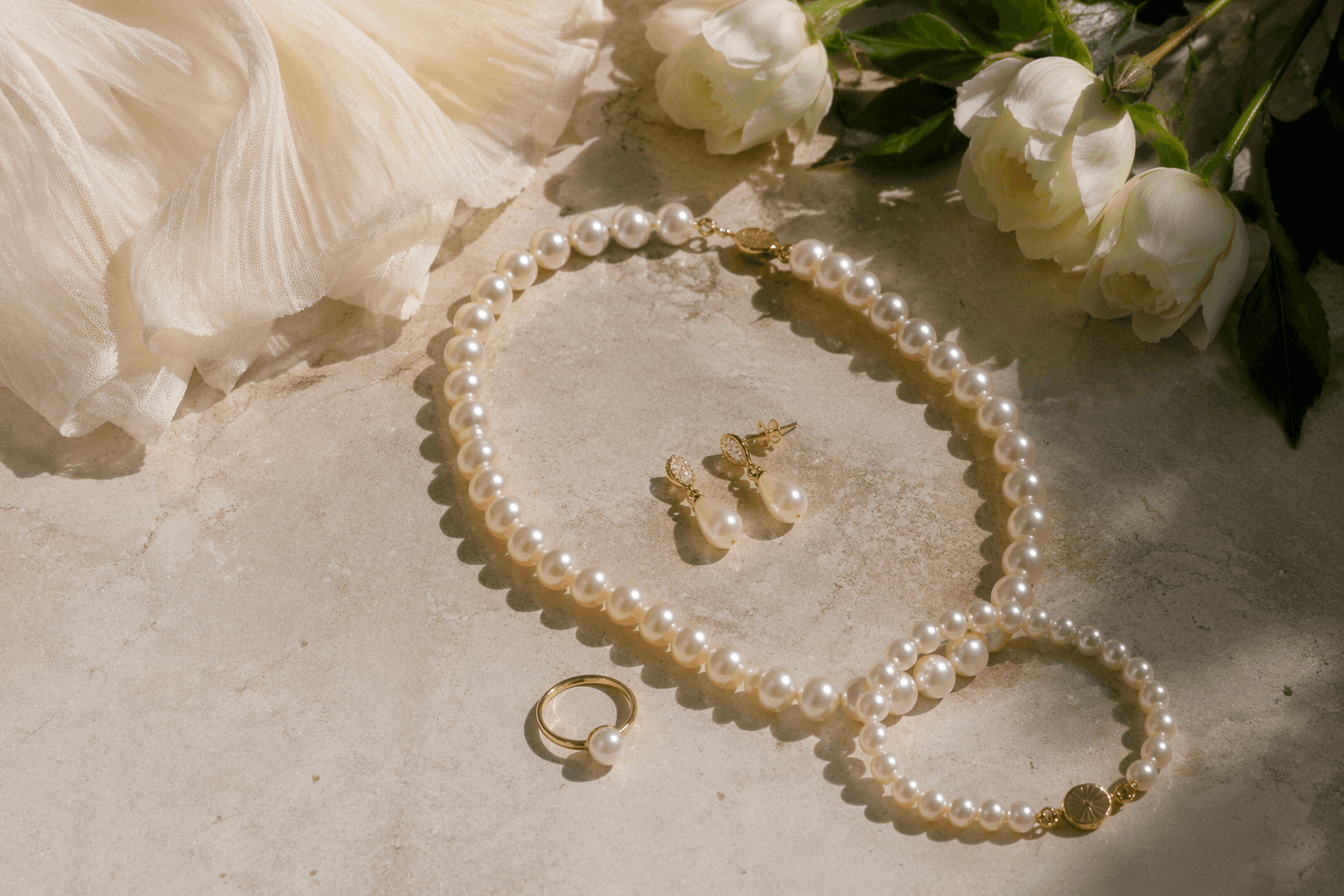
A strand can look almost identical online and still land in a different pricing universe. A white freshwater double strand can be priced around $940 to $2,140, while a white akoya double strand in a similar visual lane reaches about $4,160, because akoya buyers are paying for tighter roundness, stronger luster, and stricter matching. Tahitian strands can be even more labor-intensive, since Pearl Paradise says matching them into one finished strand can require thousands of loose pearls. Add 18K gold clasps, silk knotting, and diamond accents, and the cost rises again before the pearl itself even changes.
What to demand before you pay
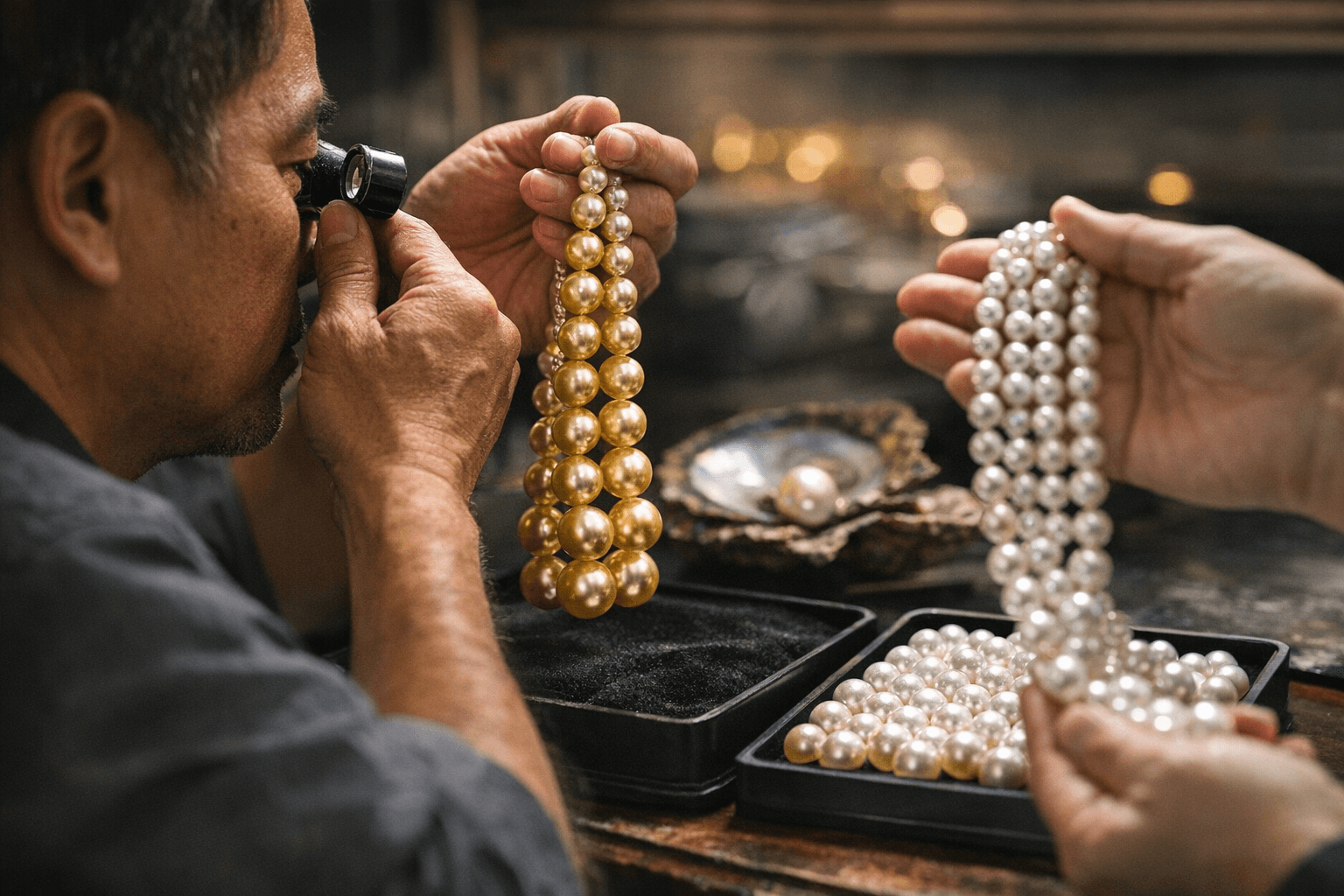
There is no universal grading standard for pearls, which is why provenance and documentation matter so much. The safest paper trail is a named lab report or a clearly defined certification system, such as GIA’s Cultured Pearl Classification Report, which evaluates loose, mounted, and strung pearls using the seven value factors. Some sellers also include a Certificate of Authenticity, and special terms like Hanadama should be taken seriously only when they are backed by the right documentation, especially since only about 2 percent of the annual Akoya harvest qualifies for that designation. If a seller leans on vague AAA language without defining the scale, treat it as marketing, not proof.
Price volatility is part of the story too. GIA’s 2023 market update said the COVID-19 pandemic caused supply shortages across South Sea, Tahitian, akoya, and freshwater cultured pearls, which helps explain why the market can feel jumpy even when the pieces look similar. In pearls, value is never just about beauty in the abstract. It is about what the mollusk produced, how rare that result is, how well the strand is matched, and whether the seller can prove every claim in writing.
This article was produced by Prism’s automated news system from verified source data, official records, and press releases, then run through automated quality and moderation checks before publishing. The system is built and supervised by the people who set the standards it runs under. Read our full AI policy.
Know something we missed? Have a correction or additional information?
Submit a Tip