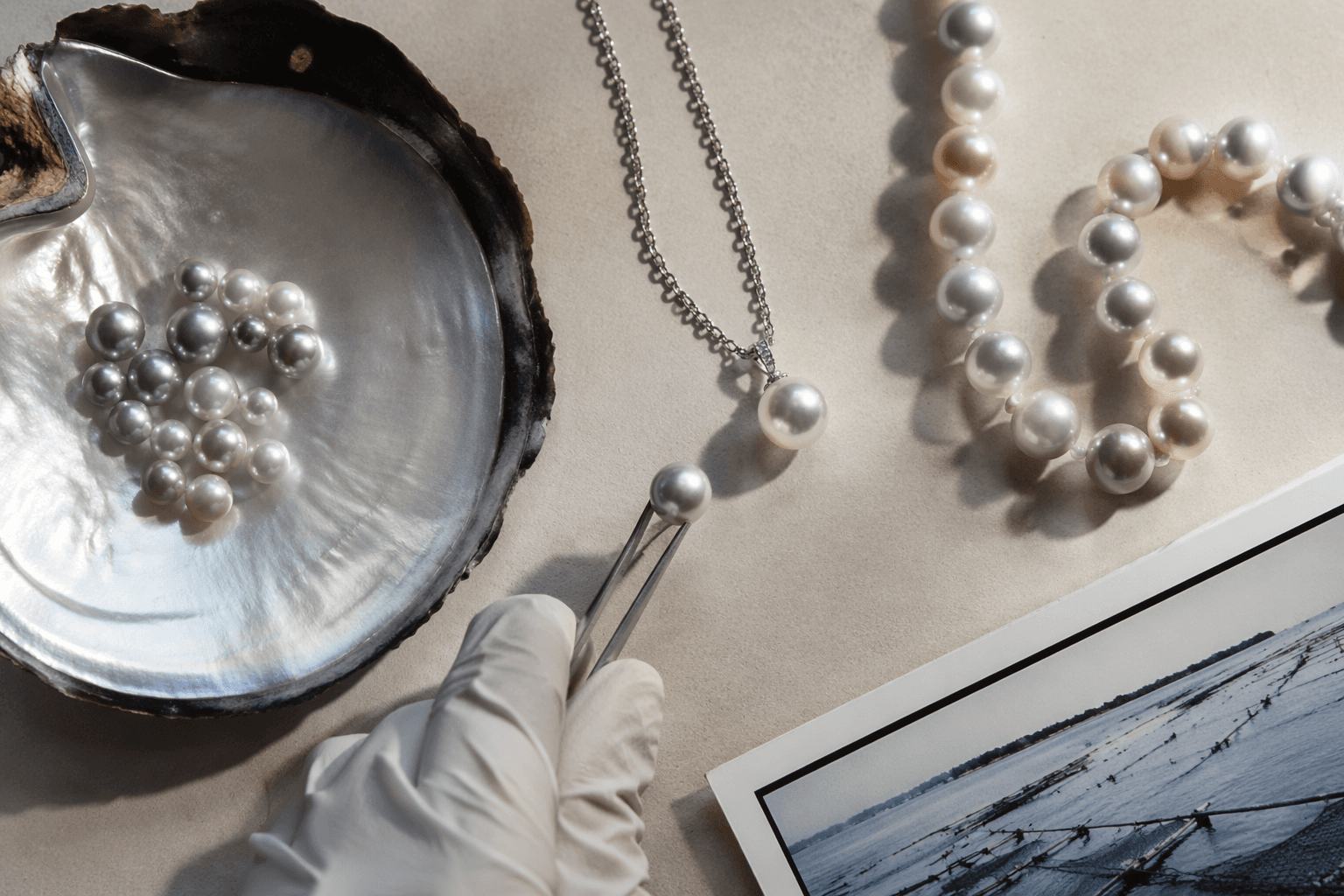
Pearls Evolve Into Luxury Icons, Sustainability Symbols, and Digital Keepsakes
Pearls are drawing luxury buyers back with stronger lustre, smarter farming, and new digital design codes that make sustainability feel economic, not decorative.
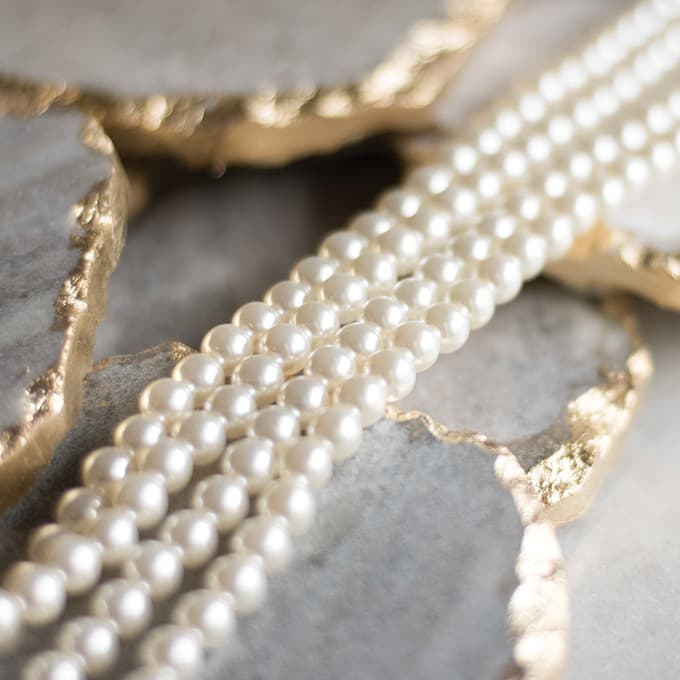
The market is tilting back toward pearls because the category now offers more than nostalgia. White and golden South Sea pearls still anchor the prestige end of the market, but younger buyers are also responding to baroque and Keshi shapes, where irregularity reads as modernity rather than compromise. That shift matters because pearls are being judged less as a single classic look and more as a broad luxury category with room for high-value strands, sculptural brooches, body chains and even NFC-embedded pearls that can hold digital mementos.
What separates a fine pearl from an ordinary one is still a matter of materials, not marketing. The Gemological Institute of America classifies cultured pearls by size, shape, color, luster, surface, nacre and matching, a reminder that value is built from visible precision and internal structure. White and cream remain the most familiar colors, but pearls also appear in black, gray, silver and many other hues, and the market rewards the ones whose surfaces are clean, whose luster is sharp and whose nacre has real depth. In other words, the pearl that feels expensive is the one that throws light cleanly and wears its skin with confidence.
The categories drawing the strongest attention
The most resilient demand continues to sit with white and golden South Sea pearls, which remain the reference point for size, glow and status. At the same time, premium-quality pearls in impeccable shape and lustre have risen in popularity among younger consumers, showing that the market is not only trading on tradition but on visible excellence. Baroque and Keshi pearls are especially useful here because their irregular forms let designers move beyond the expected strand and into earrings, cuffs, collars and body jewelry that feel directional without losing material seriousness.
That is why the strongest pearl jewelry today is not trying to look like costume or bridal shorthand. It is using the pearl’s natural variability as a luxury language. A perfectly matched necklace still carries authority, but a well-balanced baroque suite can now signal taste just as clearly, especially when the design leaves room for the pearl’s own shape to lead.
Why the business case still looks strong
Pearls are not moving through a tiny niche market. Industry coverage points to an exponential increase in global pearl trade business in 2023, driven by robust Asian demand, and China’s retail sales of pearl jewellery reached RMB24 billion, about US$3.3 billion, in 2022. That scale matters because it shows pearls are not surviving as a sentimental category. They remain a substantial commercial segment with enough depth to support premium pricing, e-commerce growth and design experimentation.
The picture became more mixed in the first half of 2024, when China’s pearl sector cooled after the 2023 boom under broader economic pressure. Even so, higher-quality pearls held up better than the rest, which is often the clearest sign of a healthy luxury category. When the weaker merchandise softens first and the best material remains resilient, the market is telling you exactly where confidence still lives.
Regeneration becomes operational, not rhetorical
The most convincing sustainability argument in pearls is not a vague promise of virtue. It is the way farming can improve the condition of the oysters, the coast and the final gem at the same time. Japan will begin implementing findings from a 10-year genomic research project on Akoya pearl oysters from 2024, with the aim of healthier oysters, finer-quality pearls and more sustainable farming. That is not branding language. It is a production plan, and it links scientific selection directly to nacre quality and harvest consistency.
There is also a broader environmental case. Conservation International says vegetated coastal ecosystems can store nearly half of the organic carbon buried in ocean sediments, which gives oyster and seaweed-adjacent farming a credible place in blue-carbon conversations. At a panel on the sidelines of Jewellery & Gem WORLD Hong Kong on September 17, 2024, pearl’s environmental stewardship potential was examined as part of this larger coastal-regeneration story. The best version of this argument is simple: if a farm can help keep waters productive, support healthier oyster populations and maintain coastal habitat, then sustainability starts to look like operational strength rather than a decorative claim.
Legacy players are shaping the standard
Few names define pearl legitimacy as clearly as Mikimoto, which says Kokichi Mikimoto successfully cultured the world’s first pearl in 1893. That history still matters because it transformed a once-ultra-rare organic gem into a category that could be grown, studied and scaled without losing its luxury aura. The point is not mass availability alone; it is the way cultivation created a new balance between rarity, consistency and craftsmanship.
Jewelmer offers the other side of that same story. The Philippines-based company marked 45 years in the pearl trade in Pearl Report 2024-2025, framing longevity and socially conscious leadership as part of its identity. In a market where provenance and practice increasingly shape value, that sort of endurance carries weight. It suggests that the most persuasive pearl houses are not just selling beauty; they are proving that beauty can be maintained through disciplined farming and long-term stewardship.
Digital keepsakes are the newest design frontier
The most surprising development in pearls is how comfortably they are moving into the digital age. NFC-embedded pearls, which can store digital mementos, turn the jewel into more than an ornament: they make it a carrier of memory, documentation or private meaning. That concept fits pearls unusually well because the category has always been about intimacy, whether in a single earring, a strand passed through generations or a brooch pinned close to the body.
The design field around pearls is widening in other directions too. Pearl brooches have returned as a sharp collector’s proposition, and body chains push the material into evening wear with a more contemporary silhouette. These are not gimmicks when the workmanship is strong; they are evidence that pearls can absorb new formats without losing their formal dignity.
What collectors and retailers should watch
The pearl market now rewards three things at once: visible quality, credible farming practice and design ideas that justify a premium. White and golden South Sea pearls remain the safest luxury signal, but baroque and Keshi shapes are expanding the audience, especially among younger buyers who want individuality with substance. Retailers that can explain luster, nacre, matching and provenance are better positioned than those relying on romance alone.
The broader market range, with 2024 estimates stretching from about US$13.2 billion to US$17.1 billion, shows how much attention the category can still command. That breadth leaves room for everything from high-jewelry strands to digital-era keepsakes, but it also raises the standard. Pearls are no longer compelling simply because they are classic. They matter now because the best ones connect luxury to materials science, to coastal systems and to a version of regeneration that can be measured in the oysters themselves.
This article was produced by Prism’s automated news system from verified source data, official records, and press releases, then run through automated quality and moderation checks before publishing. The system is built and supervised by the people who set the standards it runs under. Read our full AI policy.
Did this article answer your question?