Tiffany Titan shows pearls’ punk revival in modern metal designs
Pharrell Williams’ Tiffany Titan turns pearls into hard-edged jewelry, showing why the gem is back as a wearable, gender-fluid style code.

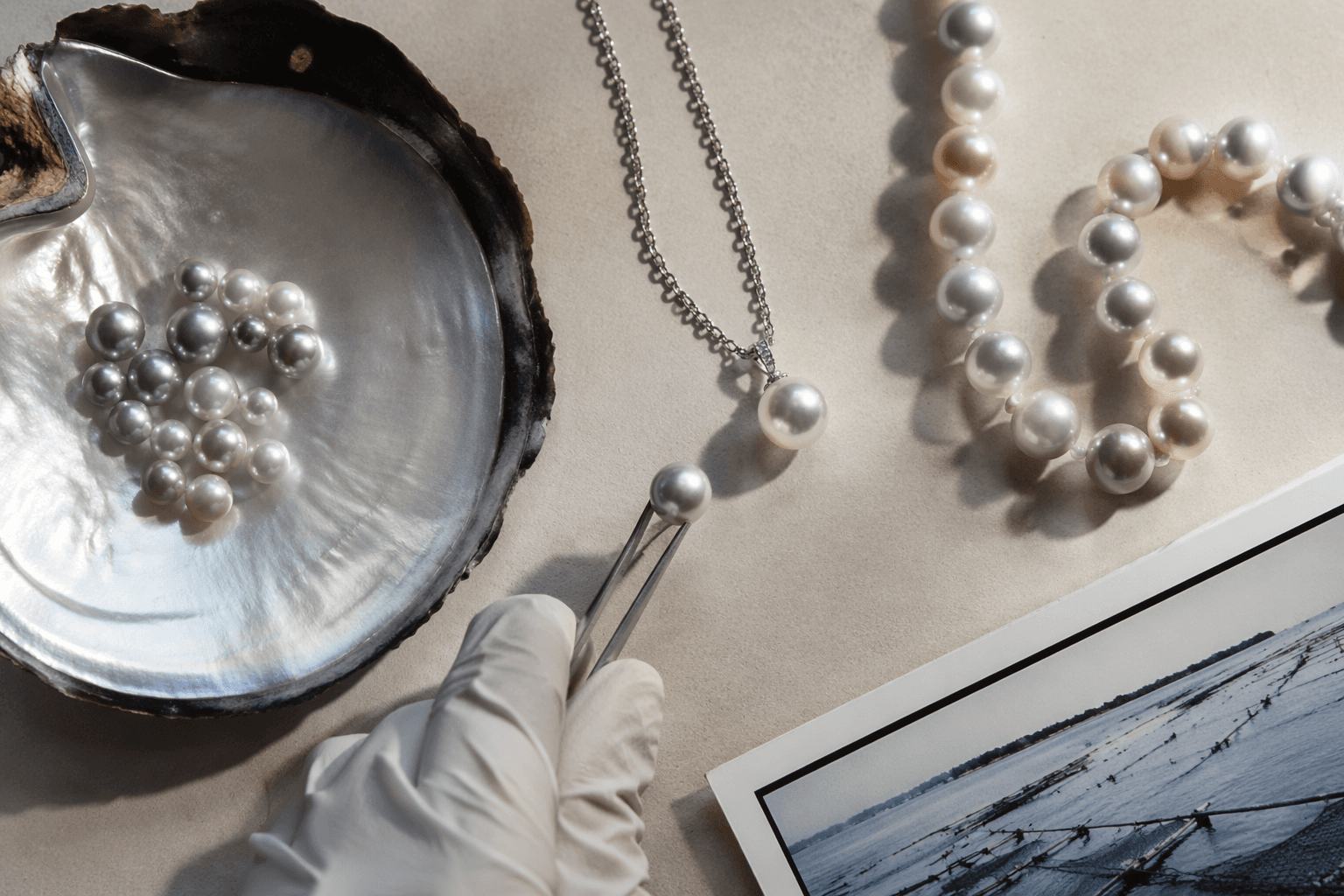
Pharrell Williams’ Tiffany Titan is the clearest sign that pearls have left the bridal box and entered the hardware drawer. The collection pairs freshwater and Tahitian cultured pearls with black titanium, 18-karat yellow gold, and diamond spikes, a contrast that makes pearls look sharper, younger, and far easier to wear with denim, tailoring, and streetwear.
The punk pearl mood is bigger than one collection
Pearls are having a fashion reset because they no longer read as delicate by default. In 2025, coverage of spring and summer runways showed them in asymmetrical, baroque, sculptural, and otherwise altered forms, which pushes them away from the classic single strand and toward something more directional. That shift matters because the strongest pearl pieces today do not soften an outfit, they punctuate it.
The market tells the same story. Industry estimates put the global pearl jewelry business at about $13.1 billion to $13.2 billion in 2024, with projections that it will more than double by 2033. That kind of growth does not happen on nostalgia alone. It happens when a category finds new wearers, and pearls are doing that by looking less formal, less precious, and more adaptable to younger, casual, and gender-fluid wardrobes.
Why Tiffany Titan became the shareable example
Tiffany & Co. first announced Tiffany Titan by Pharrell Williams in May 2024, and the concept was built on tension from the start. The design language takes its cue from Poseidon’s trident and from Atlantis, the Virginia Beach neighborhood where Pharrell Williams grew up. That origin story matters because it gives the collection a mythic edge without losing the personal connection that makes celebrity design feel more than decorative licensing.
The launch pieces arrived in 18-karat yellow gold and black titanium, in both all-metal and diamond versions. The look was not polished and polite; it was sharp, spear-like, and deliberately punk. In September 2024, Tiffany added freshwater pearl designs, and in January 2025 it followed with Tahitian cultured pearls and a new prongless diamond setting called the Titan Setting. Each update kept the same trident motif but pushed the mood darker and more assertive, which is exactly why the collection reads as a trend signal rather than a one-off capsule.
For readers scanning the wider market, that evolution is the key takeaway: pearl design is moving toward contrast. Hard metal, strong geometry, and pearl surfaces are now working together instead of competing, and that combination is what makes the category feel current.
What to look for in real-world styling
The modern pearl revival is not about recreating your grandmother’s strand. It is about choosing pieces that feel a little tougher in silhouette and a little less literal in styling. Chunkier links, sculptural mounts, and irregular pearl shapes are the easiest cues that a piece belongs to the new mood rather than the old dress code.
A few styling markers separate the trend from tradition:
- Metal pairings matter. Black titanium, yellow gold, and diamond accents create a harder frame around the pearl, which keeps the look from drifting bridal or overly classic.
- Go for volume or shape. Baroque pearls, asymmetry, and sculptural settings make pearls feel contemporary. Perfectly matched rounds still work, but they no longer define the conversation.
- Think day-to-night. The strongest pearl pieces can sit on a T-shirt in the afternoon and still hold their own with a blazer or evening shirt after dark.
- Let the pearl be one element, not the whole story. When pearls are joined by spikes, prongs, or bold metalwork, they read as design objects rather than formal accessories.
That is why Titan is such a useful model. It shows how pearls can move through a wardrobe, not just into it for special occasions. The same pearl that once signaled occasion dressing now looks right with a leather jacket, a crisp white shirt, or even a simple tank, as long as the setting has enough visual weight.
Provenance still matters, especially when pearls are marketed as edgy
Pearls may be getting a style refresh, but provenance still separates meaningful pieces from vague luxury language. Tiffany’s Tahitian cultured pearls are the most geographically legible part of the story, because Tahitian pearls are widely associated with French Polynesia, which dominates black South Sea cultured pearl production and is widely identified as the source of authentic Tahitian pearls. If a brand uses “Tahitian” loosely, the buyer should still ask where the pearls were grown, whether they are cultured, and how the origin is documented.
The materials also help tell you what you are actually buying. Freshwater pearls generally support a softer entry point, while Tahitian cultured pearls tend to carry more cachet because of their darker body color and association with French Polynesia. Pair either of them with substantial gold or titanium and the design immediately looks more intentional, but the real value comes from honest labeling, solid nacre, and a setting that protects the pearl instead of overwhelming it.
That is where the Titan Setting becomes relevant. A prongless diamond setting changes the visual rhythm of the piece, reducing the usual clawed look and allowing the pearl and diamonds to read as one streamlined composition. For buyers, that kind of construction is more than a styling detail. It is the difference between a piece that merely uses a pearl and a piece that understands how to frame one.
Why pearls keep coming back
Pearls have always been easy to reinvent because they have been culturally portable for centuries, moving from ancient trade routes to royal symbolism in Europe and then into modern fashion cycles. GIA’s history of pearl fashion makes the pattern clear: the gem falls out of favor when it looks too formal, then returns when designers give it a new silhouette or a fresh material context.
That is exactly what is happening now. Tiffany Titan shows that pearls do not need to be made softer to become wearable again. They need to be made tougher, cleaner, and more architectural. In the current jewelry climate, the pearl that lasts is the one that knows how to share space with metal, edge, and movement.
This article was produced by Prism’s automated news system from verified source data, official records, and press releases, then run through automated quality and moderation checks before publishing. The system is built and supervised by the people who set the standards it runs under. Read our full AI policy.
Did this article answer your question?