Byzantine signet ring reveals monograms as ancient authentication tools
A Byzantine silver signet ring shows monograms began as authentication tools, not ornament. That logic still shapes the appeal of custom rings and engraved seals today.
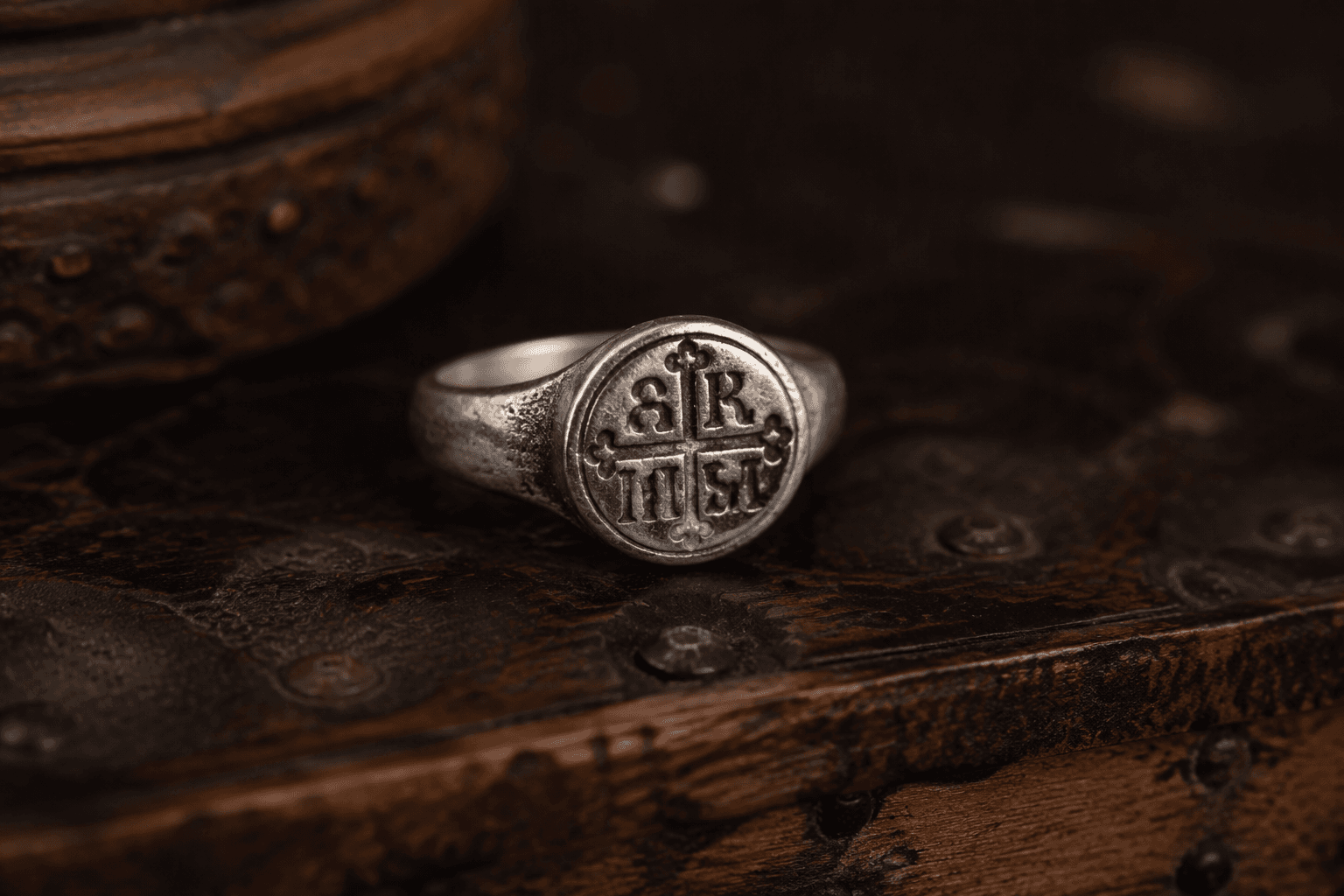
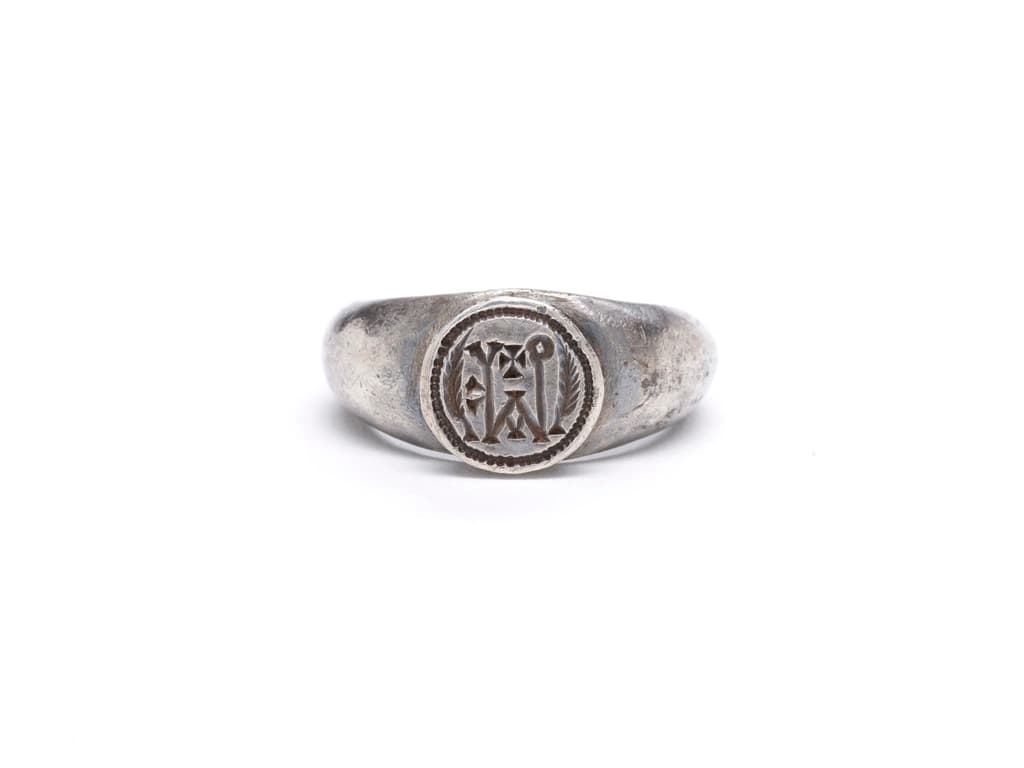
An engraved ring can do more than carry a name. On the Walters Art Museum’s Byzantine silver signet ring, a monogram of Greek letters and a cross were cut in reverse so the face could stamp a readable mark into wax or another soft material. Dated to the 6th or 7th century CE and purchased in 1986 from the Günter Puhze gallery in Freiburg, Germany, the piece shows why personalization still feels powerful: it began as proof.
Monograms started as identity, not decoration
The Walters collection record identifies the object as Signet Ring with "of Mark" in Greek, 6th-7th century (Late Antique), accession 57.2104. The museum’s image caption says that by the 6th century most rings carried a personal monogram, and this silver example uses a block-letter format that reads "of Mark." In Brad Hostetler’s Walters article, later reposted by the Mary Jaharis Center on Dec. 21, 2021, the ring sits in a world where personal identity, religious symbolism, and official authority overlap on a single small surface.
That overlap is what makes monograms more than initials. In the Byzantine Empire, a ring like this did not merely decorate a hand. It compressed a name, a faith marker, and a claim to authenticity into one device that could be recognized at a glance.
Why the carving runs backward
The ring’s form is as revealing as its inscription. It has a narrow convex band and a raised circular bezel with an incised design cut in reverse, because a signet ring had to leave a readable impression when pressed into wax or another soft material. What looks backward on the metal becomes correct in the seal, which is why the engraving had to be mirrored before it ever touched the bezel.
W. Seibt’s 2016 study on Byzantine seals places wax use in the middle Byzantine centuries and notes that it was especially common in late Byzantine times. That detail matters because it shows sealing as a long-running bureaucratic technology, not a passing fashion. Rings like the Walters example were wearable tools, made to authenticate a person, a document, or a message.
Monograms were once royal signatures
The history of the monogram reaches farther back than the Byzantine period. Erica Weiner’s monogram history notes that some of the earliest monograms served as royal signatures on Ancient Greek coins. Mark & Graham makes the same point from another angle, describing monograms as royal signatures or seals and currency, with initials carved on coins to mark the reign of a particular Roman and Greek ruler.
That older coinage history explains why monograms still feel so charged on jewelry today. They are not just stylized initials. They are compact symbols of ownership, legitimacy, and status, a visual shorthand that has moved from coin to seal to ring without losing its authority.
What that means for custom rings today
A custom signet ring works best when it is designed like a tool first and an ornament second. If the piece is meant to function as a seal, the face must be planned in reverse before engraving begins, and the order of the initials matters if the monogram follows classical or family conventions. The Walters ring also shows that symbols change the message: the cross turns a lettered mark into something more layered, where faith and identity are read together.
For buyers commissioning personalized jewelry, the most useful questions are practical ones:
- Will the monogram be engraved for a readable wax impression, not just for upright display?
- Is the bezel large enough for the letters to breathe and stay legible?
- Does the design use the right initial order for a family cipher or classical-style monogram?
- Should the piece include a symbol, such as a cross, or keep the mark purely lettered?
- Does the band shape, like the Walters ring’s narrow convex profile, suit daily wear as well as the engraved face?
Those details separate a meaningful signet from a ring that only looks personalized. The object from the Walters collection shows that the best monogram pieces are built around legibility, tradition, and the specific job the jewelry is meant to do. In that sense, modern custom rings, seals, and engraved pieces borrow their authority from an older idea: a name is most persuasive when it can be read, pressed, and recognized.
This article was produced by Prism’s automated news system from verified source data, official records, and press releases, then run through automated quality and moderation checks before publishing. The system is built and supervised by the people who set the standards it runs under. Read our full AI policy.
Did this article answer your question?