Evergreen: Personalized vs. Custom vs. Bespoke Jewelry — A Practical Buyer’s Playbook
Three words dominate personalized jewelry marketing, but they mean very different things — and confusing them costs buyers money, time, and sentiment.
Walk into any jewelry boutique or browse any Etsy storefront and you'll encounter three words used almost interchangeably: personalized, custom, and bespoke. They are not the same. Each describes a fundamentally different relationship between buyer, maker, and metal — and choosing the wrong pathway can mean waiting six weeks for a ring that looks nothing like what you imagined, or paying bespoke prices for what is essentially a monogrammed template. Here is how to tell them apart, and how to buy smart.
What the Terms Actually Mean
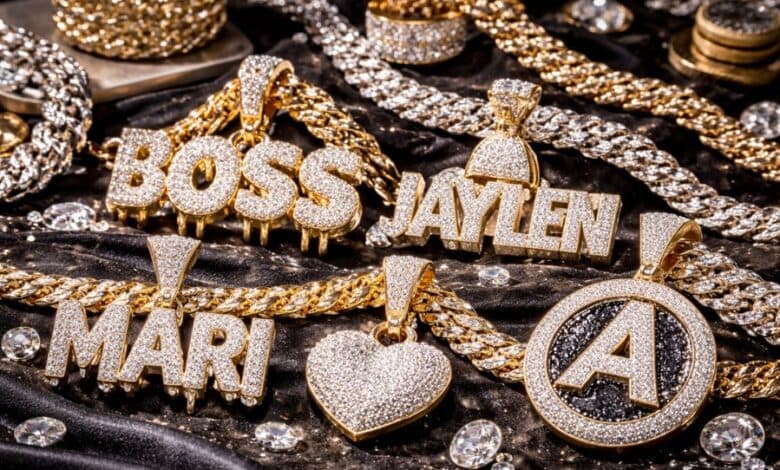
*Personalized* jewelry is the most accessible category. These are off-the-shelf pieces — a ready-made gold disc pendant, a sterling silver band, a charm bracelet — to which a personalization layer is added. That layer might be an engraved name, a birthstone swapped into a preset bezel, or a date stamped along an inner band. The design itself is fixed; you are customizing the content, not the form. Think of it as filling in a blank rather than writing the sentence.
*Custom* sits in the middle. A custom piece is semi-made-to-order: the jeweler works from an existing template or a house design, but you make meaningful choices within that framework — selecting the metal, adjusting proportions, choosing a stone shape, or repositioning a motif. Custom-made simply means selecting options for an existing design. The risk with this category is that the word "custom" is notoriously elastic in marketing. It can mean just about anything: from a jeweler using basic pre-designed elements to "customize" a piece, all the way to completely bespoke design that won't be replicated. Ask your jeweler exactly what decisions you control before committing.
*Bespoke* is the most demanding and most rewarding tier. A bespoke piece does not begin with an existing design. It's sitting down with one of a jeweler's designers, sketching out ideas based on your story, your style, your vision — and bringing something to life that never existed before. Bespoke commissions typically involve a bench jeweler or independent designer, multiple rounds of sketching and wax-model approval, and timelines that span weeks to months. The premium is real, but so is the result: a piece that cannot be replicated because it was never templated in the first place.
The Buyer's Decision Tree
Before you call a jeweler or click "add to cart," work through four questions in order.
1. Budget. Personalized pieces routinely start under $100 for plated metals with laser engraving.
Mid-range custom work in solid gold or sterling silver with stone selection typically runs from $300 into the low thousands. True bespoke commissions, which involve design fees, model-making, and the bench jeweler's time, rarely begin below $1,500 and scale steeply from there depending on metal weight and stone quality.
2. Timeline. If you need something in two weeks, personalized is your lane.
Custom orders generally require four to eight weeks depending on the jeweler's queue. Bespoke, done properly, requires you to budget three to six months — and to treat any rush promise with skepticism.
3. Sentimental depth. A personalized piece carries meaning because of what you put on it.
A bespoke piece carries meaning because of how it was conceived. If you are commemorating a loss, marking a milestone, or creating an heirloom, the extra time and cost of bespoke pays dividends that a laser-engraved template cannot match.
4. Resale. This is the consideration most buyers skip and later regret.
Personalized and bespoke pieces carry highly specific meaning that does not transfer to a secondary buyer — an engraved name or a fingerprint casting has no resale appeal outside your family. Custom pieces built on classic templates in hallmarked solid gold hold material value better. If resale matters at all, buy the metal and stone quality, not just the sentiment.
The Inspection Checklist
Whether you are buying personalized, custom, or bespoke, inspect these four things before you accept delivery.
- Hallmarks. Hallmarks are the small letters, symbols, and logos often engraved on the precious metal of fine jewelry. These details indicate what type of metal a piece is made from and by which brand or designer. In some countries, hallmarks are mandatory by law. In the United States, look for karat stamps (10K, 14K, 18K for gold; 925 for sterling silver). Be alert to marks like GP or GEP, which indicate gold-plated or gold-electroplated jewelry — not solid gold. GF indicates gold-filled, a thicker gold layer, but still not solid.
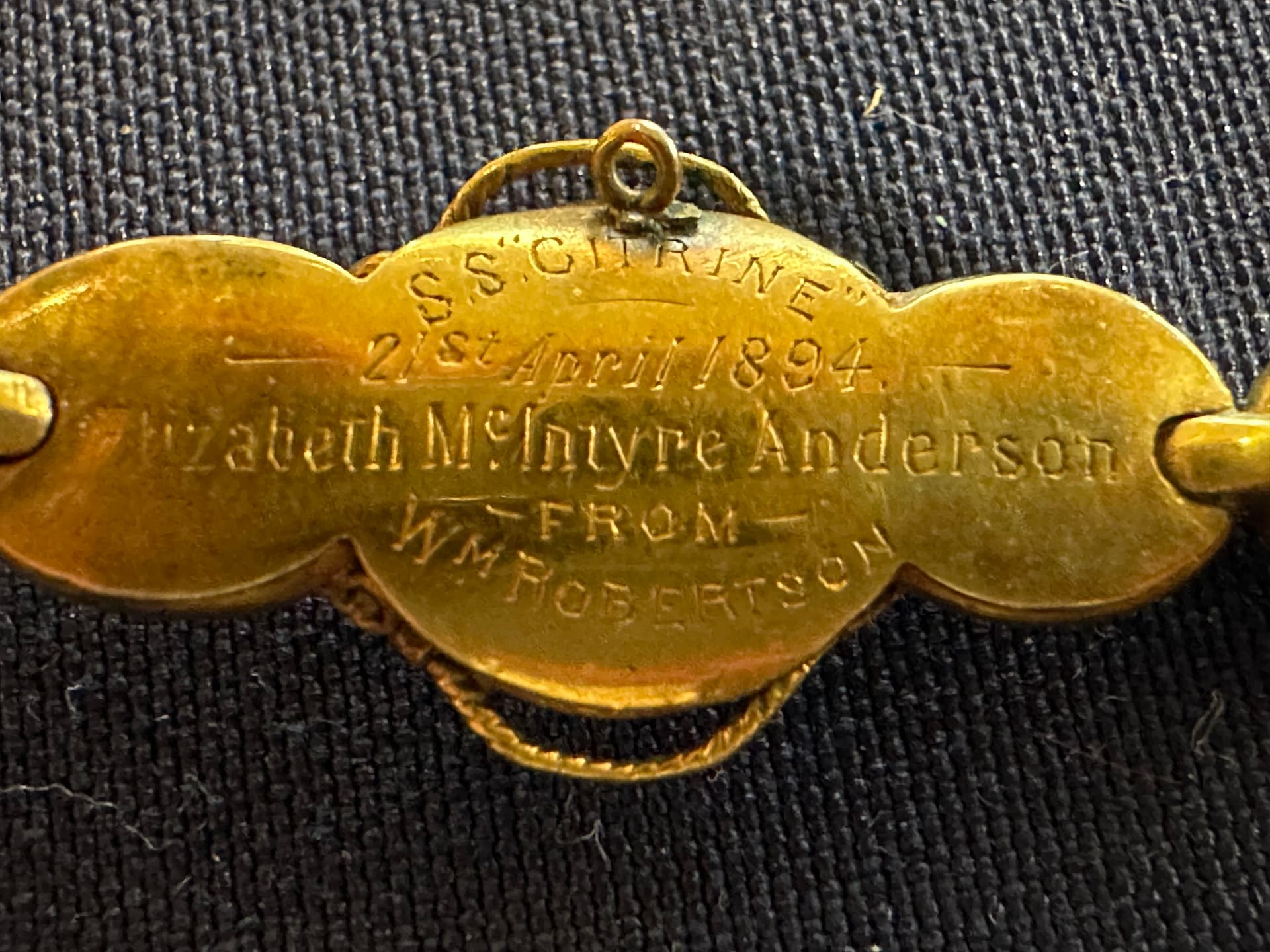
- Font permanence and depth. Engraving that is too shallow will wear smooth within years of daily contact. Run a fingernail across the lettering — you should feel defined grooves. Ask specifically whether the font was hand-engraved or machine-cut, and whether the depth can be specified.
- Solder quality. Any piece with an added charm, jump ring, or structural join needs clean, invisible solder work. Look for discoloration, porosity (tiny holes), or misaligned seams — all signs of rushed bench work.
- Finish consistency. Polished, matte, and hammered finishes should be uniform. Patchy areas suggest the piece was refinished after a correction, which may indicate a repair that wasn't disclosed.
Questions to Ask Before You Commission
A good jeweler welcomes these questions. A reluctant one is telling you something.
- What is the realistic turnaround time, and what happens if you miss it?
- Do you provide a proof — a digital rendering or wax model — before fabrication begins?
- What is your re-engraving policy if there is a spelling error or the piece arrives damaged?
- What is the exact metal composition, and can you provide a written specification?
- For stone-set pieces: are the birthstones natural, lab-grown, or simulants, and is that reflected in the price?
That last question matters more than it used to. The birthstone market now includes a wide range of quality grades and origins, and a "natural sapphire" in a personalized pendant can mean anything from a heat-treated commercial stone to an unheated specimen with a gem lab report. Know what you are paying for.
A Glossary of Personalization Techniques
*Hand-stamping:* A technique that involves manually striking a metal stamp with a hammer to create an impression on a surface. The slight irregularities are the point — each impression is fractionally unique, giving hand-stamped pieces an artisanal warmth that machine processes cannot replicate. Best suited to softer metals and simple letterforms.
*Laser engraving:* This modern technology uses focused beams to create intricate designs. It is faster, more precise, and scalable, making it the standard for online personalization retailers. One caution worth knowing: the high heat of laser engraving could potentially damage or alter soft metals such as gold and platinum, which is why reputable jewelers use calibrated settings and often prefer hand engraving for fine pieces in precious metals.
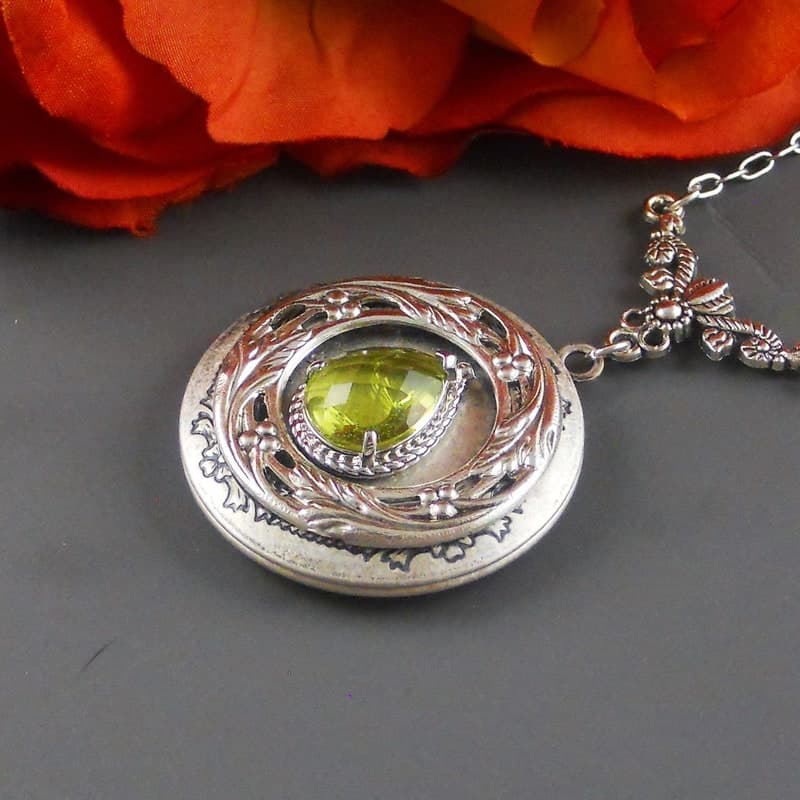
*Inset birthstones:* Stones are set into a pre-formed bezel or prong setting on an otherwise finished piece. Quality varies enormously — confirm whether the stone is held by secure prongs or simply glued, as adhesive-set stones in rings and bracelets have a short lifespan.
*Signature replication:* A scanned signature is converted into an engraving file and cut directly into metal. The result preserves the loops, pressure points, and idiosyncrasies of a person's actual handwriting — a technique now widely used for memorial pieces and anniversary gifts.
*Handwriting and fingerprint casting:* The most intimate category. Fingerprints tell the stories of our lives — from birth to death, we have the same fingerprints that uniquely identify us as an individual. Casting a fingerprint into a pendant or ring involves submitting an ink impression or a digital scan, which is then translated into a bas-relief carved into the metal's surface. Handwriting casting works similarly: a sample phrase in the subject's own hand becomes a dimensional mark in gold or silver. Both techniques are irreplaceable in the memorial jewelry market, where the emotional stakes are highest.
The Bottom Line
The word "personalized" sells jewelry. The words "custom" and "bespoke" sell the idea of personalized. Only one of those three delivers a piece that was built specifically for the person wearing it, and knowing which one you are actually buying determines whether you walk away with an heirloom or an engraved catalogue item. The difference is not always visible at the counter — it lives in the questions you ask before you say yes.
This article was produced by Prism’s automated news system from verified source data, official records, and press releases, then run through automated quality and moderation checks before publishing. The system is built and supervised by the people who set the standards it runs under. Read our full AI policy.
Did this article answer your question?