Foundrae Sues Pandora, Alleging Talisman Medallion Designs Were Copied
Foundrae sent Pandora a cease-and-desist in October 2025; the jewelry giant kept selling anyway. Four months later, it faces a suit demanding a product recall.
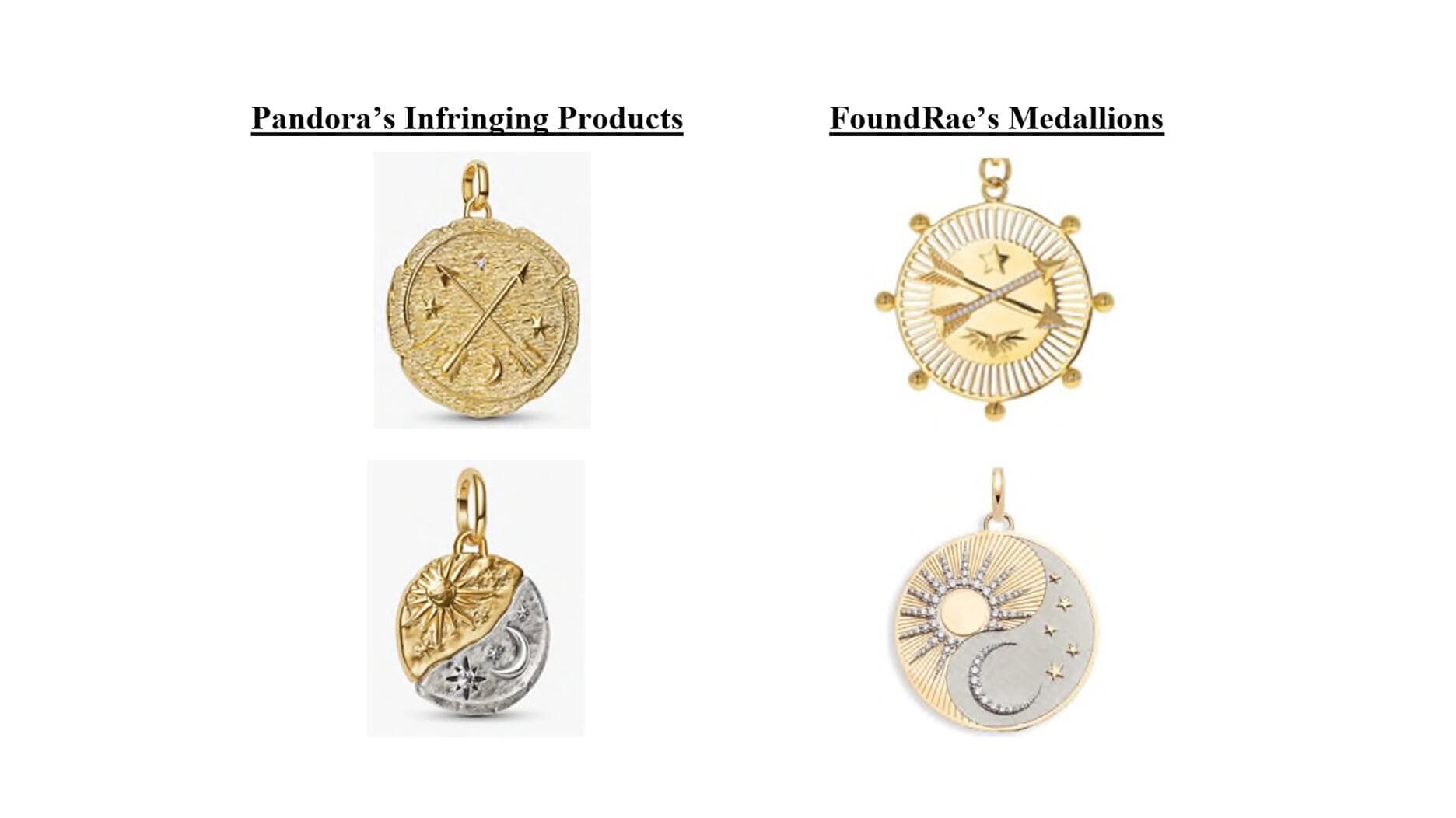
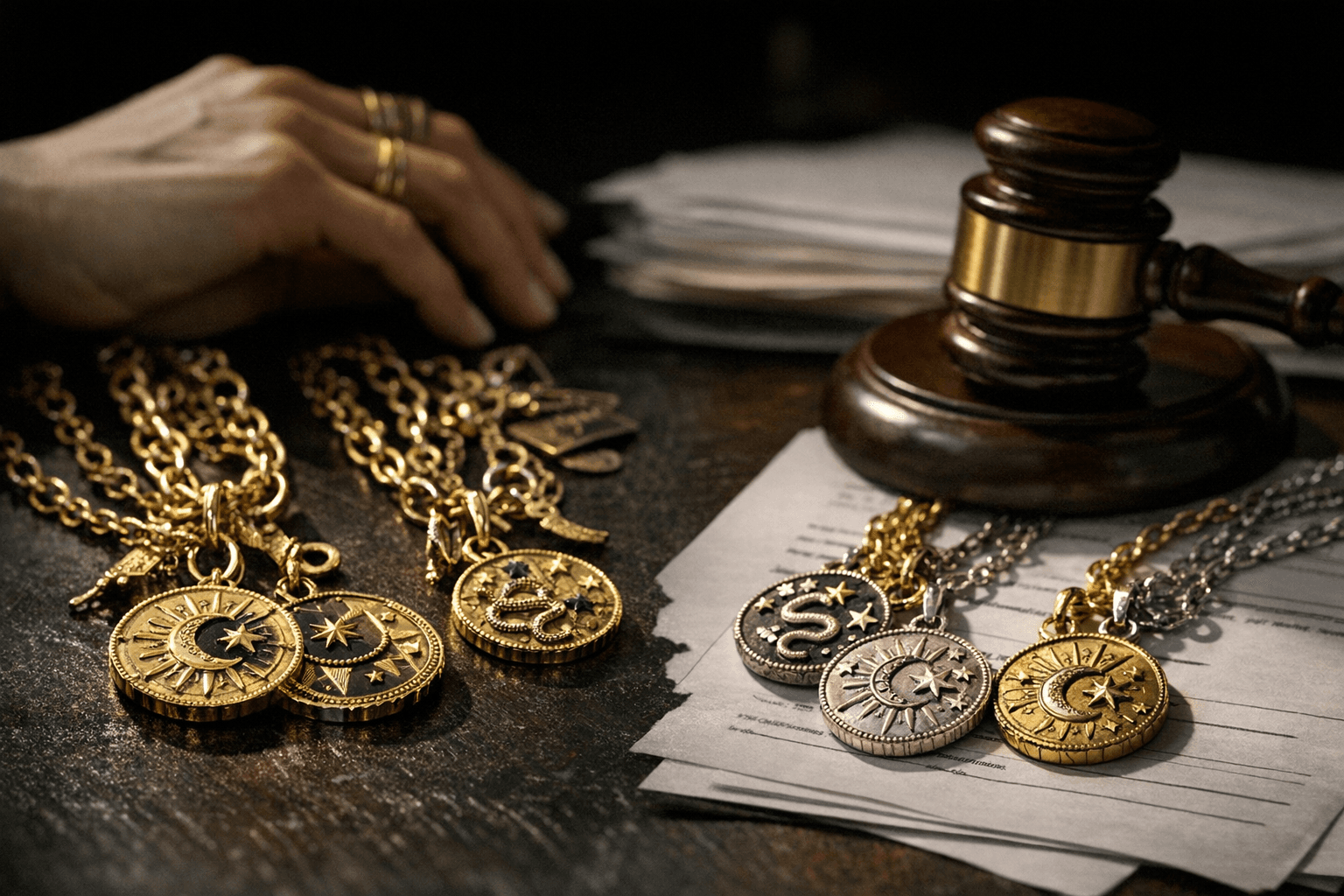
Foundrae filed a copyright-infringement lawsuit against Pandora on February 17, alleging the Danish jewelry giant copied two of its medallion designs "nearly verbatim" for Pandora's debut "Talisman" medallion collection. The complaint, case no. 1:26-cv-01331 in the U.S. District Court for the Southern District of New York, targets pieces Pandora named "Crossing Arrows" and "Sun and Moon." Foundrae, whose legal entity is Cemayla, LLC, is seeking monetary damages, a permanent injunction, and a product recall.
The lawsuit's most striking detail is its timeline. Pandora received a cease-and-desist letter in October 2025 but continued selling the allegedly infringing products regardless. That four-month gap between notice and lawsuit, with no corrective action taken, is central to the complaint brought by law firm Fross Zelnick Lehrman & Zissu on behalf of Foundrae. It undercuts any claim of inadvertent similarity and documents knowing continuation of the alleged infringement. Pandora had not responded to press requests as of publication.
Foundrae was founded in 2015 by creative director Beth Hutchens, and the New York-based brand has built its identity around medallions that carry deeply personal symbolism: talismans rooted in mythology, archetype, and individual meaning, each crafted in 18-karat solid gold. CEO Ruth Sommers issued a statement in connection with the lawsuit affirming the brand's commitment to defending the integrity of its creative work. The alleged copying, per the complaint, extends beyond physical design to marketing imagery and brand presentation, suggesting a deliberate effort to replicate not just the objects but the meaning-driven aesthetic that defines Foundrae's positioning. Customers had already been calling out the resemblance publicly before the case was filed.
For anyone shopping for symbolic medallion or talisman jewelry, a category where the piece's meaning is the purchase itself, this case is a practical guide to protecting that investment. Start with material. Foundrae's pieces are 18-karat solid gold; any claimed Foundrae piece in sterling silver or gold plate is not from the brand. Check the hallmarking on the reverse of the medallion or the clasp: 18K is the baseline authenticator. Pandora's "Talisman" collection is offered at a substantially lower price point in sterling silver, which is itself the quickest visual differentiator.
Verify the seller. Foundrae operates its own boutiques in New York, Los Angeles, Miami, Dallas, Aspen, and Palm Beach, and sells through a curated set of authorized stockists. A piece offered outside that network, particularly on a secondary marketplace, should prompt a direct authentication inquiry to Foundrae before purchase. Marketing photography is another indicator: Foundrae's imagery is editorial and concept-driven, layered with symbolic intent. Listings that appear to borrow that visual language without the brand's name attached are worth scrutinizing.
For anyone who already owns a medallion bought secondhand or through an unofficial channel, cross-reference the piece against Foundrae's archived collections online and check the gold hallmarking first. If provenance remains unclear, Foundrae's customer service team can assist with authentication.
Foundrae was among a group of independent designers previously caught up in a design-copying controversy tied to a Nordstrom collaboration involving We Wore What blogger Danielle Bernstein, in which consumer pressure eventually forced the retailer to pull the offending styles. That episode resolved without litigation. The demand for a product recall in this complaint signals that independent fine jewelry brands are no longer inclined to absorb these moments quietly, especially when the copied motif is the entire point of the piece.
Know something we missed? Have a correction or additional information?
Submit a Tip