How much memorial jewelry costs, and what drives the price
Memorial jewelry can vary widely in cost because each detail changes the work behind it, from metal and size to ashes, handwriting, or a photograph.
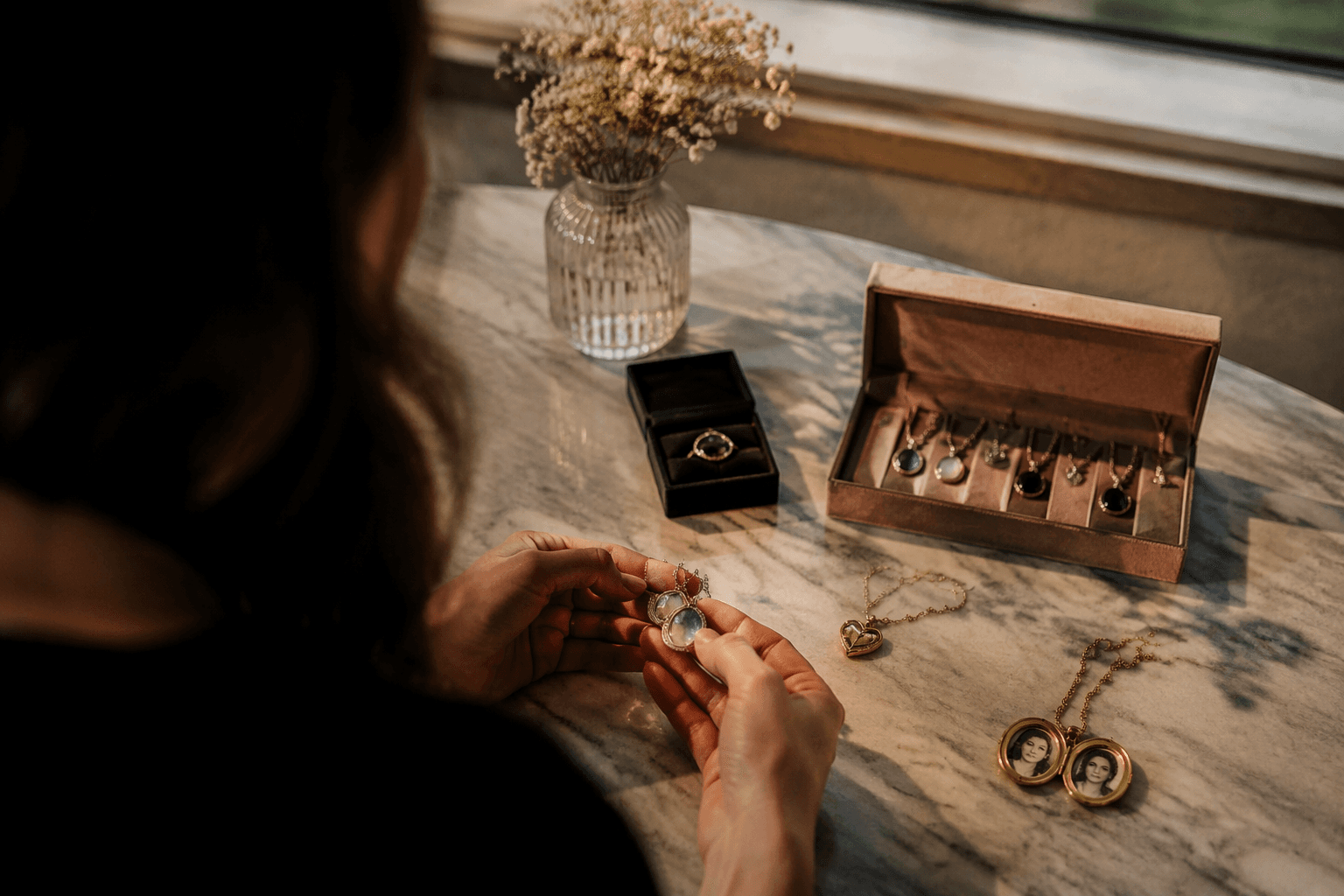
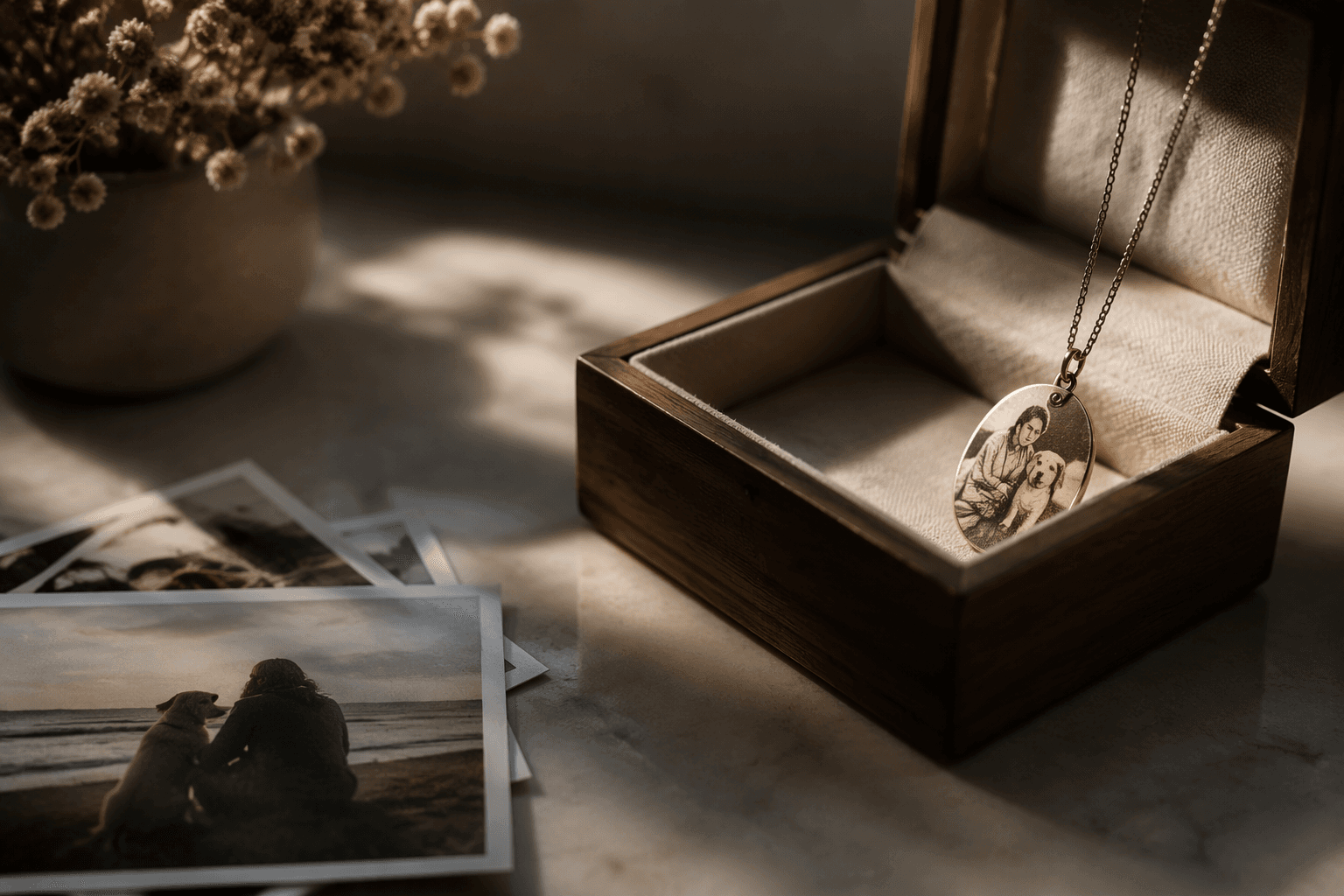
A locket that holds ashes is priced differently from a pendant engraved with handwriting, a charm built around a photograph, or a piece that carries a fingerprint, print, or other intimate detail. Each of those choices changes both the making and the price. The cost is driven less by a single category of jewelry than by how much personal labor the piece demands, how much material it uses, and how intricate the customization becomes.
What you are really buying
A memorial piece is not priced like a standard fashion necklace, where the same design can be produced again and again. Here, the value lives in the bespoke process: the jeweler may need to interpret a handwriting sample, prepare an image for printing or engraving, build a compartment for ashes, or adjust the design around a personal element that cannot be treated like ordinary decoration. That is why two pendants that look similar in a product photo can sit in very different price bands once the personalization is counted.
A simple engraved pendant generally asks for less specialized labor than a design that combines handwriting, a photo, and an ashes compartment in one finished piece. The more elements you ask a jeweler to merge, the more the design becomes a custom build rather than a straightforward engraving job.
The cost drivers that move the number
Metal choice is one of the clearest variables. A memorial piece made in a precious metal will generally cost more than one made in a less expensive material, because the metal itself adds value and changes how the piece is fabricated. Size matters too: a larger pendant, ring, or charm uses more material and often requires more surface area for engraving, printing, or setting a personal detail.
Customization is where the price can climb fastest. Engraved lettering is one layer of work; a design that must be printed, set, or built around a supplied image asks for more technical handling. If the memorial detail is especially intricate, the jeweler may need to spend extra time preparing the artwork, resizing the image, or balancing the layout so the final piece still looks polished rather than crowded.
Labor is the quiet force behind the final figure. Memorial jewelry is often a one-off item, and one-off work is slower than mass production because there is no shortcut through repetition.
Why some combinations cost more than others
Not all personalization weighs the same on the balance sheet. A pendant with a single engraved name is comparatively simple because the jeweler is making one controlled intervention in a finished design. Add handwriting, a photo, and an ashes chamber to that same piece, and the process becomes layered: each element has to be prepared, fitted, and integrated without weakening the overall design.
That is why complexity is often more expensive than size alone. A small piece can cost more than a larger one if the smaller piece requires more precise customization. The extra expense is not only in the materials; it is in the specialized production process.
How to compare pieces before you order
The best memorial jewelry purchase starts with asking exactly what is being made. A piece that looks delicate online may be a simple engraved design, or it may require a much more elaborate process once the order is placed. Before you decide, get clear on the following:
- What material is the piece made from?
- Is the personalization engraved, printed, or set into the design?
- How large is the item?
- How much custom input do you need to provide?
- Does the design need to be rebuilt around a photo or handwriting sample?
Those questions reveal how much handling the jeweler must do behind the scenes. If the answer involves rebuilding the design around an image, preparing handwriting, or combining multiple memorial elements, you should expect the price to reflect that extra work. If the customization is limited to a name or date, the finished cost is usually easier to control.
Where it makes sense to spend, and where you can save
If the piece is meant to be worn often, spend where the durability lives: in the metal, the clasp, the chain, and the quality of the construction. A well-made chain and secure closure can be more important to long-term satisfaction than a more elaborate decorative flourish.
You can often save by simplifying the personalization rather than by stripping away meaning. A clean engraving may carry the same emotional force as a more elaborate combination piece, especially if the handwriting or name is the point you most want to preserve. Choosing a smaller size, a less complex layout, or a single memorial element can reduce cost without making the piece feel any less personal.
This article was produced by Prism’s automated news system from verified source data, official records, and press releases, then run through automated quality and moderation checks before publishing. The system is built and supervised by the people who set the standards it runs under. Read our full AI policy.
Did this article answer your question?