How to choose a custom signet ring with meaning
The best signet ring feels personal because the face shape, metal, and engraving all work together, from a family crest to a single initial.
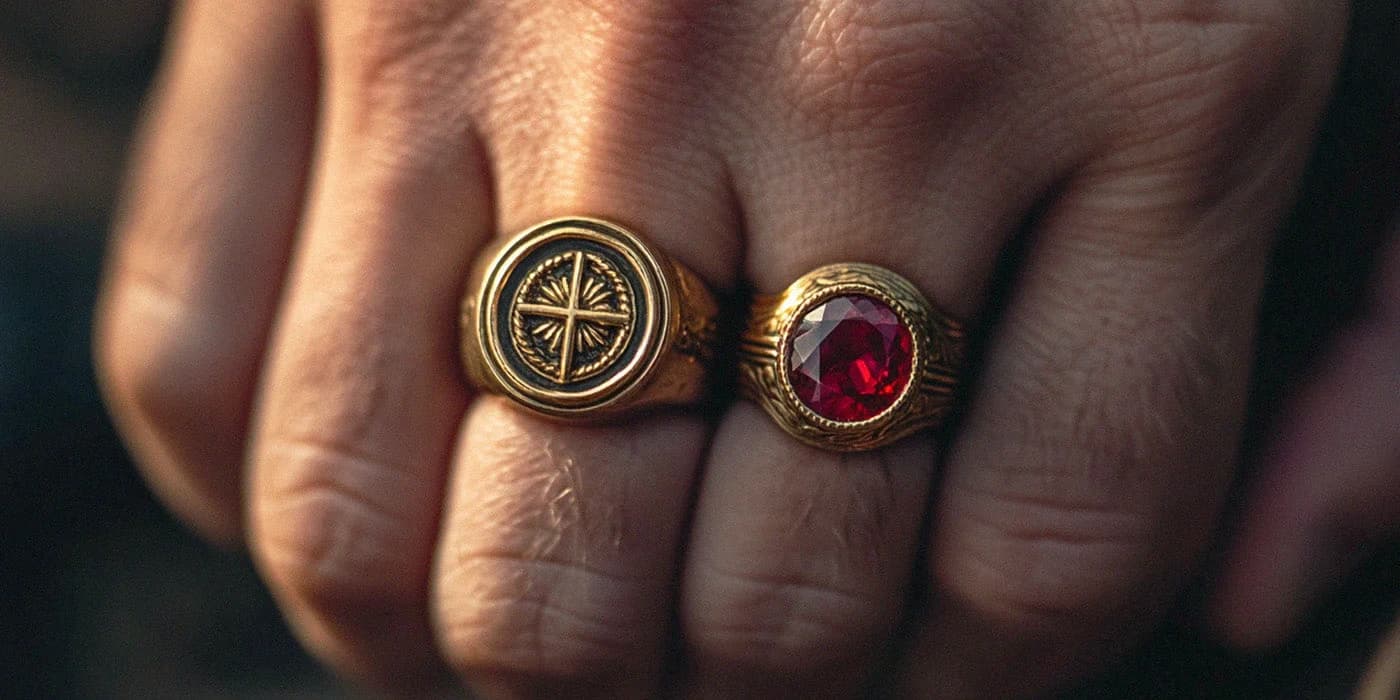
The earliest signets appear in Mesopotamia around 3500 BCE. A custom signet ring works best when the face shape, metal, and engraving all point to the same story. Choose the wrong combination and the ring can read vague or crowded; choose well and it becomes a compact emblem that looks as if it has always belonged to the wearer.
Why a signet still carries weight
A signet is a personal seal, often engraved on a ring, used for authentication. That original purpose is why the form still feels so charged: signets once stamped wax, clay, and documents to signal ownership, authority, or simply that a message was genuine. The form moved through Egypt, Greece, and Rome as a practical tool before becoming a marker of status and lineage.
The British signet had its own strict use case. The small seal dates to the reign of Edward II, from 1307 to 1327, and was required until 1851 to seal certain warrants of the Privy Seal or Great Seal.
Start with the face shape
Face shape controls how the ring sits visually and how much room the design has to breathe, which is why Nine Two Five treats shape as a core decision. Oval faces remain the classic default for initials and monograms because the layout gives a traditional look and enough space for engraving to stay legible.
Other shapes change the mood immediately:
- Oval works best for monograms, crests, and single initials that need room.
- Round faces feel softer and more minimal, especially with one letter or a small symbol.
- Square or cushion faces suit initials, geometric emblems, or a cleaner modern line.
- Shield-style faces lean more formal and can carry a crest or coat of arms with stronger presence.
If the wearer wants a family mark, oval usually feels most natural. If the goal is a simple daily ring, a more geometric face can look sharper and less traditional without losing the signet character.
Choose the metal for how the ring will live
Modern custom signet rings are offered in sterling silver, gold vermeil, solid gold, and 18-karat gold, and that ladder matters. Sterling silver is the most approachable choice and often gives the ring an easy, everyday feel. Gold vermeil sits between silver and solid gold, while solid gold and 18-karat gold make the strongest case for a piece meant to last, be repaired, and one day be handed on.
Gold usually reads warmer and more ceremonial. It suits buyers who want a signet to feel like an heirloom from the start, especially if the engraving is a crest, a coat of arms, or a clean family initial. Sterling silver can feel more relaxed and modern, which is useful if the ring is meant for frequent wear rather than formal occasions.
The face can also stay plain metal or become a harder visual statement with stone. In a video posted on February 3, 2022, Victor Mayer showed artisans making a signet ring in 18-carat white gold with a blue layered onyx signet stone. That combination creates a high-contrast, more formal look than a blank engraved face, and it is a good model for anyone who wants the signet to feel dressed up rather than quietly utilitarian.
Pick a motif that matches the wearer’s real goal
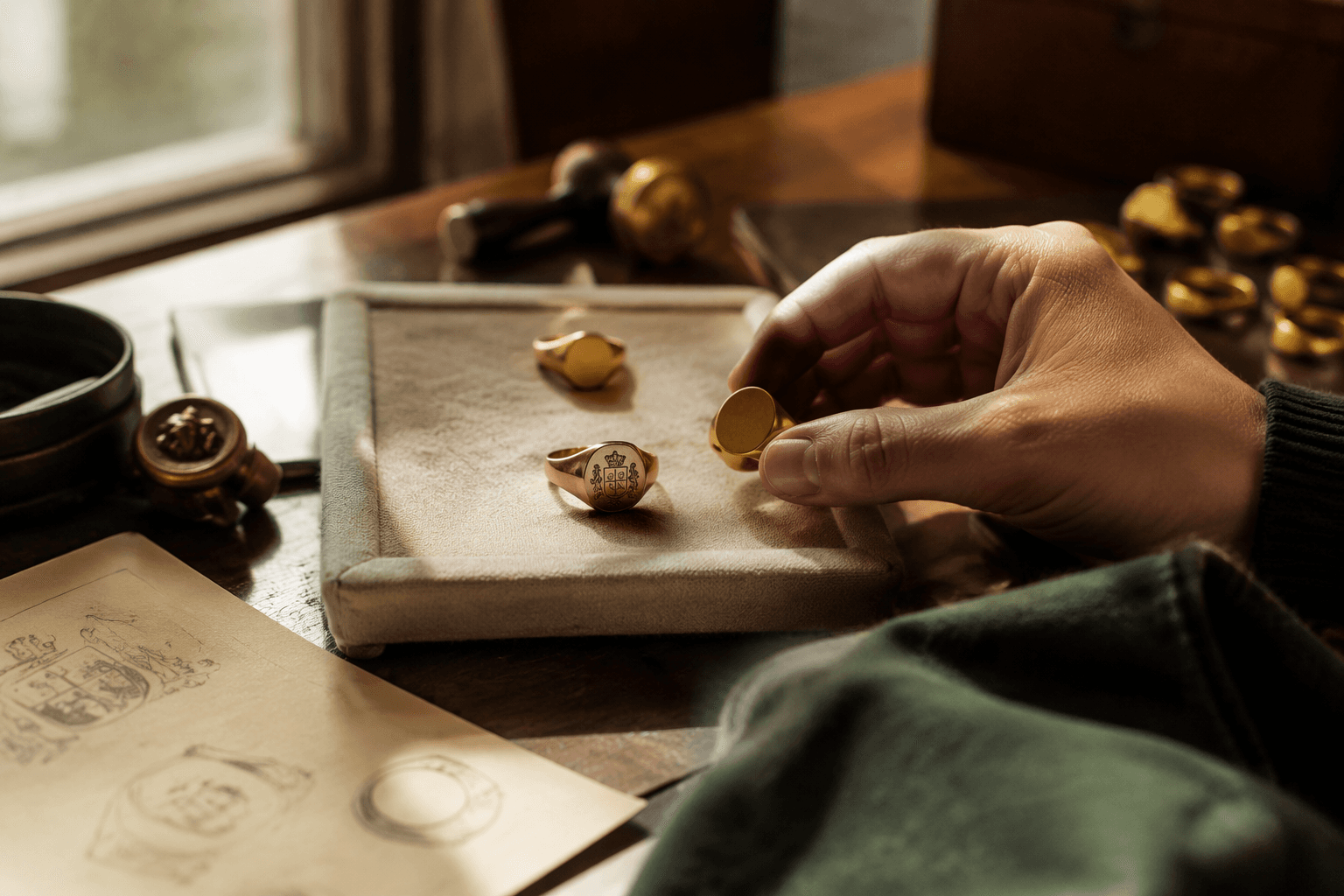
The strongest motif depends on why the ring is being made. For family symbolism, a crest, coat of arms, or monogram remains the most enduring choice because it reads as identity rather than decoration. For everyday wear, a single initial, a small abstract symbol, or a clean emblem tends to hold up better than a crowded design.
A July 4, 2024 Chloe May Jewellery post listed signet-ring engravings including initials, dates, combined crests and coats of arms, fingerprints, flowers, shells, Kentish hops, and birds. Some motifs feel instantly personal, like a fingerprint or a birth-related date. Others, such as flowers or birds, can be beautiful but need restraint so they do not turn the face into a tiny picture frame.
The safest signs are the ones that compress well into a small surface: initials, monograms, crests, or one clean symbol. More specific imagery, like regional plants or a deeply personal motif, can be charming when it belongs to the wearer’s story, but it should be chosen because it means something, not because it is merely pretty.
Engraving style affects legibility as much as sentiment
Signet engraving has moved from hand-carved intricacy to modern laser engraving. Hand-carving can leave a more tactile, traditional finish. Laser engraving brings sharper precision and can handle fine lettering or cleaner repetition, which matters when the face is small and the design needs to stay readable.
The engraving has to read from arm’s length. Intaglio-style engraving, where the design is cut into the surface, keeps faith with the signet’s seal history and works especially well for initials, crests, and simple symbols. Raised or deeply cut decorative emblems can look more ornamental, but they should be used carefully so the face does not become crowded.
A practical rule helps here: the more detail you add, the more the ring depends on scale and craftsmanship. A fingerprint or coat of arms needs enough face area to remain clear. A single letter can survive on a smaller face and still look intentional.
Think about fit, gender, and gifting
Contemporary makers now market signet rings as unisex. The category is no longer confined to men’s jewelry. That shift has widened the design language: slimmer shoulders, softer face shapes, and lighter metals can make the ring feel natural on different hands without losing its authority.
For gifting, a signet works best when the engraving is immediate but not overdetermined. Initials, a date, or a small emblem give the wearer recognition without requiring a private explanation. For heirloom intent, keep the composition simpler than you think. A clear monogram in gold or a crest in a durable metal will outlast a design that depends on a passing motif or an overcrowded face.
This article was produced by Prism’s automated news system from verified source data, official records, and press releases, then run through automated quality and moderation checks before publishing. The system is built and supervised by the people who set the standards it runs under. Read our full AI policy.
Did this article answer your question?