Pencil launches AI jewelry design agent for instant custom CAD generation
Pencil’s AI design agent turns custom jewelry from a CAD bottleneck into a minutes-long conversation, with live pricing, 3D views and production-ready files.
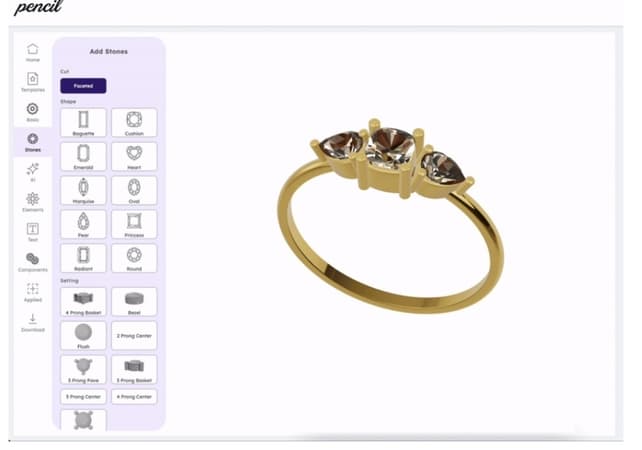
The custom-jewelry bottleneck has long sat in the same place: an idea leaves the counter, gets sketched, translated into CAD, revised, and only then moves toward manufacturing. Pencil is trying to collapse that chain into a single branded conversation, letting customers, sales staff and internal design teams generate production-ready jewelry designs in minutes.
On May 14, the company pushed its pitch as an AI design agent that can be added to a brand’s website and used to create manufacturing-ready 3D jewelry designs through chat. Pencil says the system can also connect directly to manufacturers or export production-ready 3D files, while publishing designs online with lifelike images, a 3D viewer, an online custom designer, a ring builder and live pricing. In practice, that kind of workflow could make custom buying feel closer to retail checkout than a weeks-long commission.
Pencil’s case for speed is built around the grind of conventional jewelry production. The company says traditional CAD software still demands years of training and costs thousands of dollars, while hand-drawn ideas usually need a second CAD step before they can be made. Its own materials describe a process that often stretches across sketching, CAD, revisions, manufacturing and publishing, which is exactly the friction that has kept bespoke jewelry reserved for shoppers with patience. Pencil is betting that removing that lag will matter most when a customer wants to move quickly from mood to model, whether for a personal purchase or a last-minute gift.
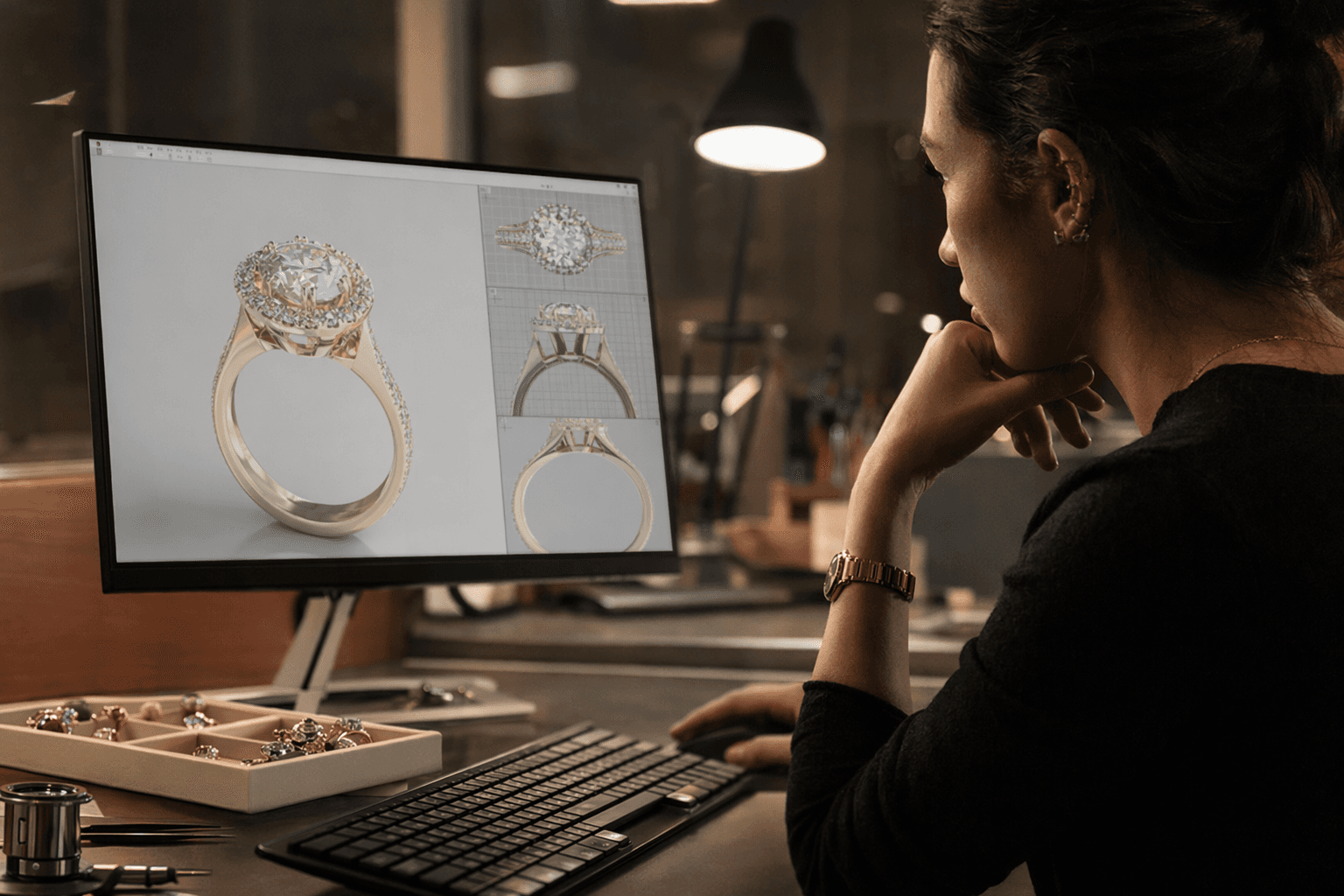
That promise is also framed as a skill shift, not just a software update. The Gemological Institute of America offers a CAD/CAM certificate that teaches students to transform sketches into production-ready designs using CAD modeling, photorealistic renderings and manufacturing techniques. Fashion Institute of Technology similarly builds jewelry design around CAD technologies, 3D modeling and digital output tools such as 3D printing and CNC milling. Against that backdrop, Pencil’s automation looks less like a novelty than an attempt to compress a professional discipline into a faster retail workflow.
The company is also leaning on scale to make the case. Pencil says more than 70,000 designers trust the platform, while another page puts the figure above 100,000. Its reviews page includes praise that it sped up printing, cut production time and filled a gap in the CAD and jewelry design market. Arcade’s launch of Maia in November 2025, an AI product creation agent for custom jewelry, gifts and home decor, shows Pencil is entering a broader push toward conversational design tools. For custom jewelry, the real shift is speed: when CAD bottlenecks shrink, personalization stops behaving like a special order and starts acting like an immediate purchase.
Know something we missed? Have a correction or additional information?
Submit a Tip