18K, 750 and 18ct Gold Stamps, How to Identify Vintage Hallmarks
18K, 750 and 18ct all mean the same gold purity. The rest of the stamp can reveal where a piece was tested, and whether it is solid gold or just plated.
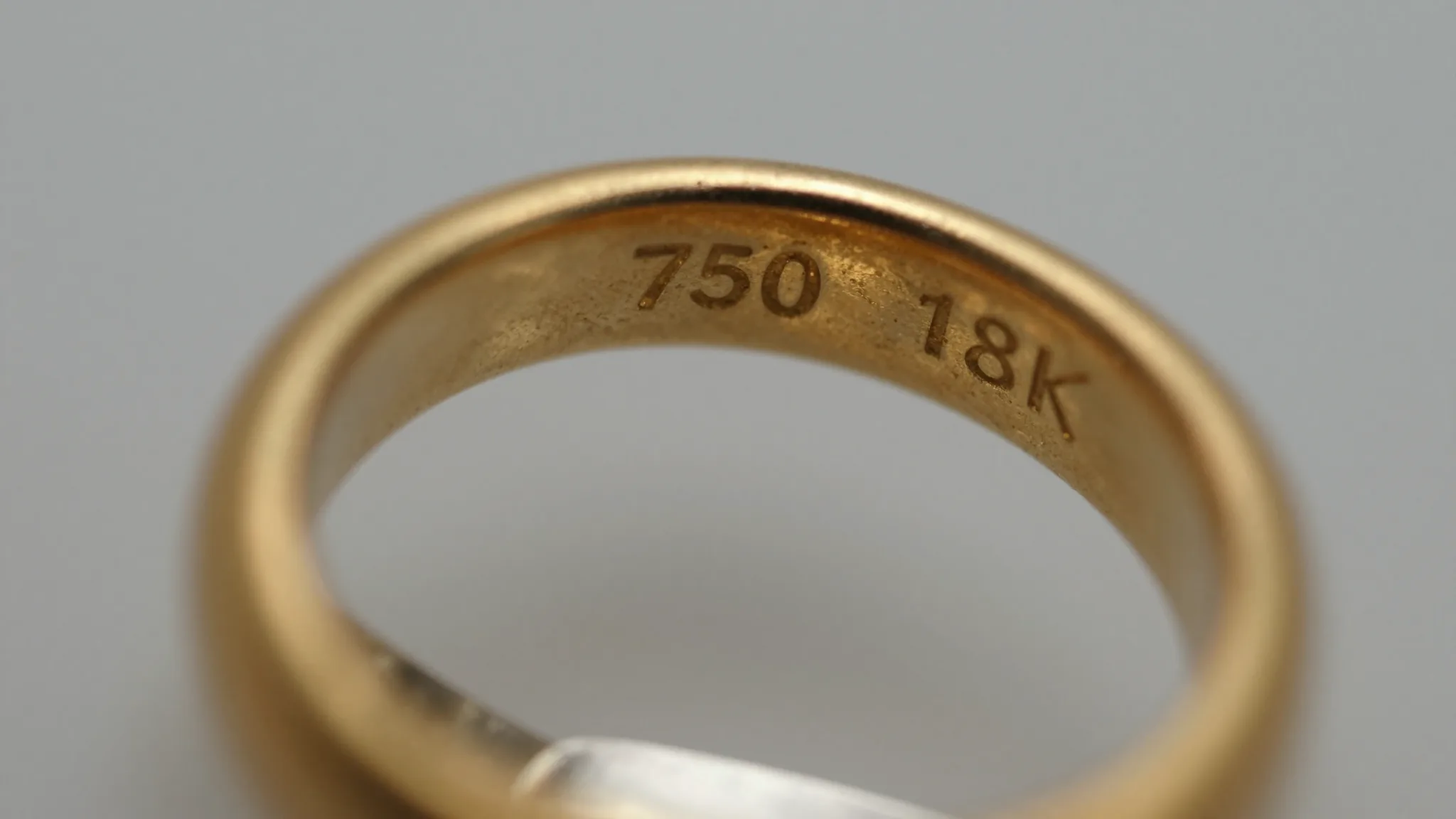
The first clue is the number, but it is not the whole story
A ring that reads 18K, 750 or 18ct is speaking the same language: 75 percent gold, or 18 parts gold out of 24. That tiny stamp can stop a lot of guesswork before it starts, but it is only the beginning of the identification process. On a vintage piece, the mark can be the first page of a small archive, especially when it is tucked inside a band, pressed into a clasp, or hidden on the back of a mounting.
What 18K, 750 and 18ct really mean
These three marks are equivalents, not competing grades. 18K is the karat system, 750 is the parts-per-thousand version of the same purity, and 18ct is the British and Commonwealth spelling convention. If you are holding a vintage ring, brooch, chain or bracelet, those marks usually point to the same metal content even when the language looks different from one country to another.
That distinction matters because gold jewelry descriptions often blur karat purity with gemstone carat weight. The Federal Trade Commission makes that separation for a reason: carat weight measures gems, while karat purity measures gold. If a seller or label mixes those terms loosely, it is worth slowing down and reading the piece more carefully.
Where to look first on the jewelry
On rings, the most common place is the inside of the shank, where the marks are protected from wear but still visible. On chains and bracelets, look near the clasp or on a small link close to it. Pendants and lockets often carry marks on the bail or the reverse side, while brooches may place them on the stem, catch, or back.
The position of the stamp matters as much as the stamp itself. A carefully placed hallmark suggests the maker expected the piece to be inspected, recorded, and worn long enough to be tracked across time. A weak, blurry, or isolated purity number tells you less than a full set of marks.
What a UK hallmark can reveal
In the United Kingdom, a hallmark is not a decorative flourish. The Goldsmiths’ Company Assay Office describes it as a set of component marks showing that an item has been independently tested, meets legal purity standards, and can reveal provenance. In the traditional UK system, you are usually looking for three elements: a sponsor’s mark, a fineness mark, and an assay office mark.
That combination can tell you who submitted the item, how pure the metal is, and where it was hallmarked. For vintage buyers, that is invaluable. It can help place a piece in a specific legal and geographic system, which is often the difference between a well-made gold jewel and a later reproduction trying to borrow the look of one.
The history behind those marks is unusually deep. Hallmarking in London dates to 1300, and Goldsmiths’ Hall became the country’s first Assay Office in 1478. The Hallmarking Act 1973 still governs hallmarking in Great Britain today, and government guidance says items above certain weights sold as gold, silver, platinum or palladium must carry a legally recognised hallmark.
Why provenance and era can hide in the stamp
A hallmark can do more than confirm metal content. In the UK system, it can also help identify where the piece was tested and sometimes narrow the era through the style of the marks themselves. That is why collectors study the full cluster, not just the purity number. The stamp becomes a map: metal, maker, office, and legal compliance all compressed into a few millimeters.

This is also where authenticity gets nuanced. A piece can have a legitimate 750 or 18ct mark and still be altered, repaired or rebuilt later. An old ring can be resized, a clasp can be replaced, and a chain can be shortened without erasing its core identity. The hallmark is evidence, not a full autobiography.
The international system and the Common Control Mark
For pieces moving across borders, the Hallmarking Convention created a shared language. Its Common Control Mark is the first and only international hallmark, accepted in all Contracting States, and about 5 million articles are marked with it each year. That volume says something important: precious-metal marking is not a niche ritual. It is a working consumer-protection system that still underpins trade.
The Convention’s goal is practical as well as protective. It is designed to facilitate trade in precious-metal articles while maintaining fair trade and consumer protection. For the buyer, that means a mark can carry legal weight beyond the country where the piece was sold.
How U.S. and British conventions differ
In the United States, the Federal Trade Commission’s Jewelry Guides exist to help consumers understand the words and symbols used to describe the quality and purity of platinum, gold and silver jewelry. The FTC’s role is especially useful when you are comparing an American piece with a British or European one, because the vocabulary may shift even when the gold content does not.
British and Commonwealth buyers will often see 18ct. European markings often use 750. U.S. descriptions more commonly use 18K. The core reading is the same, but the context changes, and context is what turns a stamp into evidence.
When a hallmark is not enough
A hallmark alone does not prove everything. Mixed-metal pieces, plated jewelry and composite constructions need closer scrutiny, especially in vintage markets where descriptions can be imprecise. UK guidance says items such as gold plated silver must be described clearly and transparently, which is exactly why the wording matters for buyers trying to separate solid gold from a surface finish.
That means you should look for the full set of marks, check whether the piece feels consistent with its claimed construction, and read the description with a skeptical eye if the language is vague. A true hallmark supports a claim; it does not excuse fuzzy labeling. If the seller leans on the purity number but avoids the rest of the stamping, the safest conclusion is that the story is incomplete.
A quick hallmark-decoding checklist
- Find the stamp first, then read every mark together, not in isolation.
- 18K, 750 and 18ct all indicate 75 percent gold.
- In UK-style marking, look for the sponsor’s mark, fineness mark and assay office mark.
- Use the assay office mark to help place the piece geographically and historically.
- Remember that karat refers to gold purity, while carat refers to gemstone weight.
- Treat plated or mixed-metal descriptions with extra care, especially if the wording is vague.
The smartest vintage buyers do not stop at the number. They read the whole object, from the hidden stamp to the way it is described, because that is where the truth of a gold piece usually lives.
This article was produced by Prism’s automated news system from verified source data, official records, and press releases, then run through automated quality and moderation checks before publishing. The system is built and supervised by the people who set the standards it runs under. Read our full AI policy.
Did this article answer your question?