AMBERIF Spring 2026 Opens in Gdańsk, Showcasing Baltic Amber Craft and Design
Three days of Baltic amber trade and a 29th design competition just wrapped in Gdańsk. Before you buy succinite, know what dealers mean by copal, ambroid and bone.
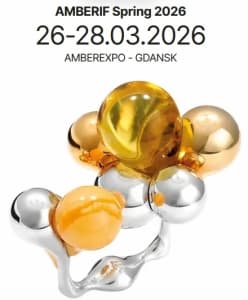
Pick up a piece of raw Baltic amber and the first thing you notice is the warmth: it retains heat in a way glass and plastic never do, and the difference is immediate. That sensory quality drew buyers, designers and trade professionals from across Europe, Asia and the Americas to AMBERIF Spring 2026, the three-day international fair that ran March 26-28 at Amberexpo Gdańsk.
Running annually since 1994 and organized by Międzynarodowe Targi Gdańskie S.A., AMBERIF holds a specific position in the jewelry calendar as one of Europe's largest industry trade fairs and the central market event for Baltic amber specifically. The exhibition showcases Baltic amber in both traditional craftsmanship and modern designs, with live demonstrations and a special design awards ceremony highlighting innovative amber creations. Gdańsk earns its description as "the crossroads of all amber routes": the Baltic coast is the world's primary source region for amber, and the city has served as the central trading and crafting hub for the material for centuries.
This year's program included the 29th AMBERIF Design Award ceremony, which opened the fair on March 26 under the honorary patronage of Poland's Minister of Culture and National Heritage. The AMBERIF Design Award is an international competition aimed at promoting Baltic amber as an engaging means of artistic expression, purely artistic in nature, favoring the artist's ideas and sense of expression. The Grand Prize carries a value of PLN 30,000, approximately EUR 7,000. The exhibition also featured industry conferences and expert-led workshops, providing deeper insights into amber craftsmanship, design and market development. A separate seminar, "Amber 360°: Science, Heritage, Environment," offered an academic lens on the material alongside commercial programming, and the fair's first evening closed with the AMBER Vibes runway presentation, artistic direction by model and photographer Lidia Popiel, in which amber jewelry served as the centerpiece.
For buyers navigating any booth in Amberexpo's halls, a few vocabulary terms matter before approaching a dealer's table. Baltic amber's technical name is succinite, named for its succinic acid content of 3 to 8 percent by weight. Because Baltic amber contains 3-8% succinic acid, it is also termed succinite. That chemistry, built up over approximately 44 million years of fossilization, is what distinguishes it from copal, a younger and partially polymerized resin that can appear nearly identical to untrained eyes. Also common in the market: pressed amber, or ambroid, which is real succinite reconstituted from smaller fragments under heat and pressure. It remains genuine material but trades at considerably lower prices than natural, single-piece specimens.
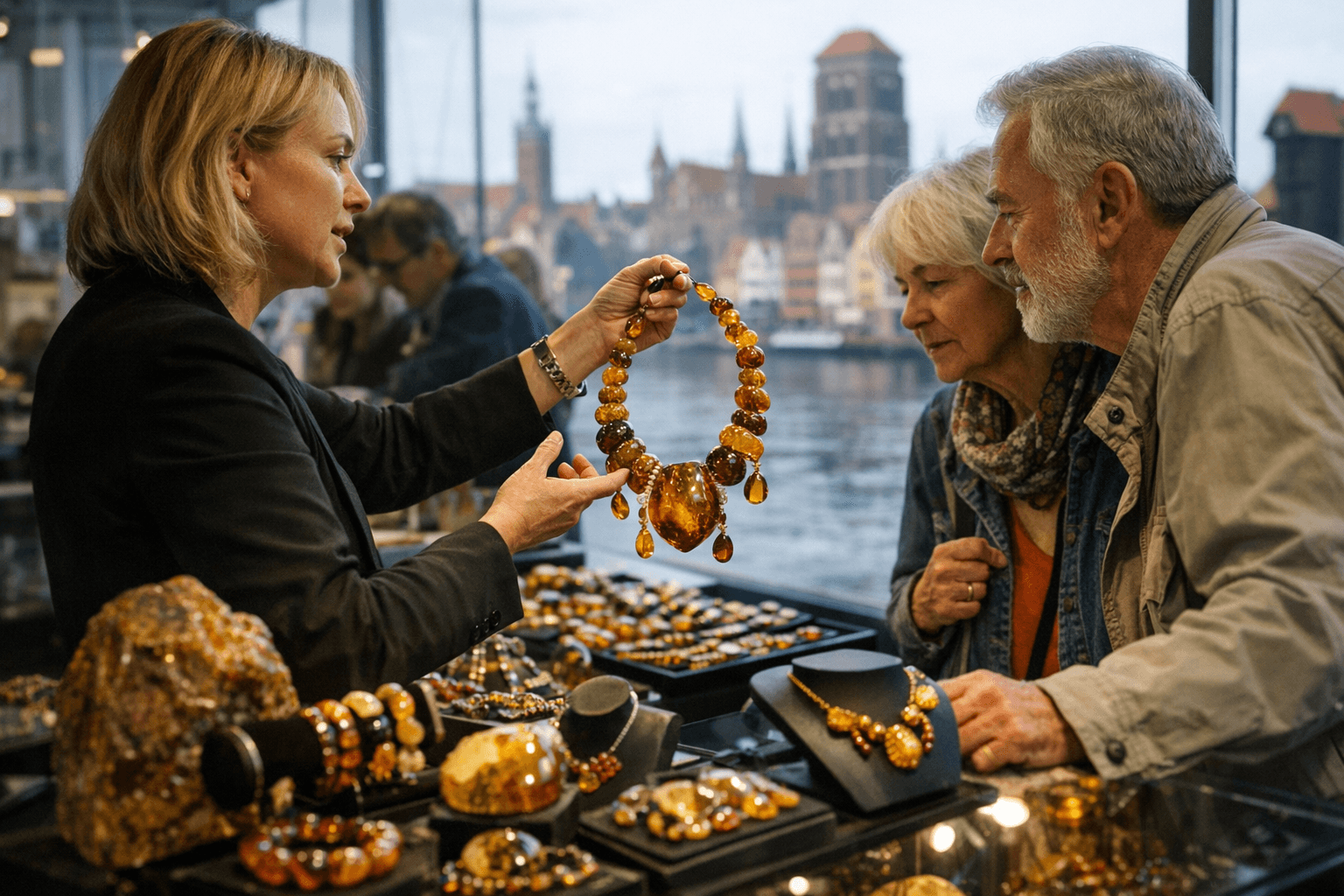
On clarity, dealers use terms inherited from the lapidary tradition. Clear amber is highly transparent material. "Cloudy," or "bastard," amber derives its appearance from a multitude of small bubbles, while "bone," or osseous, amber is more opaque and softer, white to brown in color, containing many bubbles. None of these grades are inferior in absolute terms; they reflect different aesthetic traditions, and cloudy amber has been central to Baltic jewelry for centuries.
Two field tests are worth carrying mentally into any transaction. While amber and copal will both sink in regular water, saltwater has a higher density and genuine succinite floats in a saturated saltwater solution, while glass and most dense plastic imitations sink. Copal will get sticky when painted with ether or acetone, while amber is resistant to ether and acetone.
AMBERIF Spring is a B2B event exclusively for jewelry buyers and trade visitors. Attendance required online pre-registration, a printed ID badge and receipt of a hologram at the Amberexpo reception at ul. Żaglowa 11. The largest number of AMBERIF guests are companies supplying jewellery and related products: wholesalers, retail chains, shops, galleries, investors and collectors. For the material's second test, after authenticity, is wearability, and Gdańsk in late March remains the place where both questions get answered most directly.
This article was produced by Prism’s automated news system from verified source data, official records, and press releases, then run through automated quality and moderation checks before publishing. The system is built and supervised by the people who set the standards it runs under. Read our full AI policy.
Did this article answer your question?