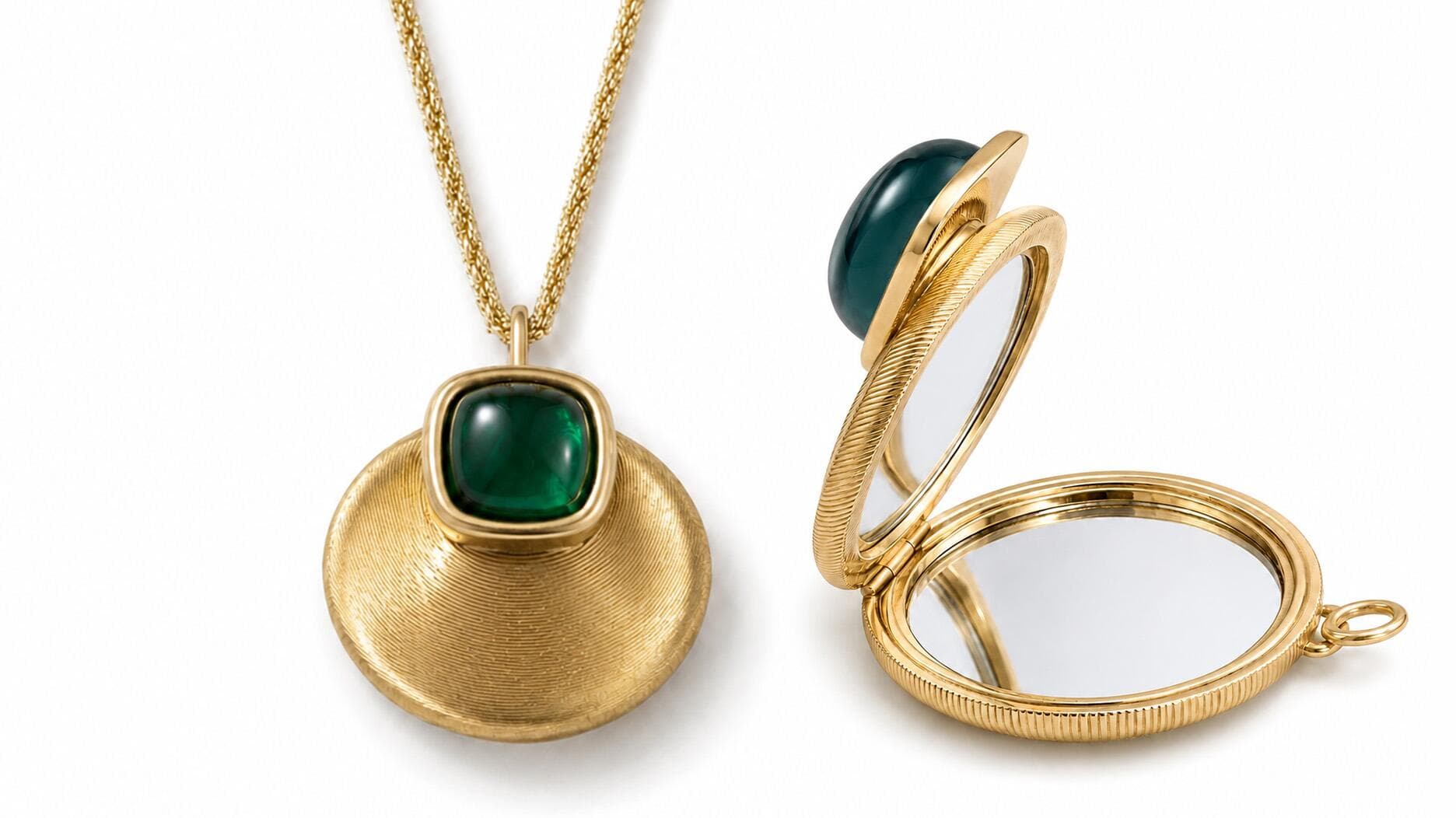
Arm cuffs return, daytime diamonds and monochrome shape 2026 style
Arm cuffs are back, but the sharper way to wear the trend is vintage: 1990s sculptural cuffs, day-ready diamonds and monochrome pieces with older edge.
The wrist as a small archive
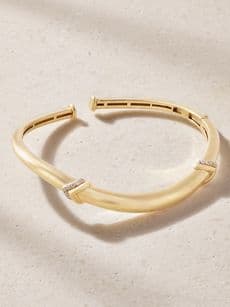
A single arm cuff can change the temperature of an outfit in one gesture. It is the kind of piece that feels discovered rather than bought, the sort of jewel that might have surfaced from an estate tray, a family dressing box, or a velvet-lined drawer where a clasp and a tiny stamp tell the whole story at a glance.
PORTER’s summer 2026 jewelry edit puts arm cuffs back at the center of the conversation, calling them officially on trend and framing them as a 1990s throwback. The most persuasive proof is how they are being worn: Emma Stone, Zoë Kravitz and Alexa Chung have each paired a lone cuff with a classic little black dress, a styling move that strips the jewel of excess and lets its shape do the talking. A cuff works best when it has presence without noise, which is why this return feels less like nostalgia than a lesson in proportion.
For the collector, that means the best search terms are not abstract trend phrases but concrete vintage ones. Start with “1990s cuff,” “arm cuff,” “armlet,” and “wide cuff bracelet,” then widen the net to sculptural gold cuffs and polished metal forms from the later 20th century. The difference between authentic vintage and retro-inspired newness often sits in the details: the softness of wear on the inside curve, the weight in the hand, the quality of the hinge or spring mechanism, and the kind of maker’s mark or metal stamp hidden where only the wearer would see it.
The historical lineage runs far deeper than the 1990s. The British Museum holds arm-cuff objects from Benin, including an historical example made of ivory inlaid with copper, a reminder that this form has long carried cultural and symbolic force. The museum itself was founded in 1753 and opened to visitors in 1759, which gives the arm cuff a lineage that stretches far beyond any single fashion cycle. In other words, the current revival is not a reinvention so much as a return to a shape that has always known how to command attention.
How to read the cuff before you buy it
PORTER highlights three contemporary references worth keeping in mind when you hunt secondhand: David Yurman’s Cablespira Flex cuff, Buccellati’s Opera Tulle cuff and Repossi’s Serti sur Vide cuff. They show three different readings of the same idea, from fluid and wearable to intricately worked and visually open, and they also clarify what to look for in vintage pieces. A real vintage cuff tends to have a stronger sense of construction, whether that is a crisp interior edge, a hand-finished surface, or the slightly irregular rhythm that comes with older manufacturing.
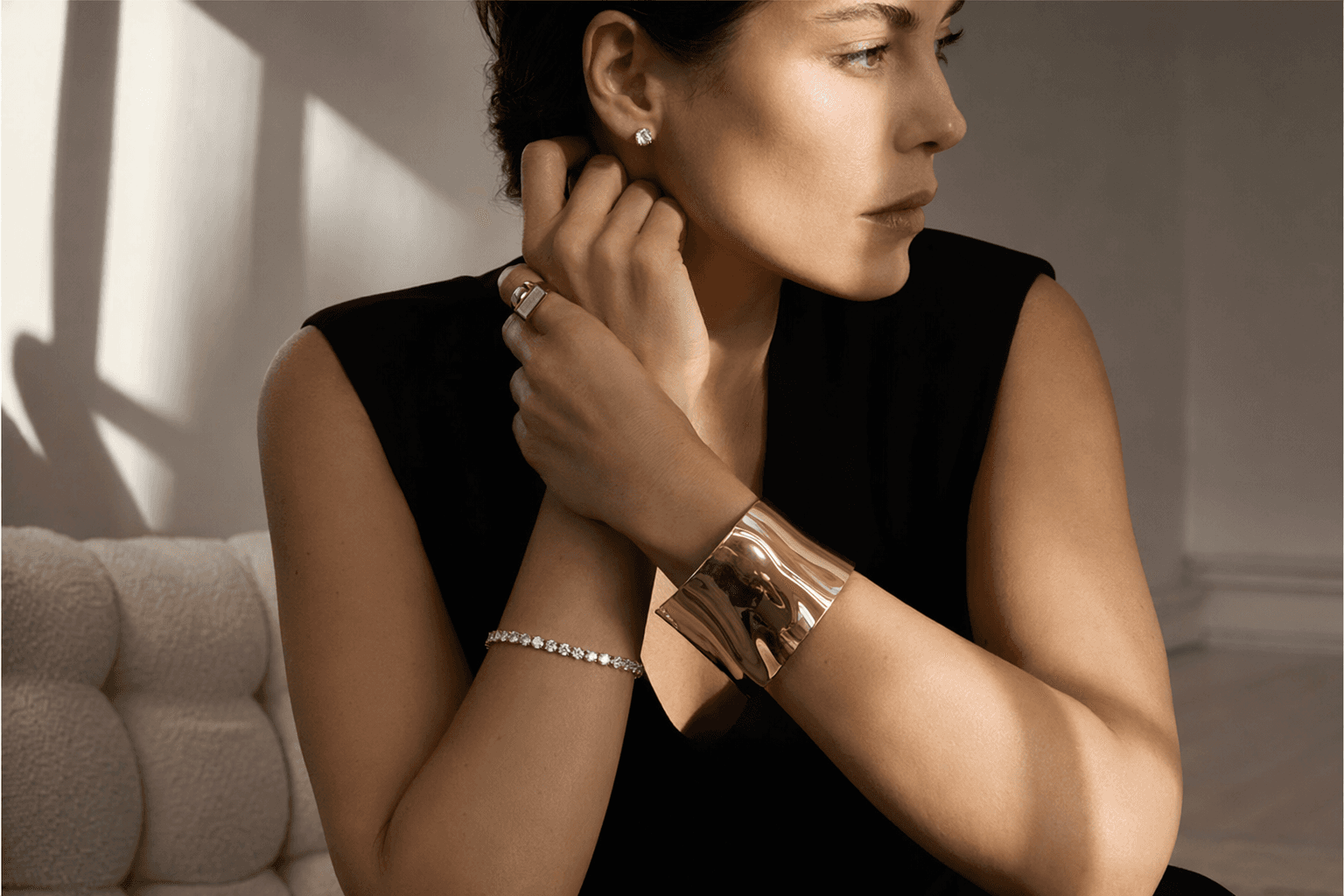
Look closely at how the cuff closes, because the clasp is often the most revealing part of the object. A good vintage piece should feel engineered rather than merely decorative, with a hinge, spring or opening that still holds tension. If the outer surface is highly polished, the interior may still show the life of the jewel, especially in places where the metal has rubbed against skin over years of wear.
Daytime diamonds, not dinner-only diamonds
The other major shift in PORTER’s edit is quieter, but arguably more useful: understated diamonds are moving into daytime. These are not the diamonds that wait for a gala, but the smaller stones that work with denim, tees and tailored jackets, the kind of pieces that slip into daily life without asking for a costume change.
That makes the vintage translation especially rich. Search for mid-century everyday diamond pieces, including slim bands, petite studs, low-profile rings and delicate rivière or line bracelets. Mid-century jewelry often excels at this balance between modesty and precision, with stones set low enough to feel practical and elegant enough to carry real light. The setting matters here: a bezel setting reads smoother and more modern on the hand, while prongs lift the stone into the light and often preserve a more open, period feel.
The appeal is partly emotional, but it is also structural. Everyday diamonds from the mid-century era were designed to be worn, not preserved, and that practical elegance is exactly what makes them so current again. A small old-cut stone on the wrist or at the throat can do more for a plain shirt than a larger, more formal jewel ever could.
Monochrome, from the runway to the archive
PORTER ties the last part of the story to monochrome dressing, noting that black-and-white-centric collections at Calvin Klein Collection and Saint Laurent helped define spring and summer 2026. That runway mood has an obvious vintage translation: Art Deco geometry, 1980s contrast, and the kind of black-and-white jewelry that relies on line, surface and silhouette rather than color.
For secondhand shopping, that means looking beyond obvious diamond pieces. Search for Art Deco onyx and diamond combinations, black enamel, jet, rock crystal, cultured pearl, and high-contrast gold work from the 1980s. The strongest monochrome pieces often feel architectural, with millegrain edges, crisp geometry or a deliberately stark pairing of dark and light that reads as chic rather than severe.
Here, too, authenticity lives in finish. Older monochrome jewelry usually reveals hand work in the mounting, subtle wear on enamel edges, or a slightly softened geometry that keeps the piece from looking too manufactured. New retro-inspired jewels often reproduce the visual idea cleanly, but they rarely have the same density, the same lived-in surface, or the same ability to anchor a wardrobe for years.
Why this moment feels durable
The broader luxury picture matters because it explains why these pieces are resonating now. In The Business of Fashion’s State of Fashion 2026 coverage, jewelry’s strength is linked to customers who want lasting value and are willing to treat themselves, a combination that favors pieces with longevity in both design and wear. That is exactly where cuffs, everyday diamonds and monochrome jewels excel: each can be styled multiple ways, and each reads as an investment in how clothes actually live on the body.
The best way to approach this season is not to chase the trend as if it were new. Treat it as a translation guide. A 1990s cuff can give a modern black dress its punctuation mark, a mid-century diamond can make a white T-shirt feel deliberate, and an Art Deco or 1980s monochrome piece can turn a simple outfit into a study in line and contrast. That is the lasting appeal of vintage jewelry, it lets the present borrow the authority of the past without losing any of its polish.
This article was produced by Prism’s automated news system from verified source data, official records, and press releases, then run through automated quality and moderation checks before publishing. The system is built and supervised by the people who set the standards it runs under. Read our full AI policy.
Did this article answer your question?