Art Deco Jewelry Buying Checklist: Identify 1920-1935 Rings Brooches Necklaces
Spot genuine Art Deco by the date window c. 1920–1935 and its stepped, geometric vocabulary, those two clues separate period pieces from later revivals.
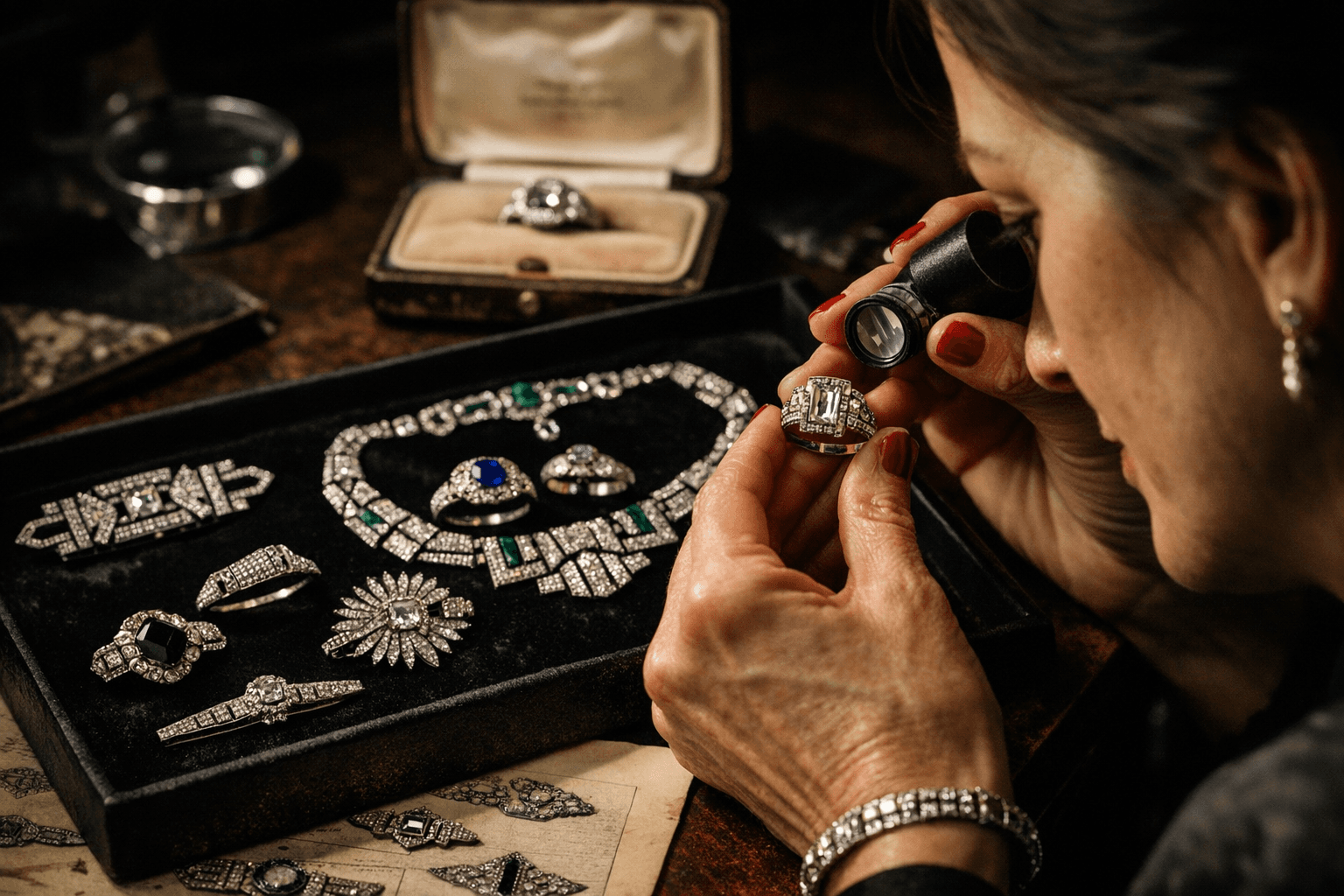
1. Date window: c. 1920–1935 (allow for late-1930s variation)
When you’re dating a piece, the single most reliable marker is the production window: most authentic Art Deco jewelry was made c. 1920–1935, with some examples extending into the late 1930s. Use that date range as a first filter: provenance paperwork, estate tags, or a maker’s archive linking an item to that period dramatically increases confidence. If a seller calls a work “Art Deco” but cites no production history within c. 1920–1935 or late-1930s provenance, treat the attribution as suspect and ask for specific evidence.
2. Design vocabulary: geometric, stepped, architectural
Look for the characteristic Art Deco vocabulary, formal geometric shapes, stepped or architectural profiles, and strong linear patterns; these are signature motifs across rings, brooches, and necklaces. A true c. 1920–1935 piece will show these elements not as surface decoration but integrated into the structure: stepped gallery work on a ring, a tiered brooch outline, or a necklace with repeating angular links. If the geometry feels applied or overly floral, it may be a revival or an inspired modern piece rather than original Art Deco.
3. Rings: proportion, settings, and the stepped gallery
Examine the ring’s silhouette against the c. 1920–1935 aesthetic: rings from the period favor low- to medium-profile settings with stepped galleries and openwork that emphasize geometry over height. Stones are often set in bezel, millegrain, or secure collet mounts rather than very high prongs; platinum was widely used for its strength allowing delicate filigree and fine openwork typical of the period. Check the underside for machine-era solder lines and consistent craft techniques from the 1920s–1930s; abrupt modern soldering or contemporary comfort bands suggest later alteration.
4. Brooches: architecture, scale, and construction
Brooches made in the c. 1920–1935 period frequently read as small architectural sculptures, think stepped tiers, chevrons, sunbursts, and clean rectangular planes, rather than organic sprays common in earlier eras. Original pins from this window often use sturdy platinum or 18k white gold backs with robust C-clasps or trombone fittings; overly fragile or safety-catch fittings that look modern are warning signs. Inspect the reverse: original Art Deco brooches show methodical symmetry in construction consistent with the geometric vocabulary, and any added solder patches or modern pin repairs can affect value and authenticity.
5. Necklaces: link logic and balance
Necklaces from c. 1920–1935 typically use repeating geometric links, rectangles, rhomboids, or graduated stepped elements, that maintain an architectural rhythm when worn. The clasp is a clue: period pieces may have box clasps with figure-eight safety or integrated geometric clasps that mirror the necklace motif; inexpensive modern catches or magnetic fastenings indicate later production. Weight and drape also matter, original Art Deco necklaces balance form and function so the chain sits flat and echoes the geometric vocabulary rather than appearing dainty or overly fluid.
6. Materials, hallmarks, and what to ask for
Prioritize documented materials: platinum and 18k white gold were common in the c. 1920–1935 window because their tensile strength enabled intricate geometric openwork; yellow gold appears less often in high-style Deco pieces. Ask for hallmarks and maker’s marks that correspond to the period and jurisdiction, these are often tiny and consistent with machine-era punch stamps. When a seller claims “period” without marks, request a loupe-view photo of the hallmark area and provenance documentation; absence of marks isn’t definitive, but it requires stronger supporting evidence.
7. Stones and cuts: period-appropriate choices
Expect stones that fit the era’s linear aesthetic, old mine, old European, rose cuts, baguettes, and early transitions were used alongside smaller calibré-cut diamonds and colored stones to reinforce geometry. Large modern brilliant-cut diamonds or contemporary synthetic-looking stones can indicate later resets; similarly, a sudden pairing of very modern-cut gems with an otherwise convincing c. 1920–1935 mounting is a red flag for modification. When in doubt, an independent gem lab report identifying cut style and any indications of recutting will clarify whether stones are original to a period piece.
8. Signs of alteration vs. original integrity
Original Art Deco pieces will show consistent wear appropriate to the c. 1920–1935 period, softened edges on milgrain, slight unevenness where hand finishing meets machine work, and patina in recessed areas. Modern alterations commonly include re-tipping prongs with brighter metal, replacing period fittings with contemporary clasps, or re-plating that masks original surface finishes; these changes reduce historical integrity. Ask sellers to disclose repairs and compare photographs under magnification; provenance that dates back to the 1920s–1930s or continuous family ownership strengthens claims despite minor, documented repairs.
9. Provenance, certificates, and red flags
Request provenance that ties a piece to the c. 1920–1935 window, estate inventories, auction catalog entries, or archival dealer records are gold-standard evidence. For high-value stones, insist on current gemological reports (GIA, IGI, or similar) to confirm whether cuts or treatments are modern; while such reports won’t date a setting, they’ll reveal whether stones are consistent with period cutting styles. Be skeptical of vague statements like “period style” or “inspired by Art Deco”; without c. 1920–1935 provenance or visible period hallmarks, those phrases are often euphemisms for later production.
- Confirm the date window c. 1920–1935 in writing, or identify hallmarks consistent with that period.
- Verify the design vocabulary is genuinely geometric/stepped and integrated into the piece.
- Inspect settings, clasps, and undersides for period construction techniques rather than modern repairs.
- Request gem reports for significant stones and provenance documents for expensive pieces.
- Factor restoration or replacement parts into price, originality commands the premium in true c. 1920–1935 Art Deco jewelry.
10. Practical checklist to carry when buying
Conclusion When you hold a genuine Art Deco piece, crafted within the c. 1920–1935 window and built from stepped, geometric vocabulary, the workmanship reads as architecture at hand: measured, restrained, and exact. Make those two criteria your north star, demand clear provenance and material verification, and you'll buy beauty that carries historical and investment value without compromise.
This article was produced by Prism’s automated news system from verified source data, official records, and press releases, then run through automated quality and moderation checks before publishing. The system is built and supervised by the people who set the standards it runs under. Read our full AI policy.
Did this article answer your question?