Blackened Rings Channel Victorian Mourning Jewelry and Dark Romance Trends
Blackened rings borrow their drama from mourning jewelry, but the best ones reveal their age in the metal, not just the mood.
A small archive on the finger
A blackened ring can feel like a private document: compact, coded, and full of clues. Its color may read as fashion at first glance, yet the best examples carry a longer memory, one that runs through Victorian mourning jewelry, oxidized silver, and the graphic contrasts of Art Deco. The appeal is not only aesthetic. Dark metal can also make a gemstone look sharper and more saturated, which is one reason the look feels as practical as it is romantic.
Why the darkness goes back so far
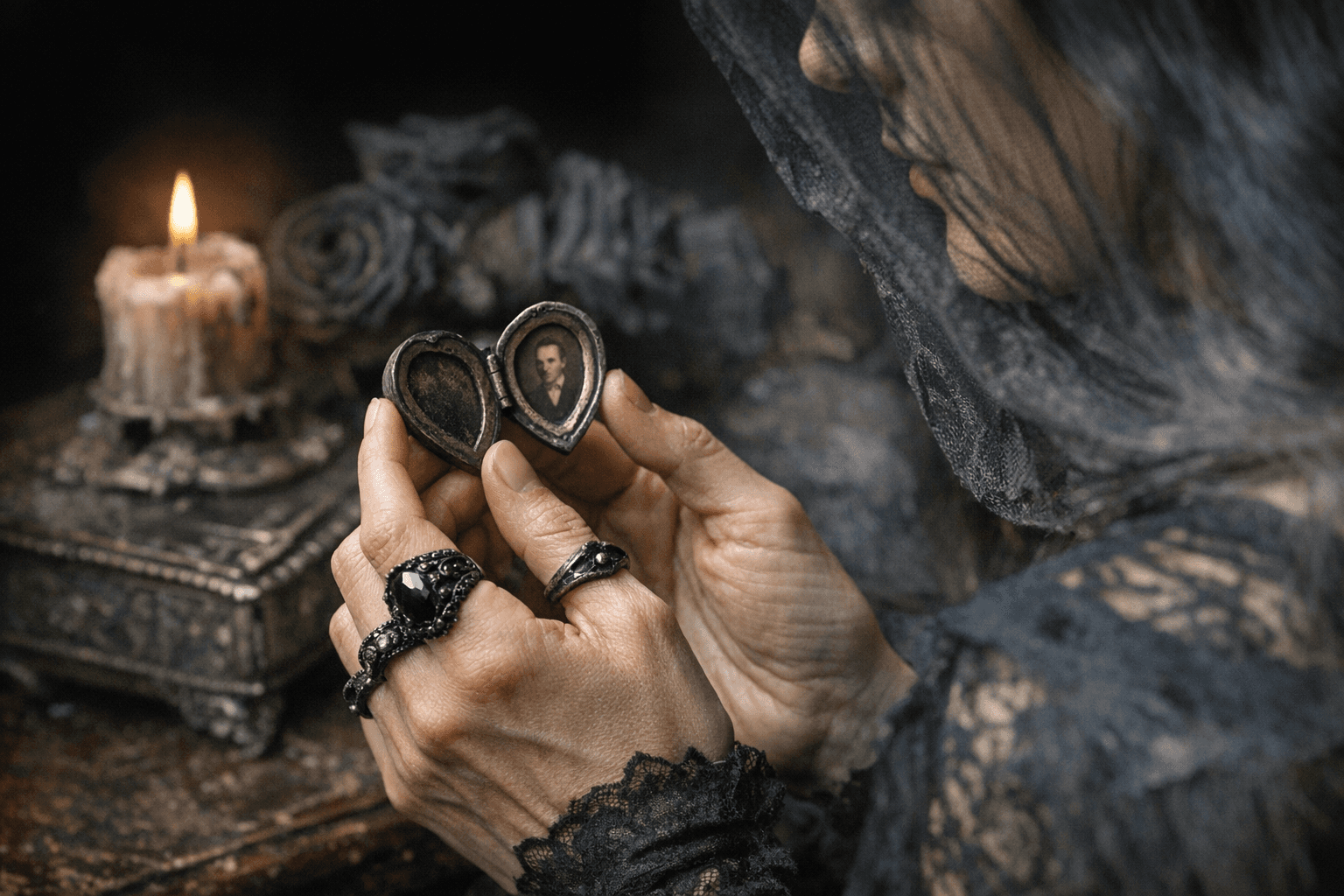
The story begins long before the current appetite for gothic styling. Mourning jewelry traditions reach back to Roman times, and in the Victorian era they became a language of grief, memory, and status. During Queen Victoria’s reign, especially after Prince Albert died in 1861, jet mourning jewelry spread widely through Britain and Europe, and deep mourning dress often required black clothing for two to three years. That severity gave black jewelry a cultural authority that still lingers today.
Victorian mourning pieces were not only jet. They were made from hair, bog oak, enamel, and other dark materials, and they often carried symbols such as willows, angels, clouds, and initials. The 1851 Great Exhibition in London helped introduce jet to a wider audience, turning a deeply specific memorial craft into something far more visible. When you see a blackened ring today, you are often looking at a distant echo of that world, whether the maker intends it or not.
What is antique influence, and what is modern styling?
This is where the collector’s eye matters. Oxidized silver has existed for centuries and rose to prominence in 19th-century Victorian jewelry, so a soft, darkened surface can be genuinely period in feel. Black rhodium is different: it is a more recent innovation, embraced by designers in the late 20th century, and it tends to create a more uniform, deliberately saturated finish. Black rhodium, blackened gold, blackened silver, and blackened titanium are all used as design choices, and dark settings can make colored stones appear more vivid.
The distinction shows up in the finish. An antique or estate ring with true age often has softened edges, gentle wear at the high points, and a surface that feels lived-in rather than factory-perfect. A newly made vintage-inspired ring may still be beautiful, but its blackness usually sits too evenly across the surface, with less variation in the recesses and less of the minute irregularity that comes from decades of handling. If the ring is meant to imitate the past, the metalwork should do some convincing of its own.
Art Deco references often sharpen the effect. Blackened rings with geometric shoulders, crisp contrasts, and a bright stone framed by darkness borrow from the period’s taste for architecture and symmetry. That contrast can be especially striking in rings that pair blackened metal with diamonds or colored gems, because the dark field makes the center stone look more concentrated and severe in the best possible way.
What to look for when shopping estate or resale
A blackened ring becomes much easier to judge when you think in terms of materials, surface, and wear. The color alone tells you very little; the construction tells you almost everything. Jet, oxidized silver, black rhodium plating, enamel, and dark base metals all behave differently over time, and each one leaves its own footprint.
When you are looking at estate or resale rings, pay attention to:
- Material: Jet is a classic mourning material, historically tied to Victorian memorial jewelry. Oxidized silver has a softer, older-looking darkness, while black rhodium is usually a surface finish rather than a metal color all the way through.
- Finish: Antique oxidized silver often shows depth in the recesses and gentle brightening on the highest points. A modern black rhodium finish can look more even, with a cooler, glossier darkness.
- Wear patterns: Honest age usually appears where the ring touched the world, at the underside of the shank, on the shoulder edges, and around engraved details. If every surface looks equally fresh, the piece is probably newer.
- Period cues: Victorian-inspired rings may use hairwork, mourning symbols, or dark stones and enamel. Art Deco-inspired pieces often emphasize geometry, contrast, and clean lines rather than sentimental motifs.
- Color behavior: Dark settings should intensify the gemstone, not flatten it. If the stone suddenly looks dull or its proportions feel off, the design may be leaning on trend rather than craft.
The smartest buys often are not the darkest pieces, but the ones whose darkness makes sense. A blackened ring with a well-cut garnet, a sapphire, or a diamond can feel beautifully intentional because the setting is working in service of the stone. That is the difference between costume and conviction.
Why the look feels so current now
Dark romance has become one of the most visible fashion moods of 2025, with gothic and Victorian-inspired styling circulating widely across clothes, accessories, and jewelry. Blackened rings fit that atmosphere perfectly because they offer emotional richness without the stiffness of a literal replica. They are moody, but they are also legible, and that combination gives them real staying power.
The broader diamond market only sharpens the contrast. De Beers Group launched new consumer initiatives in 2025, including Ombré Desert Diamonds, ORIGIN, and a new Desert diamonds launch described as its first new beacon in more than a decade. That push reminds you how firmly the traditional bright-white diamond narrative still dominates. Blackened rings sit on the other side of that conversation, offering something more nocturnal, more referential, and more openly literary.
For the collector, that is the appeal. A blackened ring can be a signal of mourning history, a nod to Art Deco clarity, or simply a modern piece with a deeper emotional register. The best ones do not scream vintage; they carry its evidence in the metal, and that is what makes them worth reading closely.
This article was produced by Prism’s automated news system from verified source data, official records, and press releases, then run through automated quality and moderation checks before publishing. The system is built and supervised by the people who set the standards it runs under. Read our full AI policy.
Did this article answer your question?