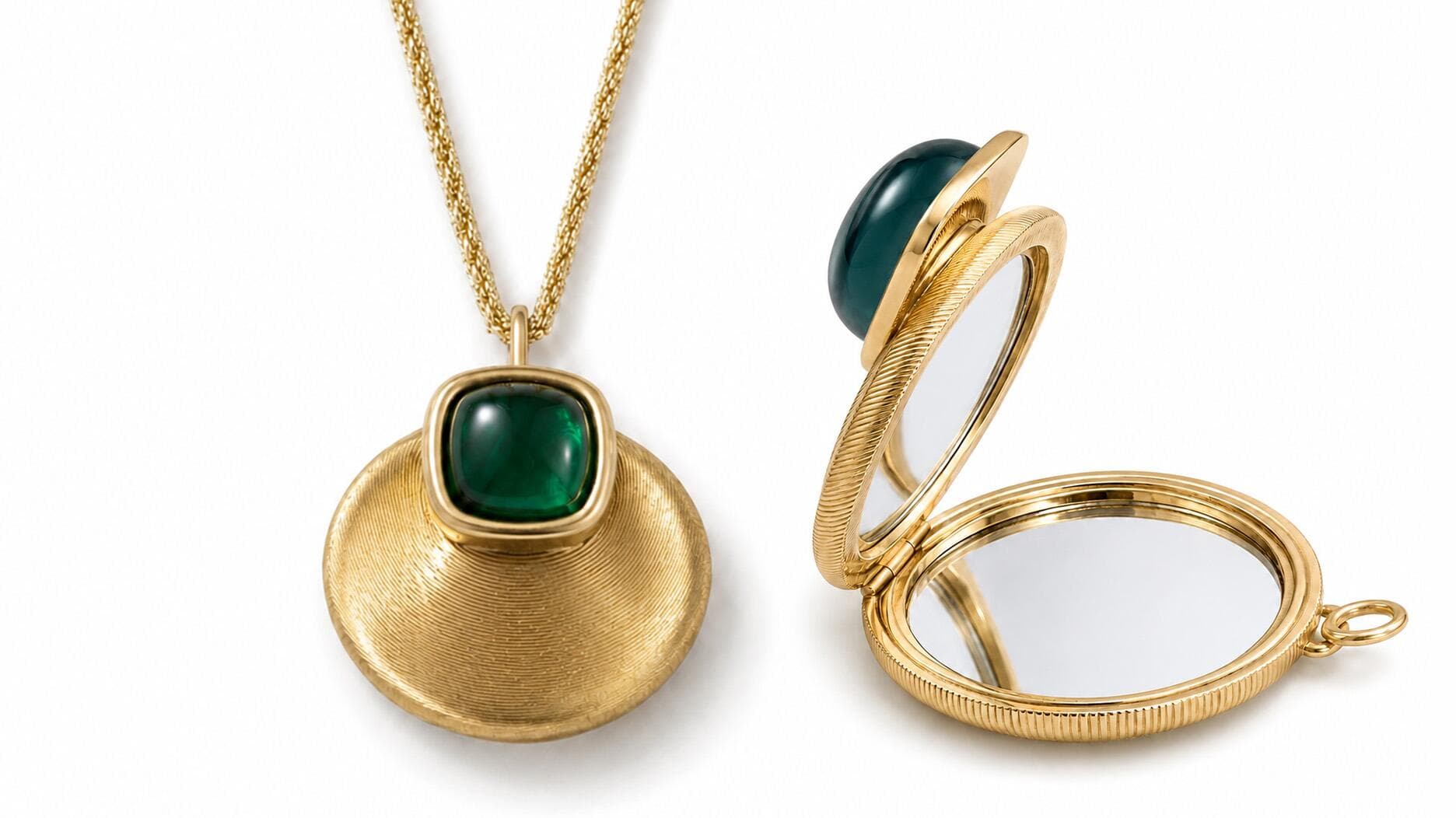
Tiffany unveils Blue Book 2026, Hidden Garden, with transformable high jewelry pieces
A chrysoprase necklace that becomes a brooch, a hidden monarch butterfly, and Schlumberger’s bird-and-bloom language make Tiffany’s new Blue Book feel like a decoder ring for vintage collectors.
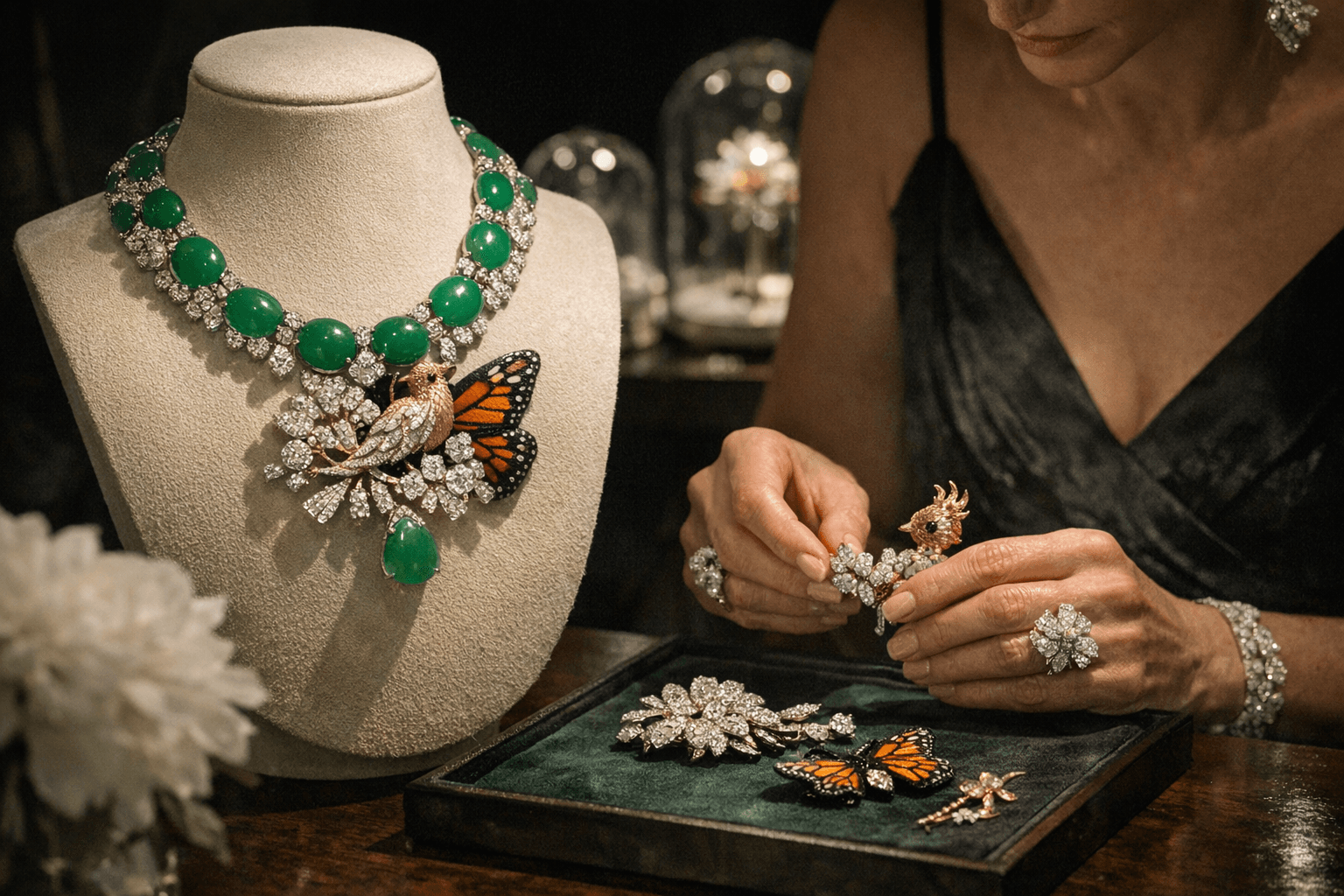
A chrysoprase bead necklace holding a 22-plus-carat aquamarine does double duty: the pendant detaches and wears as a brooch, a transformable detail that immediately places Tiffany’s new Blue Book in the company’s long archive of wearable surprises. For collectors, that kind of mechanism is more than cleverness. It is evidence of a design lineage, one that runs from Jean Schlumberger’s sculptural fantasy jewels to the vintage Tiffany pieces that still surface at auction and in estate cases.
Tiffany’s spring chapter, Blue Book 2026: Hidden Garden, is the house’s fourth Blue Book collection under Nathalie Verdeille and the first of three releases planned for spring, summer and fall. The full 2026 program totals 122 pieces, and the opening chapter leans hard into the language Schlumberger made famous at Tiffany after he joined the house in 1956: birds, butterflies, vines, leaves and the idea that nature can conceal as much as it reveals. Hidden Garden was shown at a private gala in New York on April 16, 2026.
That matters because the same signatures turn up in older Tiffany jewels that collectors chase today. Schlumberger’s Bird on a Rock brooch, introduced in 1965, set the tone for a generation of naturalistic high jewelry built with mixed metals, saturated color and a slightly mischievous sense of movement. Hidden Garden echoes that vocabulary in a Monarch chapter that nods to an archival Schlumberger necklace with a hidden monarch butterfly, and in butterfly designs that include a necklace centered by a 7.02-carat oval diamond. When a vintage Tiffany jewel carries a tucked-away creature, a convertible element or an unexpectedly playful mount, it often points back to that midcentury Schlumberger moment.
The gem choices also sharpen the collecting picture. Tiffany used salmon padparadscha sapphires, sapphires from Sri Lanka, Madagascar and Montana, fancy vivid yellow diamonds, and a pair of earrings set with more than 10 carats of D-color internally flawless Type IIa emerald-cut diamonds. Platinum and 18k gold anchor the collection, while the Paradise Bird chapter brings Mexican fire opal, Brazilian rubellite, Ethiopian blue chalcedony and Madagascan spessartite into the mix. A parrot group uses unenhanced blue and purple sapphires with hand-applied paillonné enamel in dark blue, duck green and Tiffany Blue, a finish that collectors will recognize as one of the harder old-world techniques to fake convincingly.
That last point is why Blue Book 2026 reads like a lesson in identification as much as a launch. Tiffany was founded in New York in 1837 by Charles Lewis Tiffany and John B. Young, and the Blue Book dates to 1845, when it became the first direct-mail catalog in the United States. Nearly two centuries later, the house is still trading on those origins. Anthony Ledru cast Hidden Garden as a statement of creativity, craft and the highest standards of gemology, but for vintage eyes the real story is simpler: the best Tiffany jewels have always left clues, and Schlumberger taught the house how to hide them in plain sight.
This article was produced by Prism’s automated news system from verified source data, official records, and press releases, then run through automated quality and moderation checks before publishing. The system is built and supervised by the people who set the standards it runs under. Read our full AI policy.
Did this article answer your question?