Cartier-signed sabre and Napoleon hair headline Olympia Auctions sale
Cartier’s Paris signature turned a ceremonial sabre into the sale’s star, as Napoleon’s hair and T.E. Lawrence relics showed how provenance can outshine materials.
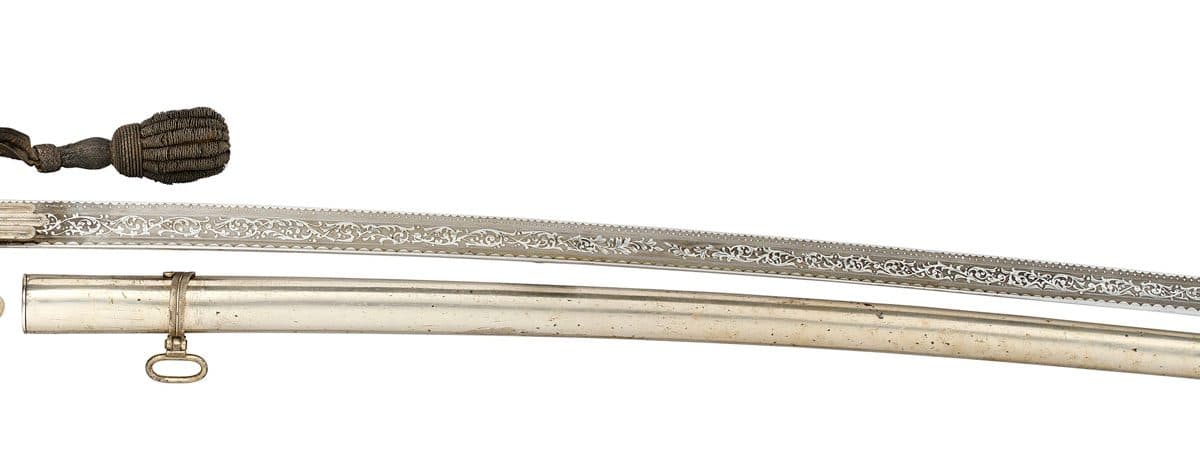
A Cartier Paris-signed ceremonial sabre carried Olympia Auctions’ June 24 London sale, where the strongest money sat with provenance rather than precious metal. Catalogued as lot 109, the circa 1920-30 presentation sabre was described as an “extremely rare and fine” White Russian piece and was estimated at £15,000 to £20,000, with Olympia saying it was almost certainly presented to Agha Petros Elloff, the Assyrian military leader born in 1880 and dead by 1932.
That attribution is the sort of detail collectors pay for. Cartier signatures already carry weight in jewelry and decorative arts, but surviving interwar Cartier swords are rare enough that the hilt’s Paris mark became the key value signal. In this case, the sword’s appeal came from the overlap of maison name, military history and named ownership, the same triad that drives top-tier signed antique jewelry when a jewel can be tied to a documented hand or household.
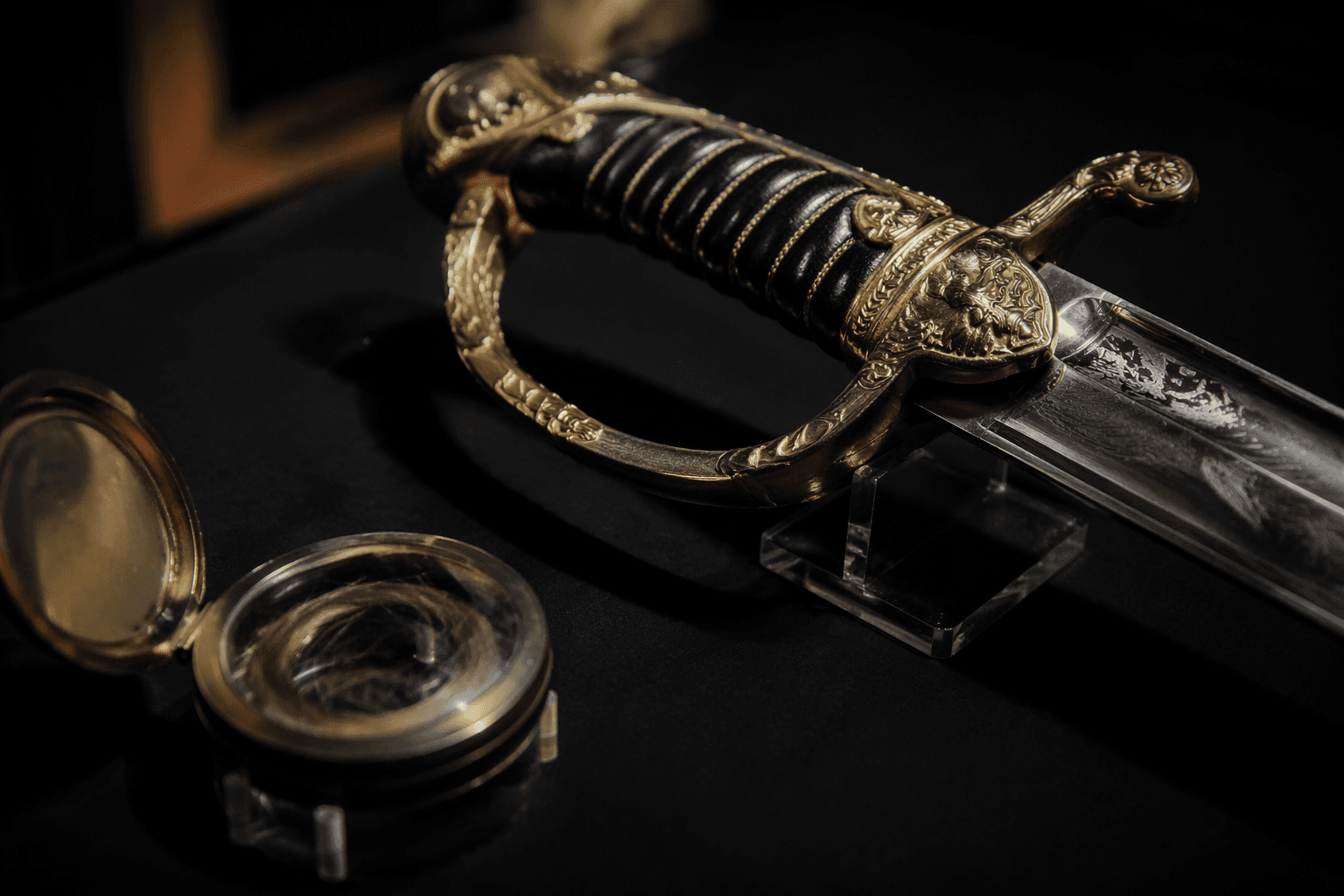
The sale’s most intimate relic was lot 129, a small cased lock of Napoleon’s hair in a silver case with London silver hallmarks for 1912, made by Goldsmiths & Silversmiths Company Ltd. at 112 Regent Street. Its estimate of £2,000 to £3,000 was modest beside the sabre’s, but the gilt inscription inside the lid traced the object through George Edgecumbe, Lady Julia Lockwood, George Dundas MP, Adam Dundas and Charles Dundas, turning a lock of hair into a portable archive. For collectors of signed vintage jewelry and historic accessories, that chain of custody is the point: the object’s story is the setting.
Olympia also brought lot 134, a group of four T.E. Lawrence-associated items, to market as another piece of wearable history. The lot included a pair of corded adjustable tassels, a white-metal spur with remains of leathers, a plaited riding crop with a copper knop and a Royal Air Force swagger stick. Olympia said Lawrence of Arabia gave the items to the vendor’s father, John H. Buyer, and put a £1,000 to £1,500 estimate on the group.
The auction house used the sale to underline the breadth of its militaria department, including a German silver executioner’s sword dated 1694 among the other notable lots. But the Cartier sabre made the sharpest point: when a signed object carries a named owner, a historical setting and a recognizable maison, it can behave less like memorabilia and more like jewelry market evidence.
This article was produced by Prism’s automated news system from verified source data, official records, and press releases, then run through automated quality and moderation checks before publishing. The system is built and supervised by the people who set the standards it runs under. Read our full AI policy.
Know something we missed? Have a correction or additional information?
Submit a Tip