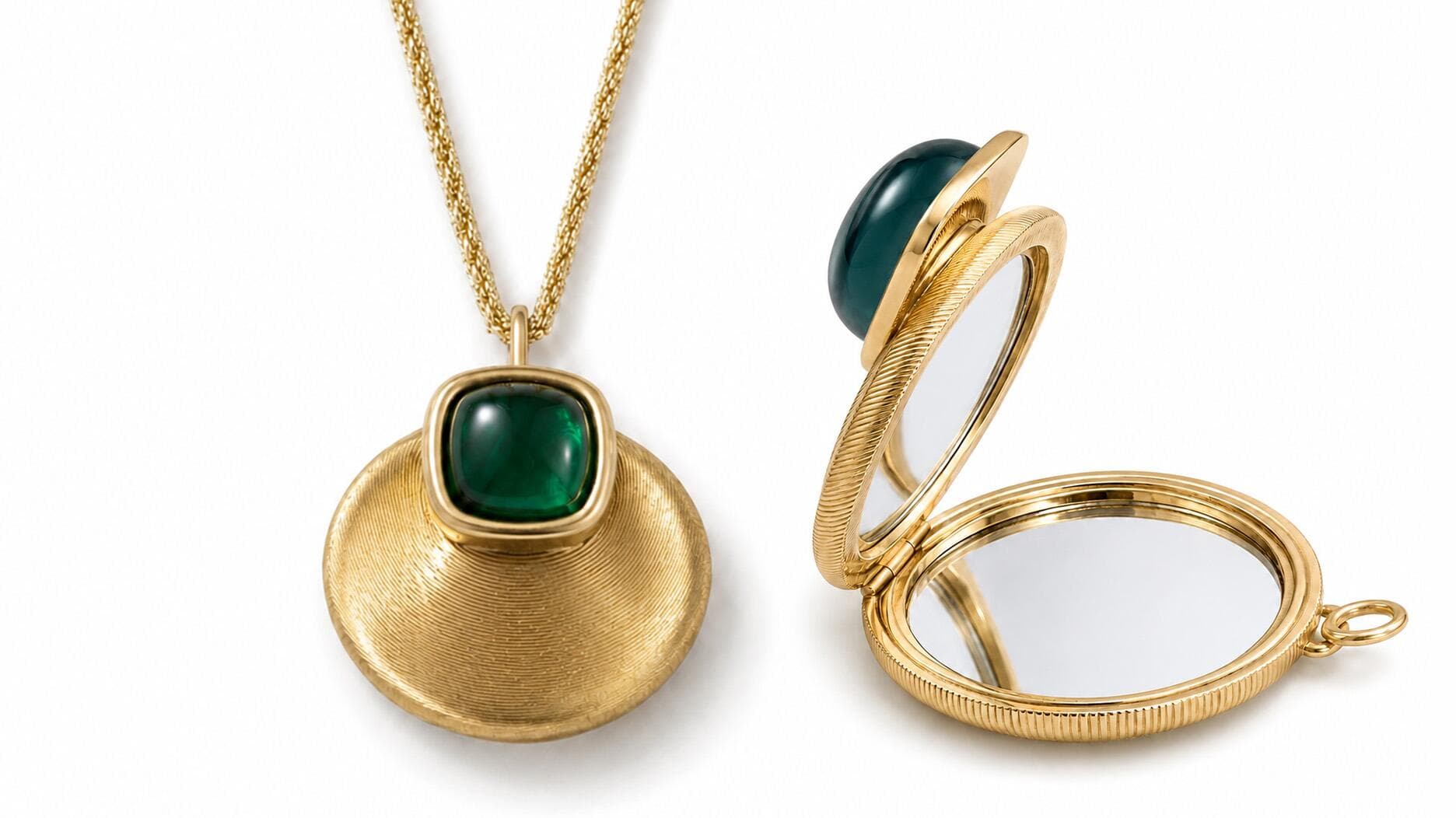
Celebrity Stylists Predict 2026 Jewelry Turns Bold and Wearable
Bold metal and mixed finishes are back, and vintage buyers can decode the look by era, maker, and stone instead of buying new.

A small archive you can wear
An inherited ring, an estate-sale brooch, a cuff with tiny stamps inside the curve: that is where this trend gets interesting. Celebrity stylists are pushing jewelry toward pieces that feel bolder, more wearable, and more personal, but for vintage buyers the real opportunity is different. The new language of sculptural metal, mixed finishes, layered chains, chunky cuffs, and grounded color is already sitting in past decades, waiting to be decoded by shape, maker, and material.
Sculptural gold and silver: look to studio jewelry and modern icons
The clearest vintage match for the sculptural turn is mid-century studio jewelry and the modernist work that followed into the 1970s. The Met’s Art Smith cuff shows why these pieces still read as current: biomorphic forms, open negative space, and a hand-crafted feel that makes the wearer part of the design. Elsa Peretti’s work for Tiffany, introduced in 1974, carries the same energy, especially the Bone cuff and other organic, body-aware shapes that turned jewelry into wearable sculpture.
When you are scanning resale listings, words like modernist, studio, biomorphic, and sculptural are your clue that the piece may fit this moment. The best examples are not busy. They curve, swell, or wrap with intention, often in silver, yellow gold, or copper and brass, and they rely on silhouette rather than stones to do the work. That is exactly why they feel so modern again.
Mixed metals are not new, just newly visible
Mixed metals look contemporary in 2026, but vintage buyers have a deeper bench to shop from. The Jewellery Editor notes that mixing metals and layering jewelry together has become fashionable again, while antique jewelry history shows that even Georgian pieces could combine silver fused to yellow gold. That makes two-tone construction, contrasting links, and deliberate metal pairings useful clues when you are sorting through estate photos.
For vintage hunting, the sweet spot is usually a piece where the contrast is structural, not accidental. Look for Art Deco and retro-era bracelets with clear yellow-and-white metal tension, chains that alternate tones, or links that combine silver with gold-plated accents. In the listing language, terms like two-tone, mixed-metal, vermeil, and gold-filled can help separate a thoughtful design from a later mishmash.
Chunky cuffs: the wrist story worth reading
If there is one silhouette the stylists seem to keep circling, it is the cuff. Vintage hunting here should start in the 1970s and 1980s, when bold bangles were a serious proposition and cuff shapes could be hammered, mesh-like, or almost architectural. The Jewellery Editor points to a rare 1970s Georges Lenfant cuff with gold mesh hammered into a wave formation, while the same style universe includes the confident, body-aware curves of Peretti’s Bone cuff.
The telltale signs in resale listings are usually in the finish and the width. Search for hammered, grained, brushed, wave formation, mesh, or wide cuff, and pay attention to whether the bracelet sits rigidly on the wrist or flexes with the arm. Those details matter because the current appeal of chunky cuffs is not just size, but presence. They are meant to read as an object first and adornment second.
Layered necklaces: long chains, lariats, and the estate-sale stack
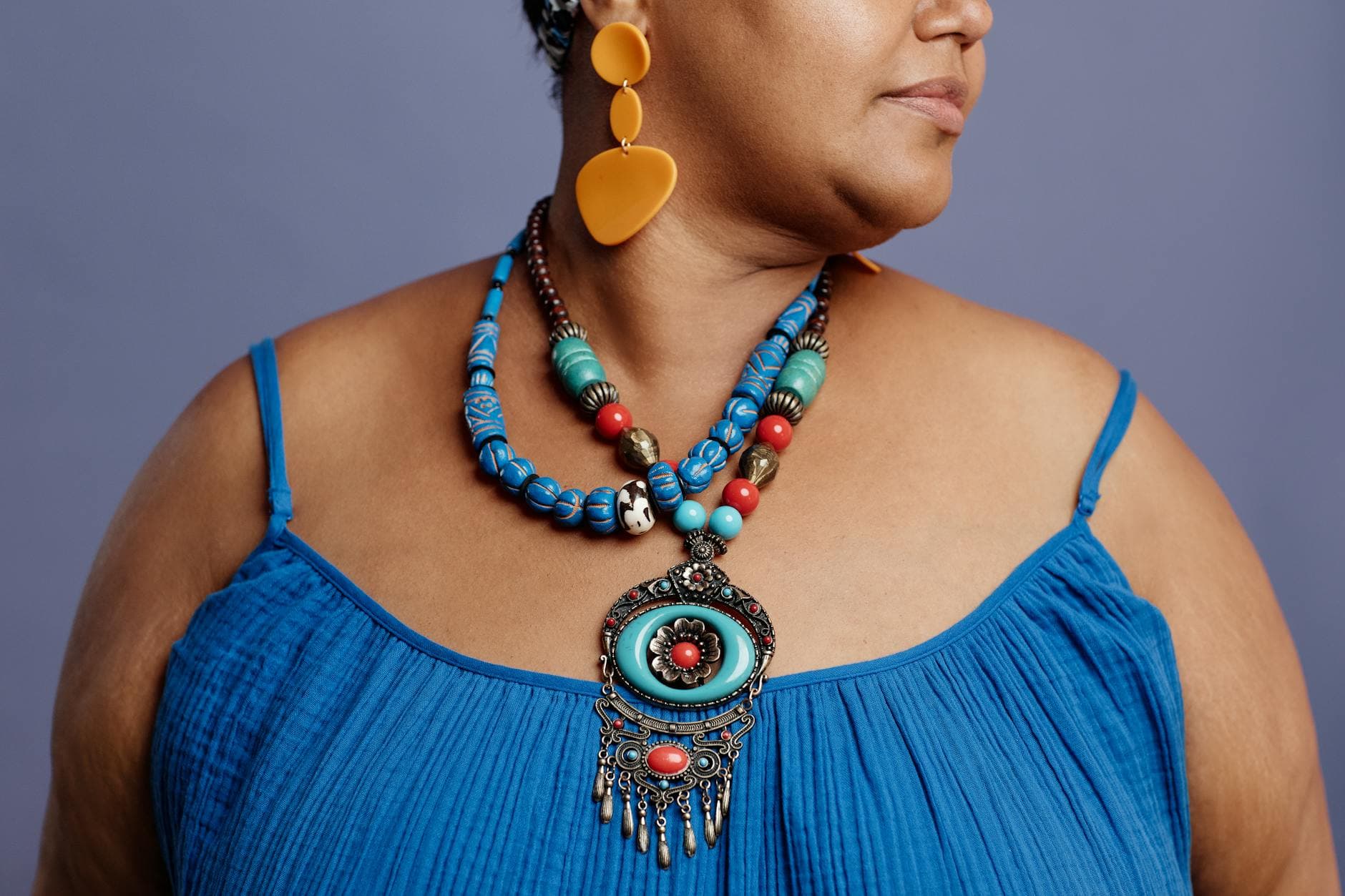
Layering is where the vintage market becomes a puzzle worth solving. The Jewellery Editor describes the return of mixing styles across eras and wearing multiple necklaces together, and Piaget’s 1970s jewelry provides the template: long lariat-style chains, turquoise and chrysoprase beads, and tasseled necklaces that already know how to stack visually. StyleCaster’s 2026 read on the look is equally clear, calling out necklace stacks that mix heritage pieces, estate-sale finds, and chunky beads.
In listings, the best necklace candidates tend to be long enough to layer without effort. Search for lariat, sautoir, long chain, pendant necklace, bead strand, and rivière, then study the clasp and spacing. A single necklace can do the work of the trend if it has movement, length, and enough visual rhythm to sit beside another piece without looking forced.
Beads and earthy tones bring the color back down to earth
The color story is softer than it sounds. Stylists are not talking about neon or costume jewelry, but about subtle pops of color through beaded pieces and earthy tones, and that translates beautifully into vintage. Think malachite, turquoise, chrysoprase, lapis lazuli, carnelian, moss agate, and pearls used with a slightly bohemian hand. Piaget’s turquoise-and-chrysoprase necklaces, malachite jewels associated with 1970s taste, and a 1970 gold bracelet and necklace set with turquoise and pearls all point to a grounded, tactile palette.
This is where the wearable part of the trend really lands. Beaded jewelry can feel everyday if the stones are small and the color is muted, but the right vintage strand still has enough texture to stand out against a shirt collar or a plain knit. In resale photos, look closely at stone uniformity, bead drilling, and whether the piece was designed as a single statement or as something meant to be layered.
How to read a listing before you buy
The strongest vintage finds usually reveal themselves in the object description before they reveal themselves in the photos. Search for maker names such as Tiffany, Elsa Peretti, Art Smith, Georges Lenfant, Piaget, Buccellati, and the broader studio-jewelry circle that includes Ed Wiener and Sam Kramer. Then cross-check the form: sculptural, hammered, modernist, organic, two-tone, lariat, bead strand, or wide cuff. Those words are the bridge between a current trend and an older piece that already speaks the same design language.
That is the real value of this 2026 turn toward bolder, wearable jewelry. It does not ask you to start from scratch. It asks you to look again at the archive already in front of you, and to choose the piece whose marks, materials, and silhouette can still tell the story clearly.
This article was produced by Prism’s automated news system from verified source data, official records, and press releases, then run through automated quality and moderation checks before publishing. The system is built and supervised by the people who set the standards it runs under. Read our full AI policy.
Did this article answer your question?