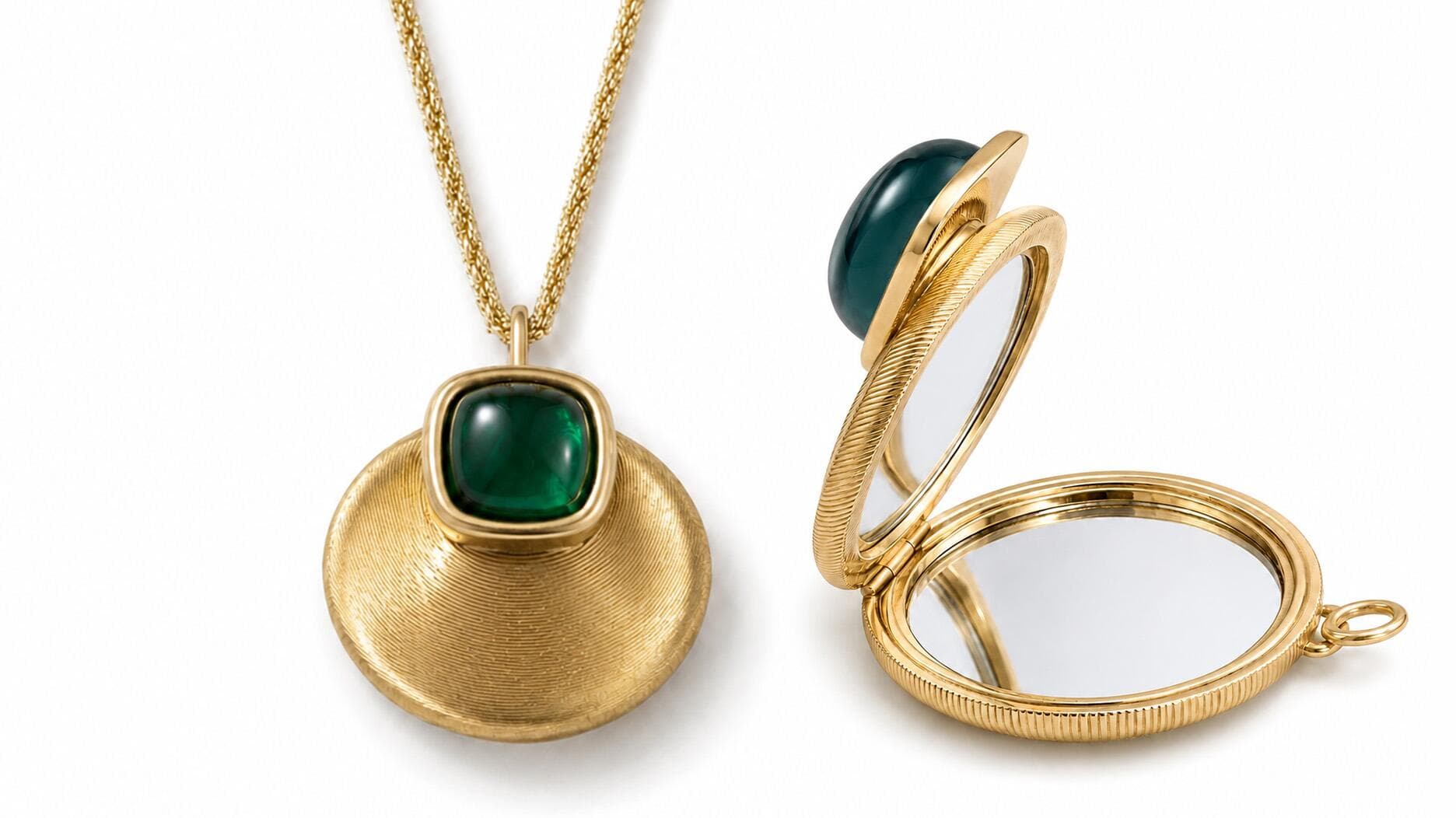
Decode Your Vintage Jewelry: A Complete Guide to Marks and Hallmarks
A tiny stamp inside a ring shank can tell you more than the stone itself — here's how to read every mark, symbol, and number your vintage jewelry carries.
Pick up an inherited ring or a brooch pulled from an estate sale, and you're holding a small archive. The scratches and patina are one kind of record; the marks stamped into the metal are another, more precise one. "Understanding jewelry marks and signatures is essential for collectors, connoisseurs and enthusiasts," as the specialists at Rau Antiques put it, and that understanding begins with knowing what you're actually looking at when you squint at the inside of a band.
"Like humans, metals show their age." That line from East Towne Jewelers in Mequon, Wisconsin, is a useful starting point. Patina — the dark spots or green and brown film that develops through oxidation over a long time — gives a first impression of age. But the hallmarks stamped into the metal are where the real story lives.
What Hallmarks Actually Are
Hallmarks are small stamps or engravings that function like a piece's identity papers. They can reveal metal purity, country of origin, the timeframe of manufacture, weight, and the assay office that certified the piece. The full taxonomy of marks you might encounter on vintage jewelry is broader than most people expect:
- Purity marks (such as 10K or STER)
- Maker's marks (initials, full names, logos, or unique symbols)
- Assay office marks
- Date letters
- Trademarks
- Designer signatures
- Copyright marks
- Quality marks for gemstones
- Country of origin marks
- Patent numbers
Each category answers a different question. Purity marks tell you what the metal is worth. Maker's marks tell you who made it. Date letters and assay marks tell you when and where it was certified. Together, they are what Bryn Mawr Jewelry's Jill Freeman describes as "a rewarding journey that combines history, art, and detective work."
Precious Metal Marks: The Numbers Behind the Stamps
Gold is marked using two parallel systems: the karat system familiar to most buyers, and the millesimal fineness system used more widely in European and international trade. The conversion between them is precise:
- 24K = 999 = 99.9% pure gold
- 18K = 750 = 75.0% pure gold
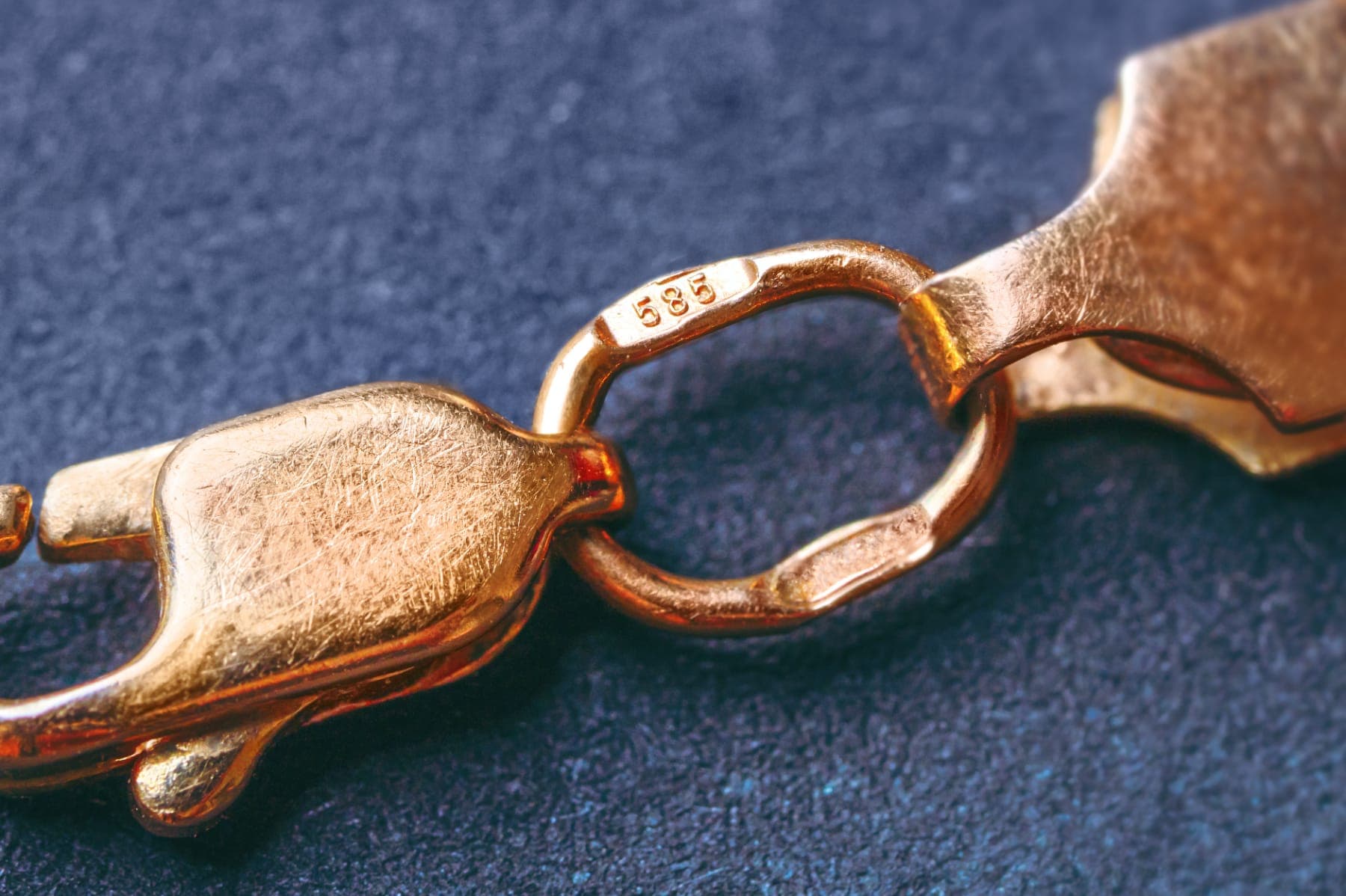
- 14K = 585 = 58.5% pure gold
- 10K = 417 = 41.7% pure gold
So when you find "585" stamped inside a ring, you're looking at the European equivalent of a 14-karat mark. Both notations are legally accepted in many jurisdictions, which is why a piece might carry one or the other depending on where it was made.
For silver, the most common mark you'll encounter on vintage pieces is "925," indicating sterling silver at 92.5% purity. The abbreviation STER serves the same purpose on older American pieces. The two marks are interchangeable in meaning but not always in era: STER tends to appear on earlier 20th-century American work, while the numeric 925 stamp became more standard internationally over time.
Platinum carries its own legal framework. The United States established formal standards in 1976, requiring that any item marketed as platinum contain at least 950 parts per thousand pure platinum. Items falling between 850 and 950 parts per thousand must be stamped with their exact fineness rather than simply labeled "platinum." Unlike gold and silver, platinum is rarely alloyed with base metals, which is part of what makes it so durable and so legible under a loupe: the metal tends to hold its mark clearly.
One category of marks deserves a specific caution. Jewelry stamped with HGE (Heavy Gold Electroplate), GE (Gold Electroplate), or GF (Gold Filled) contains minimal gold content applied over base metals such as copper. These are not solid gold pieces, and their resale and intrinsic value reflect that fact. Mistaking a GF bracelet for an 18K piece is one of the more common errors at estate sales, and the mark is the only reliable way to avoid it.
Where to Look on Each Jewelry Type
Marks are almost always placed somewhere inconspicuous, which is by design: you don't want a stamp disrupting the visual surface of a piece. Knowing the conventional hiding spots dramatically shortens your search.
On rings, look inside the shank. This is the standard location for both purity marks and maker's marks, and it's where the vast majority of vintage and antique rings carry their information.
On necklaces and pendants, check the back of the pendant itself and the area near the clasp. Clasps on vintage necklaces often carry a separate purity stamp from the chain, since they were sometimes made from a different component stock.
Bracelets tend to stamp near the clasp, on a flat link, or on the inside of a solid bangle. For vintage and antique pieces specifically, marks can sometimes migrate to the inside of the hinge area, which is worth checking if the obvious spots come up blank.
Earrings are the most challenging. Look on the posts, the backs, and the inner curve of hoop styles. For clip-on earrings, check the hinge mechanism and the underside of the clip, where there's often just enough flat surface to accommodate a small stamp.
How to Read What You Find
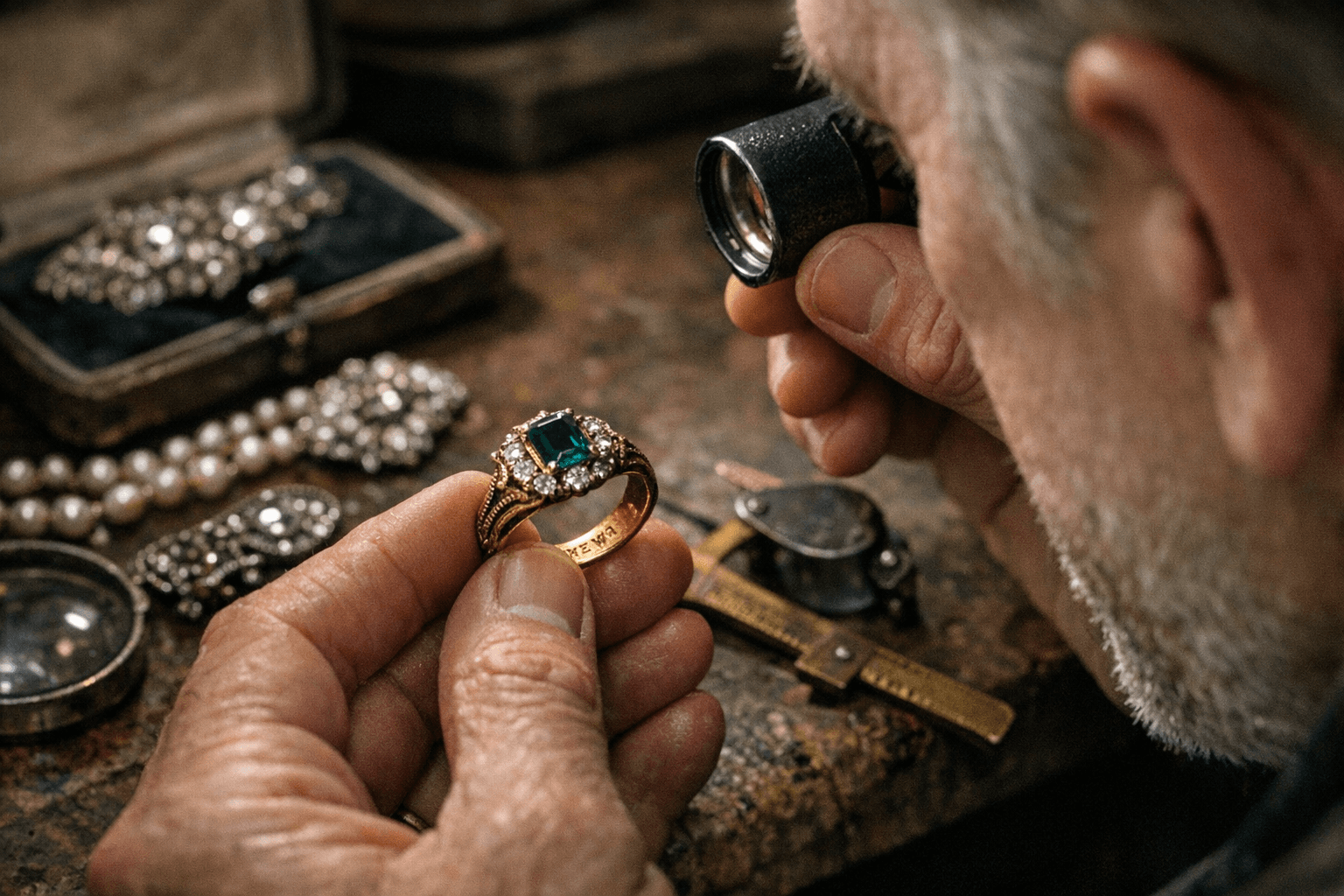
The practical process begins with light and magnification. A jeweler's loupe is the right tool; a phone camera zoomed to its limit is a workable substitute in the field. Hallmarks are often grouped together in a single area rather than scattered across the piece, so once you locate one mark, look immediately around it for the rest.
Antique hallmarks have a distinctive visual character: hand-stamped impressions that are deep but slightly irregular, ornate crests, elaborate shields, and symbolic imagery rather than clean sans-serif numerals. British hallmarks from the antique period can include a full set comprising purity, maker, assay office symbol, and a date letter — all within a few millimeters of each other. A Victorian ring, for example, might carry a crown symbol alongside "18" for gold purity, the leopard's head denoting assay in London, and a date letter cycling through the alphabet according to the year of hallmarking.
Vintage pieces from approximately the 1920s through the 1980s tend toward cleaner, more standardized stamps — less symbolic imagery, more legible numerals. Modern pieces are the most uniform of all, often carrying only the purity mark and a maker's trademark.
One practical reality: hallmarks on antique pieces can be partially worn, faint, or obscured by decades of wear and cleaning product buildup. Professional cleaning can sometimes reveal marks that appeared absent, but it should be approached carefully and ideally handled by a conservator who understands the piece's materials. Always compare what you find against official hallmark charts; many national assay offices publish these online, and specialist reference books for British, French, and American marks are widely available.
Maker's Marks and Provenance
A maker's mark is the most personally revealing stamp on any piece of jewelry. These marks can be initials, a full name, a logo, or a unique house symbol, and tracing them can connect a ring or brooch to a specific manufacturer and, through that, to an approximate date range and region of production. Famous houses like Tiffany & Co., Cartier, and Van Cleef & Arpels stamp their names directly onto their pieces. Lesser-known makers require more research: online databases, specialist antique jewelry reference books, and consultation with a qualified appraiser or dealer are the established routes.
Victorian-era pieces often use symbolic marks in place of names, a practice that can make identification more time-consuming but also more satisfying. Style characteristics help narrow the field even without a legible maker's mark: Victorian jewelry tends toward lacy and floral designs with a preference for yellow gold, and mourning jewelry from that period may incorporate woven hair as a material element. Art Nouveau and Art Deco pieces each carry their own visual grammar, and learning to read those design languages alongside the hallmarks gives a much fuller picture than either approach alone.
Why It Matters Before You Sell or Buy
Knowing what the marks say before you take a piece to an antique dealer or auction house puts you in a fundamentally different position. The difference between a 14-karat gold bracelet and a gold-filled one is not a marginal one at resale. The difference between a signed Cartier piece and an unsigned piece of the same era can be an order of magnitude in value. Hallmarks are also the primary tool for distinguishing authentic antique jewelry from reproduction costume pieces designed to look old, a distinction that matters both financially and for anyone who cares about owning what they think they're owning.
"Identifying vintage rings is a rewarding journey that combines history, art, and detective work." That framing is accurate in both directions: the detective work pays off materially when it comes time to buy, sell, or insure, and it pays off in a different way when a small stamp on a hundred-year-old piece suddenly connects you to a specific workshop, city, and year. The marks were always there. They just needed someone willing to look.
This article was produced by Prism’s automated news system from verified source data, official records, and press releases, then run through automated quality and moderation checks before publishing. The system is built and supervised by the people who set the standards it runs under. Read our full AI policy.
Did this article answer your question?