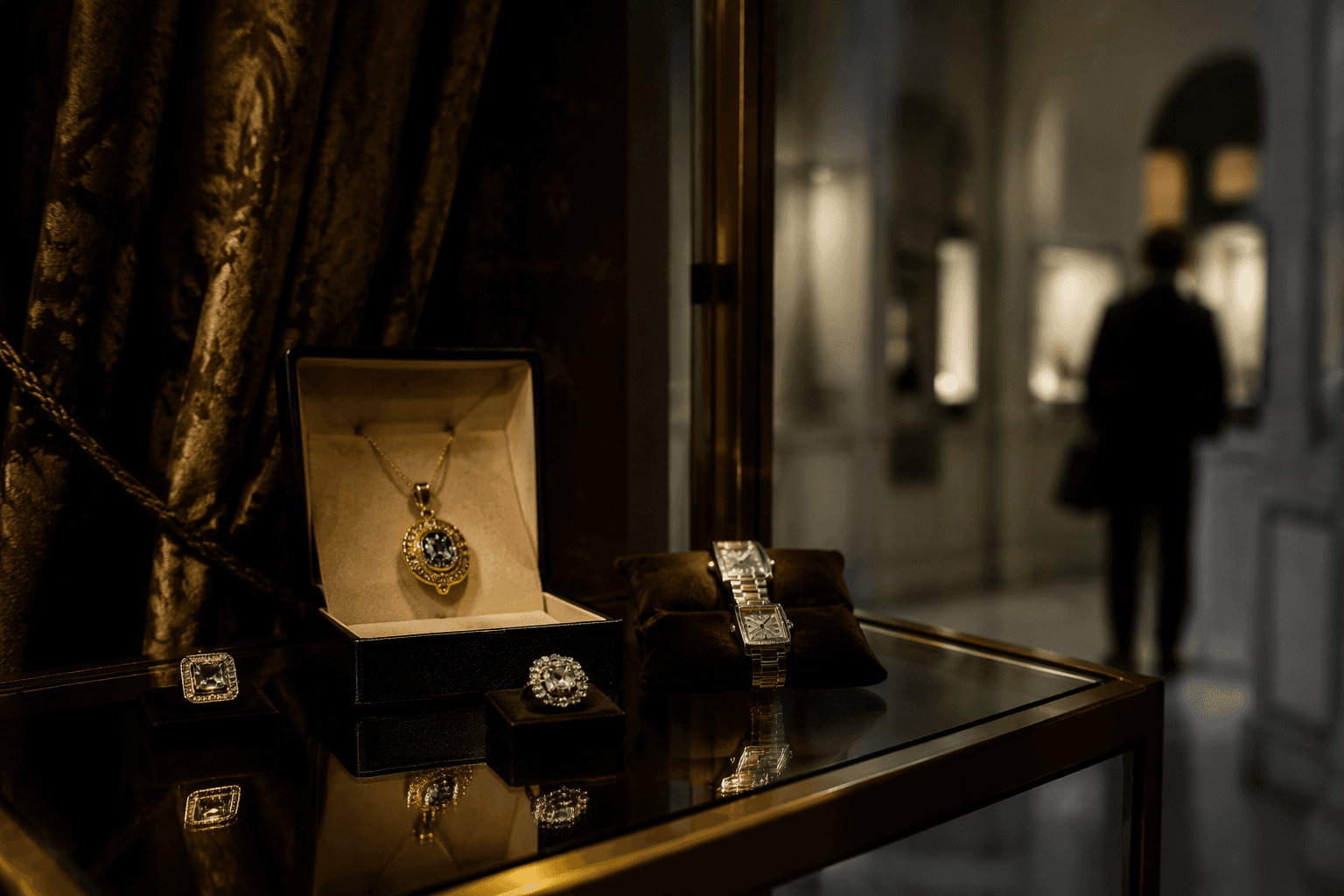
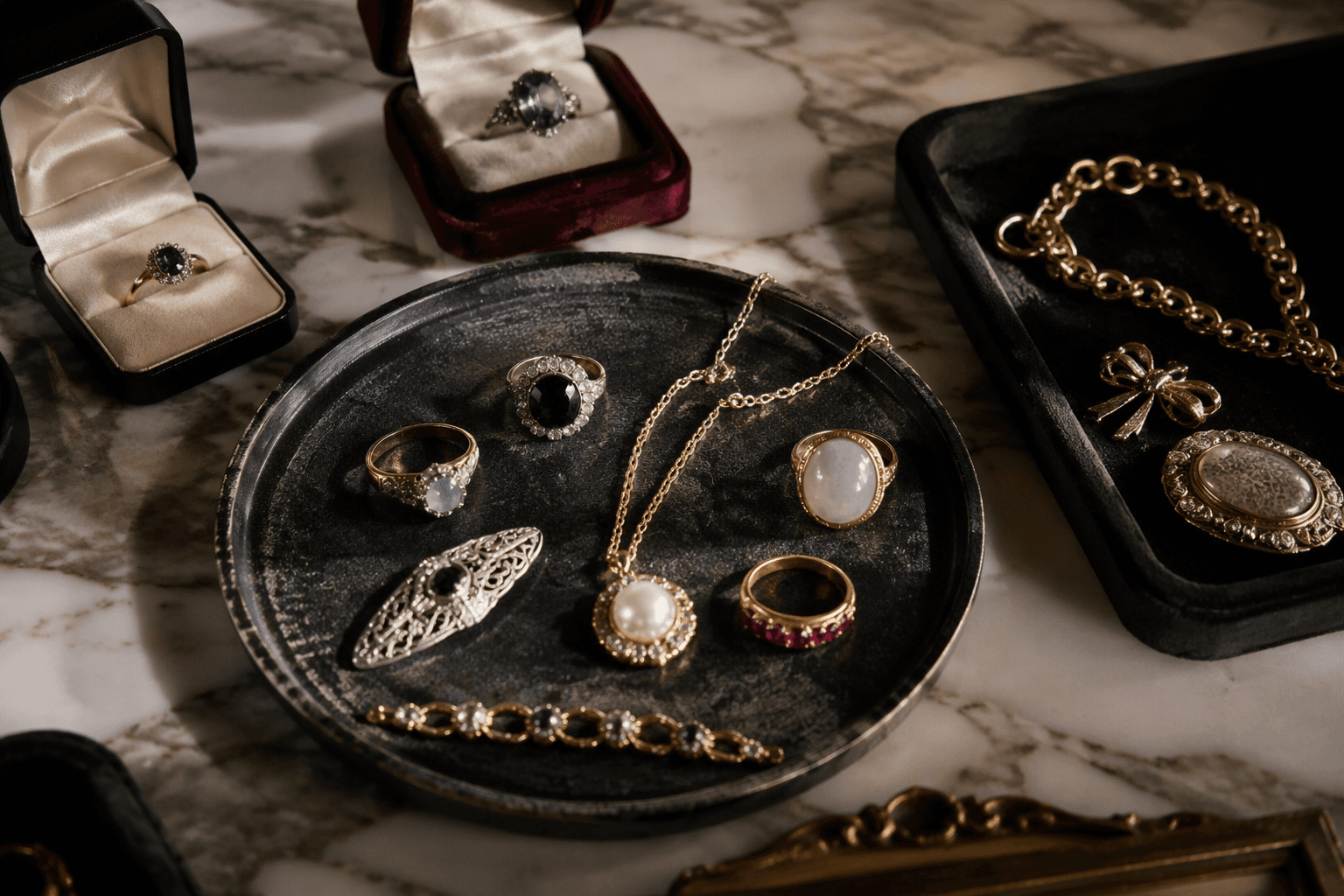
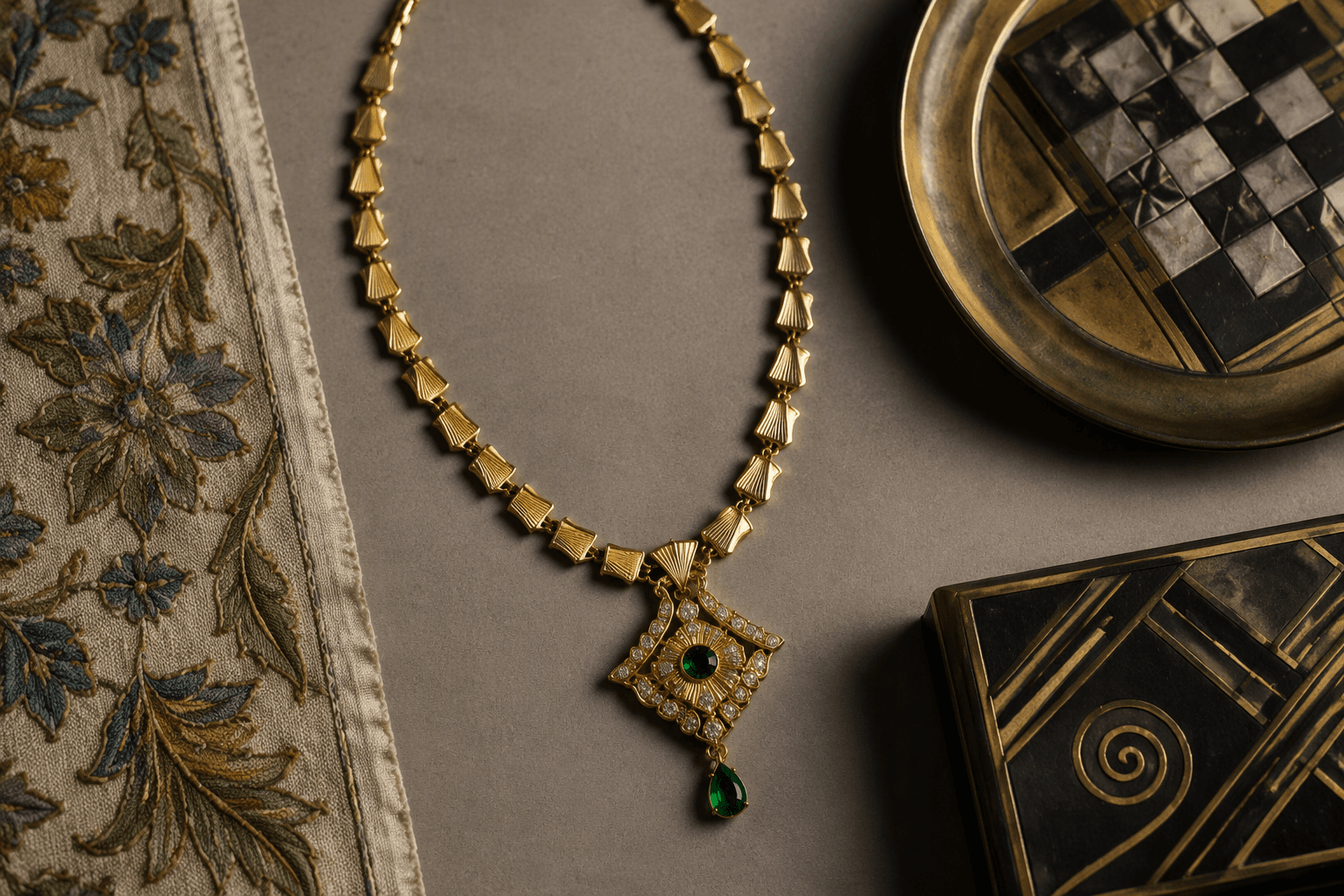
Fall investment buys revive interest in collectible vintage jewelry
Fashion's new investment-buy language is sending buyers back to signed vintage jewels, where Cartier, Tiffany, and rare stones can outlast a single season.
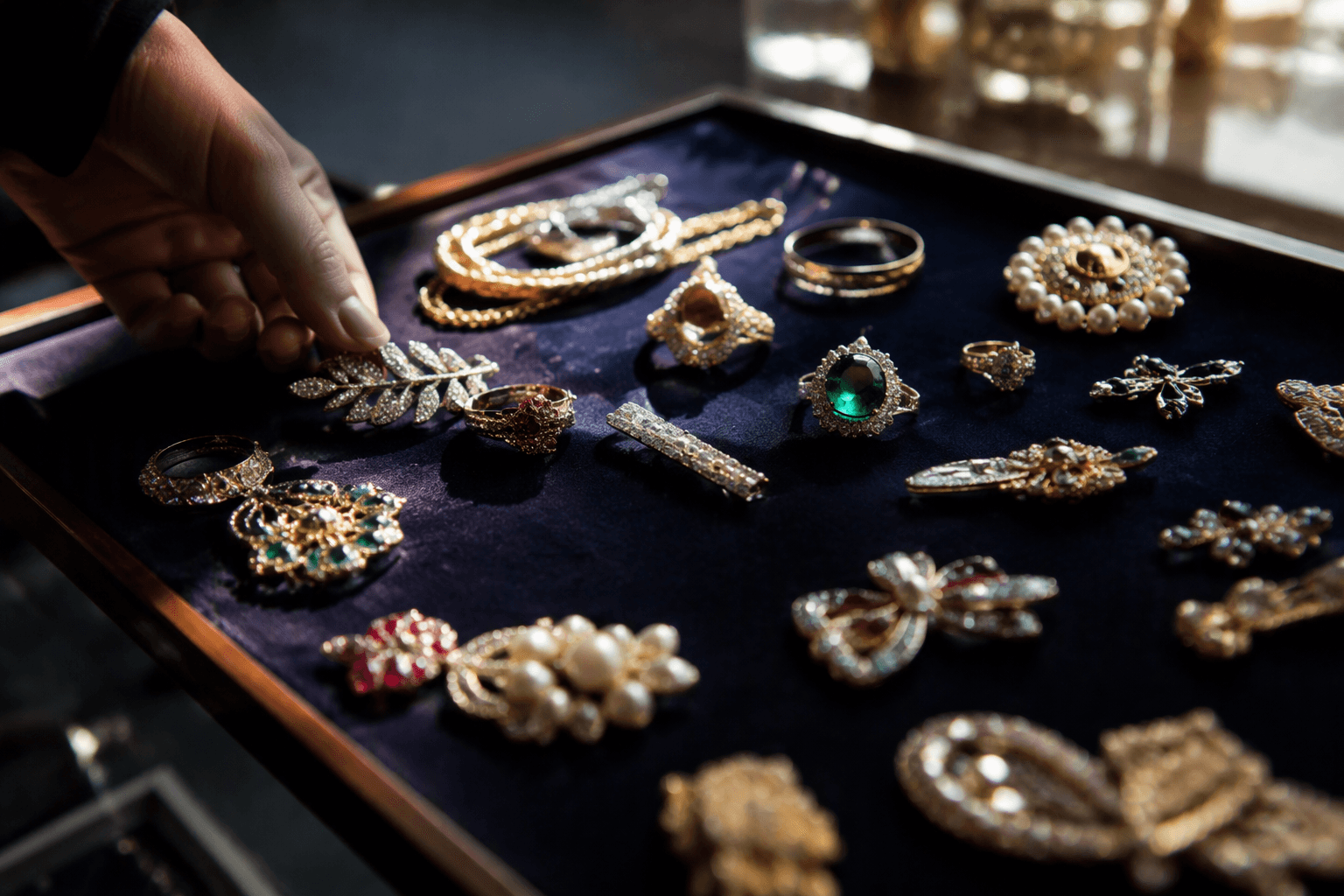
A Cartier Love bracelet looks different when Jacob Elordi, Taylor Swift, and Timothée Chalamet are all wearing it again. The old screw-motif bangle stops reading like a relic and starts reading like a proof point: certain designs never really leave the market, they just wait for the culture to catch up.
Kristen Nichols included the bracelet in Who What Wear’s roundup of cult investment buys. For vintage jewelry, the message is even sharper, because the best pieces already live at the intersection of style memory, material value, and maker recognition.
Why the investment-buy label matters
Who What Wear’s fall-winter 2026 trend coverage includes a category called “Modern Heirlooms,” and that phrase explains why collectible jewelry keeps resurfacing in fashion conversations. A jewel earns that description when it can pass from one wardrobe to another without looking frozen in its original decade, whether it is a gold bangle, a diamond line bracelet, or a signed ring with a strong silhouette.
That is also why Cartier’s Love bracelet and Juste un Clou bangle keep reappearing in style coverage as cult buys. Their appeal is not only scarcity or status, but readability: the shapes are simple enough to survive changing tastes, and the signatures are strong enough to matter on the resale floor.
What separates a real buy from an expensive want
The smartest vintage jewelry purchases usually share a short list of traits that matter in resale, not just in the moment. Signed houses such as Cartier, Van Cleef & Arpels, JAR, and Tiffany & Co. carry more market weight because the maker’s name gives the piece an identity beyond its materials. Buyers are not only paying for gold or stones; they are paying for authorship, design history, and the collector base that recognizes both.
Condition matters just as much. Original edges, crisp signatures, functioning clasps, secure settings, and stones that have not been overworked or replaced help preserve value, while heavy polishing can soften the very details that make a vintage jewel legible. Rarity matters too, whether that means a scarce model, an unusual stone combination, or a design that has become scarce because it was worn hard and lost to time.
The final filter is wearability across generations. Pieces that can move from a blazer to a knit to evening clothes, without feeling trapped in one era, tend to stay relevant longer.
Where the market is still rewarding jewelry
Christie’s jewellery sales feature coloured stones, diamonds, natural pearls, and signed pieces from houses including Cartier, Van Cleef & Arpels, JAR, and Tiffany & Co. That mix shows where value tends to gather: exceptional materials, clear authorship, and designs that can be verified at a glance.
Sotheby’s has a dedicated jewelry consignment page, a jewelry department page, and an upcoming auction listed as The Gem Drop August, scheduled for 10 to 13 August 2026 in New York, with a 11:00 AM EDT start time. The schedule reflects an organized secondary market where fine jewelry can be consigned, catalogued, compared, and sold with specialist scrutiny.
The luxury segment has become vital to expanding secondary-market volume. Christie’s and Sotheby’s ended 2025 with stronger sales helped by luxury goods, trophy lots, and private deals. Jewelry sits comfortably inside that same collector logic.
The categories that deserve investment language
The pieces that justify the phrase “investment buy” are rarely the loudest. They are the signed jewels with strong design codes, the gold pieces whose value is supported by metal content as well as style, and the rare stone jewels that remain desirable even when fashion shifts. Cartier bangles, important diamond and pearl pieces, and signed creations from the great houses all fit that frame because they have more than one route to value.
By contrast, many expensive seasonal buys lose their argument as soon as the trend cools. If a piece depends entirely on novelty, heavy styling, or a logo with little collector history behind it, the price may be high without the resale being durable.
This article was produced by Prism’s automated news system from verified source data, official records, and press releases, then run through automated quality and moderation checks before publishing. The system is built and supervised by the people who set the standards it runs under. Read our full AI policy.
Did this article answer your question?