Gen Z and Millennial Buyers Reshape the Luxury Jewelry Auction Market
Younger clients made up 44% of bidders at Christie's APAC in 2025, signaling a generational shift in who's buying rare gems and vintage signed pieces at auction.
Auction salesrooms have a new regular: the millennial or Gen Z bidder, paddle raised for a rare sapphire, a signed vintage brooch, or a contemporary statement piece they discovered on their phone at midnight. This is not a passing trend. Younger clients represented 44 percent of bidders across luxury categories at Christie's in the Asia Pacific region in 2025, up from 41 percent in 2024, according to Belinda Yuen, a Jewellery Department specialist at Christie's APAC. That three-point climb, sustained year on year, is reshaping how the world's most storied auction houses think about who they serve and how they reach them.
Who these buyers are
Millennials, now in their 30s and 40s, and Gen Zs, ranging from their teens to late 20s, are not approaching the auction room the way previous generations did. They are not simply inheriting a taste for fine jewellery from their parents. They are arriving with their own framework: a sharp eye for individuality, a hunger for the meaningful stories behind pieces, and a clear interest in smart investments. As the market has observed, they are "bringing a fresh energy and perspective" to a category long associated with old money and closed doors.
What unites these two cohorts, despite their different life stages, is a rejection of acquisition for status alone. The millennial buyer researching a 1960s French signed piece wants to know who made it, when, and why it endures. The Gen Z bidder chasing a rare Paraíba-adjacent tourmaline wants to know where it came from and whether the supply chain holds up to scrutiny. Both want the piece to mean something beyond its hammer price.
What they're buying
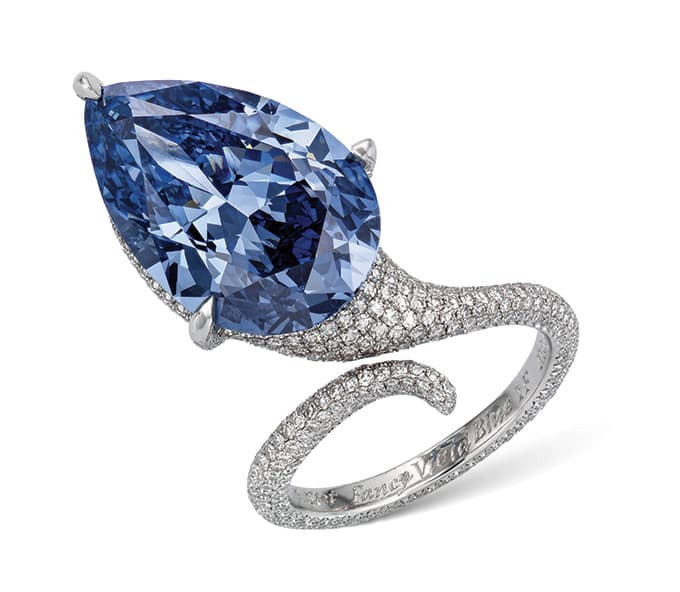
The categories attracting younger bidders are specific and telling. Rare gemstones sit at the top of the list, a preference that reflects both aesthetic discernment and investment logic. Coloured stones in particular have attracted renewed collector attention globally, though the supplied data does not break down demand by specific gem variety. Alongside rare gems, younger buyers are actively pursuing vintage signed pieces, the kind of lot that carries the hallmark of a notable house and tells a traceable story of design history. Contemporary jewellery designs also feature prominently, suggesting these buyers are not purely nostalgic: they want work that reflects the current moment as readily as they want pieces that embody a bygone one.
"Gen Z and millennial bidders are becoming a familiar sight in auction salesrooms, going after rare gemstones, contemporary jewellery designs and even vintage pieces," as one industry report summarised. The use of "even vintage pieces" is itself instructive. It signals that the vintage market, once considered the domain of seasoned collectors with decades of auction experience, has become an accessible and desirable category for first-time bidders who understand what a signed piece represents.
How the pandemic rewired the auction world
The digital infrastructure that made all of this possible did not emerge from a grand strategy. It was, initially, an emergency measure. When Covid-19 closed salesrooms in 2020, auction houses moved their operations online out of necessity, building out live-stream bidding, virtual catalogue viewing, and digital client services at speed. That quick fix, as it turned out, opened the door to an entirely new buyer profile. "What started as a quick fix during the Covid-19 pandemic has now turned into a key component of auctioneers' growth strategies, with a focus on keeping these tech-savvy buyers engaged through an increasingly more dynamic digital presence."
The shift is permanent. Houses that once relied on the ritual of a physical saleroom, the white-gloved handling of lots, the theatre of the auctioneer's gavel, have learned that a significant portion of their future clientele will never set foot in a viewing room. Reaching them requires something different.
The digital engagement challenge
Belinda Yuen is direct about what keeping younger buyers engaged actually demands in practice. "The main challenge lies in sustaining attention in a fast-paced digital environment, which we address by offering fresh, visually led content (videos, articles) and seamless online access to information," she said. The challenge she describes is not unique to auction houses: every luxury category competing for the attention of digitally native consumers faces the same compression of attention spans and the same proliferation of competing content. But jewellery carries a particular challenge online because the sensory experience of a stone, its weight, its depth of colour, the way light moves through a well-cut pavilion, cannot be fully conveyed through a screen. Visually led content is a partial solution, not a complete one, and the best auction houses are still working out how to close that gap.

What is clear is that online and hybrid auction formats are no longer supplementary offerings. Younger bidders demonstrate higher engagement in these formats, and the salesroom of the future will almost certainly be a hybrid space where physical presence is optional, not required.
Where the action concentrates
Even as digital access democratises participation, certain moments in the auction calendar still pull younger bidders toward live engagement. Yuen points to "live luxury weeks" in Hong Kong and New York as periods of heightened bidding activity among Gen Z and millennial buyers. These events carry concentrated energy: multiple houses mounting major sales within days of each other, creating a market moment that even remote bidders track closely. For buyers who can attend in person, they offer the kind of immersive experience that converts a passive follower into a committed collector.
Christie's APAC bidder data situates much of this growth specifically within the Asia Pacific region, a geography that has its own distinct collector culture and a growing cohort of young high-net-worth individuals with an appetite for fine jewellery as both adornment and asset.
Provenance, ethics, and the sustainability imperative
Perhaps the sharpest departure from previous generations of auction buyers is the expectation around ethical sourcing. Younger collectors are not content to admire a stone; they want to understand its journey. According to Yuen's outlook for the auction market, "there will also be a bigger focus on ethical sourcing and sustainability, which reflect generational values." This is an area where auction houses have significant work to do. Provenance documentation has traditionally focused on ownership history, the chain of custody from one notable collection to the next. The new demand is different: it extends backward, to the mine, the cutter, the trading chain. Laboratory reports, country-of-origin determinations, and traceability initiatives are increasingly part of what younger buyers expect to see alongside a lot description.
For those of us who cover jewellery with a close eye on supply chains, this generational pressure is the most consequential shift in the data. Vague commitments to "responsible sourcing" will not satisfy a buyer who grew up reading about artisanal mining conditions and who knows the difference between a Kimberley Process certificate and meaningful provenance documentation. Auction houses that want to retain these buyers over the long term will need to go further than they currently do.
The new collector economy
Jewellery, Yuen notes, "is expected to remain one of the fastest-growing starting points for new collectors," and the reasoning is not hard to follow. Compared to fine art, jewellery is portable, wearable, and often available at lower entry price points. A signed mid-century piece can be acquired, worn, researched, and resold, offering a cycle of engagement that a painting on a wall does not. For a generation that values experience and meaning over static accumulation, jewellery is the category that best bridges the emotional and the financial.
The 44 percent figure from Christie's APAC is a single data point, drawn from one region and one house, and the full methodology behind it warrants scrutiny: whether it captures registered bidders, active buyers, or all bid participants, and whether "luxury categories" encompasses watches and handbags alongside jewellery. Comparable data from Sotheby's, Phillips, and major regional houses would provide a fuller picture. But the directional signal is unambiguous. The next generation of fine jewellery collectors is already in the room, online or otherwise, and they are bidding with intent.
This article was produced by Prism’s automated news system from verified source data, official records, and press releases, then run through automated quality and moderation checks before publishing. The system is built and supervised by the people who set the standards it runs under. Read our full AI policy.
Did this article answer your question?