Georgian Antique Jewelry, The Rare Vintage Look Defining 2026
Georgian-set jewelry is back because it looks collected, not copied, and the real clues are in the backs, the cuts, and the collets.
What Georgian-set really means
Georgian-set jewelry is not just a romantic label. It points to pieces made during the Georgian period, from 1714 to 1837, the era of the Hanoverian monarchs in the United Kingdom and widely considered the earliest period of antique jewelry. Authentic examples are rare, which is why the look reads as collectible rather than merely decorative.
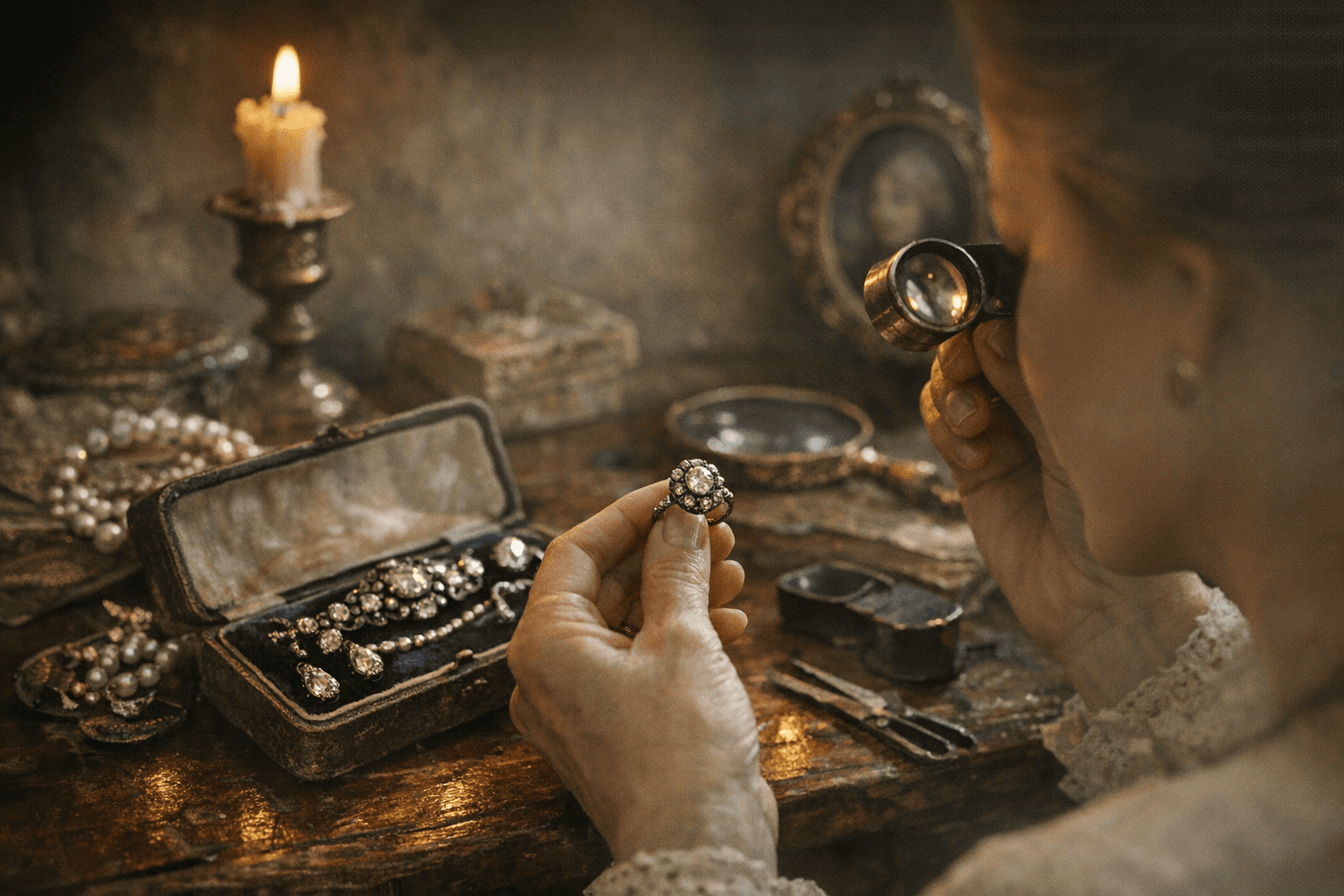
The style is defined by handcraftsmanship. Georgian jewels often show intricate metalwork, older diamond cuts such as old mine cuts and rose cuts, and settings that feel engineered by eye and hand rather than by modern precision. That imperfect richness is part of the appeal: the piece should look made, not manufactured.
Why the look feels current again
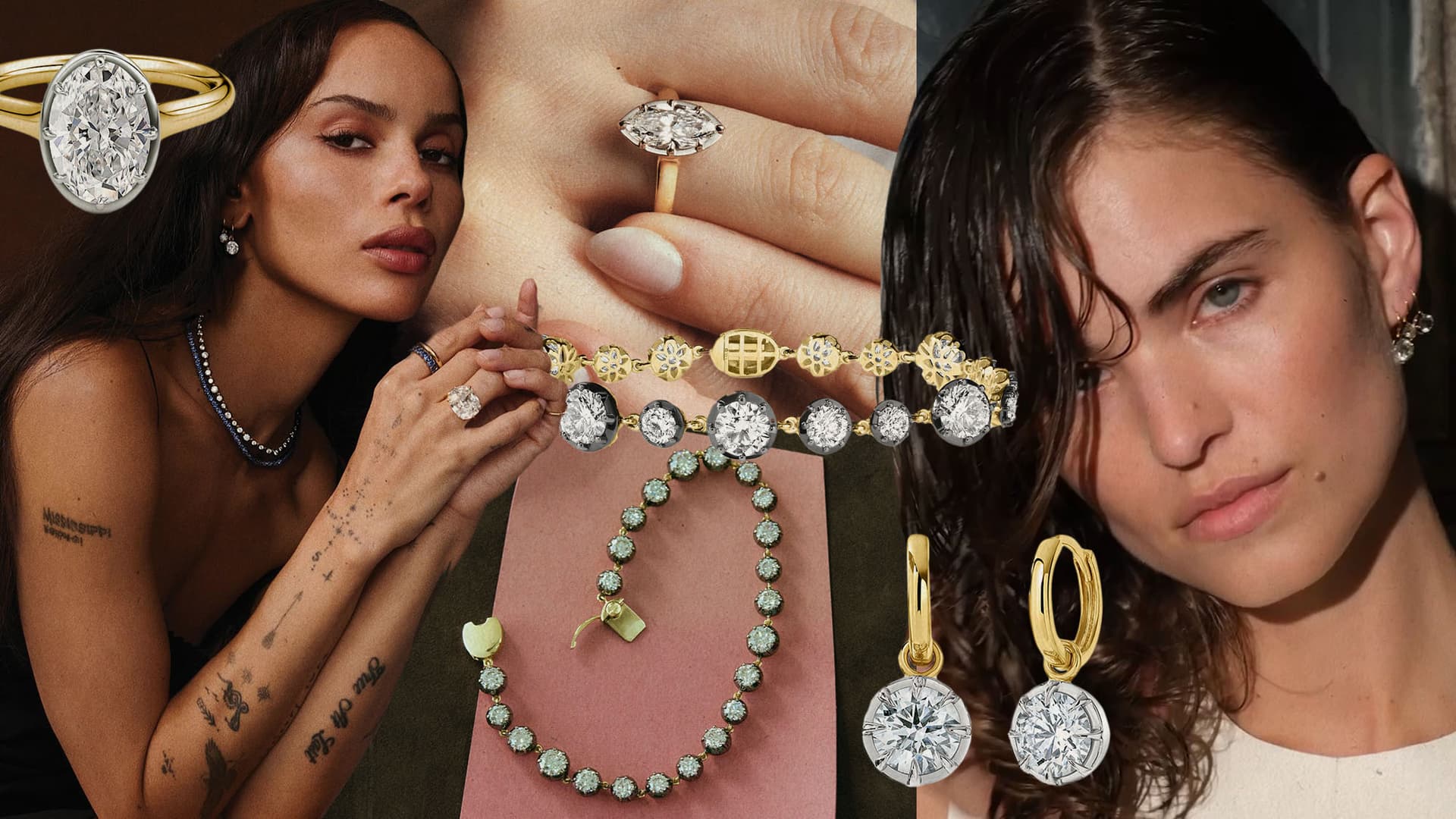
Zendaya and Zoë Kravitz have helped pull Georgian design out of the display case and back into conversation. Zendaya’s engagement ring from Jessica McCormack, with its blackened-gold finish and button-back Georgian settings, captures why the style feels fresh now: it keeps the antique silhouette, but sharpens it for a modern wardrobe.
The revival is not happening in isolation. JCK reported that shoppers are leaning toward pieces “like their grandmothers wore,” including old diamond cuts and vintage brooches, and linked the renewed attention to Taylor Swift’s old mine-cut engagement ring. That ring helped push warmer diamond hues and vintage settings into the mainstream, where they now read less as period costume and more as a deliberate design choice.
How to read a true Georgian piece
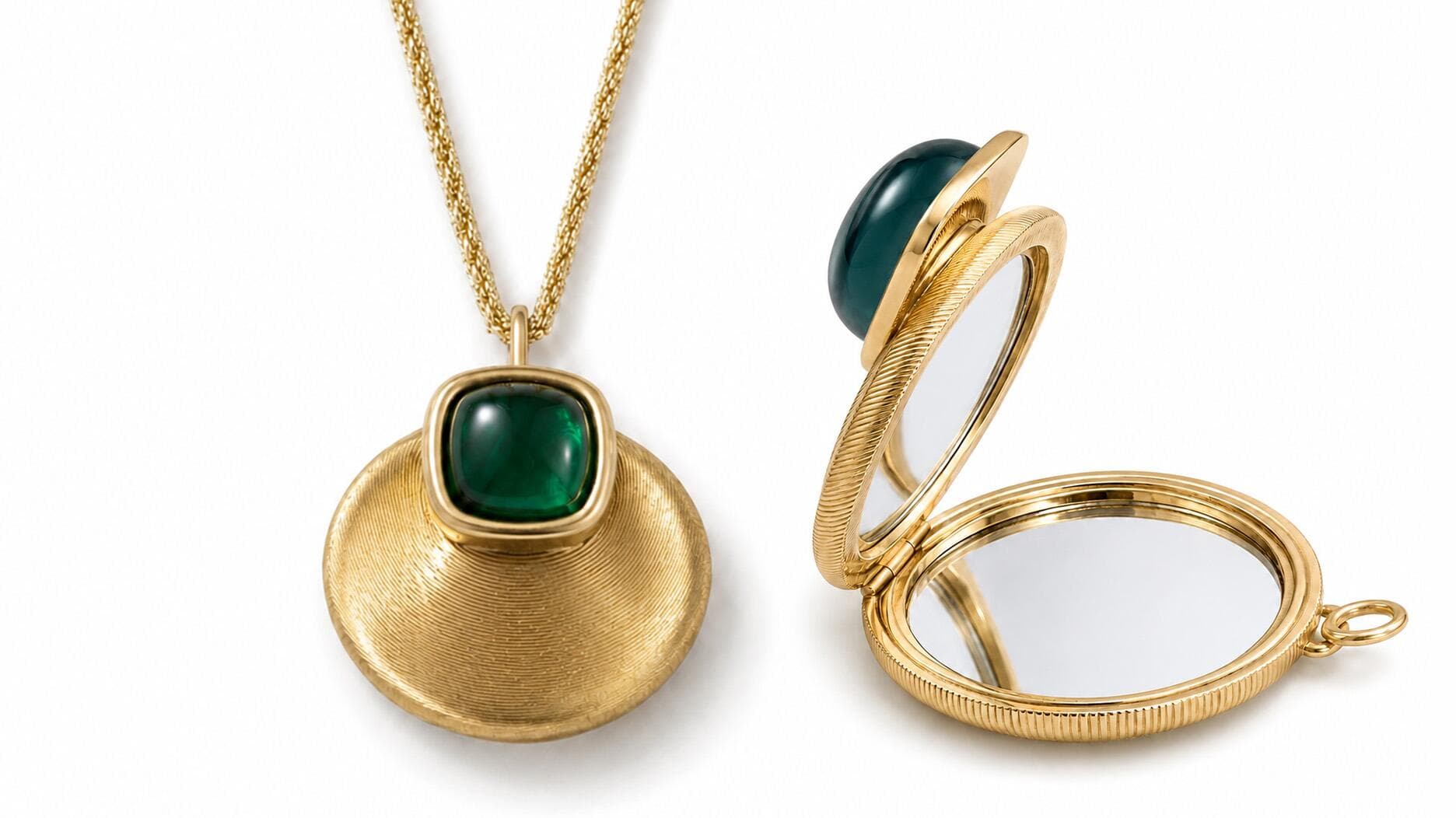
The quickest way to decode a Georgian jewel is to look at the back as carefully as the front. Closed-back settings are one of the clearest period signals, especially on colored stones and some diamonds, because they were designed to boost sparkle in candlelight. Foil backing may appear behind stones, especially in older colored gem settings, adding brightness from the rear rather than relying on modern brilliance alone.
Cut-down and collet-style mounts are another hallmark. In a true Georgian setting, the stone often sits within a delicate rim or collar of metal that was shaped to cradle the gem closely. That construction can make the stone look deceptively modern at first glance, even though the setting itself is unmistakably antique once you know what to look for.
Old mine cuts and rose cuts matter too. Old mine cuts tend to have a softer, squarer outline and a visible culet, while rose cuts have a domed top and a flatter profile. If a jewel claims Georgian heritage but shows crisp modern facet symmetry, bright white metal, and a factory-perfect layout, it may be Georgian-inspired rather than Georgian.
The difference between Georgian and Georgian-revival
Georgian-revival pieces borrow the language of the era without necessarily carrying its age or construction. They often use antique-style silhouettes, darkened gold, collet settings, and old-cut diamonds, but the finish is cleaner and the engineering more contemporary. That can make them attractive buys, especially if you want the look without the fragility of a truly 18th-century object.
The distinction lives in the details. A genuine Georgian piece usually shows hand-finished irregularity, softer wear, and a construction logic that predates modern mass production. A revival piece may mimic the profile but use newer stones, sharper prongs, cleaner soldering, or an open-back structure that would not have been typical of the original period.
What to inspect before you buy
When you are decoding a piece, start where most people never look: inside the setting, along the shank, under the clasp, and around any repairs. Marks and hallmarks, if present, may reveal metal content, maker, or later intervention, but the bigger story is often in the structure itself. A jewel with a Georgian face and a visibly modern under-gallery deserves extra scrutiny.
Watch for restoration red flags. Fresh solder, mismatched patina, overly bright metal, replaced stones that do not match the wear of the rest of the piece, or a setting that has been opened up and converted can all signal heavy alteration. None of that automatically makes the jewel undesirable, but it does change what you are actually buying: an antique fragment, a restored survivor, or a later interpretation.
The best Georgian pieces still feel alive with their past. You should see softness at the edges, age in the metal, and construction that matches the period story the jewel is telling. If a seller leans on “Georgian style” but cannot explain the setting, the cut, or the condition honestly, the claim is vague.
Why collectors prize it
The Georgian story is bigger than romance. Museums and antique dealers have long linked the style to wealth and heirloom passing, which explains why it now reads as deeply collectible. It is not a look built for disposable fashion; it is a look built to survive, be inherited, and be read by the next owner.
That scarcity also gives the style cultural weight. The Natural Diamond Council has framed antique and recycled jewelry as part of a sustainability and circular-economy shift, and Georgian pieces fit that shift neatly because they already embody reuse, longevity, and craftsmanship. Even the market’s most dramatic proof point has a historic edge: the Anglesey Necklace sold for $4.8 million at a 2024 Sotheby’s auction in Geneva, a reminder that antique jewelry can carry both artistic and financial significance.
The reason Georgian-set jewelry is defining the moment is simple: it offers evidence. Every collet, cut, and closed back tells you something about where the piece came from, how it was made, and why it still matters now. That is what makes it feel modern in 2026, and why the smartest buyers are reading it like an archive rather than treating it like a trend.
This article was produced by Prism’s automated news system from verified source data, official records, and press releases, then run through automated quality and moderation checks before publishing. The system is built and supervised by the people who set the standards it runs under. Read our full AI policy.
Did this article answer your question?