GIA warns vintage jewelry care depends on each material
The wrong cleaner can strip value from pearls, emeralds, and antique settings. GIA says the safest first step is to match care to the material, not the age.
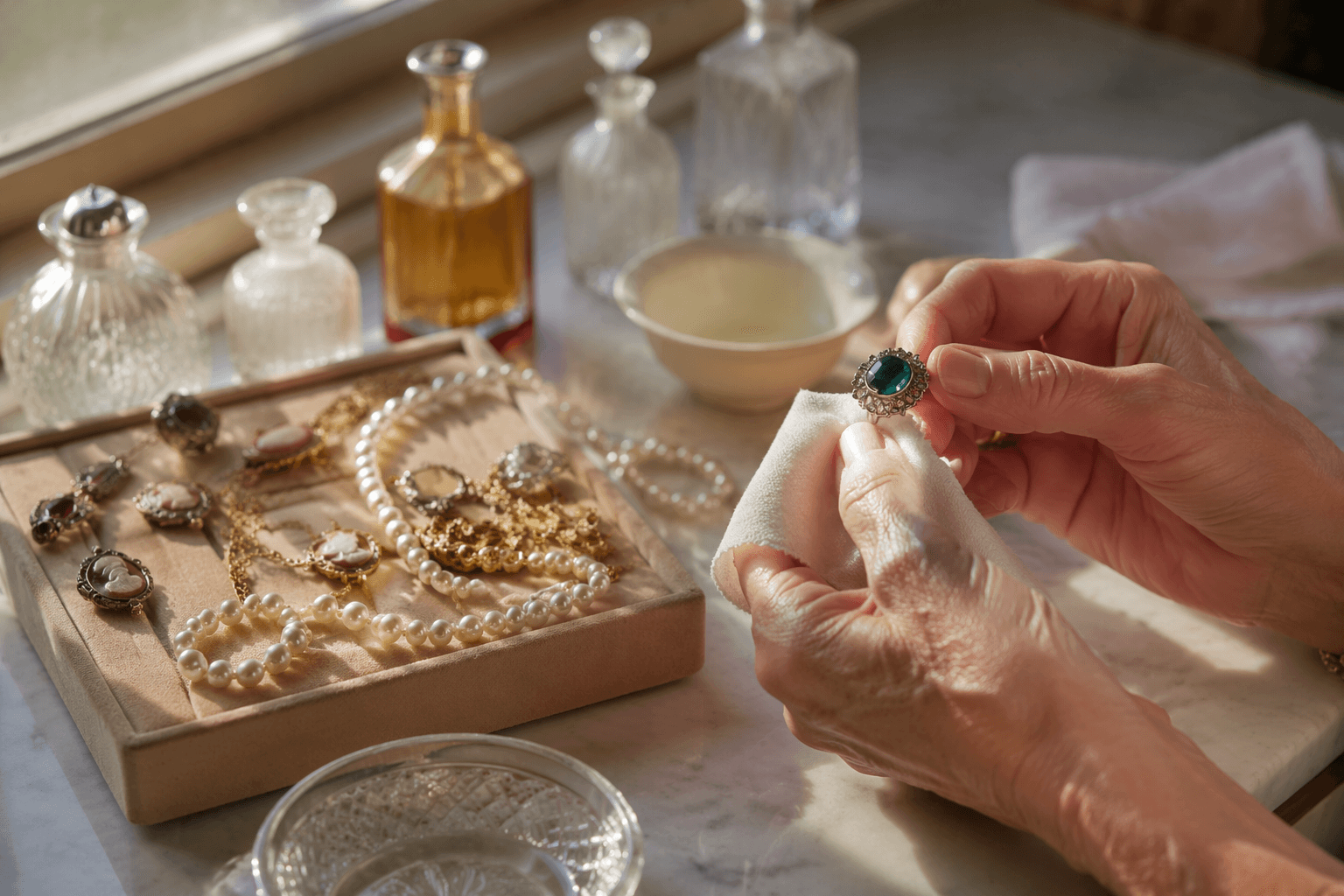
An inherited brooch, a strand of pearls, or an old cocktail ring can look solid enough to wear with confidence, until the wrong cleaning method turns a modest refresh into a costly repair. Vintage jewelry care has to start with the material, not with the assumption that old means durable.
Why the material matters more than the date
Many vintage pieces can be cleaned at home with water and a soft lint-free cloth, but that only works when you know what you are touching. Have jewelry checked and cleaned every six months; GIA recommends that interval because stones can loosen over time. That matters even more for antique mounts, where older prongs and past repairs may already be under strain. Age changes the risk profile: a 1930s ring set with a hard diamond can still fail at the prongs, while a seemingly delicate heirloom can hide treatment, filling, or glue that reacts badly to heat and vibration.
The biggest expensive mistake is treating all jewelry as if it can tolerate the same routine. Ultrasonic cleaners and steam cleaners can loosen gemstones in their settings, so jewelry professionals inspect pieces for loose stones before using them. Harsh household cleansers, toothpaste, and chlorine bleach should never be part of the cleanup, and fine jewelry should come off before chlorinated swimming or household chores that expose it to chemicals.
Pearls: the easiest way to ruin a strand
Pearls are the clearest warning against one-size-fits-all care. GIA places pearls at just 2.5 on the Mohs scale. They scratch, abrade, and mark easily. Hair spray, perfume, cosmetics, perspiration, and cleaning agents can damage their surface, and unlike a harder gem, a pearl does not forgive repeated exposure.
The safest home routine is simple and gentle. Use warm, soapy water for occasional thorough cleaning, then wipe cultured pearls with a very soft, clean cloth after each wearing. Store them in a soft pouch or case, keep them away from sharp objects, and avoid dry, hot environments that can desiccate the surface. Intense heat or light can dehydrate pearls and cause cracked nacre, so a windowsill or a hot dressing table is a poor resting place.
Pearls should never go into an ultrasonic or steam cleaner. That single mistake can do more than dull a surface finish: it can permanently alter the look and integrity of the jewel. Pearl necklaces may also need periodic restringing, because silk string can darken, stretch, or wear thin over time.
Pearls may be dyed, impregnated, or coated, and those treatments can change over time. A strand that looks stable today may behave differently after years of wear.
Emeralds: beautiful, valuable, and more fragile than they look
Emeralds are another stone where the surface impression can mislead you. GIA places emeralds at 7.5 to 8 on the Mohs scale, but they have only fair to good toughness, which means hardness does not equal resilience. Heat can damage emeralds by extending existing fractures, and that makes aggressive cleaning especially risky for older stones with a long life behind them.
Most fashioned natural emeralds contain fracture fillings, with the share at 90 percent or more. That matters because ultrasonics and steam are exactly the wrong tools for a stone with hidden fills. Hot steam can cause oil or unhardened resin to sweat out of fractures, and ultrasonic vibrations can weaken already-fractured emeralds. The safest home method is warm, soapy water with gentle scrubbing.
Antique settings and fragile heirlooms need restraint
The metalwork around the stones deserves as much caution as the gems themselves. Older prongs in antique jewelry should not be vigorously scrubbed, because wear can leave them thin, bent, or already fragile. A setting can look intact and still fail under pressure from a brush, especially if the piece has seen previous resizing, soldering, or stone replacement.
That is why professional inspection comes before any ultrasonic cleaning. A jeweler should check for loose stones, worn prongs, and fragile mounts before deciding whether a device is safe at all. Diamonds are often treated as the benchmark for toughness, yet ultrasonic cleaners can loosen gemstones in their settings, which is why professionals are the right people to use them when appropriate.
What you can safely do at home
A careful home routine is not complicated, but it has boundaries.
- Wipe most vintage jewelry with a soft lint-free cloth after wear.
- Use warm water and mild soap only when the material can tolerate it.
- Keep pearls dry between wears and store them away from abrasion.
- Remove fine jewelry before swimming in chlorinated water or using household cleaners.
- Stop immediately if you see loose stones, lifting prongs, cloudy fills, or flaking surface treatments.
Treatments, disclosure, and the hidden history inside vintage pieces
Vintage jewelry also carries the problem of incomplete information. Gemstone treatments are constantly changing and being refined, and disclosure guidelines exist for treated gems. A family jewel may not just be old, it may also include fracture filling, impregnation, coating, or heat treatment that was never documented when it first entered circulation.
A piece with clean paperwork, known repairs, and honest treatment disclosure is easier to care for safely than one whose history has been guessed at for decades.
This article was produced by Prism’s automated news system from verified source data, official records, and press releases, then run through automated quality and moderation checks before publishing. The system is built and supervised by the people who set the standards it runs under. Read our full AI policy.
Know something we missed? Have a correction or additional information?
Submit a Tip