What a brooch’s back reveals about its age and repairs
Flip a brooch over first: the hinge, catch, and pinstem can date it faster than the front and expose repairs that change value.
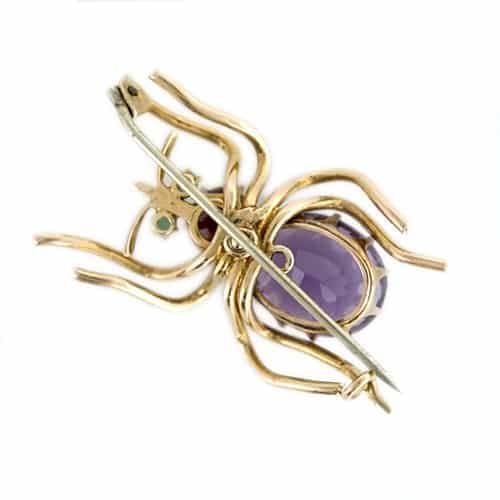
One late-18th-century brooch in the Victoria and Albert Museum has a pin fitting added at the back together with a safety chain. A worn hinge, a later safety chain, or a replaced pinstem can reveal repair work and a second life that the decoration alone will never show. At estate sales, flea markets, and online listings, the reverse is where age, alteration, and authenticity come into focus.
Why the reverse is the first clue
The hardware is part of the jewel, not an afterthought. A pinstem is the sharp finding on the reverse of a brooch or pin, held by a clasp or catch that can range from a simple C to a more intricate safety mechanism. The back can tell you whether you are holding an original period piece, a later marriage, or a brooch that has been upgraded to keep pace with changing fashion and safety habits.
The simplest clue is often the easiest to miss. A C pin catch is a loop of wire shaped like a C and soldered onto the reverse to stop the pinstem. The basic C catch was the main brooch-finding technology until around 1900. After that, articulated safety catches began to be patented, so a lever or rollover-style catch is usually a clue to the early 20th century rather than the mid-Victorian period.
What to inspect before you trust the front
The back of a brooch deserves the same close looking you would give a hallmark. Start with the hinge, the pinstem, the catch, any chain attachment, and the solder seams around those parts. Then compare those details with the front style and the likely manufacturing method, because a beautifully intact front can still sit on later hardware.
- A period-correct hinge and catch with wear that matches the front usually supports value.
- A later safety chain on an antique brooch can be historically correct and should not automatically lower value.
- A replaced pinstem, fresh solder, or mismatched modern catch on an older body can complicate dating and reduce collector confidence.
- Missing or altered back hardware is a red flag when the seller describes the piece as untouched.
Original findings help place a brooch in its period, while replacement parts can turn a straightforward antique into a piece with a mixed history. That changes how carefully it should be priced and described.
Repairs are part of the story, but they are not invisible
Repairs and later additions can be documented without stripping a brooch of authenticity. The Victoria and Albert Museum records another bow brooch fastened with a pin and catch on the back, similar to a safety-pin mechanism.
Older pieces from the ancient world also carry that evidence. The British Museum records a Roman wing brooch with an intricately pierced catch plate, while another ancient brooch record lists a catch-plate and lug that are now missing. If the original fastening survives, it strengthens the construction story. If it does not, the absence becomes part of the condition report.
The back tells a longer history than the Victorian era
The brooch back is not only a Victorian dating trick. Greek clothing was not sewn and relied on straight pins and fibulae to fasten garments, and Byzantine crossbow fibulae were elaborate safety-pins used to secure official cloaks. Most fibulae use a simple catch-plate, which means the broad idea behind the brooch back has been evolving for centuries.
That long history explains why not every old fastening looks like the modern brooch mechanism. In the Norway and Scotland style cited on the Victoria and Albert Museum's brooch by Charles Jamieson, the wearer pulls cloth through the central hole and spears it with the pin.
Why around 1900 is such a useful dividing line
If you are trying to separate an original antique from a later piece borrowing an older look, the turn of the century is a useful hinge point. The jewelry industry shifted from small workshops to larger, more mechanized production by the mid-19th century, which helps explain why standardized and patented mechanisms became more common later. A lever safety catch for brooches was patented by Herpers Brothers of Newark.
The Metropolitan Museum dates René-Jules Lalique brooches to around 1900 and around 1905, and records Marcus & Co. as established in 1892 by Herman Marcus, who arrived in New York in 1850 after training in Dresden.
A collector’s read on value
The back of a brooch will not always lower value when it shows later work. A documented, functional safety chain can be historically correct, and a repaired hinge may simply mean the piece was worn and loved enough to survive. What matters is whether the hardware makes sense for the age, whether the repair was done cleanly, and whether the seller is honest about what is original and what is later.
This article was produced by Prism’s automated news system from verified source data, official records, and press releases, then run through automated quality and moderation checks before publishing. The system is built and supervised by the people who set the standards it runs under. Read our full AI policy.
Know something we missed? Have a correction or additional information?
Submit a Tip